Thursday in April | 26 Movies
Texas is more a country unto itself than one of the 50 states. The second largest state, both by area and population, trying to peg down a single identity to Texas is a fool’s errand. The community of Dallas is vastly different from that of San Antonio, as are those who reside in El Paso versus the citizens of Lubbock. There are rural communities throughout the vast and varied landscape, and who knows how to begin explaining Austin? But in April, TCM will endeavor to capture some of the Lone Star State’s personality with the spotlight, “Deep in the Heart of Texas.” These movies will explore the state’s vast cultural history, its racial dimensions, its shifting demographics and how it reflects the changing nature of America.
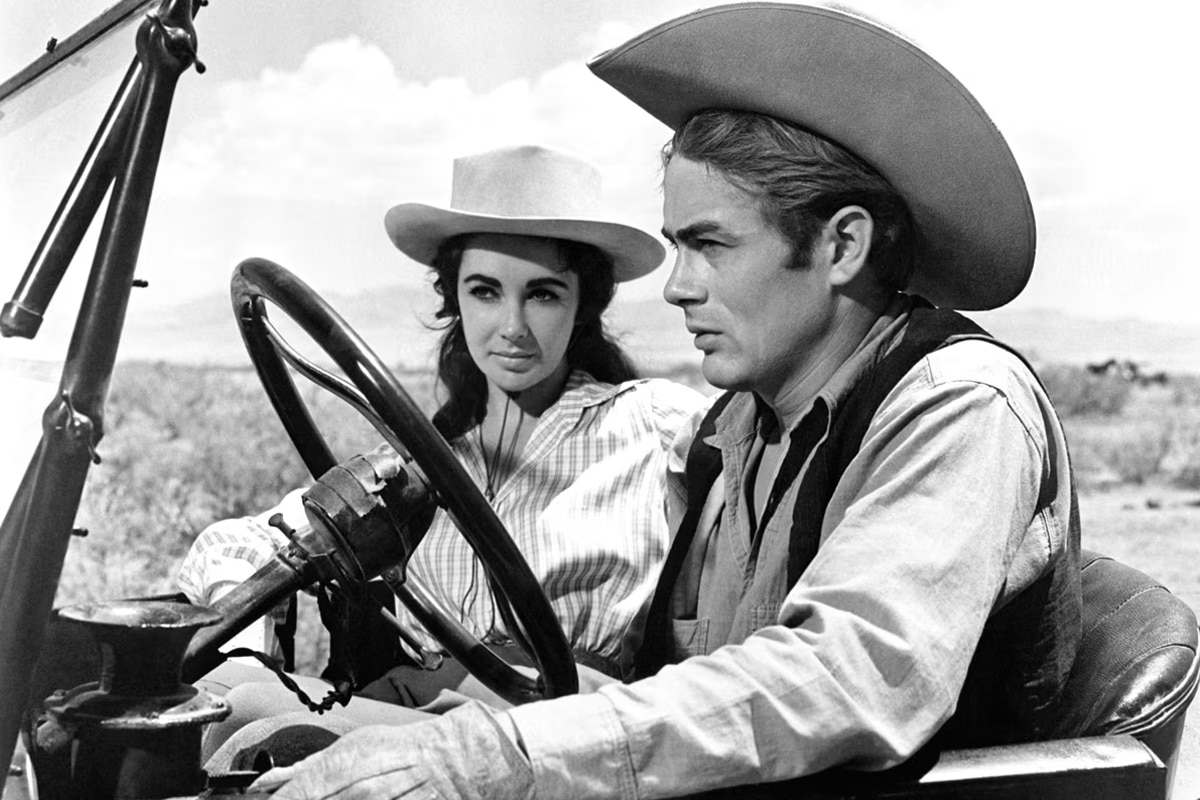
There’s perhaps no better place to start than George Stevens’ epic Giant (1956). The story begins in the mid-1920s and follows Jordan "Bick" Benedict Jr. (Rock Hudson), a successful rancher who marries Leslie Lynnton (Elizabeth Taylor), an East Coast elite who’s determined to make her way through the upper echelons of Texas power. What neither counts on is the unexpected success of Bick’s former ranch hand, Jett Rink (James Dean), who strikes oil on a desolate piece of land. Over the course of several decades, Stevens’ film examines the changing face of American power as well as the complexion of American intolerance as a community of Mexican immigrants becomes integrated with Bick’s family.
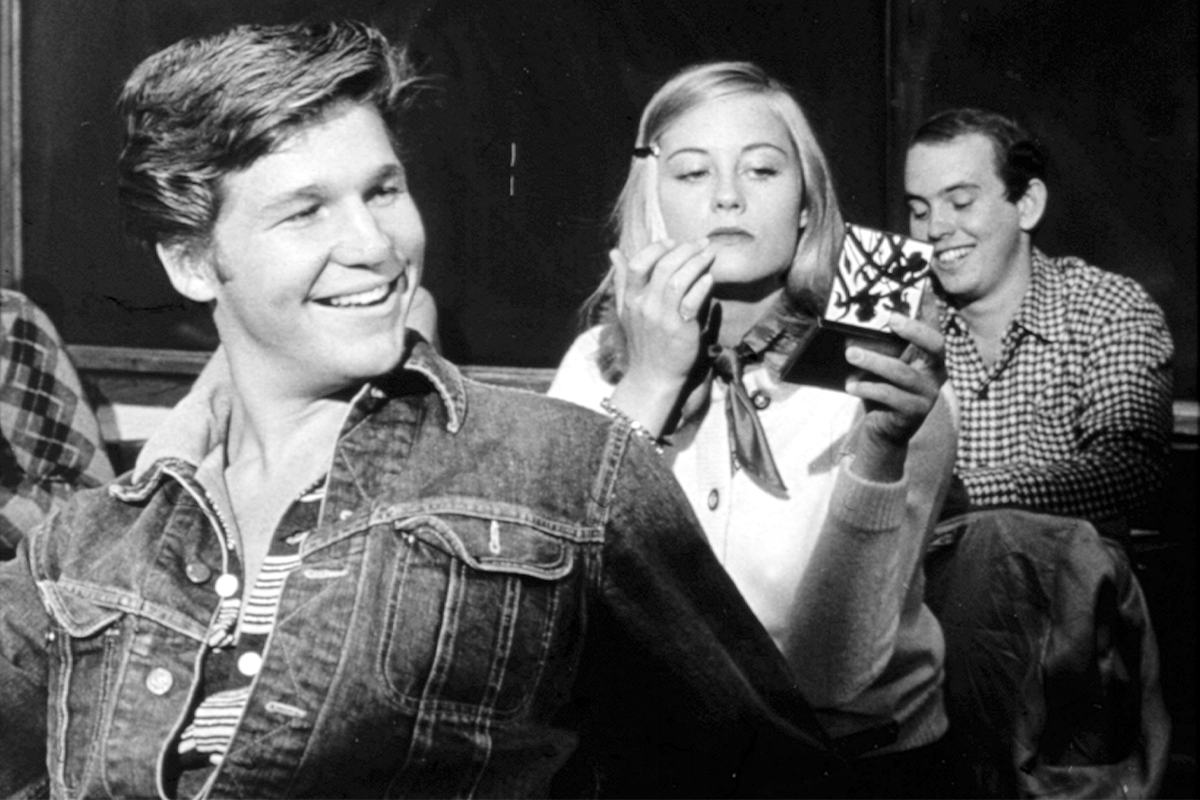
The night’s following film, The Last Picture Show (1971), arguably picks up where Giant leaves off, going into 1950s Texas to examine youth culture and the shifting mores of desire in a small town. The first of several Larry McMurtry adaptations playing this month, Peter Bogdanovich’s breakthrough feature follows high school seniors and best friends Sonny (Timothy Bottoms) and Duane (Jeff Bridges) as they pursue various women, confront the class divisions around them and consider what the future holds outside of Anarene, Texas. While a landmark movie of New Hollywood, it’s a film that not only explores the life of youth culture but pays just as much attention to the adults in its story, which helped lead to Oscar-winning performances from Ben Johnson and Cloris Leachman.
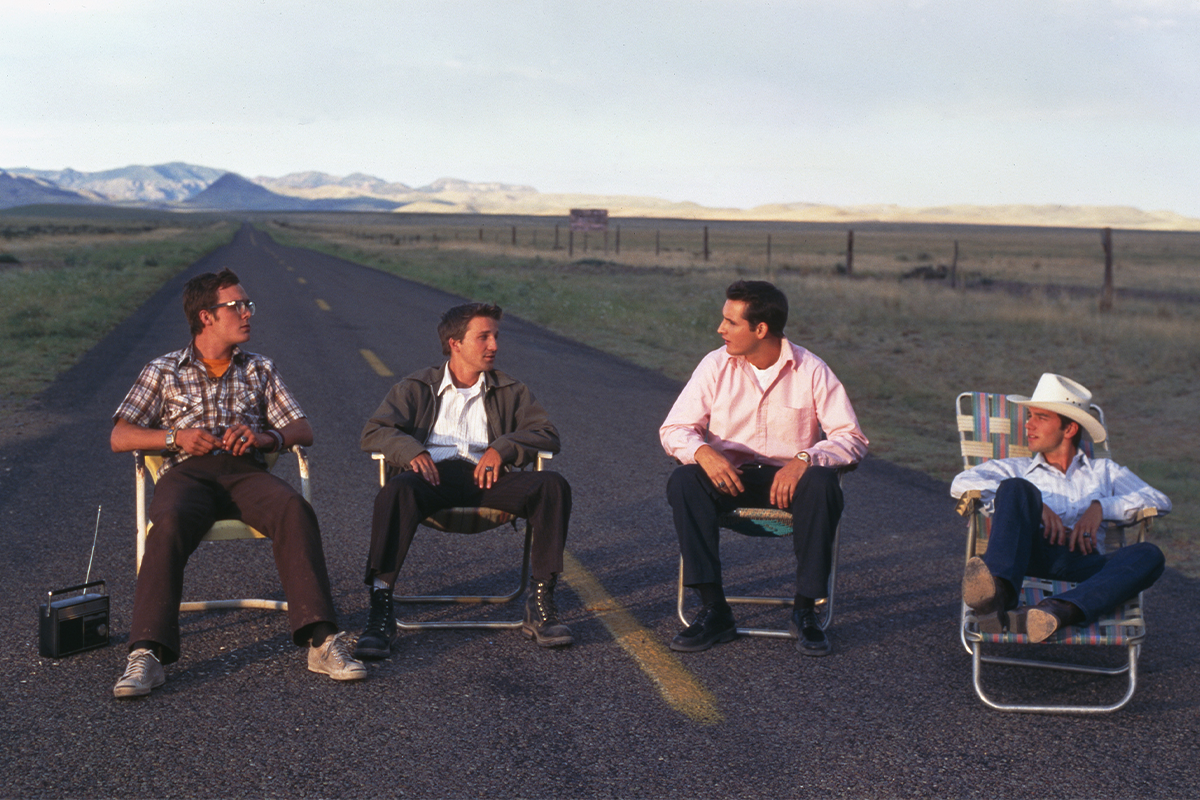
Also airing on the 2nd is the TCM premiere of Dancer, Texas Pop. 81 (1998), the tale of four friends from a small Texas town planning to leave for Los Angeles after their graduation; Robert Altman’s Brewster McCloud (1970), starring Bud Cort as a the titular character who is building as pair of wings to fly while living in a fallout shelter under the Huston Astrodome building; and Seven Days in May (1964), a political drama directed by John Frankenheimer with a screenplay by Rod Serling in which a coup of the American government is being planned at a secret training base in Texas.
The following week kicks off with John Sayles exploring the generational trauma of racial divides in the riveting Lone Star (1996). Chris Cooper stars as the sheriff of a small town in South Texas, who’s overshadowed by the legend of his father, the town’s former sheriff (Matthew McConaughey). When a skeleton is uncovered near a shooting range, it leads to further truths coming to light involving the town’s complicated racial history and whether attempts of “progress” have truly reckoned with a legacy of prejudice or merely papered them over with pleasant myths.
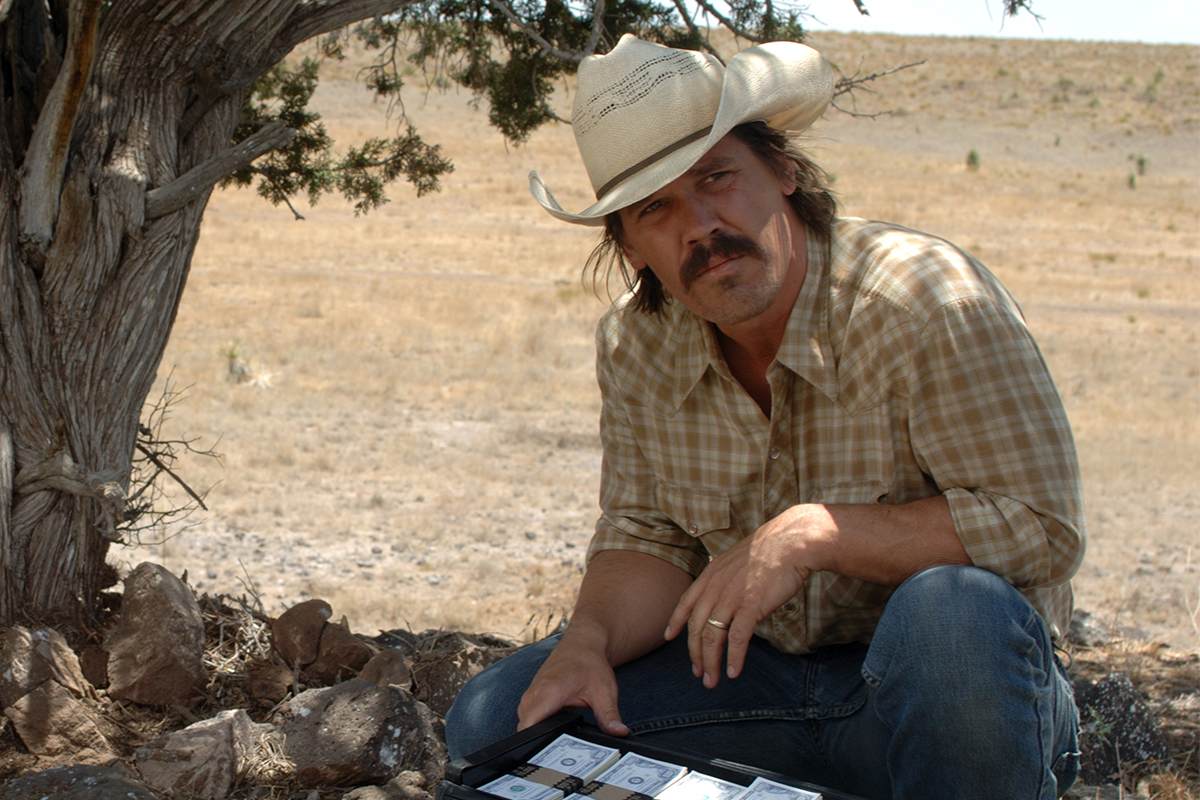
A couple of other neo-noirs set in the Texas landscape follow that night from two of the unlikeliest filmmakers: Minnesotans Joel and Ethan Coen. Despite hailing from the Land of 10,000 Lakes, the duo has made two of the most indelible neo-noirs in cinema history. The first to air on TCM is their Oscar-winning adaptation of Cormac McCarthy’s No Country for Old Men (2007). Josh Brolin stars as a man who stumbles upon a case full of money from a drug deal gone bad, but he gets caught in the crosshairs of relentless, sociopathic hitman Anton Chigurh (Javier Bardem), who wants to retrieve the cash. Breathless, bitingly funny and unapologetic in its look at the underlying chaos of life, No Country for Old Men beautifully uses the Texas landscape to visualize its tale of brutality.
The Coens also made rural Texas their setting for their debut feature, Blood Simple (1984), which would set the tone for their filmography of crimes, unintended consequences and how the chaos of the universe doesn’t inherently mean that anyone is immune from retribution. In this sordid, pulpy tale, club owner Julian Marty (Dan Hedaya) asks private investigator Loren Visser (M. Emmet Walsh) to find evidence that his wife Abby (Frances McDormand) is having an affair with his employee Ray (John Getz). When Marty’s mind turns to murder, it leads to a series of deeper betrayals and the kind of darkly comic absurdity that has resurfaced throughout the Coens’ films.
The night closes out with two New Hollywood crime dramas focused on bank-robbing lovers in Texas: The groundbreaking, nine-time Oscar-nominated Bonnie and Clyde (1967), directed by Arthur Penn and starring Warren Beatty and Faye Dunaway; and Sam Peckinpah’s The Getaway (1972), starring Steve McQueen and Ali MacGraw.
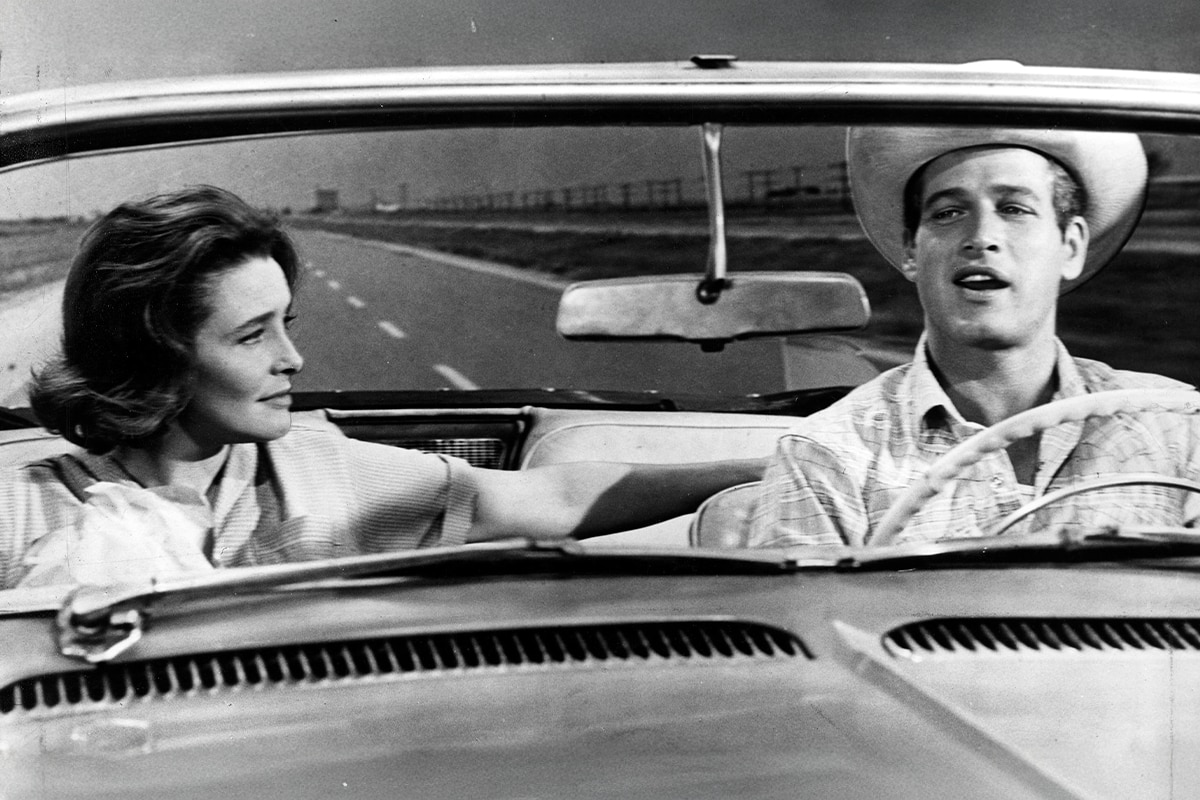
On April 16th, we return with another adaptation of Larry McMurtry, this time with Hud (1963). In this thoughtful, somber neo-Western, Paul Newman strikes an unforgettable figure as the selfish, cruel title character. The son of a kindly Texas rancher, Hud clashes with his father (Melvyn Douglas) but makes for an odd role model for his young brother Lonnie (Brandon de Wilde), especially as both men pine for their housekeeper Alma (Patricia Neal). Beautifully shot by genius cinematographer James Wong Howe (who would win an Oscar for his work in the movie), Hud is a brooding, thoughtful piece that knows how to contrast its vast setting against the smallness of its protagonist.
Things get a little stranger with the TCM premiere of Richard Linklater’s sophomore feature Slacker (1990). Shot on a budget of only $23,000, Linklater firmly rejects traditional storytelling in favor of a sprawling series of vignettes spread across the city of Austin. A keen window into the city’s signature strangeness, as well as a snapshot of Gen X attitudes, the film jumps from character to character, settling into distinct conversations and histories with a specific sense of place. An indie landmark, the film borders on documentary for what it shows of the Austin scene of the late ‘80s. Jack Fisk’s Raggedy Man (1981), making its TCM debut; Wim Wenders’ cult classic Paris, Texas (1984); and Jean Renoir’s The Southerner (1945) round out the night.
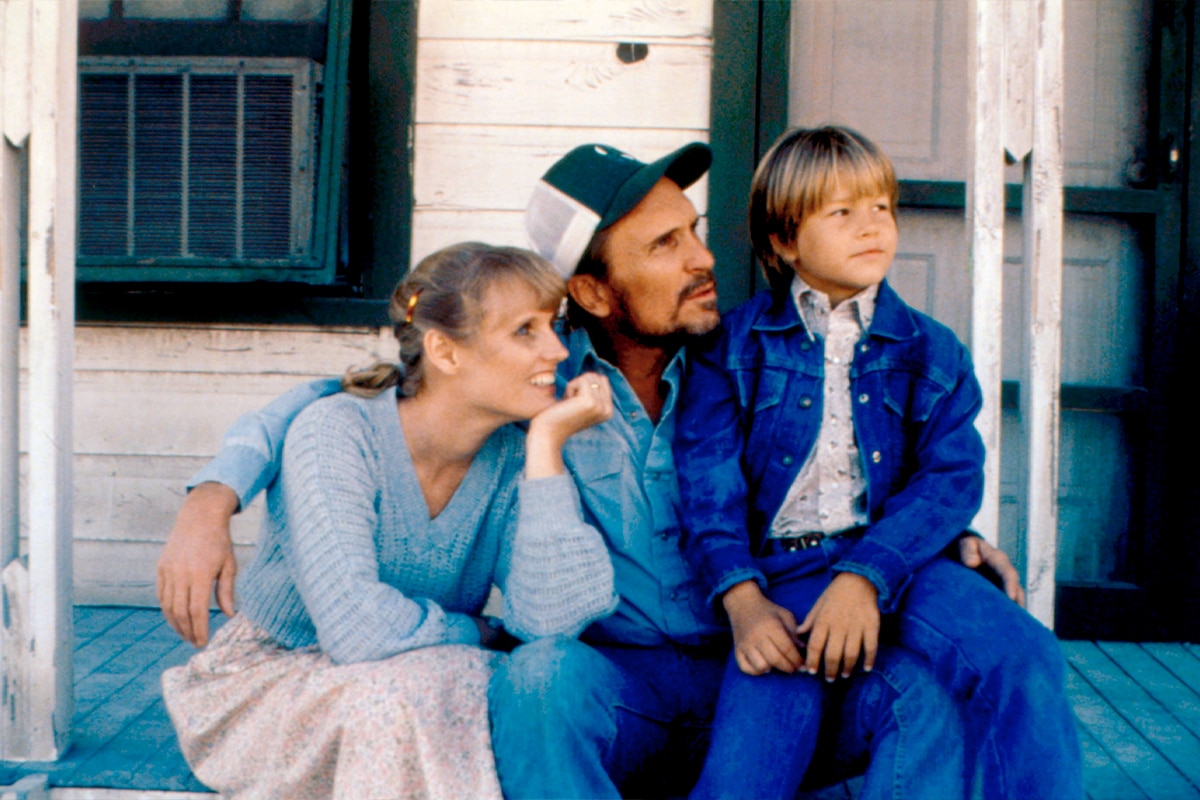
The following week, TCM audiences will be treated to the movie that won Robert Duvall a well-deserved Oscar: Tender Mercies (1983). In the film, Duvall plays Mac Sledge, a washed-up, alcoholic country music singer who feels like he’s thrown his life away only to discover a new chance at happiness when he falls for a young widow (Tess Harper) and becomes both a husband as well as stepfather to her precocious son, Sonny (Allan Hubbard). While the stereotype of a Texas man can be loud and bombastic, Duvall’s Mac Sledge shows there’s not a single type of Texan masculinity, as he brings a quiet, ascetic approach to the character.
For the last week of this TCM Spotlight, we return once more to a Larry McMurtry adaptation with the Best Picture-winning feature Terms of Endearment (1983). As she did with her then-husband’s adaptation of The Last Picture Show, production designer and uncredited script collaborator Polly Platt brought her wisdom to bear on this human drama set in Texas. This time around, the drama focuses on the unique relationship between doting/overbearing mother Aurora Greenway (Shirley MacLaine) and her daughter Emma (Debra Winger). Although more intimate in scope, director James L. Brooks fashioned a Texas epic of his own as he looks at the lives and loves of Aurora and Emma over the course of several decades, unpacking the complicated bonds between mothers and daughters.
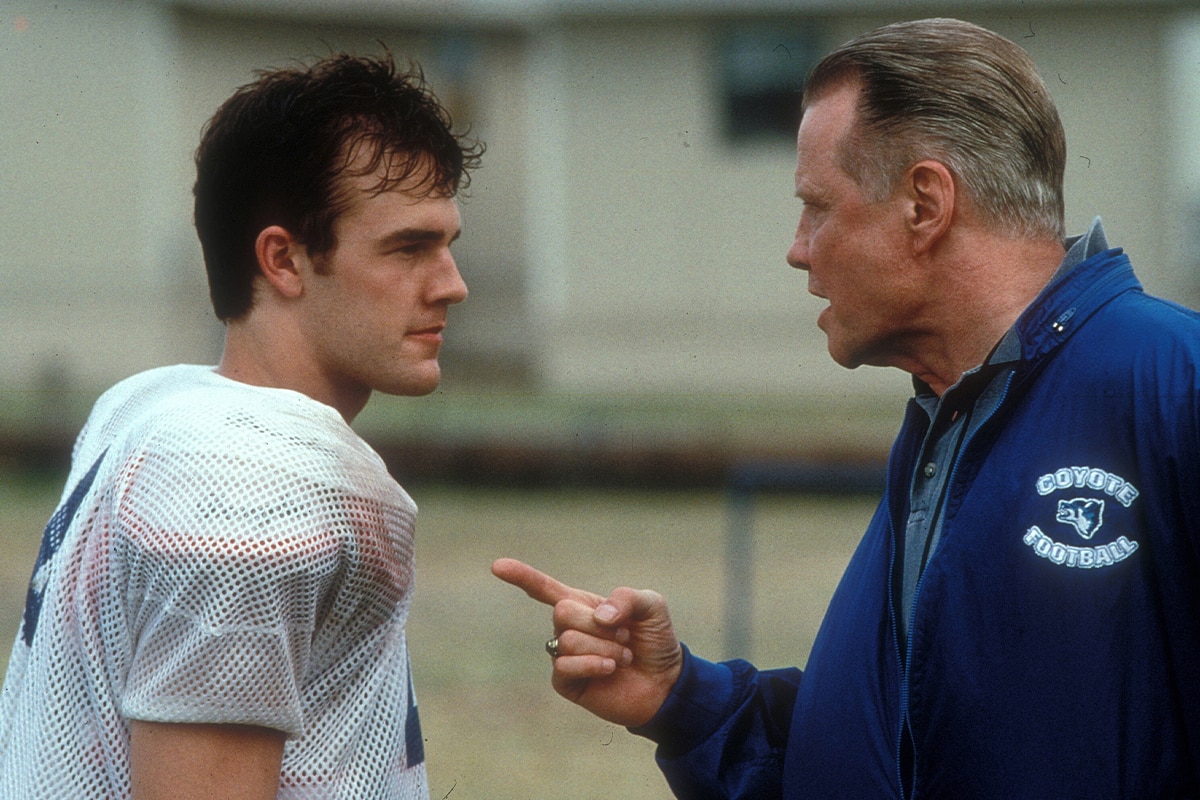
Of course, we can’t have a spotlight on Texas without at least one movie about high school football, so on the final night of the series, Varsity Blues (1999), will make its TCM debut. James Van Der Beek stars as Jonathan "Mox" Moxon, a thoughtful backup QB who is thrust into a role he never wanted when his team’s starter goes down. With such quotable lines as Van Der Beek shouting at his coach/dad (Jon Voight), “I don’t want your life!” and Ali Larter wearing a memorable piece of edible clothing, it’s not surprising that the film has been a Millennial favorite since its release.
Also featured on the final night is Robert Benton’s Best Picture nominee Places in the Heart (1984), starring Sally Field in the role that won her the second of her two Best Actress Academy Awards; Les Blank’s short film A Well Spent Life (1971), which serves as a tribute to Mance Lipscomb, often heralded as the greatest guitarist of all time; Douglas Sirk’s Written on the Wind (1957), which earned Dorthy Malone a Best Supporting Actress win; Mervyn LeRoy’s Best Picture nominee, Blossoms in the Dust (1941); and Jack Conway’s Boom Town (1940), starring Clark Gable, Spencer Tracy, Claudette Colbert and Heddy Lamarr.
All of these movies show that Texas can’t be contained to simple catchphrases like “Everything’s bigger in Texas,” and “Don’t mess with Texas.” The wide variety of stories conveys a distinct character of independence, soulful reflection and personalities shaped by a wilderness that still refuses to be tamed. These films do take us deep into the heart of Texas and, more importantly, they show us why Texas has such heart.