Fridays in April | 20 Movies
Roger Corman left behind a legacy unmatched by filmmakers of his (or, for that matter, any) generation when he passed away in 2024 at the age of 98. In addition to directing over 50 films, he produced almost 500 features, created and ran two production companies and hired young talent in all facets of the business, both in front of and behind the cameras. He was dubbed "King of the B-movies" for his cheap productions and cost-cutting tricks, but he had an eye for talent and provided invaluable practical experience to hungry young artists willing to work long hours for small paychecks. Among the graduates of the "Corman School" are such luminaries as Martin Scorsese, James Cameron, Jack Nicholson, Robert Towne, John Sayles, Gale Anne Hurd and Jonathan Demme. TCM celebrates the magnate with four nights spanning his career. The first two nights feature films directed by Corman, and the following two highlight the directors who came up under his tutelage.
Friday, April 3
Peter Bogdanovich, Joe Dante, and Ron Howard are among the filmmakers who share their stories in Roger Corman: The Pope of Pop Cinema (2021), a French documentary that sketches out the defining contradictions of the ambitious young director who gave up on the studios and created his own career as an independent filmmaker. The rest of the night dives into a sampling of his early career as director, including a pair of films that have become cult classics.
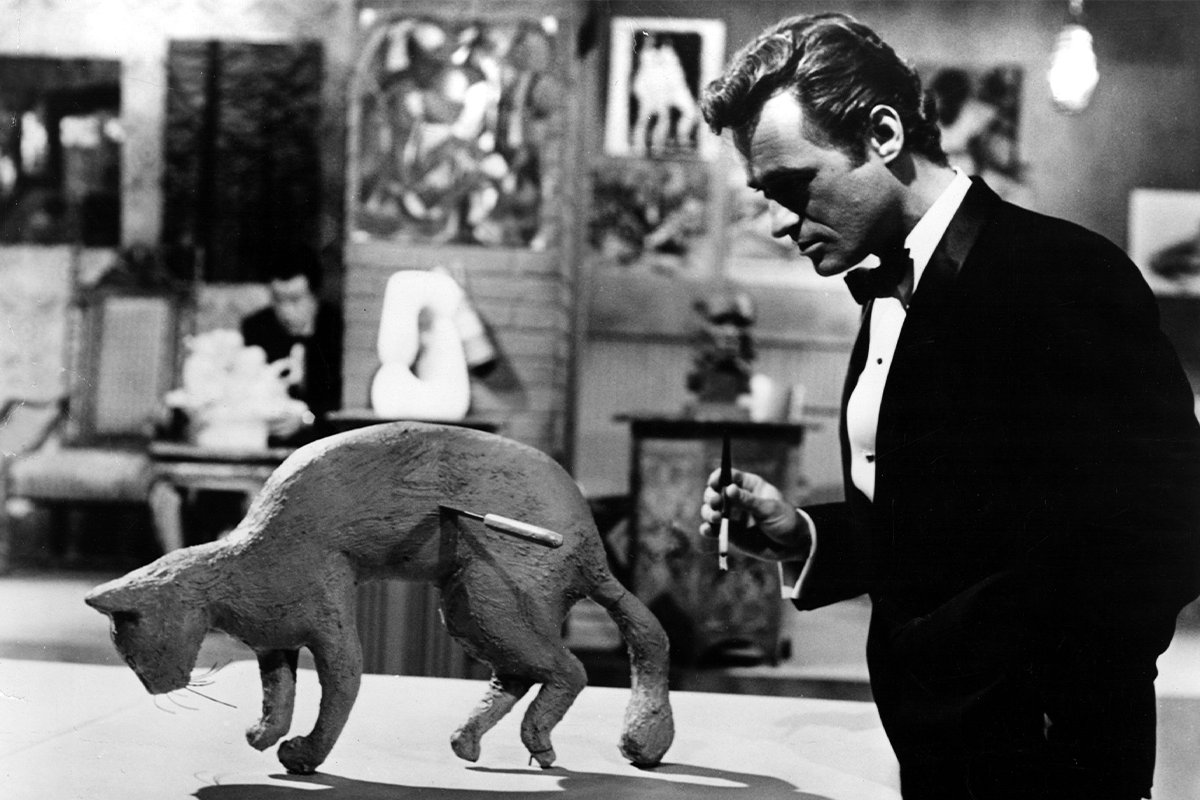
Both A Bucket of Blood (1959), starring Dick Miller as an untalented would-be sculptor who becomes a beatnik sensation when he covers dead bodies in clay, and The Little Shop of Horrors (1960), about a mysterious plant that feeds on human blood and becomes increasingly voracious, are horror comedies written by Corman's longtime collaborator Charles B. Griffith and shot on bargain-basement budgets. Corman took pride in meeting the challenges of the productions, shooting Bucket in five days and Little Shop in a record two days (with additional second unit night shoots), and the threadbare production values have become part of the charm for Corman fans. Little Shop of Horrors got a second life when Howard Ashman and Alan Menken created an off-Broadway musical version that continues to be revived.
Corman began as a producer but, in his own words, "I had seen what directors were doing on the first two films I produced, and I thought, I could do that!" He took the director's chair for Five Guns West (1955), a Civil War Western with a minimal cast, shot almost entirely on location outside of Los Angeles. "With almost no training or preparation whatsoever," he later recalled, "I was learning how to direct motion pictures on the job." Corman jumped on the juvenile delinquent drama bandwagon with Teenage Doll (1957), making its TCM premiere debut, with Fay Spain stealing the film as the smart-talking leader of a girl gang out for revenge.
Friday, April 10
The second night of the tribute focuses on the Corman's sixties output for American International Pictures, the biggest of the independent studios. These films, at their best, tapped the zeitgeist of American youth culture and brought psychological depth to what were often dismissed by critics and audiences as "drive-in movies."
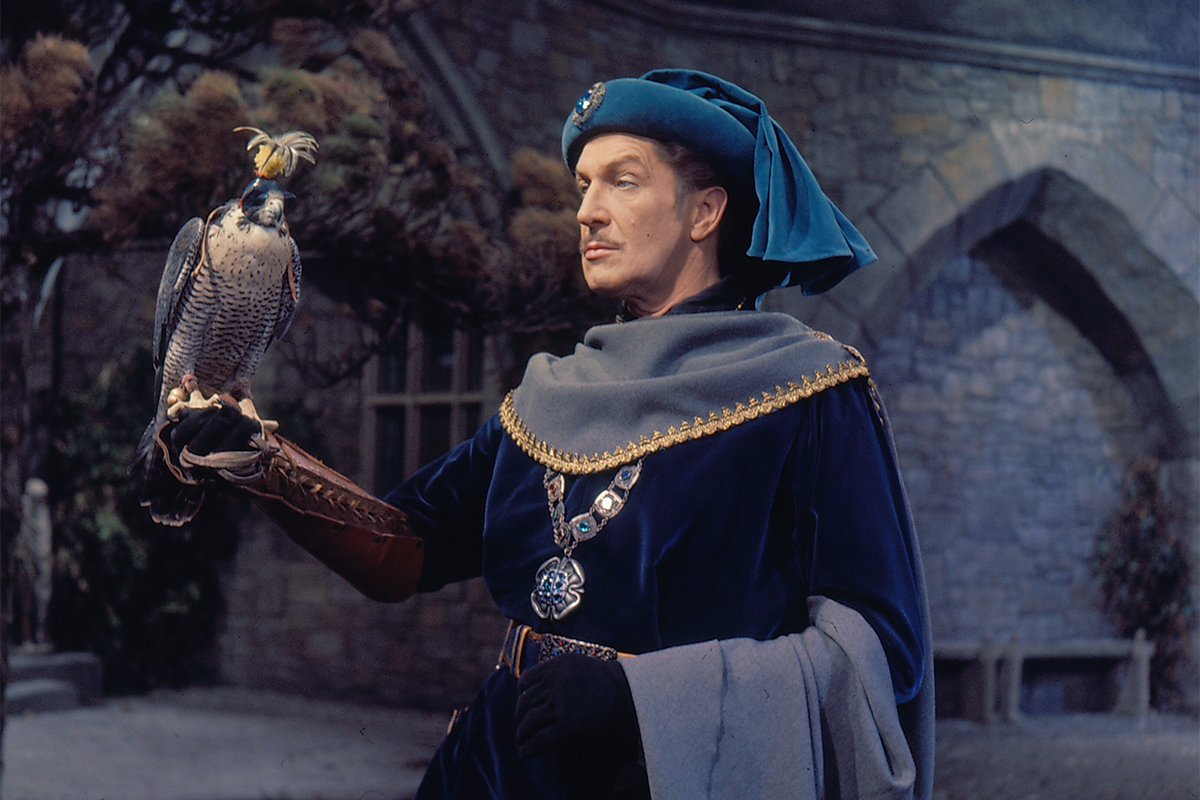
The Masque of the Red Death (1964), starring Vincent Price as a debauched Prince who humiliates and torments all who take refuge in his castle during the plague, is the pinnacle of Edgar Allan Poe films that Corman made in the 1960s. It was shot in England, where they made use of sets leftover from big-budget productions Becket (1964) and A Man for All Seasons (1966), and British cinematographer Nicolas Roeg (who went on to direct 1976’s The Man Who Fell to Earth) gave Corman his richest, most visually lavish canvas.
Back in the U.S., Corman dove into the counterculture with The Wild Angels (1966), starring Peter Fonda as the leader of an outlaw biker gang. Corman and screenwriter Griffith hired members of the local Hell's Angels chapter as extras and consultants, and Corman enlisted Peter Bogdanovich, then a film critic and historian, to revise the screenplay. He stuck around as Corman's assistant and second unit director. It was anti-establishment outlaw cinema and became a massive hit, transforming Fonda's image from nice guy romantic lead to counterculture icon. Likewise, the film kicked off a genre of biker movies and inspired Fonda and Dennis Hopper to write and direct their own picture: Easy Rider (1969).
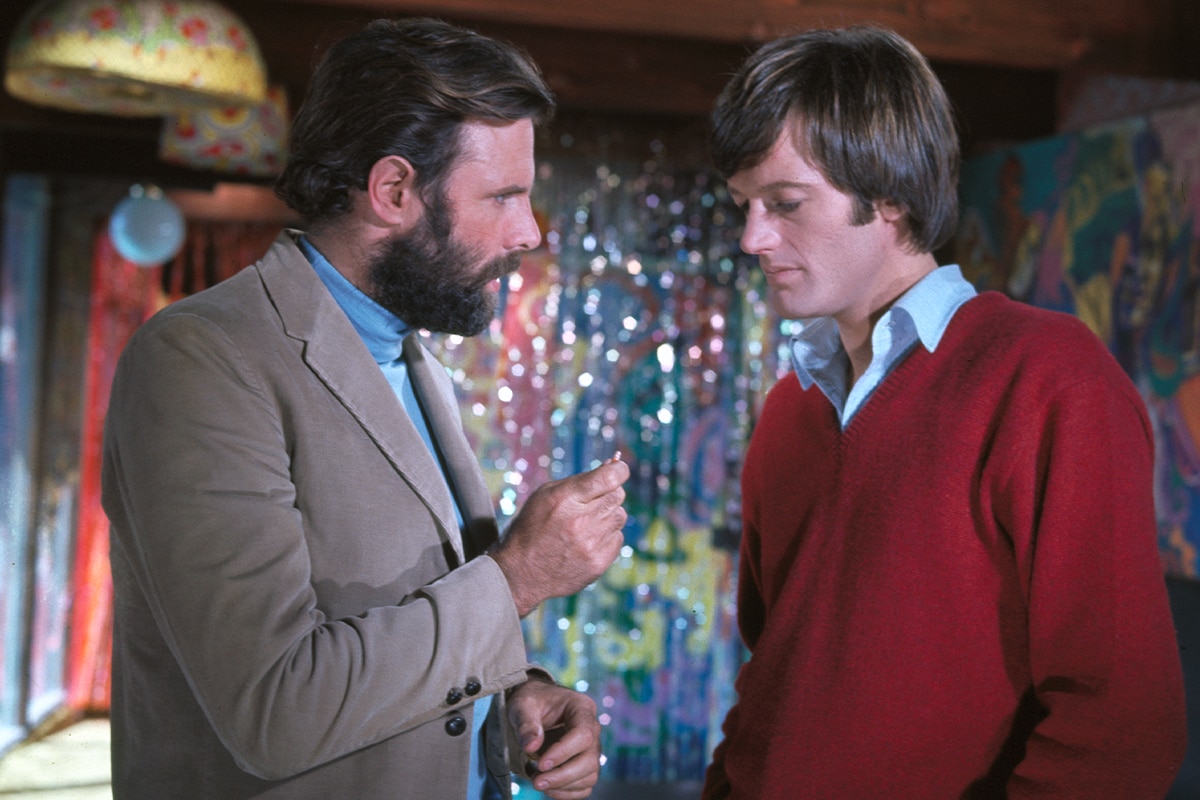
First, however, Fonda played a commercial director who drops acid and goes on a psychedelic odyssey in The Trip (1967), which was scripted by Jack Nicholson, who also accompanied Corman's "research" trip when he took LSD in preparation for directing. Corman bristled at American International Pictures president James Nicholson's post-production interference: he had added a warning of LSD’s dangerous effects, cut scenes or shots he found objectionable and betrayed Corman's original message by radically altering the ending. "I saw a pattern taking shape," Corman recalled in his autobiography. It peaked in Gas-s-s-s (1970), airing in its TCM premiere, a satire where everyone over the age of 25 is killed by an experimental military weapon. Shot on location in the American Southwest during what became a brutally cold winter, it was a difficult production made even more stressful by constant rewriting. But when AIP recut the film after Corman left to shoot his next film in Europe, it was the final straw.
In between those two counterculture films, Corman capitalized on the success of Bonnie and Clyde (1967) with Bloody Mama (1970) starring Shelley Winters as the notorious "Ma" Barker, who terrorized with her four gangster sons during the Depression. It was easily the most violent film Corman directed, and while he certainly did not glamorize these outlaws, it too was cut by AIP. Corman cut ties with AIP and formed his own production company, New World Pictures in 1970.
Friday, April 17
The festival moves from a celebration of Roger Corman as director to his accomplishments as a producer, giving promising young filmmakers their first shot at a commercial feature. The films were invariably exploitation projects, often designed around materials or opportunities at hand, but Corman gave his directors plenty of freedom as long as they remained underbudget and delivered the requisite amount of violence, nudity or sensationalistic spectacle. The list of Corman alumni who went on to great success is impressive, as the final nights illustrate.
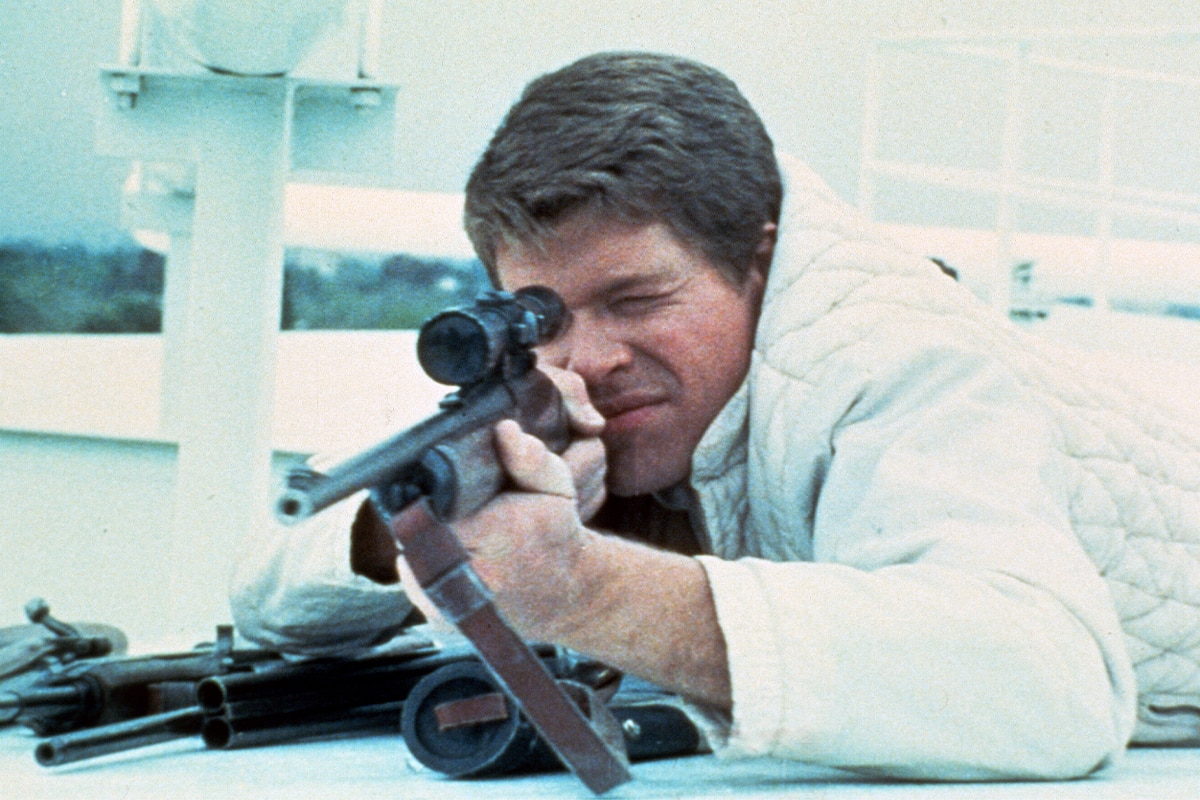
When Corman found he had the services of actor Boris Karloff for two days, he approached his one-time assistant Peter Bogdanovich with an offer: "You can write and direct our new Boris Karloff film." With the proviso that he incorporate 20 minutes of footage from The Terror (1963, which screens later in the evening), Bogdanovich created Targets (1968), a modern horror film inspired by Charles Whitman and the Texas Tower shootings. Karloff was rewarded with the best role of his late career, a retiring horror film actor whose Gothic films pale next to the terror of real-life violence.
Joe Dante got his start cutting trailers with Allan Arkush for Corman's New World Pictures and, after co-directing Hollywood Blvd. (1976) with Arkush, made his solo debut on Piranha (1978), an aquatic horror film cashing in on the success of Jaws (1975). It was the first screenplay by novelist and future filmmaker John Sayles, who worked with Dante to inject social commentary and a streak of dark humor into a nature-gone-wild horror. "It's a movie that knows it's a parody of Jaws," Dante explained in a 2015 interview. Steven Spielberg apparently got the joke, for he later hired Dante to direct Gremlins (1984) for his own company, Amblin Entertainment.
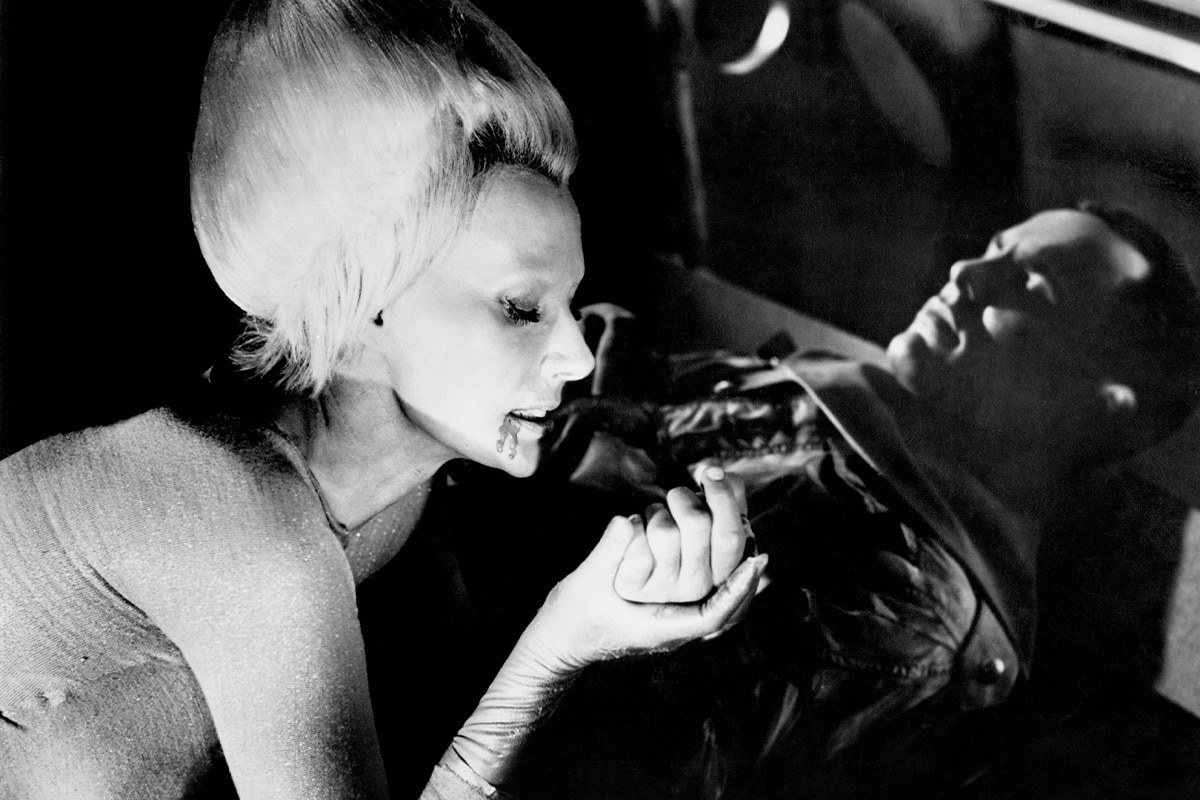
Curtis Harrington was a veteran of the avant-garde underground whose first feature, the dreamy romantic fantasy Night Tide (1964), impressed Corman. He hired Harrington to make a pair of films utilizing footage from a couple of Soviet science fiction features he had picked up. Queen of Blood (1966), featuring Basil Rathbone (whose scenes were shot in a single whirlwind day-and-a-half), reworked the Russian space adventure into an intergalactic horror film with an exotic but bloodthirsty female alien. "[I]t was very flattering to realize that I had created the prototype for a whole series of science-fiction movies dealing with monstrous creatures from outer space," Harrington wrote in his autobiography.
Francis Ford Coppola was shooting second unit on a racing film that Corman made in Ireland when he pitched a low-budget horror film to get extra mileage from the locations, equipment and core cast. Dementia 13 (1963) was cooked up in a couple of days and shot in rush with film school friends and Corman veterans. The rough cut was so incomprehensible that Corman ordered additional scenes to be written and shot (including some by assistant Jack Hill) but moments of invention and visual creativity show the talent behind the camera.
Corman immediately sent Coppola to Big Sur to shoot scenes with Jack Nicholson for The Terror (1963), a costume horror that was essentially written as it was shot. The Terror became legendary for its "too many cooks" development. Corman shot two days on standing sets from The Raven (1963) before they were dismantled, and then tasked Coppola, Monte Hellman, Jack Hill and even Jack Nicholson with directing additional scenes. An entirely new story was eventually concocted to make sense of the hodgepodge of footage.
Friday, April 24
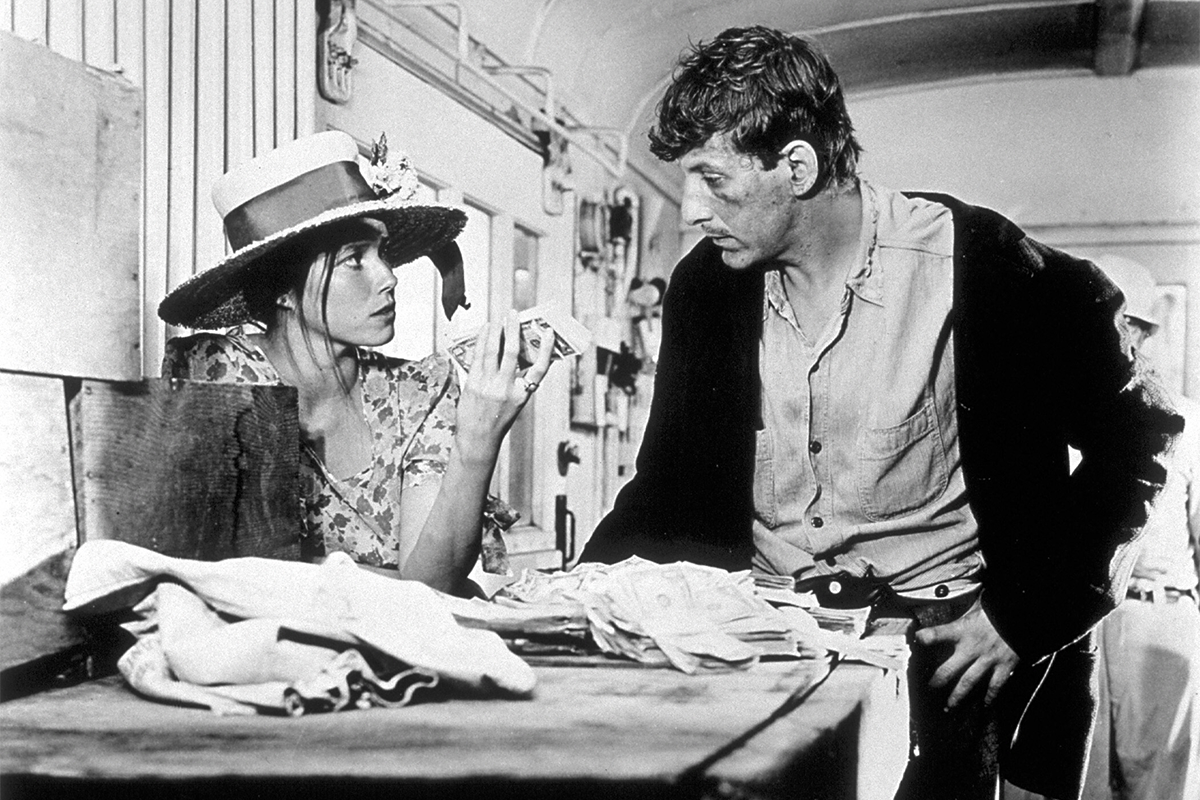
NYU Film School graduate Martin Scorsese was working as an editor in Hollywood when Corman asked him to direct Boxcar Bertha (1972), loosely adapted from the memoir of a woman who rode the rails during the Depression. Corman told him he could "rewrite as much as you want, but remember, Marty, that you must have some nudity every 15 pages." Scorsese later mused that "If I was doing Boxcar Bertha now, I would have gotten much more out of it. But it was the most fun I'd ever had on a movie."
Allan Arkush loved music as much as he did movies, and he drew on his own experiences for Rock 'N' Roll High School (1979), a high school rebellion comedy that Corman originally wanted to make as "Disco High." "You can't blow up a high school to disco music," Arkush explained to Corman, and he cast New York punk rockers the Ramones in the film. As Corman wrote in his autobiography, "My 'students' taught me something about cashing in on the thriving music [sic] late-1970s record business."
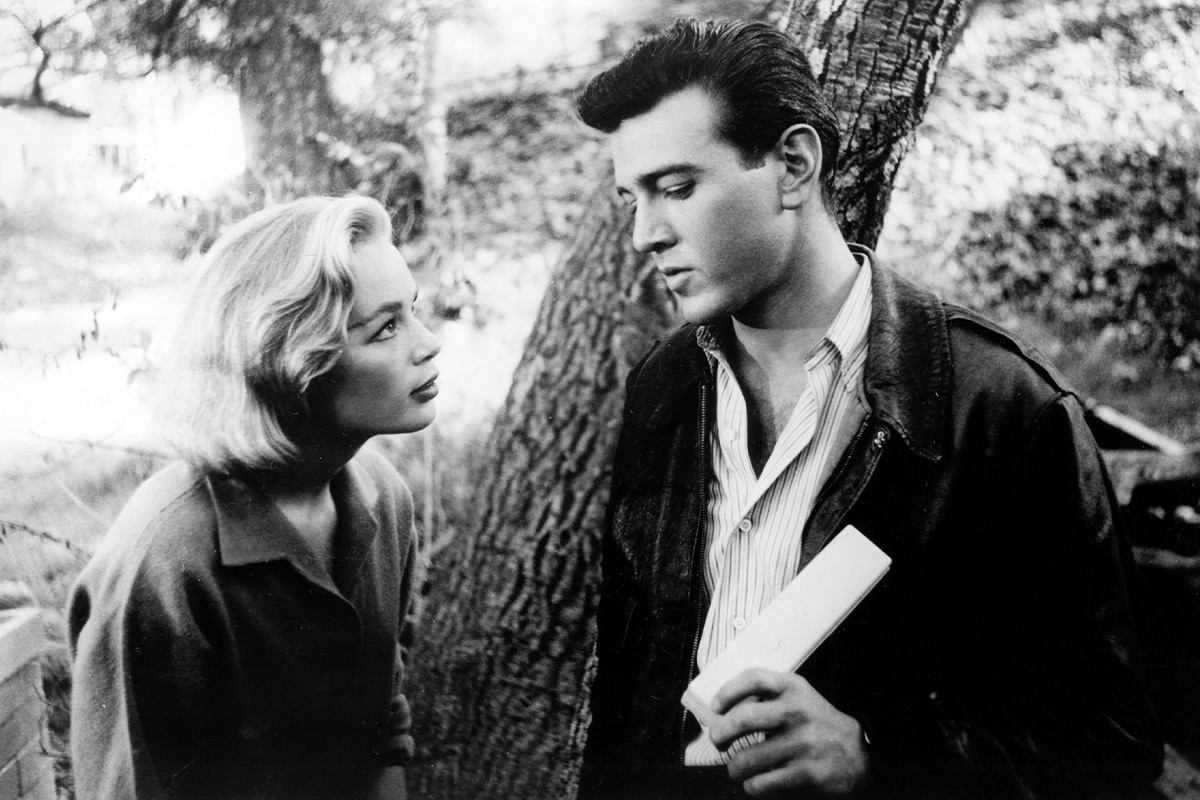
Corman was an active producer on Stakeout on Dope Street (1958), but his investment enabled director Irvin Kershner, who went on to direct such films as Eyes of Laura Mars (1978) and The Empire Strikes Back (1980), to make the leap from TV documentarian to feature filmmaker. The documentary-style drama also marked the feature debut of cinematographer Haskell Wexler (credited as Mark Jeffrey), who went on to win Academy Awards for photographing Who's Afraid of Virginia Woolf? (1966) and Days of Heaven (1978).
Monte Hellman first came to Corman's attention when he invested in Hellman's Los Angeles stage production of Samuel Beckett's "Waiting for Godot." It lost money, but Corman subsequently hired him to direct Beast from Haunted Cave (1959) on the cheap. Corman's name is not in the credits of The Shooting (1966), a Western that Hellman shot back-to-back with Ride in the Whirlwind (1966) with star and co-producer Jack Nicholson, but he financed both pictures. Despite strong reviews at international film festivals and a successful European release, it failed to land American distribution and was released directly to TV. Years later, it was proclaimed an existential Western and embraced as a cult classic.
Sources:
How I Made a Hundred Movies in Hollywood and Never Lost a Dime, Roger Corman with Jim Jerome. Random House, 1990.
On the Edge: The Life and Times of Francis Coppola, Michael Goodwin and Naomi Wise. William Morrow and Company, 1989.
Roger Corman: An Unauthorized Biography of the Godfather of Indie Filmmaking, Beverly Gray. Renaissance Books, 2000.
Nice Guys Don't Work in Hollywood: The Adventures of An Aesthete in the Movie Business, Curtis Harrington. Drag City, 2013.
They Are Eating the Guests: And Interview with Joe Dante, video interview by Uwe Huber. Koch Media, 2015.
Martin Scorsese: A Journey, Mary Pat Kelly. Thunder's Mouth Press, 1991.
Roger Corman: The Best of the Cheap Acts, Mark Thomas McGee. McFarland & Company, 1988.
Crab Monsters, Teenage Cavemen, and Candy Stripe Nurses, Chris Nashawaty, Abrams, 2013.
Scorsese on Scorsese, edited by David Thompson and Ian Christie. Faber and Faber, 1989.
AFI Catalog of Feature Films
IMDb