"That rare but rewarding thing, an intelligent Western. ... With CinemaScope and Eastman Color, [Sturges] makes Black Rock by turns ugly and attractive, and, at each turn, quite out of any civilized world. His drama is cool as a knife blade."
- “Newsweek,” January 1955
"Spencer Tracy, the rock-firm, middle-aged stranger, acts with enormous conviction in a well-nigh perfect performance."
- Charlotte Bilkey Speicher, “Library Journal,” January 1, 1955
"Spencer Tracy gives a masterful performance as the mysterious stranger."
- Philip T. Hartung, “Commonweal,” January 14, 1955
"Lee Marvin is alarmingly mean as a steely, easy-going plotter....Robert Ryan, as the chief villain, has some fine scenes with Tracy, who is at his best."
- Time, January 17, 1955
"The menace of these swaggering desert roughnecks is nonetheless creeping and cold. And the battle that Mr. Tracy puts up to save his hide is dramatically taut. When he comes out, it is obvious that not only valor but justice has prevailed."
- Bosley Crowther, The New York Times, February 2, 1955
"The obvious picture of comparison is High Noon (1952). Both are suspense thrillers with an evident moral; both center upon the behavior of a man isolated by mortal danger; both work toward a blazing climax through an atmosphere of hair-trigger calm. The new picture is the better by a variety of measurements. Spencer Tracy offers a more complex, contradictory, witty, and therefore more interesting interpretation than did Gary Cooper."
- Robert Hatch, Nation, February 19, 1955
"Considerable excitement is whipped up in this suspense drama, and fans who go for tight action will find it entirely satisfactory. Besides telling a yarn of tense suspense, the picture is concerned with a social message on civic complacency....There's not a bad performance from any member of the cast, each socking their characters for full value."
- Variety, 1955
"This is one of the finest motion pictures ever made. ... You are a victim of suspense, and you are not an easy victim because you feel yourself not to be a person in an audience, but a spectator in the action at Black Rock. You feel the heat and aridity of the desert; you want to know what shameful thing is eating the inhabitants of this town. And above all you want to know what's going to happen."
- Novelist John O'Hara, 1956
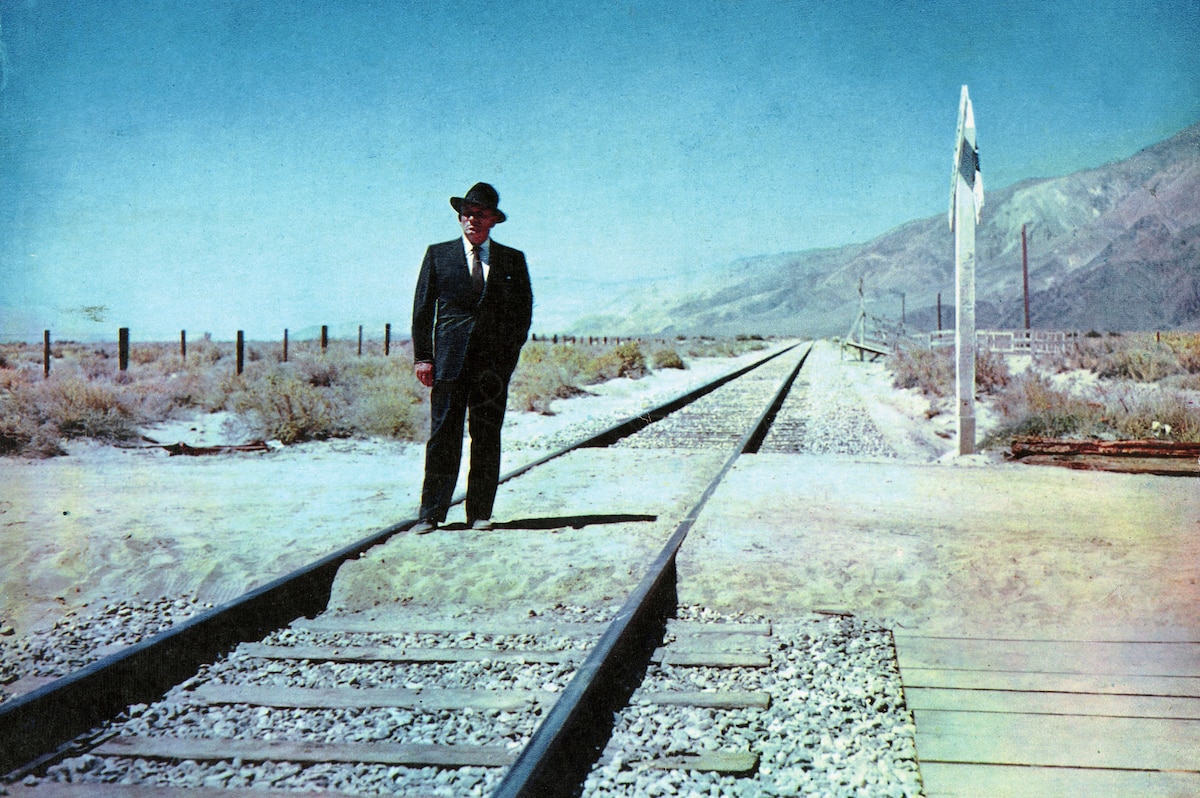
"Though Bad Day at Black Rock is crudely melodramatic, it is a very superior example of motion picture craftsmanship. The director, John Sturges, is at his besteach movement and line is exact and economical; the cinematographer, William C. Mellor, uses CinemaScope and color with intelligent carethe compositions seem realistic, yet they have a stylized simplicity. In part because of this, when the violence erupts, it's truly shocking."
- Pauline Kael, “5001 Nights at the Movies”
"I love everything about this film: the little guy in the black suit with his hand in his pocket, the aura of dread...the bar fight. That's probably the best bar fight ever. It's a thriller that's about everything."
- Director William Friedkin
"Nicely put together by Sturges, its suspense derives largely from the excellent performances and imaginative use of the 'Scope frame by cameraman William C. Mellor."
- Geoff Andrew, Time Out, January 26, 2006
"Although Bad Day at Black Rock is a film about racial prejudice against Japanese Americans, no Japanese Americans actually appear on screen. True to the formula of the Hollywood social problem film, the film centers on a heroic white male character exposing bigotry, hegemonically asserting that white patriarchal capitalist culture is a cure for racism, and not a cause."
- Harry M. Benshoff and Sean Griffin, “America on Film: Representing Race, Class, Gender, and Sexuality at the Movies”
Additionally, this film has received the following awards and/or honors:
Bad Day at Black Rock won Academy Award nominations for Best Actor (Spencer Tracy), Director (John Sturges) and Screenplay (Millard Kaufman)
Other honors included:
British Academy Film Award nominations for Best Film and United Nations Award, Winner of the Cannes Film Festival Best Actor Award (Tracy) and nominee for Golden Palm (John Sturges),
Directors Guild of America nomination for Sturges and a Writers Guild of America nomination to Millard Kaufman
It was included on The New York Times 10 Best Movies list for 1955 and named one of the Best American Films by the National Board of Review