"It is pleasing to see a story that was held at arm's length for ten years finally come in as a picture which is not only 'moral' but brilliant to boot...The lesson is, we would proffer, that a film need not be obscene in order to give a comprehension of a carnal and sordid side of life."
- Bosley Crowther, The New York Times.
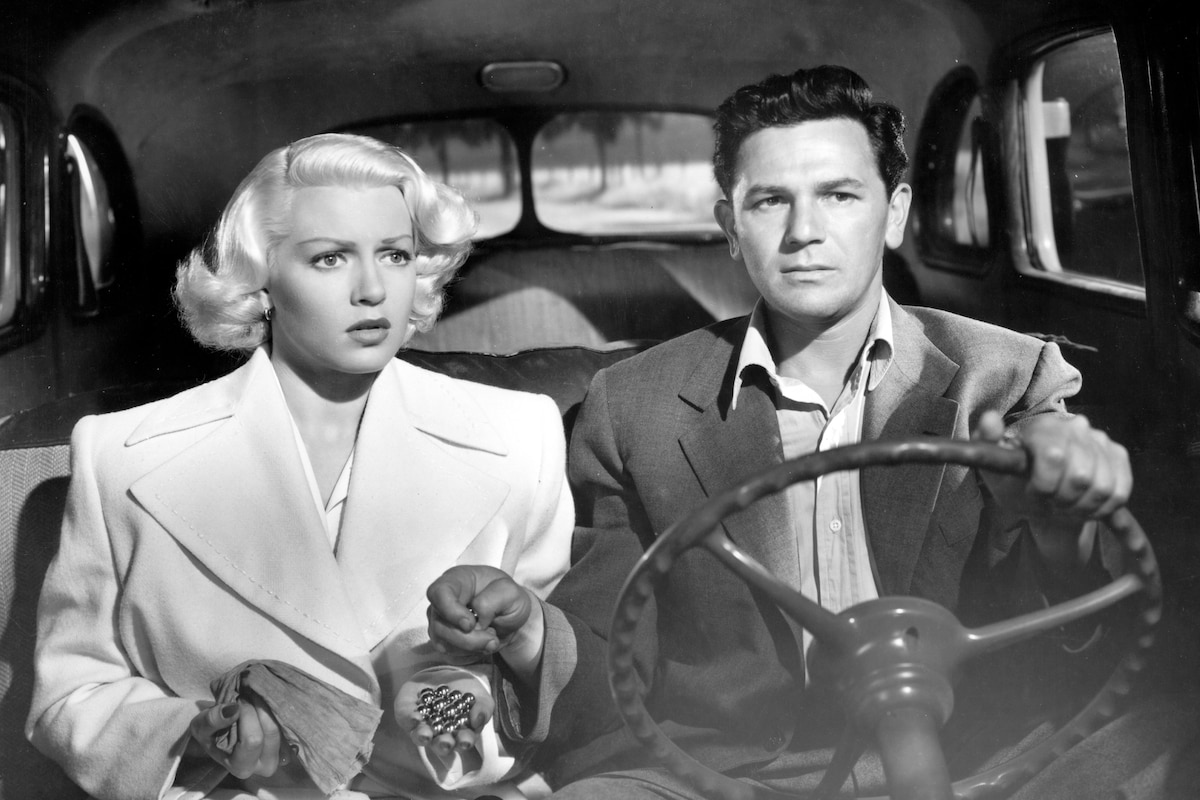
"One of the astonishing excellences of this picture is the performance to which Lana Turner has been inspired....if it is possible not to be dazzled by that baby beauty and pile of taffy hair, you may agree that she is now beginning to roll in the annual actress' sweepstakes."
- Alton Cook, The New York World-Telegram
"Entertaining, though overlong. The director, Tay Garnett, knew almost enough tricks to sustain this glossily bowdlerized version of the James M. Cain novel, and he used Lana Turner maybe better than any other director did. Cain's women are, typically, calculating, hot little animals, and his men doom-ridden victims. Here, Lana Turner's Cora -- infantile in a bored, helpless, pre-moral way -- is dressed in impeccable white, as if to conceal her sweaty passions and murderous impulses...."
- Pauline Kael, “5,001 Nights at the Movies”
"The Postman Always Rings Twice is mainly a terrible misfortune from start to finish. I except chiefly the shrewd performances of Hume Cronyn and Leon Ames, as lawyers. I say it with all respect for the director, Tay Garnett, and with all sympathy for the stars, Lana Turner and Garfield. It looks to have been made in a depth of seriousness incompatible with the material, complicated by a paralysis of fear from the front office. It is, however, very interesting for just those reasons it is what can happen, especially in Hollywood, if you are forced to try both to eat your cake and have it, and don't realize that it is, after all, only good pumpernickel."
- James Agee
"Evil and corruption lie just below the surface of the mundane in The Postman Always Rings Twice...James M. Cain's novel of treachery and murder becomes a classic vision of the noir films' ability to depict amour fou, a love which goes beyond the bounds of normal relationships."
- Ellen Keneshea & Carl Macek, “Film Noir: An Encyclopedia Reference to the American Style”
"Tay Garnett's adaptation of the sordid story of adultery and murder gave American parochial justice a grim touch of truth, in spite of lapsing into a sentimental ending."
- “The Oxford Companion to Film”
"Development of the characters makes Tay Garnett's direction seem slowly paced during the first part of the picture, but this establishment was necessary to give the speed and punch to the uncompromising evil that transpires...The writing is terse and natural to the characters and events that transpire."
- Variety
"Garfield and Turner ignite the screen in this bristling drama...the film packs a real punch and outshines the more explicit 1981 remake."
- “Leonard Maltin's Movie Guide”
"...it is hard to believe that a more accomplished actress [than Turner] could have expressed so much about the uneasy pursuit of respectability."
- David Thomson, The New Biographical Dictionary of Film
"Pale shadow of Double Indemnity [1944], efficient but not interesting or very suspenseful."
- Halliwell's Film & Video Guide
"...The plot gathers slack latterly; but this is only a minor flaw in a film, more grey than noir, whose strength is that it is cast as a bleak memory in which, from the far side of paradise, a condemned man surveys the age-old trail through sex, love and disillusionment."
- Tom Milne, TimeOut Film Guide
"..one of the best film noirs of all time - and one of the earliest prototypes of today's 'erotic thrillers.'
- Tim Dirks, The Greatest Films
"This film version of The Postman Always Rings Twice retains the convoluted turns of Cain's plot, but already seems a derivative retelling of stock elements, instead of ground zero for the classic noir femme fatale saga."
- Glenn Erickson, DVD Savant