"Sumptuous Technicolor mounting and a highly exploitable story lend considerable importance to Leave Her to Heaven that it might not have had otherwise. Script based on Ben Ames Williams' bestseller has emotional power in the jealousy theme but it hasn't been as forcefully interpreted by the leads as it could have been in more histrionically capable hands."
- Variety
"Miss Tierney's petulant performance of this vixenish character is about as analytical as a piece of pin-up poster art. It is strictly one-dimensional, in the manner of a dot on an I. And Cornel Wilde is equally restricted as her curiously over-powered spouse. Jeanne Crain is colorless and wooden as the sister with whom he eventually finds bliss, and Vincent Price, Mary Philips and Darryl Hickman mechanically play other roles. Only the sets are intriguing, being elaborate and gadgety."
- Bosley Crowther, The New York Times
"No amount of strenuous plot trouble—or even a long fall down a flight of steps—seems to jar Gene Tierney's smooth deadpan. Walking or sleeping, in ecstasy or anger, joy or sorrow, her pretty, composed features seem to be asking the single gamin-and-spinach question: 'Huh?'"
- James Agee, Time magazine
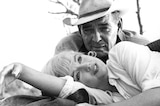
"Gothic Psychologizing melodrama, so preposterously full-blown and straight-faced that it's a juicy entertainment....There are scenes to cherish: Ellen impassively watching her brother-in-law drown; Ellen flinging herself down a flight of stairs to terminate an annoying pregnancy; Ellen going lickety-split on a charger, tossing her father's remains around the Technicolored New Mexico landscape...."
- Pauline Kael, “5,001 Nights at the Movies”
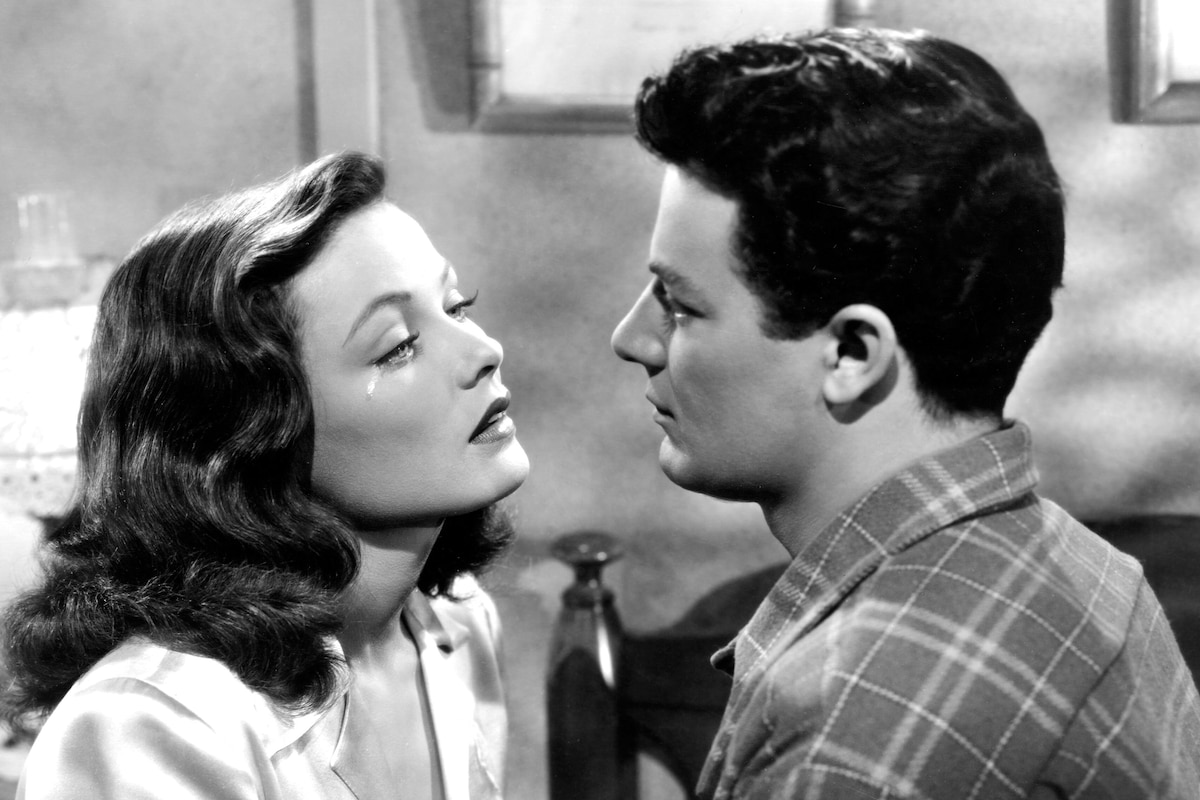
"The success of Leave Her to Heaven belongs foremost to Gene Tierney. She was much more than Hollywood's most beautiful overbite. She had the preternatural ability to be alluring and icy at the same time; she could change emotional colors with magnificent yet subtle clarity. Wasn't she sweet and warm a moment ago? Maybe, but now she's ready to kill."
- Matthew Kennedy, “Bright Lights Film Journal”
"[Director John] Stahl, nearing the end of a career that stretched back to silent films, is best known today for directing a trio of classic 1930s 'women's pictures' such as Imitation of Life [1934] that were remade in color in the 1950s by Douglas Sirk. Stahl's use of space and the performances in Leave Her to Heaven, his only color film and Fox's most popular film of the 1940s, suggest he was at least the equal of the much-exalted Sirk as an artist of melodrama."
- Lou Lumenick, The New York Post
"[Technicolor] reached its astounding apogee in the lips of Gene Tierney, as red as a witch's apple. Each frame of her seems to be hand-tinted, as if she had ordered it. Her soft voice dies to a low whisper at the close of every phrase. 'I don't want anybody else to do anything for you,' she tells her husband. And with that, the great conservative promise of postwar domesticity—the man, newly arrived or returned, waited upon by his woman—tightens into a threat."
- Anthony Lane, The New Yorker
"A ‘film noir in color’ (per Martin Scorsese) and a masterpiece of post-WWII American cinema (premiering just months after the August 14 armistice)...The onscreen melo boils, but director John M. Stahl's gaze remains spare and precise, very Japanese in its effects, like an acidic fusion of Ozu and Naruse. (A few of Tierney's gowns, stained with psychic-wound red streaks, even resemble kimonos.)"
- “The TimeOut Film Guide”
"The beautiful Tierney betrays her lovely countenance by playing one of the most evil creatures ever to slink across the screen....Tierney is fascinating as the ravishing killer, but Wilde and Crain are too tame by comparison. Price is his usual flamboyant self. Stahl's direction is well done, and the lensing by Shamroy in rich color is lush and eye-pleasing, the focus soft enough in the location shots in Arizona, Georgia, and Maine to qualify as film noir.
- TV Guide
Additionally, this film has received the following awards and/or honors:
Leave Her to Heaven was nominated for four Academy Awards including Best Actress (Tierney); Best Art Direction-Interior Decoration, Color; Best Sound, Recording; and Best Cinematography (Leon Shamroy) which won the Oscar.