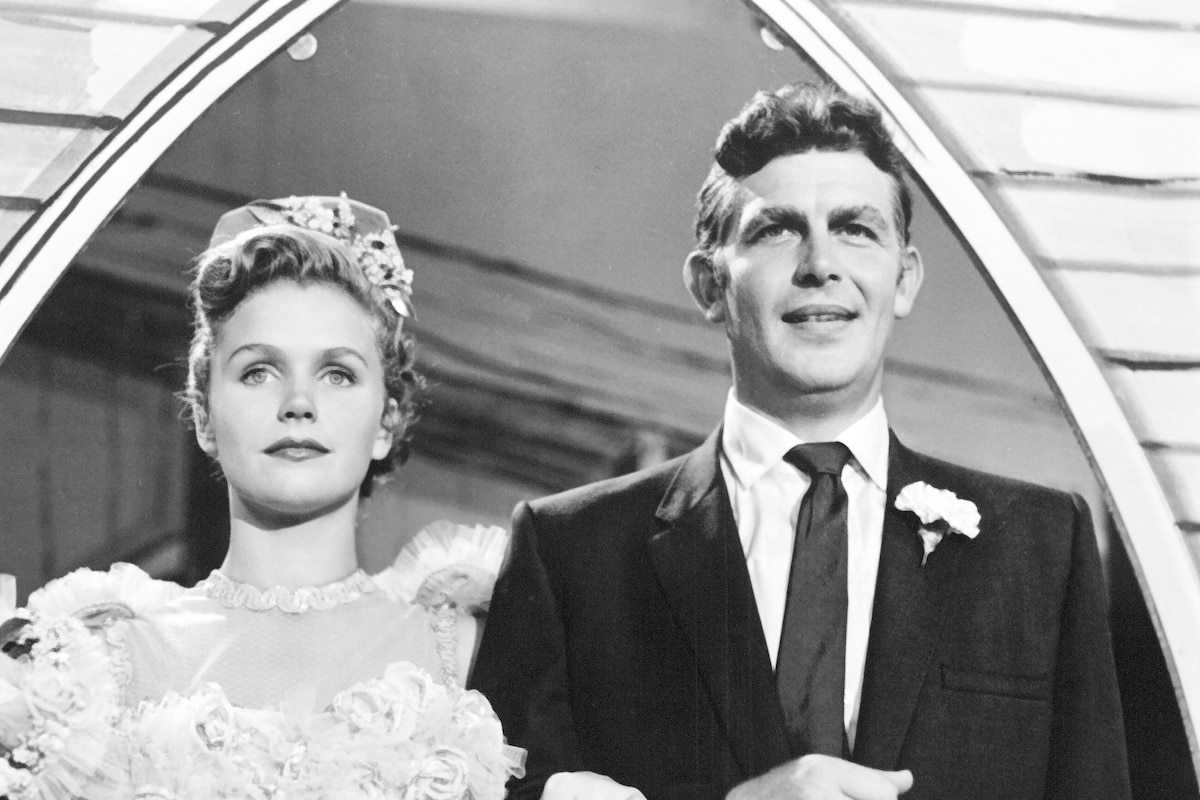
At the time of its release, A Face in the Crowd received a mixed reaction from the public and critics alike. Both its style and content were criticized as exaggerated, which is ironic, given the fact that film seems just as relevant today as it did nearly 50 years ago.
Elia Kazan later stated in Michel Ciment's interview book, “Kazan on Kazan,” that A Face in the Crowd "was in advance of its time. It foretells Nixon. I don't think it was about [Joseph] McCarthy particularly...The first part of A Face in the Crowd is more of a satire, and the second part tends to really involve you with Lonesome's fate and with his feelings... What I like in the film is the energy and invention and bounce which are very American. It's really got something marvelous about it, this constantly flashing, changing rhythm. In many ways, it's more American than any picture I ever did. It represents the business life, and the urban life, and the way things are on television, the rhythm of the way this country moves. It has a theme that even today is completely relevant."
The entry on A Face in the Crowd in “The Oxford Companion to Film,” edited by Liz-Anne Bawden, states that "the inherent dangers of personality-building, and the exploitation of the gullible viewing public, were exploited with humour, bitterness, and sharp observation."
In “Guide for the Film Fanatic” by Danny Peary, the author wrote, "Lonesome Rhodes is guilty of taking advantage of the medium—through which you can fool all the people all of the time—but Schulberg is attacking us, the ignorant public who sits like sheep and believes whatever it sees on the tube. The scary thing is that if today Rhodes were caught expressing his real thoughts while thinking the mike was off, his popularity would probably go up—which is what happened to Reagan each time he said something hostile when he thought his radio mike was off. A well-made film; with strong performances by Neal and Griffith whose character is on the surface similar to the one he played on his television comedy series."
In “Magill's Survey of the Cinema,” Caroline McFeeley wrote, "If A Face in the Crowd ends in melodrama, it is nevertheless highly effective satire, exposing the actual workings of an industry which has continued to demand attention for sparse entertainment and high levels of abuse."
Heather Joslyn of the “Baltimore Citypaper Online” wrote: "Some of director Elia Kazan's hard-hitting, issue-oriented movies of the '40s and '50s seem hopelessly stiff and sanctimonious today (Seen Gentleman's Agreement lately? Didn't think so.), but this raw, underappreciated drama keeps getting better. Maybe that's because it's proved so prophetic. There are echoes of Elvis Presley, Richard Nixon, Ronald Reagan, Bill Clinton, Oprah Winfrey and just about every TV pundit and celebrity flavor-of-the-month in Lonesome Rhodes (Andy Griffith), a no-account hillbilly singer who becomes a radio star, then a TV star, then a national folk hero, then a political figure, and eventually a monster."
But not everyone thinks so highly of Elia Kazan's work. For instance, critic Andrew Sarris does not hold A Face in the Crowd in high regard. In his book “The American Cinema: Directors and Directions, 1929-1968,” he placed director Kazan in the chapter "Less Than Meets the Eye" and doesn't even mention A Face in the Crowd in the course of his assessment of the director's career.