Thursday March 19 | 5 movies
Every year, the Library of Congress chooses 25 films to be inducted into the National Film Registry. The films are chosen based on nominations from the public, which are then narrowed down by the National Film Preservation Board to a selection of titles that are deemed "culturally, historically, or aesthetically significant.” Not only are these films considered the best of American cinema, but they’re also marked for preservation to help secure their legacy. TCM will be screening a sampling of the newly selected films as well as a documentary about the history of film preservation.
Ten Nights in a Barroom (1926)
Based on the temperance novel by Timothy Shay Arthur and stage adaptation by William W. Pratt, Ten Nights in a Barroom (1926) stars Charles Gilpin as Joe Morgan, a mill worker whose descent into alcoholism results in a personal tragedy and ultimately causes him to turn a new leaf. This story about the dangers of drink and the transformative power of sobriety was perfectly suited for the Prohibition Era. What makes this 1926 adaptation of this story stand out from the others that preceded it—including a short, a serial and two feature-length adaptations by Lee Beggs and Oscar Apfel—was its all-Black cast.
A cottage industry of independent production companies making films outside of the studios and for more niche markets was an integral part of the silent film era. The Lincoln Motion Picture Company and Oscar Micheaux’s Film Corporation were in the business of creating “race movies” targeted to Black audiences. In 1926, performer and entrepreneur Sherman H. Dudley co-founded the Colored Players Film Corporation of Philadelphia with businessmen David Starkman and Louis Groner and film director Roy Calnek. They saw a need for films that were devoid of Black stereotypes or minstrel-like performances, were made on expensive sets with top talent and included stories that were both uplifting and enlightening.
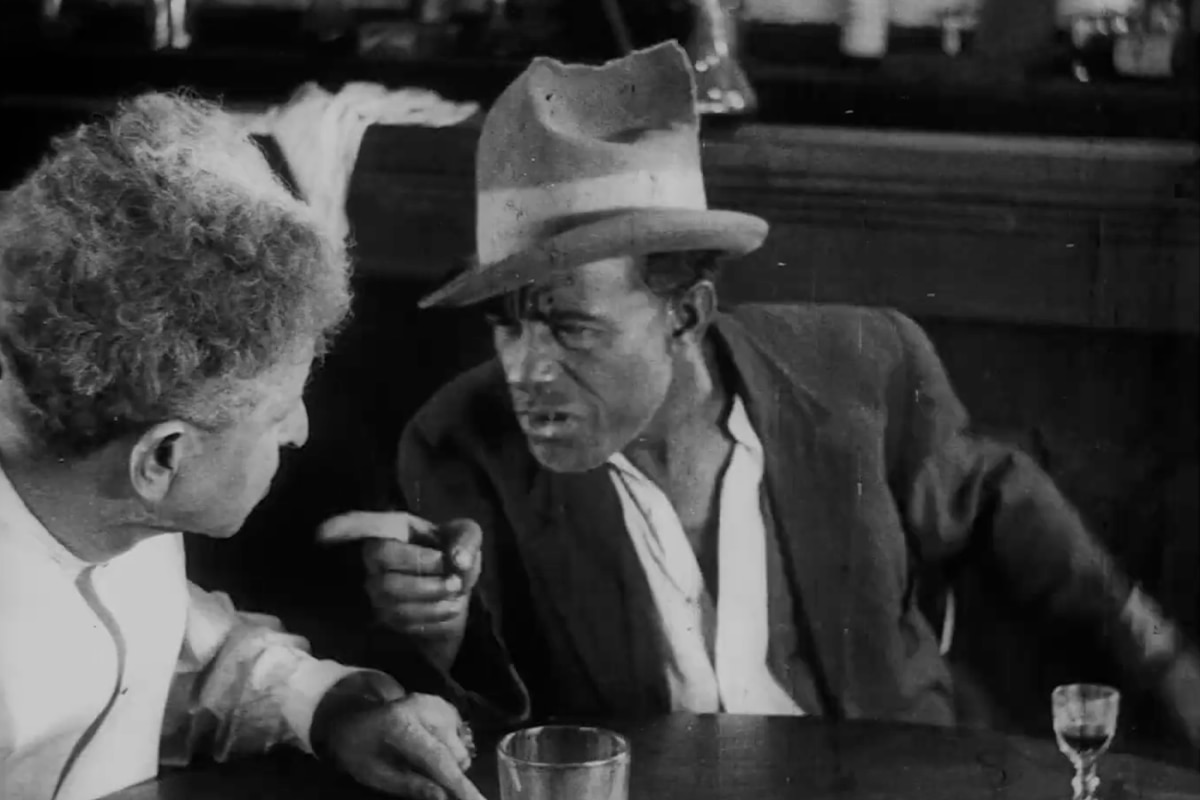
According to a 1926 edition of The Film Daily, the corporation had “a fully-equipped studio, laboratory and plans to make 10 feature films along with a series of ‘two-reel juvenile comedies.’” The niche industry of race movies was very competitive and financing was hard to come by. Despite their ambitious plans, Colored Players only made four feature films, two of which, including Ten Nights and The Scar of Shame (1929), are known to exist. Ten Nights in a Barroom has since been preserved by the George Eastman Museum and released by Kino Lorber as part of their Pioneers of African-American Cinema collection.
High Society (1956)
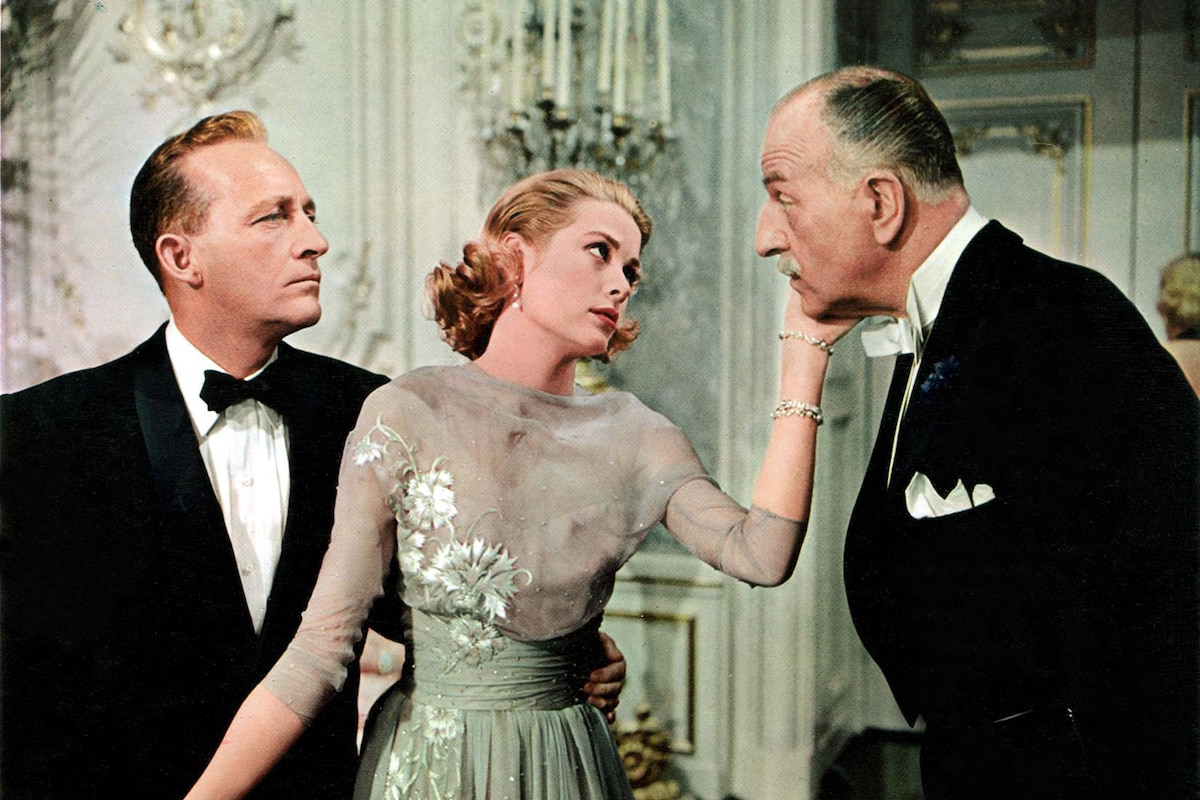
The release of High Society (1956), MGM’s Technicolor musical remake of the hit comedy The Philadelphia Story (1940), was a momentous occasion in the entertainment industry. In a time when movie studios faced fierce competition from television, reviving popular stories with a new aesthetic and casting top talent were weapons movie studios used when faced with competition from television. When studio executive Sol C. Siegel moved from 20th Century-Fox to MGM, he made this adaptation one of his first projects. Directed by Charles Walters, High Society puts Bing Crosby, Grace Kelly and Frank Sinatra in the roles made famous by Cary Grant, Katharine Hepburn and James Stewart, respectively, but moves the setting to posh Newport, Rhode Island. The story follows a divorced socialite caught in a love triangle between her mischievous ex-husband (Crosby) and the reporter (Sinatra) tasked with covering her wedding to a stodgy fiancé (John Lund). Original songs by Cole Porter and the addition of jazz legend Louis Armstrong elevated the prestigious production.
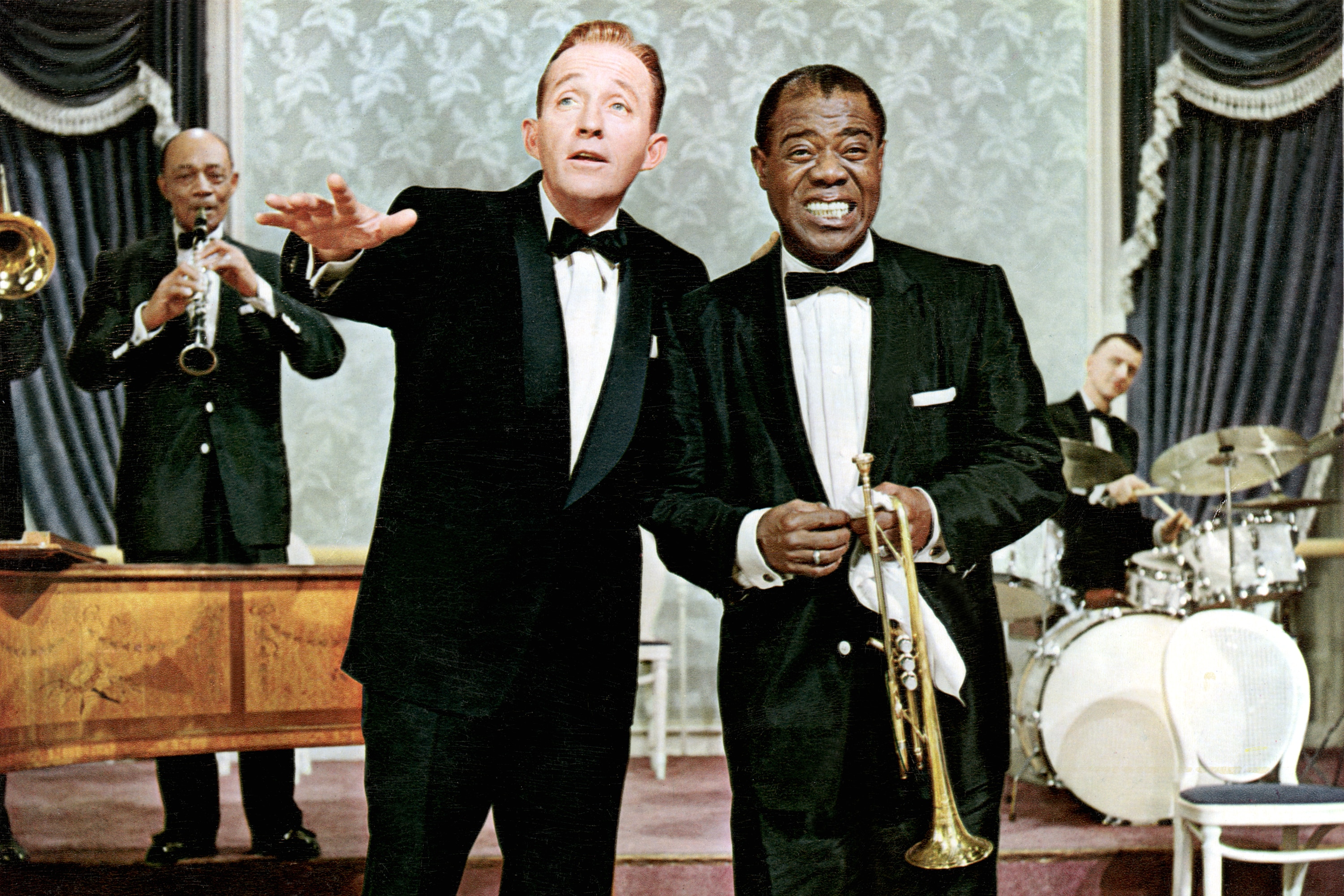
According to Charles Walters biographer Brent Phillips, “the announcement that Crosby, Sinatra and Armstrong were to appear together in a motion picture was more than significant. It was an anticipated milestone in music history.” Sinatra was riding the wave of his successful comeback and about to enter his Rat Pack era. Although they had been working together since the late 1920s, Crosby and Armstrong became best known as a jazz duo in the 1950s with hit songs like “Gone Fishin’.” The role of C.K. Dexter-Haven was changed to that of a music promoter organizing the Newport Jazz Festival, which happened to coincide with Tracy Lord’s upcoming nuptials. In just a few years, the newly formed jazz festival would be the subject of the documentary Jazz on a Summer’s Day (1959), which, alongside The Philadelphia Story, was also a National Film Registry selection.
High Society was Grace Kelly’s final feature film. At the time of filming, she was already engaged to Prince Rainier of Monaco and wore her real engagement ring during the production. Production wrapped in March of 1956, and by April she was married. While there were talks of her continuing her acting career, Kelly’s final work was promoting High Society, and she gracefully exited the industry for her new life as royalty.
Say Amen, Somebody (1982)
When independent documentarian George T. Nierenberg was looking for his next subject, blues guitarist Ry Cooder suggested gospel singers. Say Amen, Somebody (1982) was the first documentary to focus on gospel music and its importance in Black culture. According to the American Film Institute, Nierenberg believed “he was able to offer a ‘fresh point of view’ on the subject due to his lack of familiarity with the music.” He and his wife spent a year visiting churches and looking for gospel singers who would make good subjects for his film. He chose the vibrant Mother Willie Mae Ford Smith and the self-proclaimed “father of gospel music,” Reverend Thomas A. Dorsey.
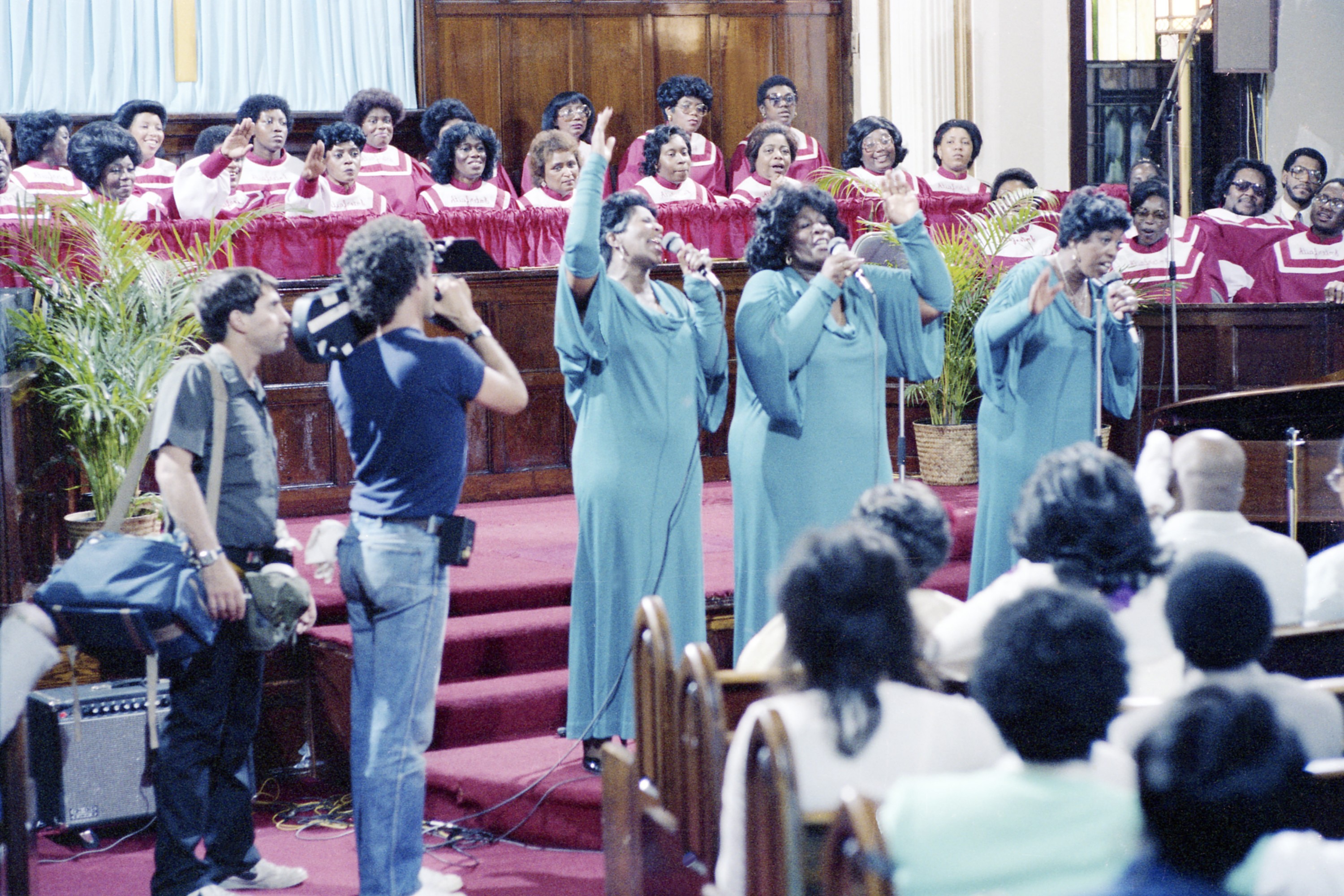
Nierenberg went from simply being an outsider to becoming fully immersed in the culture of Black churches. Say Amen, Somebody is a tapestry of both emotional and surprising moments that build the story not only of its two main subjects but of a tight-knit community. About his filmmaking style, Nierenberg said, “It's my role to find the story,” an approach different from other documentarians who believed in observing and not interfering. Say Amen, Somebody received funding from the National Endowment for the Humanities and the Arts, as well as the Missouri Arts Council.
In 2019, Nierenberg supervised a restoration of the documentary in collaboration with the Smithsonian, the Academy of Motion Picture Arts and the Center for African American Media Arts, among other organizations.
Before Sunrise (1995)
Directed by the ever-versatile Richard Linklater, Before Sunrise (1995) stars Ethan Hawke and Julie Delpy as strangers who meet on a train and impulsively go on a romantic adventure in Vienna. Unfolding almost in real time, the film captures a love story through conversation and intimate moments while still leaving enough ambiguity to keep the audience guessing. Before Sunrise was inspired by Linklater’s encounter with a young woman in Philadelphia and co-writer Kim Krizan’s chance meeting with a Norwegian man on a Paris-bound train. The film was intended to be a collaborative experience. Linklater felt it necessary to have a female scriptwriter to give the story a woman’s perspective. It also took him six months to cast the two leads because he wanted actors who would be fully involved in the filmmaking process. Both stars contributed to the script, although there are differing accounts from both Delpy and Krizan about how much input the actors had with the dialogue. Before Sunrise has a seemingly improvisational style but was actually quite scripted and controlled.
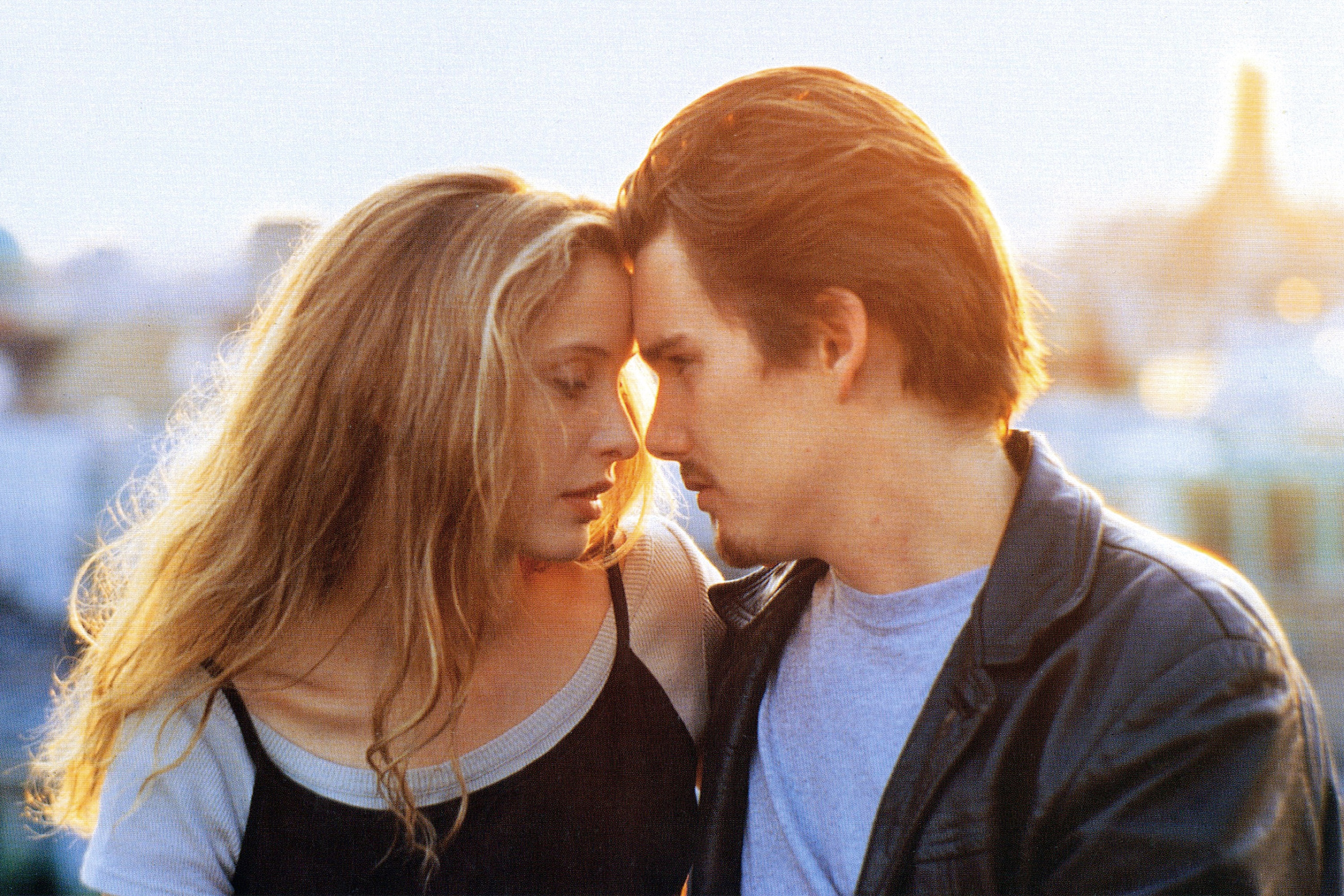
According to Linklater, Before Sunrise was made on a $3 million budget, which was a step up from his microbudget cult classic Slacker (1990) and a step down from his ensemble comedy Dazed and Confused (1993). Interest in Before Sunrise and involvement from Krizan, Hawke and Delpy led to two sequels, which formed the “Before Trilogy.” Before Sunset (2004) reunites the pair in Paris, and Before Midnight (2013) follows the couple in Greece.
The film launched Linklater’s longtime collaboration with star Ethan Hawke, who has starred in several of his films, including Linklater’s Academy Award-nominated Boyhood (2014) and the recent Lorenz Hart biopic Blue Moon (2025). Over the years, Linklater’s unique approach to filmmaking, with evolving styles and his fascination with capturing the passage of time, has made him a beloved figure among cinephiles. In an interview with the British Film Institute, Linklater said, “Before Sunrise was a big departure… I hope every film is. It keeps you curious.”
Film: The Living Record of Our Memory (2021)
Directed by Inés Toharia Terán, Film: The Living Record of Our Memory (2021) is a two-hour ode to the importance of film preservation. This documentary explores the concept of archived film as a collected memory and spotlights the work that archivists and collectors have done to save the history of this art form. It’s estimated that 80% of all silent films are gone and that much of our early film history has been destroyed due to fire or improper storage. Access, preservation, restoration and education have been key elements in protecting film’s legacy.
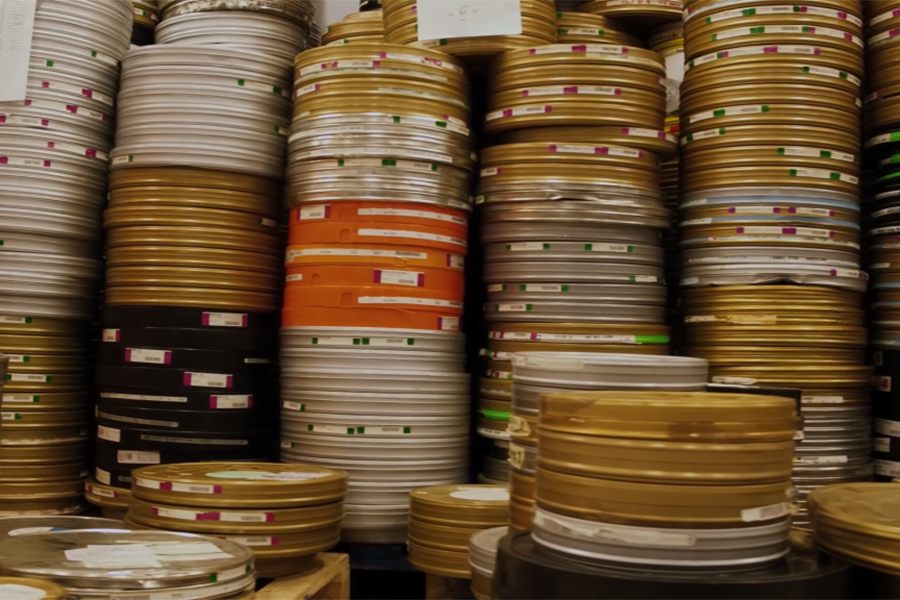
The documentary includes many interviews with filmmakers like Bill Morrison, Costa-Gavras, Fernando Trueba, Ken Loach and Wim Wenders as well as film historians, preservationists, archivists, curators, cinema directors and distributors. Included in the documentary is a look at the work at the Library of Congress’s Packard Campus for Audio-Visual Conservation, including the formation of the National Film Registry as well as their Mostly Lost workshop, which recruits experts to help identify rare films that would otherwise languish in obscurity.