March 16 | 5 Movies
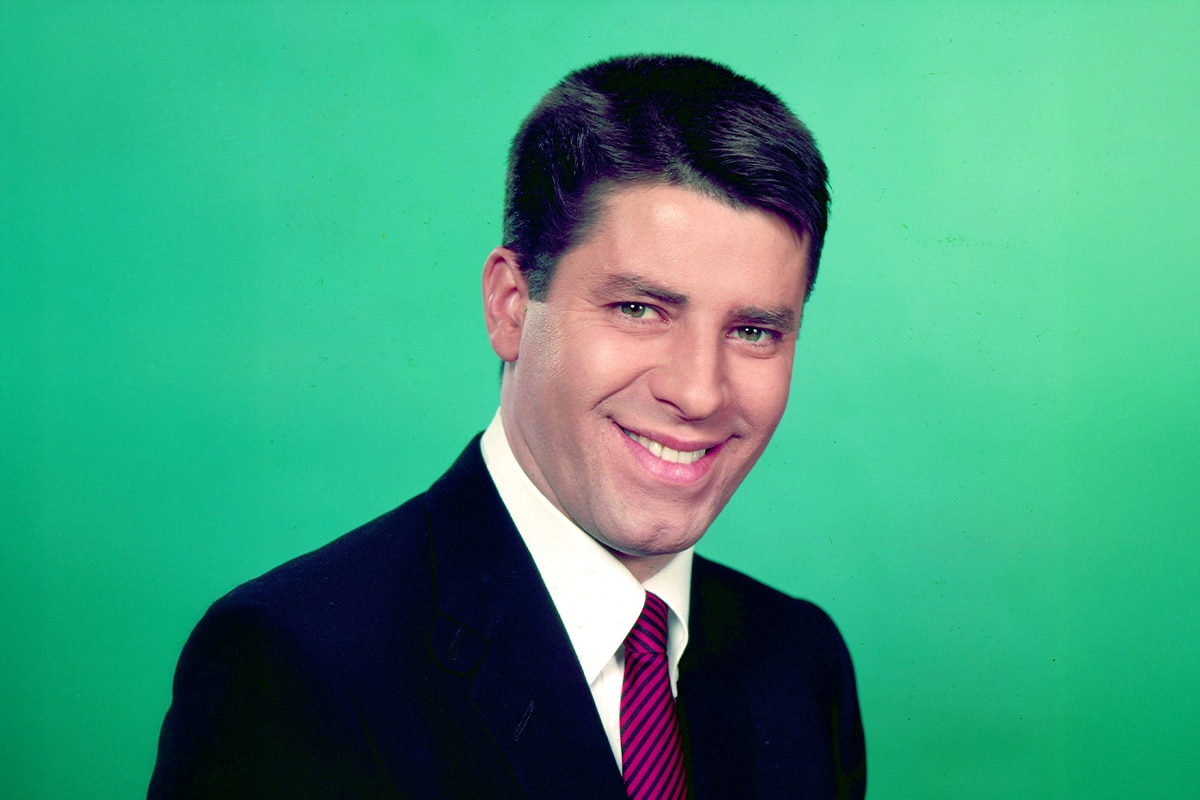
Show business was literally in Jerry Lewis’s blood. Born Joseph Levitch on March 16, 1926, in Newark, New Jersey, he was the son of vaudevillians who were often away on tour. During one of his father’s shows at a Borscht Belt resort, five-year-old Lewis was brought out to sing “Brother, Can You Spare a Dime.” At the end of the song, the child’s foot slipped, causing a footlight to explode. “I heard myself get my first laugh from an audience. And I liked the laugh I got better than the applause I got.” His formal education ended in his freshman year of high school, when he was expelled for knocking out one of his principal’s teeth for calling him a “dumb Jew.” At 16, Lewis was determined to enter show business, creating a lip-syncing act that became so popular, he was soon performing in burlesque theaters and nightclubs, despite his father’s objections. TCM celebrates his career of laughs with a night of films starring the indelible comedian on March 16 at 8pm ET.
In 1944, Lewis struck up a casual friendship with singer Dean Martin, and over the next two years, he often ran into him while performing. While booked at the mobster-owned 500 Club in Atlantic City in July 1946, Lewis convinced the owner to hire Martin as a singer, because he had clowned with him onstage and knew he could do comedy. Their first show of the night was mediocre, and the boss warned them to be funny at the second, or they'll “be wearing cement shoes.” Lewis grabbed a paper bag from Martin’s pastrami sandwich and wrote down every gag he could think of from burlesque. After a quick rehearsal, Martin and Lewis were a hit at the later show, and within a week, crowds were lined up around the block to see them. It was the beginning of a 10-year partnership nearly unparalleled in show business. Lewis kept that sandwich bag for the rest of his life.
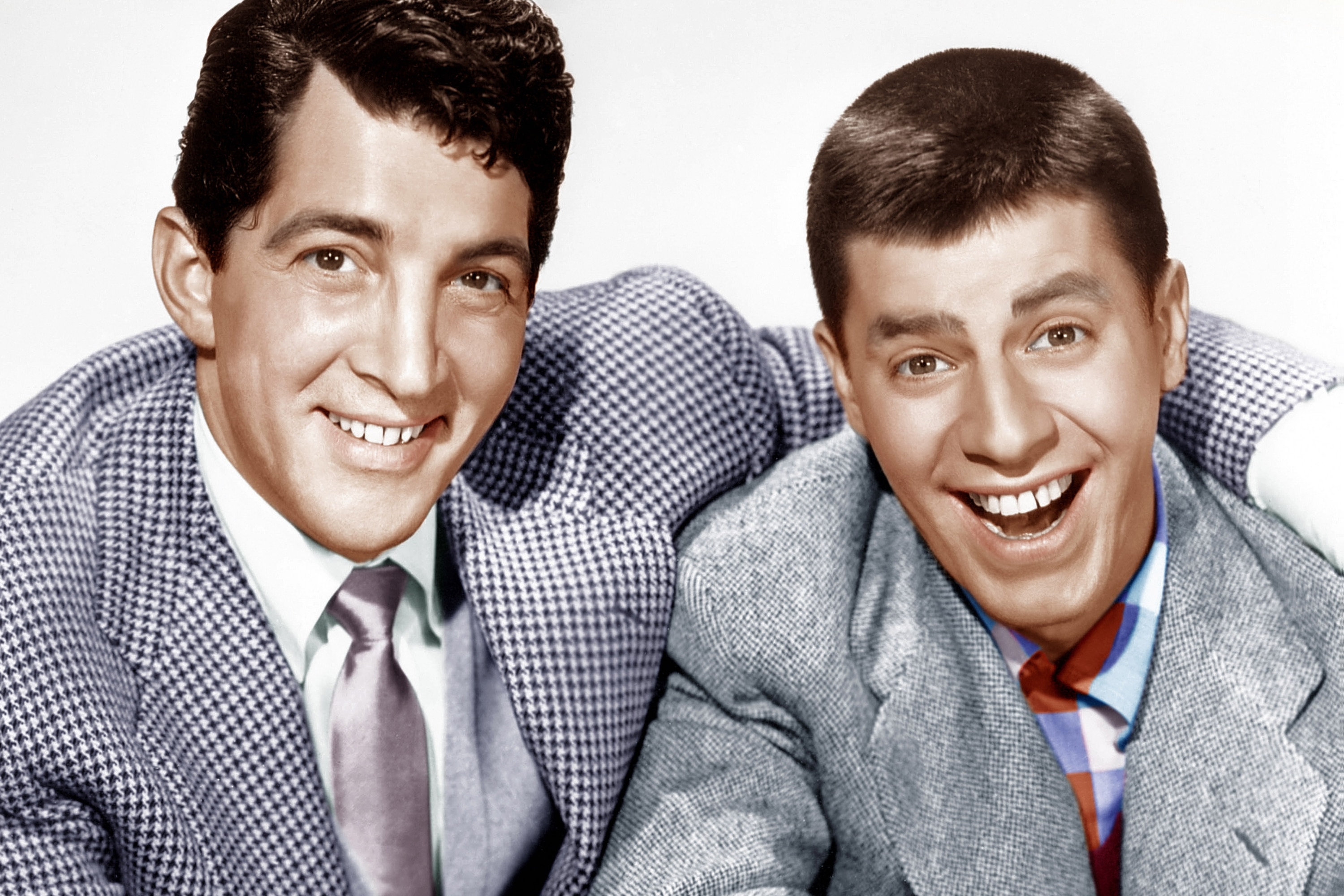
By the end of their first year, Martin and Lewis were headlining at the Copacabana, the world’s top nightclub, and Hollywood came calling. Paramount won the bidding war, and the team signed on to appear in My Friend Irma (1949), with Marie Wilson. The sequel, My Friend Irma Goes West (1950), earned twice as much as the first, making Martin and Lewis movie stars. At the same time, they went into the new medium of television on “The Colgate Comedy Hour,” while still appearing live. In 1951, they made $300,000 for two weeks at the Paramount Theater in New York, where 20,000 fans blocked the road in front of their hotel, screaming like girls would a decade later for The Beatles.
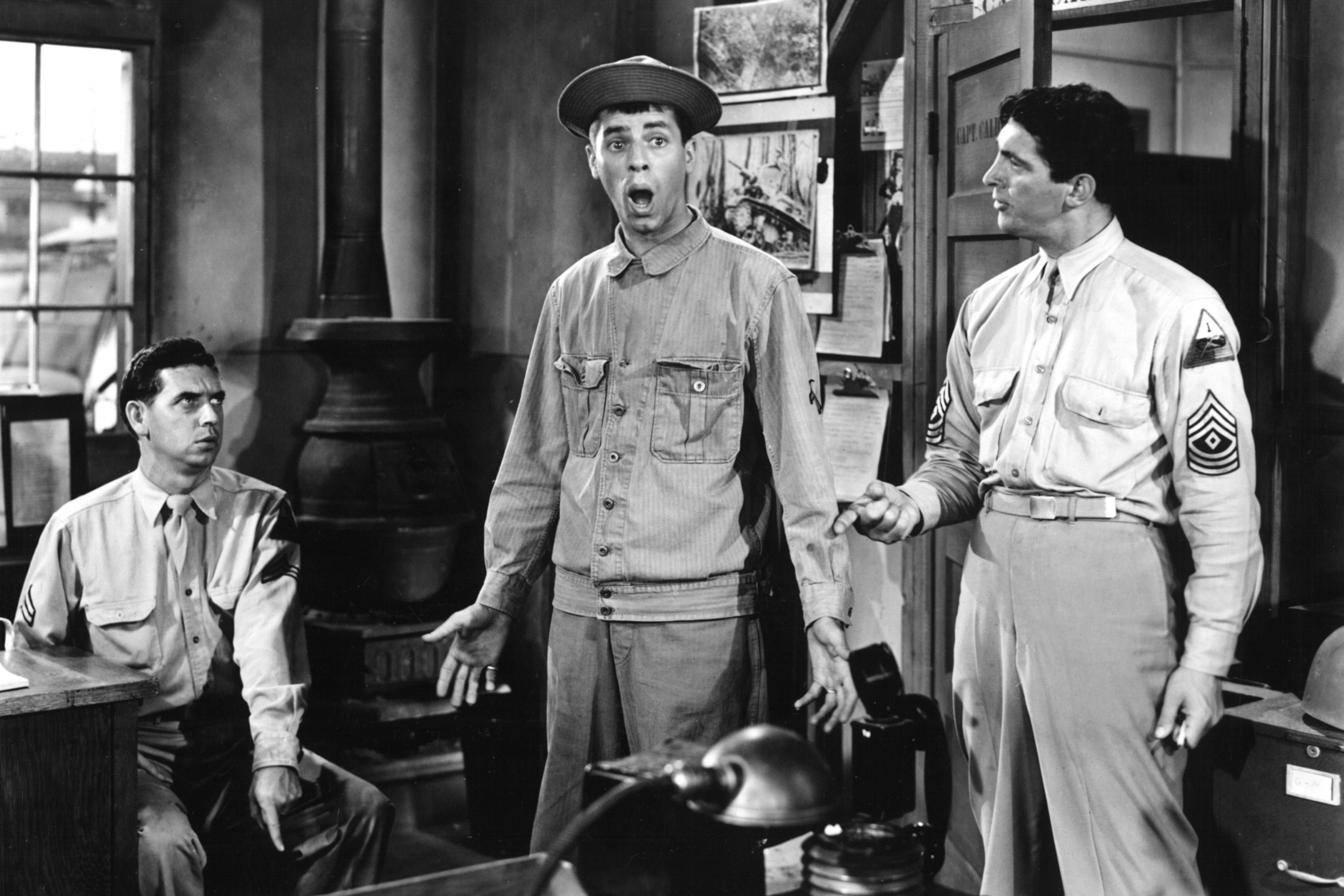
Between 1949 and 1956, Martin and Lewis appeared in 17 films, including the WWII comedy, At War with the Army (1950), the first in which they received star billing. They reached their box-office peak with Sailor Beware (1952), which grossed $27 million (equivalent to $330 million today). In the early 1950s, the team was the hottest thing in show business, but by 1954, their producer, Hal Wallis, wanted to shift the focus of their films, believing the majority of their audience were teenage girls in love with Lewis, rather than Martin, who was nine years older. Soon, rumors that the team was breaking up appeared in the gossip columns, and they appeared on Edward R. Murrow’s “Person to Person” program to quell the rumors. Although Living It Up (1954) and Artists and Models (1955) were still successful, Martin and Lewis’s personal relationship began to cool. Finally, on July 25, 1956, 10 years to the day after their first show at the 500 Club, Martin and Lewis split for good with a farewell performance at the Copacabana. They would not see each other again for 20 years, when Frank Sinatra brought Martin onstage at Lewis’s Muscular Dystrophy telethon to surprise him.
Although personally devastated by the split, Lewis continued solo in nightclubs, had a hit record and returned to films. Despite a mild heart attack and a bleeding ulcer in 1958, he briefly had his own television show, where he featured his father, Danny. At the age of 35, he signed the then-biggest contract in Hollywood history, $10 million, which gave him total control over his films at Paramount. His nonstop pace took its toll. During the production of Cinderfella (1960), Lewis ran up a carpeted staircase on set and immediately had another heart attack. “He’d go without sleep and just work, and work, and work,” said co-star Stella Stevens. Paramount wanted Cinderfella as a summer release, but Lewis insisted that it was a Christmas film. As a compromise, Lewis promised Paramount he would make another in time for the summer. He quickly wrote The Bellboy (1960), which he shot in three weeks at the Fontainebleau Hotel in Miami, while simultaneously performing there at night.
Lewis was not just a comedian, writer and director, he was a technical innovator. Obsessed with the filmmaking process early on, he invented and patented the “video assist,” in which a video camera was attached to a film camera on set, so that he could immediately rewatch what he’d just shot on a monitor. Lewis first used it on The Ladies Man (1961), and it is still used today.
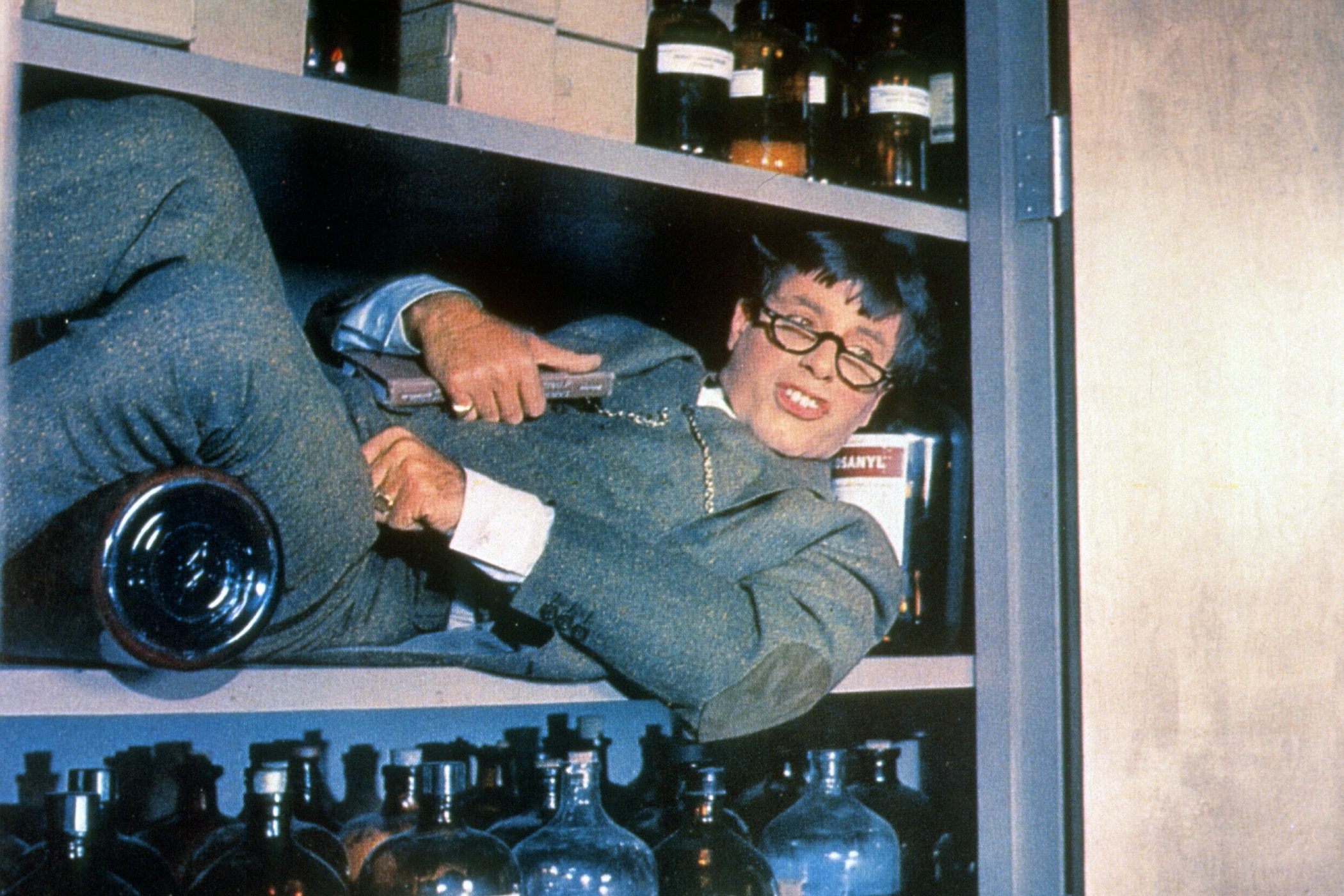
Lewis’s best solo works, from 1960 to 1965, are still considered classics, but The Nutty Professor (1963) is the film for which he is probably best remembered. In it, Lewis plays a modern-day Jekyll and Hyde, with the dual roles of a nerdy professor who becomes a hipster singer named Buddy Love. When it was released in July 1963, Daily Variety called it “flat and pretentious,” but it made $3.3 million in six months. The Nutty Professor was remade in 1996, starring Eddie Murphy, with Lewis as executive producer, as he would be on the 2000 sequel, Nutty Professor II: The Klumps.
In 1965, Lewis left Paramount to become an independent producer, but independence didn’t equal success. By the late 1960s, the world had changed, and Lewis, like many of his contemporaries, was out of style in the hippie era. Warner Bros. pulled his film, Which Way to the Front (1970), after only three days. He left for Europe, where he shot the now notorious The Day the Clown Cried (1972), about a clown allowed to stay alive by the Nazis as long as he made children in concentration camps laugh. The film was never released. Lewis later said he couldn’t remember anything from 1974 to 1978 because of his addiction to painkillers, due to old injuries sustained while performing. Despite the addiction, he still performed at his yearly Muscular Dystrophy telethon, which he began in 1951 with Dean Martin. He eventually helped raise billions of dollars, and his work for the charity earned him a 1978 Nobel Peace Prize nomination. Later that year, he finally kicked his drug habit.
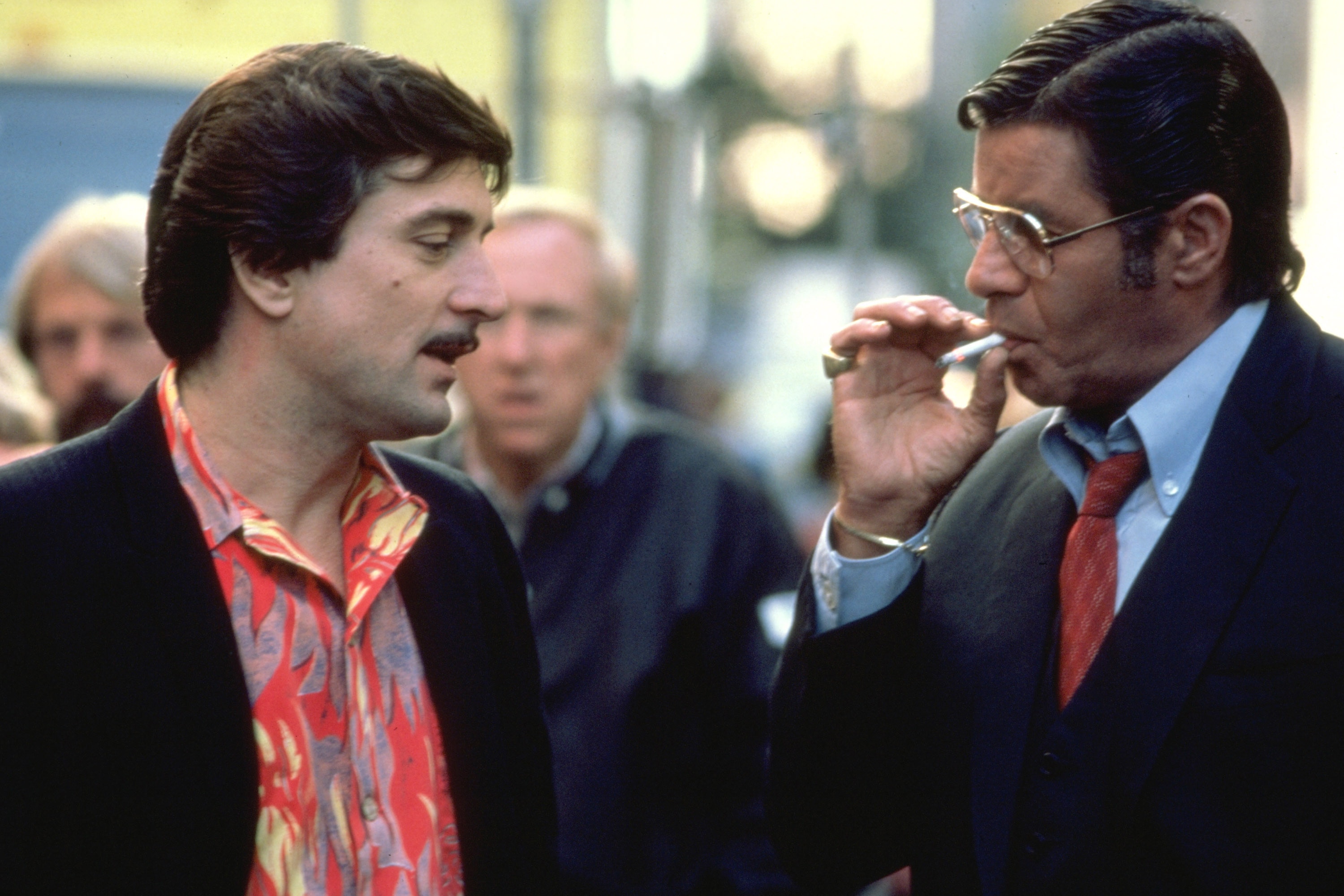
Lewis had a successful return to film with Hardly Working (1980), but by then, he was bankrupt, and his creditors got his share of the profits. The 1980s were a time of dramatic ups and downs. In 1980, he was divorced by his wife Patti, after six sons and many years of marriage, and later in the year, he underwent heart surgery. After his recovery, he was asked by director Martin Scorsese to co-star with Robert De Niro in The King of Comedy (1982), in which Lewis plays Jerry Langford, a stand-up comedian and talk show host who gets kidnapped by a deranged aspiring comedian named Rupert Pupkin (De Niro). Lewis found he “didn’t have to dig too deeply to find out what [his character] was about because he was very close to what I am.” Lewis was in awe at De Niro’s talent and dedication to the role, even coaching him to “do less” while performing as Pupkin, because Pupkin wouldn’t be as good as De Niro made him. He was also surprised at his own performance. “I never performed before with that intensity. Now, to see the character, or to see myself, because I had no mask or no disguise that I’m used to seeing, the “silly Jerry” I hide behind, it was doubly frightening.”
In the ‘80s and ‘90s, Lewis would guest star on television shows like “Wiseguy,” “Mad About You” and “Law & Order: SVU,” even voicing a character on “The Simpsons.” At the age of 70, he achieved a lifelong dream of appearing on Broadway, playing The Devil in the musical “Damn Yankees,” with which he later toured. He was awarded the Governor’s Award at the Emmys in 2005 and honored with a Jean Hersholt Humanitarian Award in 2009. After suffering for years with several debilitating illnesses, Jerry Lewis died on August 20, 2017, at the age of 91.
SOURCES:
A&E Biography. (2014). Jerry Lewis: The Last American Clown. [Video] YouTube
AFI Catalog of Feature Film. “Artists and Models.” https://catalog.afi.com/Film/51431-ARTISTS-ANDMODELS?sid=b0f08e86-044b-4ed3-9679-e876c01141bd&sr=12.005975&cp=1&pos=2
AFI Catalog of Feature Film. “At War with the Army.” https://catalog.afi.com/Film/27103-AT-WARWITHTHEARMY?sid=ea045048-4cd6-41d1-bffb-5eac403eeec1&sr=13.398027&cp=1&pos=0
AFI Catalog of Feature Film. “The King of Comedy.” https://catalog.afi.com/Film/67056-THE-KINGOFCOMEDY?sid=786cd66b-f3da-47f1-9354-caeb9fcc4bae&sr=10.180736&cp=1&pos=0
AFI Catalog of Feature Film. “The Nutty Professor.” https://catalog.afi.com/Film/18700-THE-NUTTYPROFESSOR?sid=06436685-7a2c-48f3-b97b-72b61da8e8ed&sr=10.098412&cp=1&pos=1
Archive of American Television. (2011). Jerry Lewis Discusses The King of Comedy. [Video] YouTube.
David Susskind. (1965). Jerry Lewis on His Childhood and Career Pt. 1. [Video] YouTube.
Dick Cavett Show. (1973). Jerry Lewis. [Video]. YouTube.
Grierson, Tim. “Brotherly Love: Why Jerry Lewis and Dean Martin Never Really Broke Up” August 21, 2017. Medium. https://medium.com/mel-magazine/brotherly-love-why-jerry-lewis-and-dean-martin-never-really-broke-up-2ff85696b5ce
The Voices of Hollywood. (2016). Jerry Lewis Interview 1983 Brian Linehan’s City Lights. [Video]. YouTube.