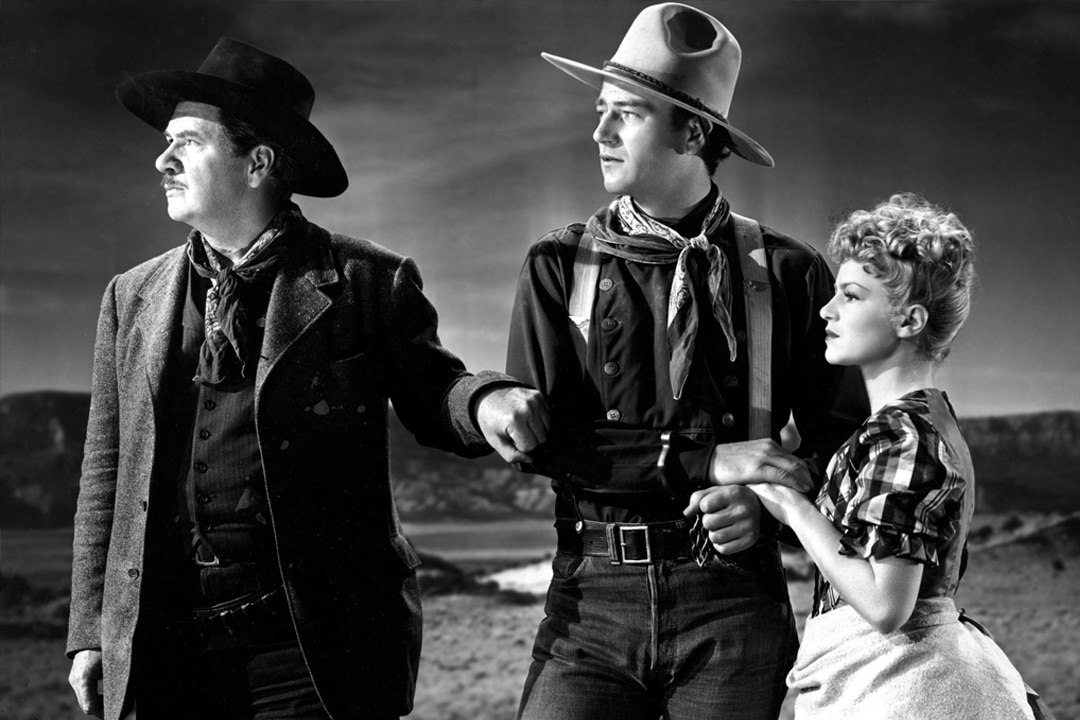
Geronimo and his band of Apaches have severed the telegraph wires, leaving the town of Tonto, New Mexico, cut off from the rest of the world. In the meantime, a stagecoach is heading out of town for Lordsburg, full of individuals from all walks of society: Dallas, a "fallen lady" who is chased out of town by gossip-mongering society ladies; Dr. Josiah Boone, a doctor whose alcoholism has ruined his practice; Samuel Peacock, a timid whisky drummer; Lucy Mallory, a refined but tough-minded woman who will stop at nothing to be reunited with her cavalry officer husband; Henry Gatewood, a banker who uses his aura of respectability to hide embezzled money; and Hatfield, a Southern gambler with a sketchy past who skips town under the pretext of gallantly protecting Mrs. Mallory. Escorted by the stagecoach driver and Sheriff Curly Wilcox, they embark for Lordsburg. Along the way, they meet up with the notorious Ringo Kid, whom the Sheriff arrests. Before they finally reach Lordsburg, various crises, from childbirth to the climactic Apache raid, reveal the underlying character of each stagecoach rider.
The Breen Office, the censorship watchdog in Hollywood, rejected Dudley Nichols' treatment because of the story's sympathetic portrayal of the prostitute Dallas, Doc Boone's constant drunkenness, the Ringo Kid's thirst for revenge and the marshal's involvement in some deaths. Nichols' first draft script took the Breen Office suggestions to heart and the production went ahead without further objections from the censors. In devising the Ringo Kid character, John Ford referred back to a silent era Western hero he created with Harry Carey, Sr. called Cheyenne Harry.
Stagecoach marked the beginning of a long friendship between Ford and the Navajo Indians of Monument Valley. He employed scores of the local indigenous to play Apache warriors in Stagecoach and the various Indian tribes of many of his other Westerns. More than 200 were hired to film the climactic attack on the stagecoach alone. For his commitment to providing them with much needed work (paying them on a union scale no less), the Navajos called Ford "Natani Nez," which means "tall leader."
Ford was so pleased with the way stuntman Yakima Canutt solved the problem of safely shooting the stagecoach's river crossing that he gave Yakima carte blanche in creating all the stunts for Stagecoach. Canutt's spectacular stunt of being dragged underneath a team of horses and a stagecoach is rightfully famous. According to the veteran stuntman, here's how it was accomplished. "You have to run the horses fast, so they'll run straight. If they run slow, they move around a lot. When you turn loose to go under the coach, you've got to bring your arms over your chest and stomach. You've got to hold your elbows close to your body, or that front axle will knock them off." After the stunt was completed, Canutt ran to Ford to make sure they got the stunt on film. Ford replied that even if they hadn't, "I'll never shoot that again."
Ford liked to bully actors on the set, and Stagecoach was no exception. At one point, he said to Andy Devine, the husky-voiced character actor who plays the coach driver: "You big tub of lard. I don't know why the hell I'm using you in this picture." Undaunted, Devine replied, "Because Ward Bond can't drive six horses." Likewise, he attacked Thomas Mitchell, who eventually retorted, "Just remember: I saw Mary of Scotland," effectively humbling the director. Worst of all was Ford's treatment of the Duke. He called him a "big oaf" and a "dumb bastard" and continually criticized his line delivery and manner of walking, even how he washed his face on camera. However, at least part of this was to provoke the actor into giving a stronger performance; Claire Trevor recalls how Ford grabbed Duke by the chin and shook him. "Why are you moving your mouth so much?" he said. "Don't you know you don't act with your mouth in pictures? You act with your eyes." Wayne tolerated the rough treatment and rose to the challenge, reaching a new plateau as an actor. Ford helped cement the impression that Wayne makes in the film by giving him plenty of expressive reaction shots throughout the picture.
Trevor was the highest-paid cast member at $15,000. Wayne got a grand total of $3,700, less than supporting player Tim Holt, who got $5,000. Stagecoach grossed nearly a million dollars by the end of 1939, earning the largest profits of any Walter Wanger film production to that date.