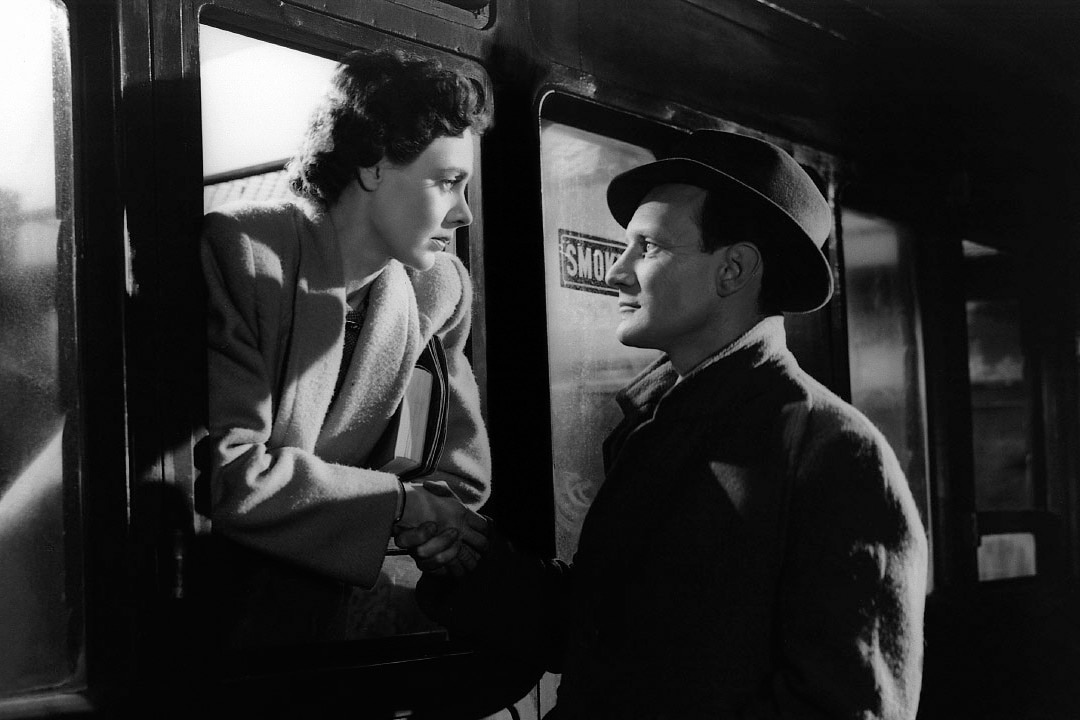
A married doctor and a middle-class wife and mother have a chance meeting when the woman gets a cinder in her eye. The doctor stops to help and the two strangers suddenly discover an unexpected attraction between them. Years of dreary, dull routine give way to a new sensual awakening for the couple as they begin to see each other frequently, but they know, in the end, they must return to their spouses and resume their former lives.
Brief Encounter was shot during the final days of World War II, going into production in January 1945. Filming was completed in May, with an interruption on May 4 to celebrate Germany's surrender. Originally, the train station scenes were set for London, but with the threat of German rocket attacks during the last days of the war, the company was evacuated outside the city. The producers chose Carnforth Station in Southeast England because it was one of the largest provincial stations and was far enough from the coast that they would have time to turn off the lights in the event of an air raid and blackout warning.
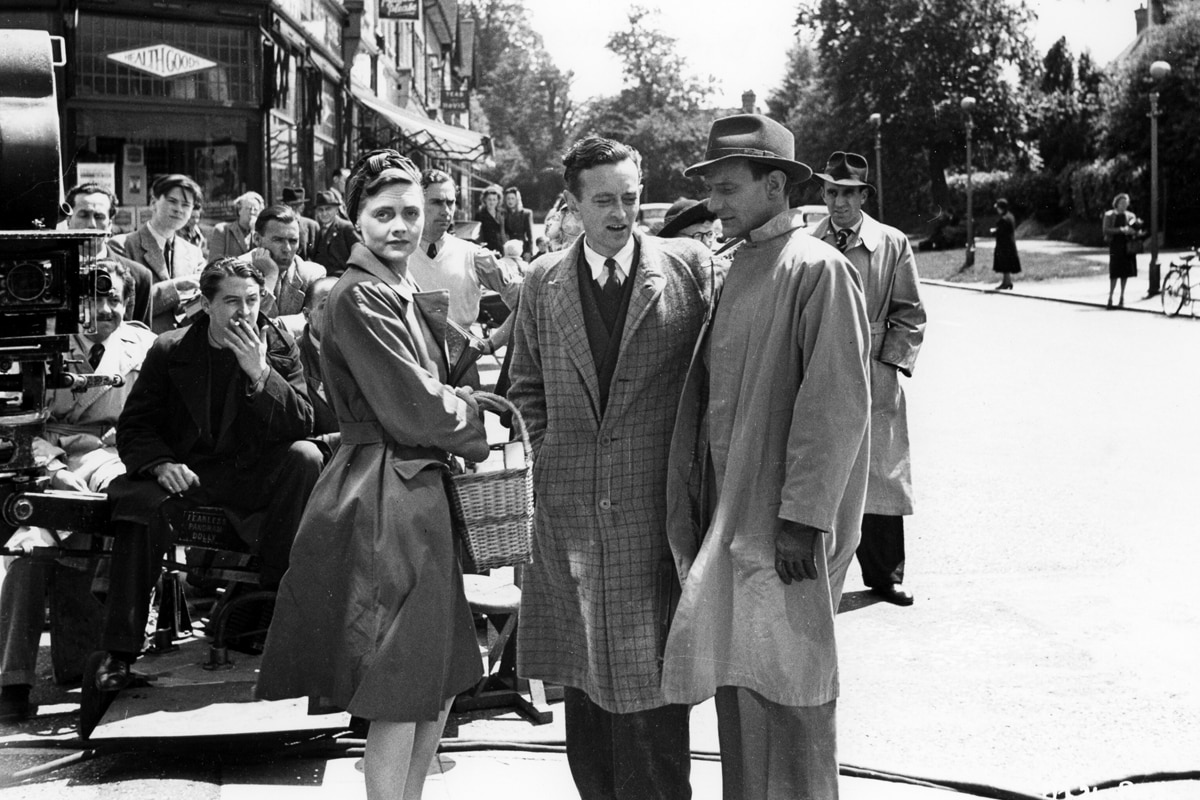
Shooting at Carnforth station usually started at 10:30 p.m. and continued until 6 a.m., before the morning commute started. Another advantage offered by Carnforth Station was the fact that it had a ramp leading up to the train platform. Director David Lean thought it would be more effective for the actors to be running up the ramp to catch their trains and that running up steps might have made them look ridiculous. Unhappy with the location of the station's refreshment room, Lean had a different one built in another part of the station for exterior shots. For interiors, he shot in a film studio in Denham, although the set was closely modeled on the real room. Although there was no mention of it in the script, Lean was so intrigued with the station's clock that he made frequent use of it in the film. This actually required making a dummy face for it so that the times would be appropriate and could be read more easily in long shots.
Leading lady Celia Johnson was not looking forward to the four-week location shoot at the railway station, but her opinion changed when they got there and the cast and crew developed a spirit of camaraderie. Between scenes, she usually played poker with the crew or worked on a crossword puzzle. She was also impressed with the hospitality shown by the station master, who let them warm up in his office during the cold winter nights. The production drew extras from the area around Carnforth. Those involved were particularly pleased to enjoy the dinner provided each night, which included sweets and other items restricted by wartime rationing.
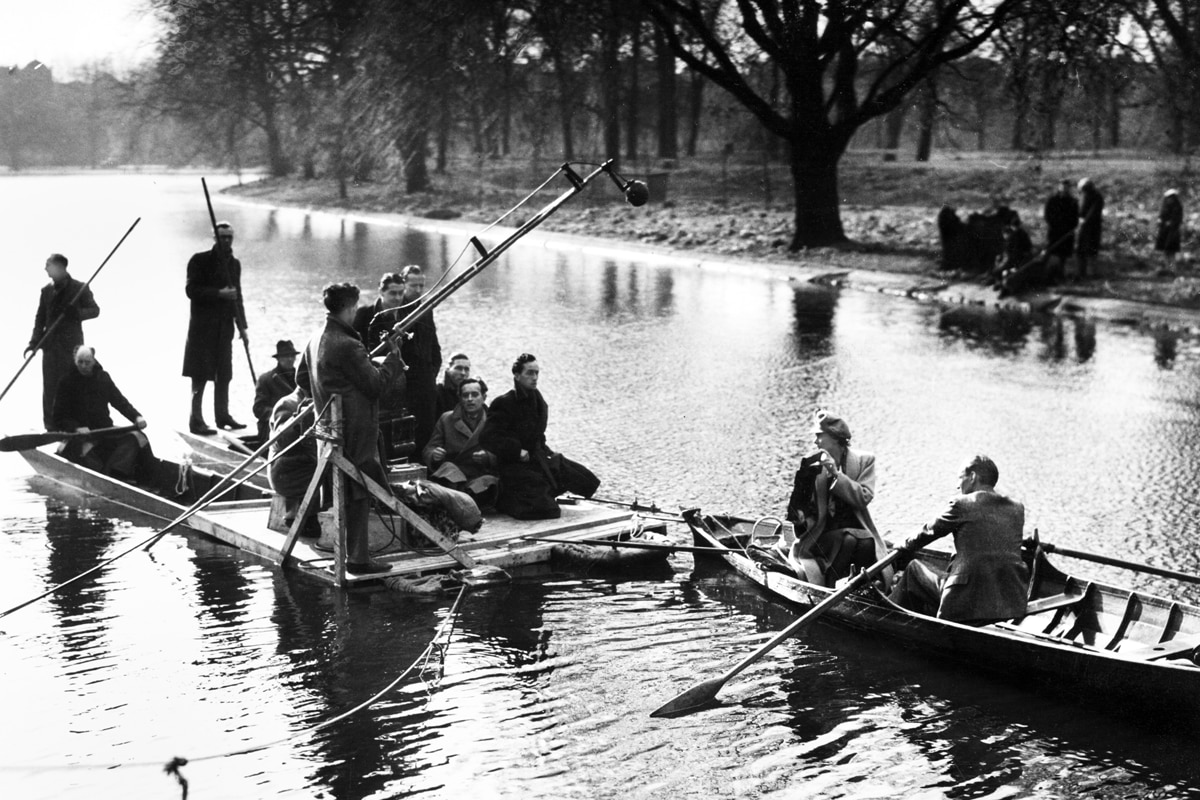
When Lean tried to get shots of express trains speeding through the station, he ran into a problem. The engineers, not used to the camera lights being used during the location shoot, had slowed down to a crawl as they approached, fearing there was some problem. He had to get a railway traffic officer to send word to other stations, assuring the drivers there was nothing wrong, and they could maintain speed. Other location shooting took place in Beaconsfield, a small town near Denham. The boat ride sequence was shot in Regent's Park in London.
Cast in his first major film role, Trevor Howard had a hard time adapting to acting for the camera. For the scene in which he had to rattle off a list of diseases while both he and Johnson are really fighting their feelings for each other, it took him so many takes to capture both the script and what was beneath it, that Johnson began having problems maintaining spontaneity. Howard also had trouble understanding the character's delicacy in dealing with the woman he loved. For the scene in the flat, he couldn't see why the man didn't just make love to her as soon as she showed up. When Lean tried to explain that the sudden intimacy and the unprecedented opportunity to consummate their love had suddenly made the characters shy, Howard could only respond with, "I must say, you are a funny chap."
Adapted from Noël Coward’s 1936 stage play “Still Life,” the playwright co-wrote and co-produced Brief Encounter. He also chose Rachmaninoff's Second Piano Concerto as the film's background music. It was his favorite musical piece. The film's composer, Muir Mathieson, objected, wanting to compose the entire score himself. When Coward insisted that the piece was part of the character's life, Mathieson gave in—on condition that Johnson be shown turning on the radio to listen to the piece and that the music not be rearranged for the film.
Because Lean and producer Ronald Neame were busy filming Great Expectations (1946) on location, the film had its first preview in front of a working-class audience in Rochester. The results were disastrous, with the audience laughing through the most romantic scenes. At the film's press screening, Lean sat next to drama critic James Agate, who delivered a stinging commentary on everything he considered wrong with the film, at full voice, throughout the presentation.
Anthony Havelock-Allan was convinced the only place the film would do well was France, but the major French distributor, Gaumont, turned it down. They only changed their minds when Brief Encounter won the Grand Prize at the Cannes Film Festival. It turned out to be a big hit in France. Brief Encounter opened at the Little Carnegie, an art house in New York, to respectable business and good reviews. Positive word of mouth, however, drove up attendance records. By its fifth week there, when most films would have been fading fast, it broke the house record. It ended up running a total of eight months.