October 21 and 28 | 10 Movies
On October 21 and October 28, TCM host Ben Mankiewicz will be joined by author and historian Donald Bogle to introduce two nights of films featuring legendary Black athletes like Jackie Robinson, Woody Strode, Meadowlark Lemon, Kareem Abdul-Jabbar, Jim Brown, Julius Erving, Althea Gibson, Bernie Casey, Jim Kelly and Muhammad Ali.
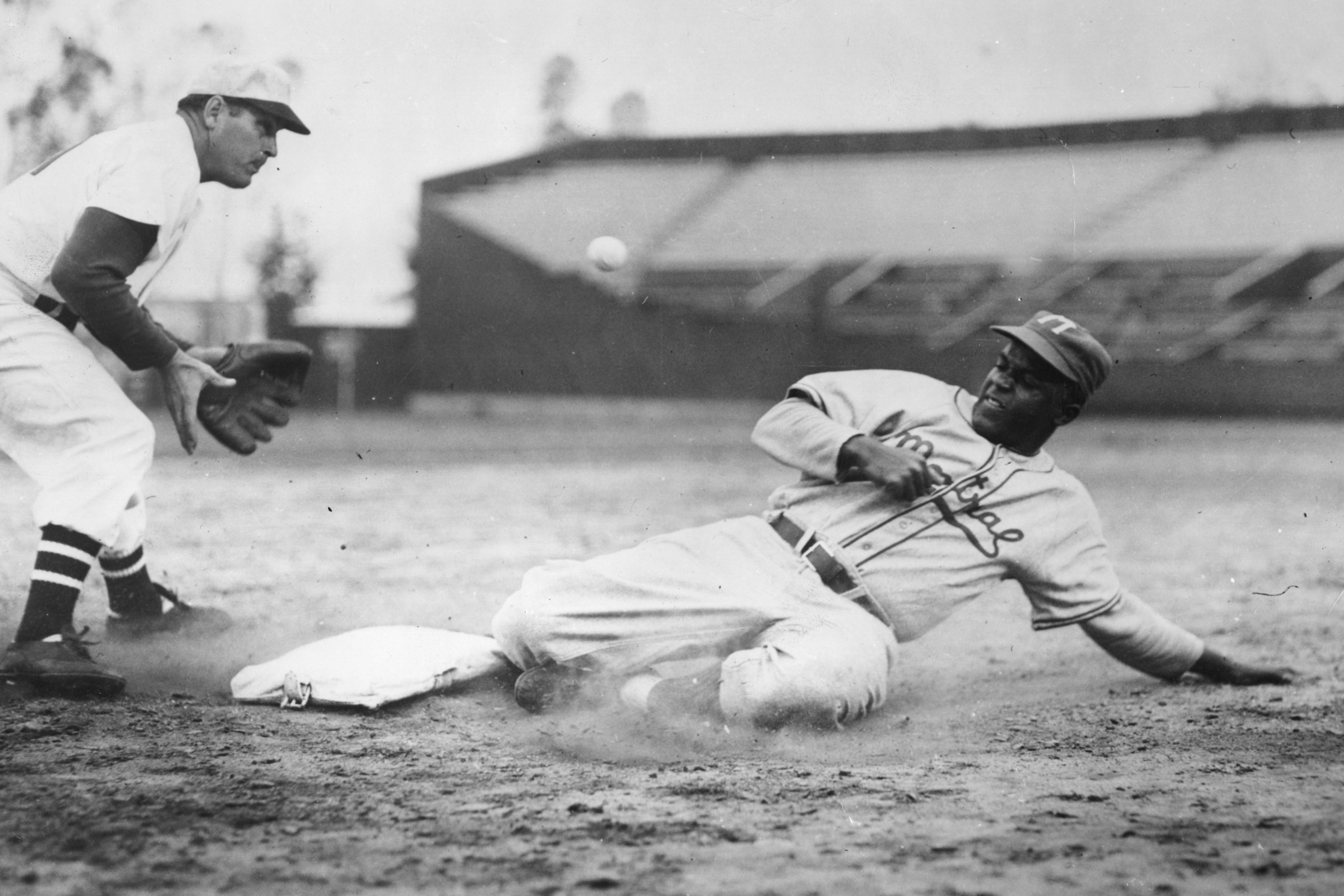
In 1947, Jackie Robinson became the first Black Major League Baseball player when he signed with the Brooklyn Dodgers. Robinson faced all sorts of obstacles, including racial hostility from fans and fellow players, including members of his own team. Three years later, Hollywood turned that experience into a film, The Jackie Robinson Story (1950), in which Robinson played himself. As with all biographical films, some liberties were taken, as Robinson later told a reporter, “We don’t name cities where things happened, or ball clubs, either. Otherwise, they’d lose a lot of fans.” Historian and former Vice President of Curatorial Services at the Negro Leagues Baseball Museum, Dr. Raymond Roswell, said in an interview with author Johnny D. Boggs that The Jackie Robinson Story is “a movie of its time. It’s an important part of understanding his story and baseball history in general. We’re fortunate to have that as an artifact.”
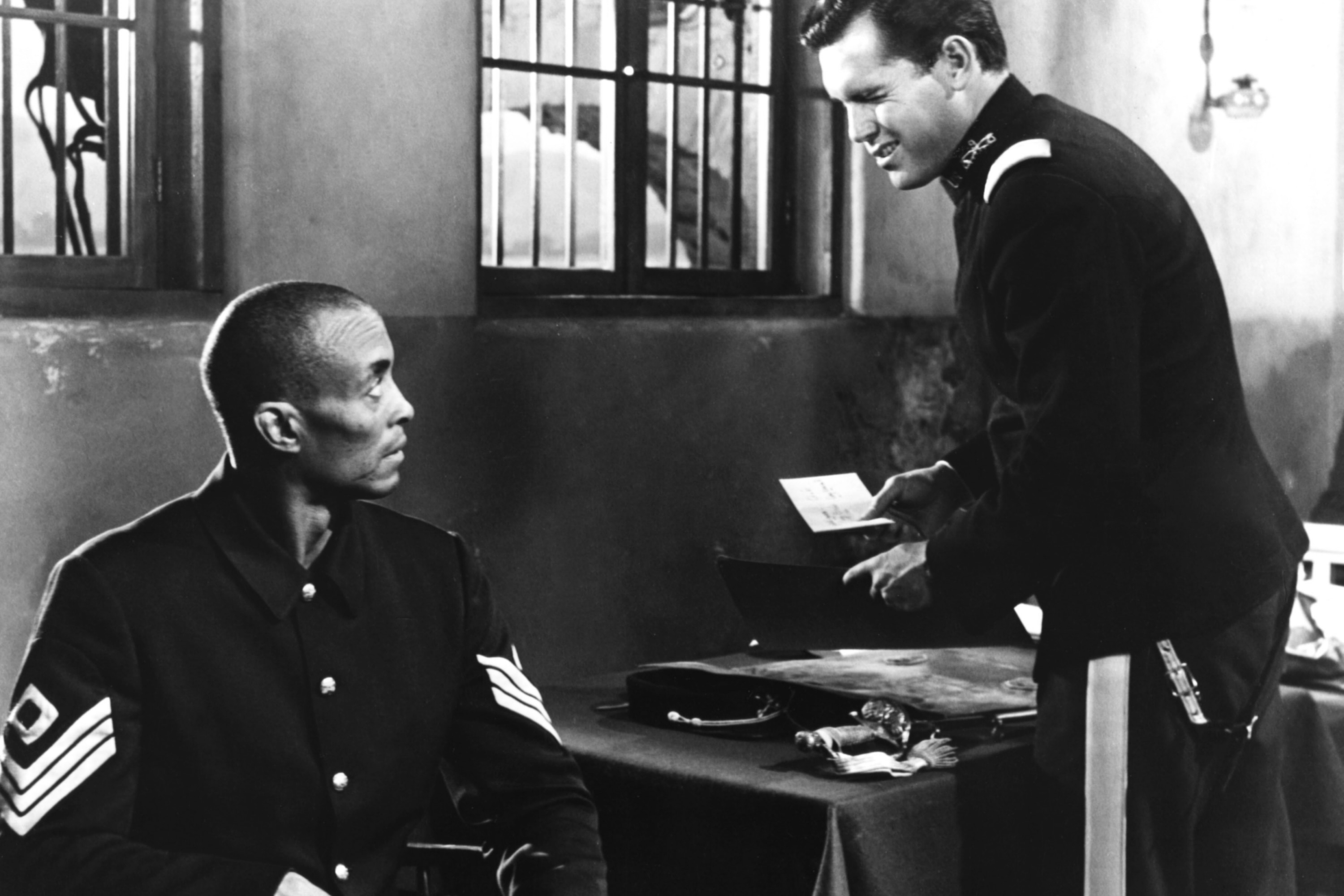
Woody Strode is best remembered as an actor in Spartacus (1960) and The Man Who Shot Liberty Valance (1962), but he was also a UCLA football star who, with Kenny Washington and two others, helped integrate the modern NFL when they joined the Los Angeles Rams in 1946. Strode’s Hollywood career began in 1939 as an assistant at Warner Bros., and after World War II, he began acting, first in television and then in films. In 1960, he starred in John Ford’s Sergeant Rutledge. In it, Strode plays a Buffalo soldier from the 9th U.S. Cavalry unit, charged with the rape and murder of a white girl and the murder of her father. Writer Willis Goldbeck was inspired to write the film after the success of The Defiant Ones (1958) proved to Hollywood that audiences were interested in Black characters as leads. Ironically, Sergeant Rutledge was not a box-office success, possibly because its marketing focused on the “suspense” angle of the courtroom drama, rather than promoting it as an action Western. Strode received excellent reviews for his performance, however, and later praised the film, saying, “It had dignity. You’d never seen a Negro come off a mountain like John Wayne before.”
Althea Gibson, the first Black woman to win singles championship titles at the French Open, Wimbledon and the US Open, made her only feature-film appearance in John Ford’s The Horse Soldiers (1959). Gibson plays Lukey, an enslaved woman living on a plantation during the Civil War. Although she co-starred with John Wayne, William Holden and Constance Towers, Gibson had to remain in Hollywood when production moved to location in Louisiana because racist policies made finding equal accommodations for her difficult. Instead, all her scenes were shot in Hollywood, with local actresses doubling for her in long shots.
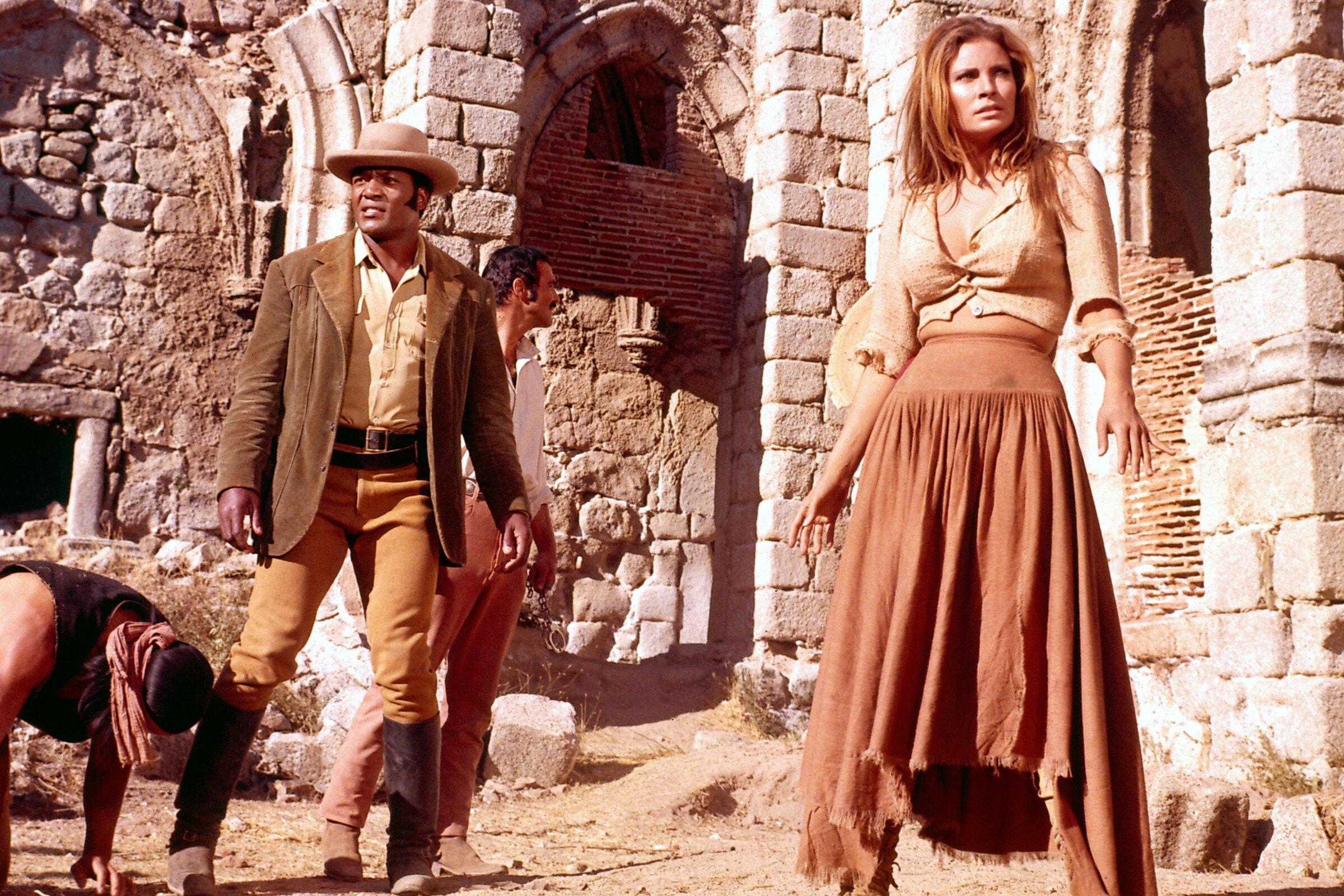
Ten years later, football legend-turned-actor Jim Brown would change Hollywood forever when he starred with Burt Reynolds and Raquel Welch in 100 Rifles (1969), written and directed by Tom Gries. Brown stars as Lydecker, a Black deputy from Arizona who is promised a reward and a steady job if he brings bank robber Yaqui Joe Herrera (Reynolds) back to the United States from Mexico. Instead, Lydecker joins forces with Joe and an Indian revolutionary, Sarita (Welch), to bring 100 rifles to the Yaqui people in their fight against Mexico. The ground-breaking and steamy sex scenes between Brown and Welch lit up the screen, although the two actors had personality conflicts when the cameras stopped rolling. Reynolds called them “supercharged sexual creatures […] whose mere presence generated major heat before the first frame was even shot.”
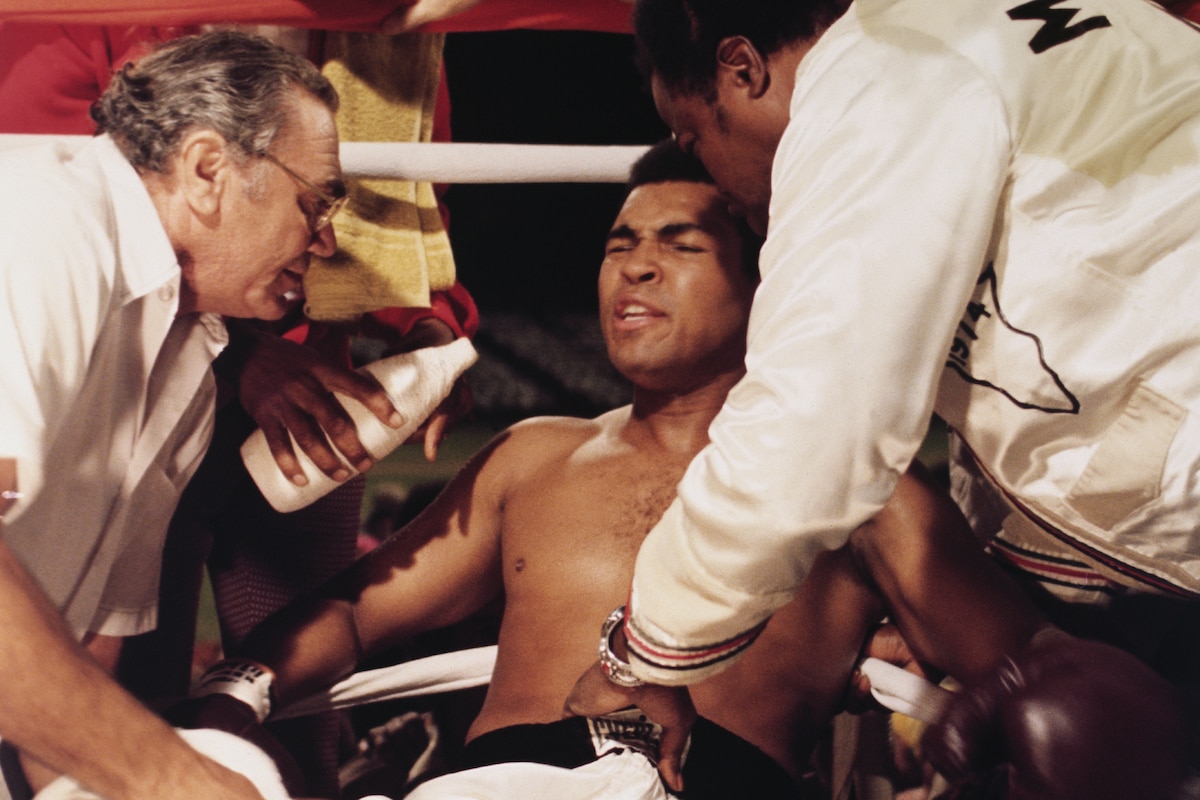
Gries directed another film in our salute to Black athletes, The Greatest (1977), starring the man who truly was “the greatest,” Muhammad Ali, based on his 1975 autobiography. It covers the years between 1960, when, as Cassius Clay, he fought for Olympic glory in Rome, and the famous 1974 “Rumble in the Jungle” match against George Foreman in what is now the Democratic Republic of the Congo. The Greatest features footage from some of Ali’s fights against Sonny Liston, Ken Norton, Joe Frazier and Floyd Patterson. The theme song, “The Greatest Love of All,” would become a hit eight years later for Whitney Houston.
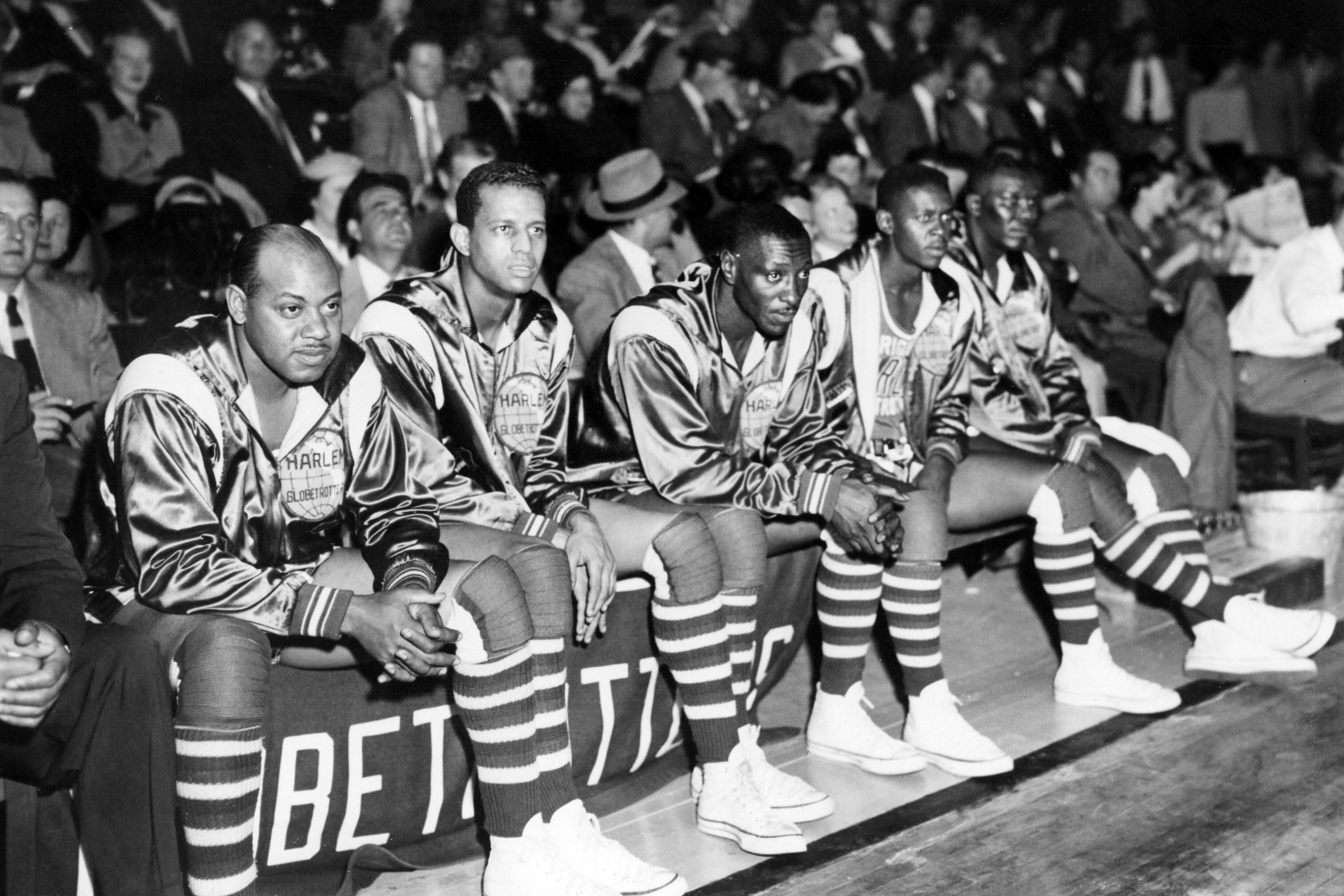
The Harlem Globetrotters (1951) was directed by Phil Brown and Will Jason and written by Alfred Palca. Palca wrote the movie (about a college chemistry student who wants to play with the Globetrotters) after seeing movie audiences react to newsreel footage of the exhibition basketball team who combined comedy with extraordinary athleticism and became beloved global goodwill ambassadors. Globetrotters players Reece “Goose” Tatum, Marques Haynes and William “Pop” Gates are featured in the film, with Billy Brown as the student who aspires to be a Globetrotter, Dorothy Dandridge as Brown’s love interest and Thomas Gomez as the team’s owner and manager, Abe Saperstein, who started the team in 1926.
Nearly 30 years later, another Harlem Globetrotter, Meadowlark Lemon, appeared in a film. Lemon starred, along with NBA legends Julius “Dr. J.” Erving and Kareem Abdul-Jabbar, in The Fish That Saved Pittsburgh (1979). When nearly all the players on The Pittsburgh Pythons quit, their young water boy (James Bond III) and an astrologer (Stockard Channing) help form a new team whose players all share the astrological sign of Pisces, and their fortunes turn around dramatically.
Former football player Fred “the Hammer” Williamson stars in Black Eye (1974), a 1920s-era film in which a private detective (Williamson) must find the killer of a young woman who stole a silver-tipped cane from the casket of a silent movie star. Directed by Jack Arnold and written by Mark Haggard and Jim Martin, it was based on Jeff Jacks’ 1971 novel “Murder on the Wild Side,” about a white detective in Greenwich Village.
Black Belt Jones (1974) stars Jim Kelly as a Black karate expert who avenges his mentor’s (Scatman Crothers) death at the hands of the gangsters who tried to force him to sell his karate school. Kelly had won the World Middleweight title at the Long Beach International Karate Championship in 1971, and appeared in several films, including Bruce Lee’s Enter the Dragon (1973).
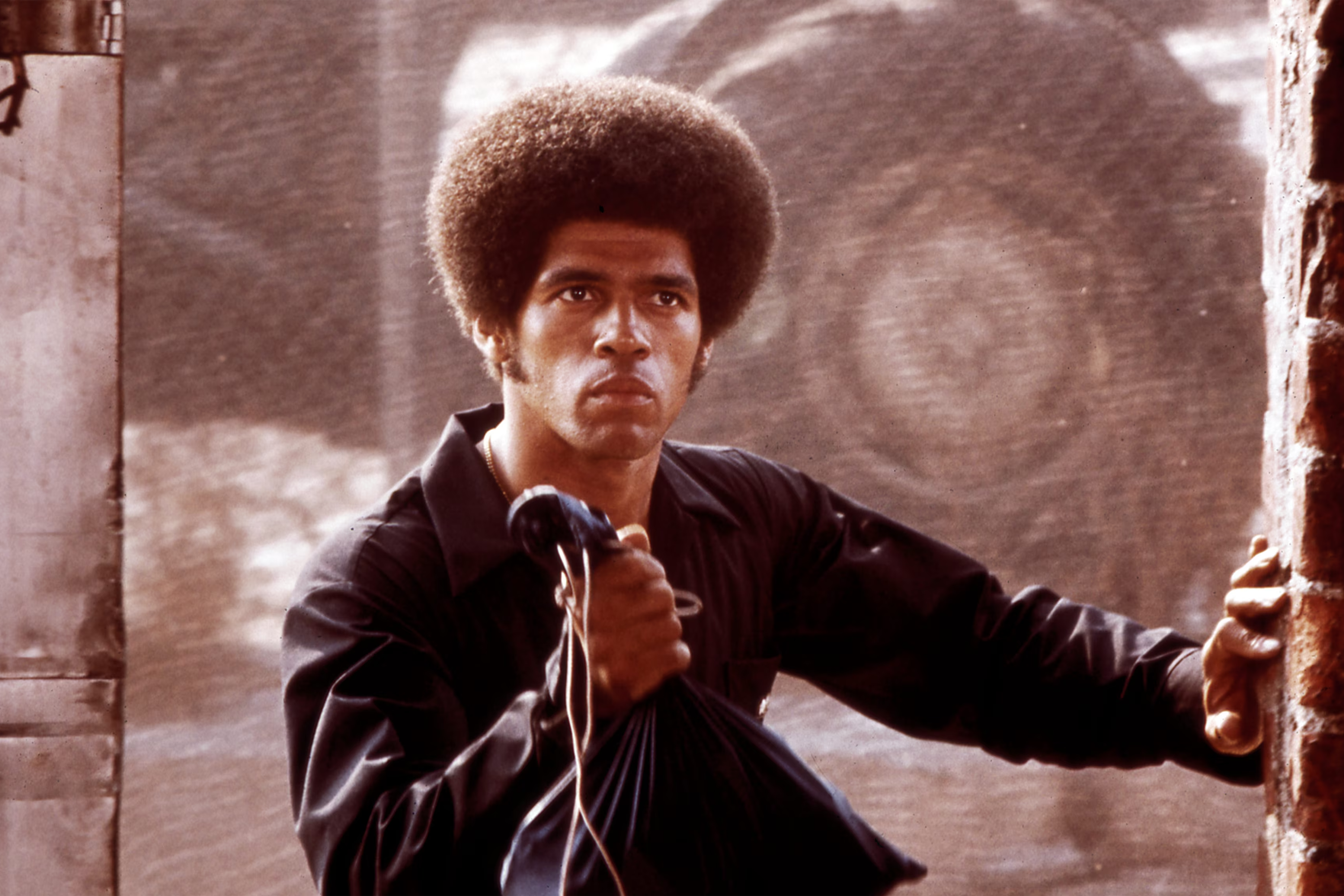
Ted Lewis’s 1970 novel “Jack’s Return Home” was the basis for the 1971 film Get Carter, starring Michael Caine, but Hit Man (1972), a Blaxploitation crime thriller released the following year, was a more faithful adaptation of the original story. In it, former police officer-turned-hitman (NFL star Bernie Casey) goes home to Los Angeles to investigate the death of his brother in a suspicious drunk driving accident. Shot on location at the Watts Towers, Los Angeles International Airport and at Africa America Park in Fillmore, outside of Los Angeles, the film was condemned by the Catholic Film Office for its “dizzying spectacle of raw sex and supergraphic violence [that] would horrify the Marquis de Sade.” Casey left the NFL at the age of 30 and turned to poetry and acting, most notably starring in Brian’s Song (1971), Black Gunn (1972), Cleopatra Jones (1973), the James Bond film Never Say Never Again (1983) and Bill & Ted’s Excellent Adventure (1989).