October 6 | 6 Movies
TCM celebrates a first with TCM host Alicia Malone’s “Murder at the Movies: A Movie Palace Mystery,” the debut entry in a new mystery series and the first fiction book from TCM and Running Press. To honor the occasion, the evening’s lineup on the network includes several thrillers, all of which are based on novels. “Murder at the Movies” centers around a screening of an Alfred Hitchcock film that turns deadly—offscreen, urging recent New England transplant Audrey Sullivan to find out why a murder happened on opening night at the family theater she’s just inherited.
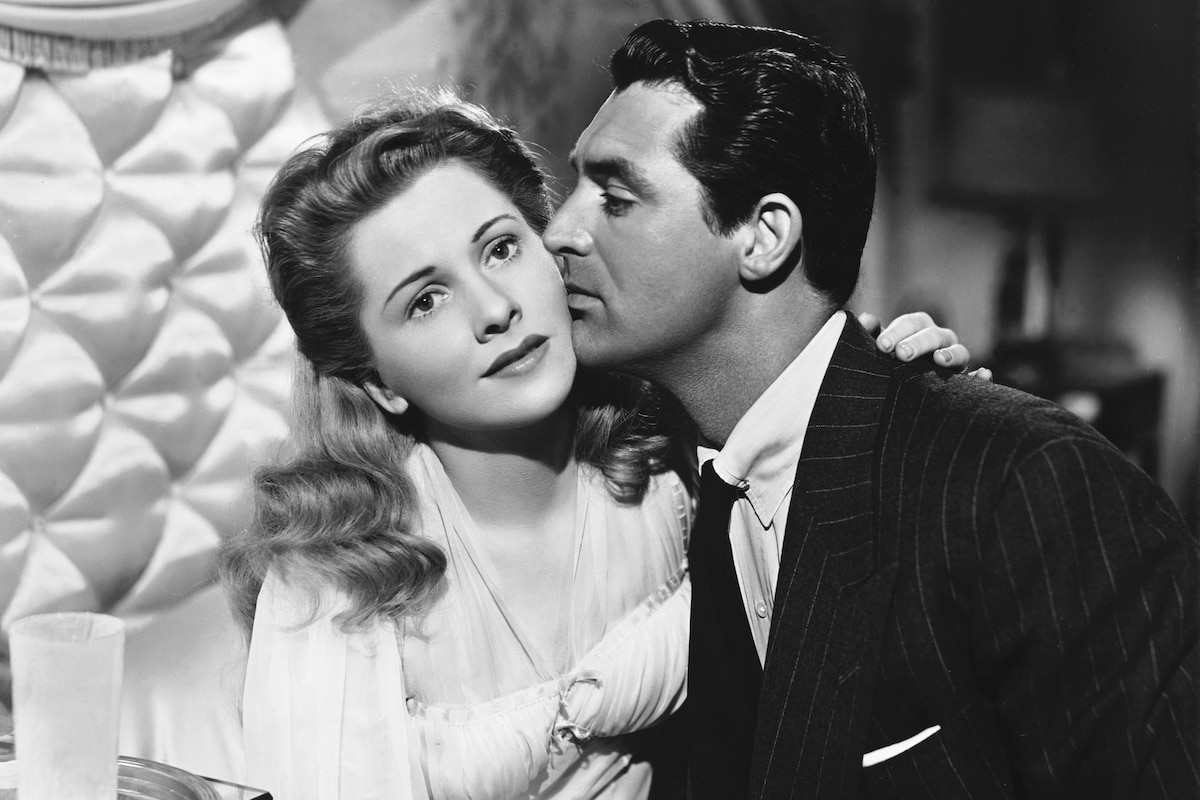
Speaking of Hitch, one of The Master of Suspense’s movies, Suspicion (1941), appears in the night’s programming. The story of a newlywed, Lina (Joan Fontaine), who begins to suspect her charming husband, Johnnie (Cary Grant), might be plotting to kill her does not rank as one of the director’s most popular pictures. However, Fontaine’s Best Actress Oscar win holds the distinction of being the first—and only—acting award for a Hitchcock movie. While Suspicion was Fontaine’s second of two films with the director, it would be Grant’s first, marking the start of a fruitful relationship with Hitchcock that spanned four movies across the next two decades.
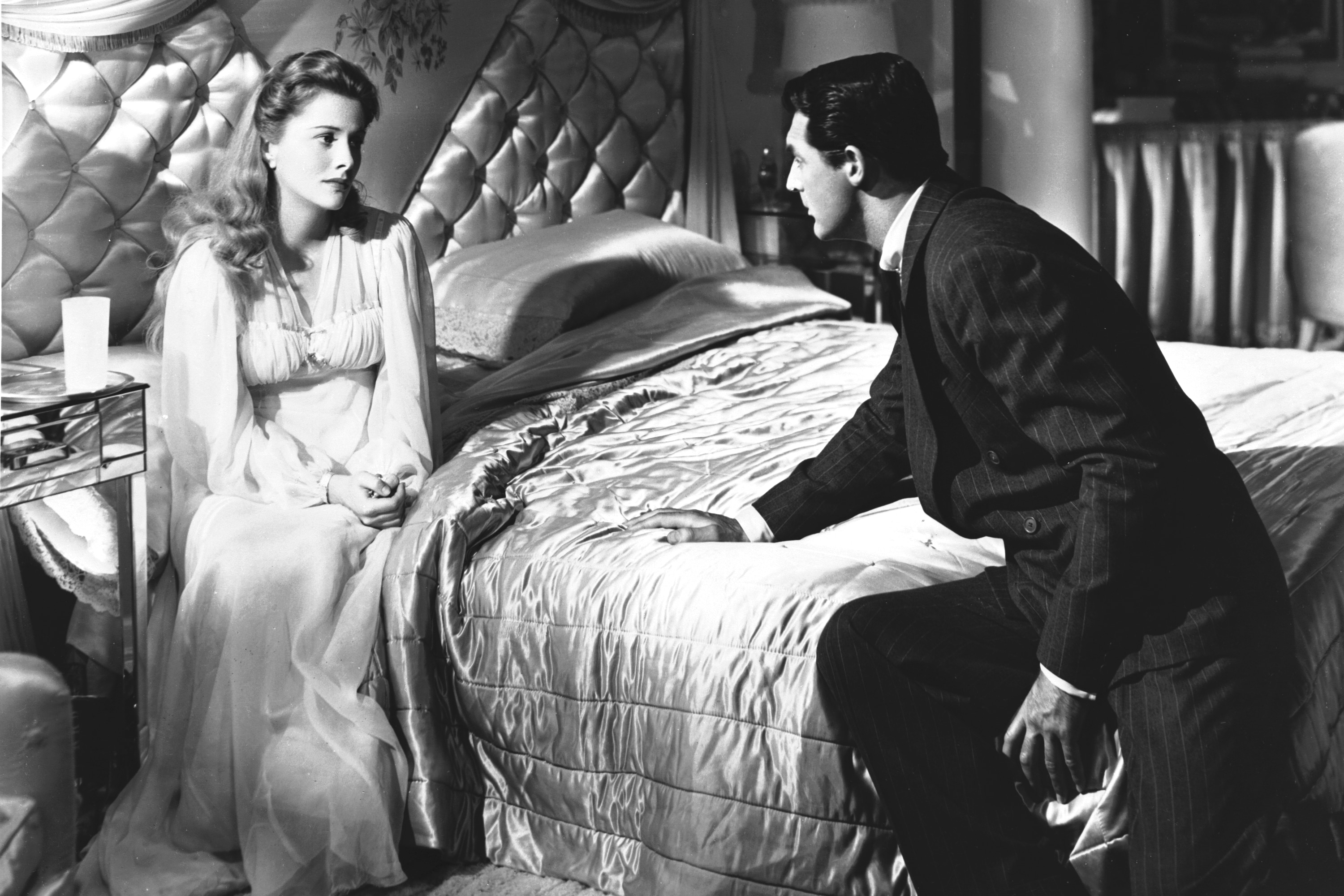
Based on Anthony Berkeley Cox’s “Before the Fact,” penned under the pseudonym Francis Iles, Suspicion had a tumultuous production. Hitchcock worked on the initial story with his frequent collaborators, wife Alma Reville and assistant/later producer Joan Harrison. Samson Raphaelson, known for his comedic scripts with Ernst Lubitsch, was added into the mix, and the resulting work between the group was “hopelessly tangled,” Donald Spoto writes in “The Dark Side of Genius: The Life of Alfred Hitchcock.”
Illnesses, cast clashes, censorship concerns and more plagued the filming. Not to mention, much about the movie itself was up in the air—from the title (which included choices like Fright and Suspicious Lady before Suspicion was christened right before release) to the ending, an unusual predicament that bred uncertainty in the actors and their performances. The adaptation strayed from the book in several ways, with the largest difference being the ending, as it was feared that audiences would not accept the likeable Grant as a murderer. Despite turbulence behind the scenes, the finished product was popular with audiences and well-regarded by many critics. In addition to Fontaine’s Oscar win, Suspicion was nominated for Best Picture, a mere year after another Hitchcock-Harrison-Fontaine collaboration, Rebecca (1940), took home the top prize.
And Then There Were None (1945), directed by René Clair and based on Agatha Christie’s 1939 novel, finds a group of strangers, made up of recognizable character actors including Barry Fitzgerald, Walter Huston, Roland Young, C. Aubrey Smith and Judith Anderson, invited to an island mansion by a mysterious couple who never show up. The guests share one thing in common—all of them are accused of murder—and one by one, they meet their deaths as the remaining suspects attempt to catch the killer among them.
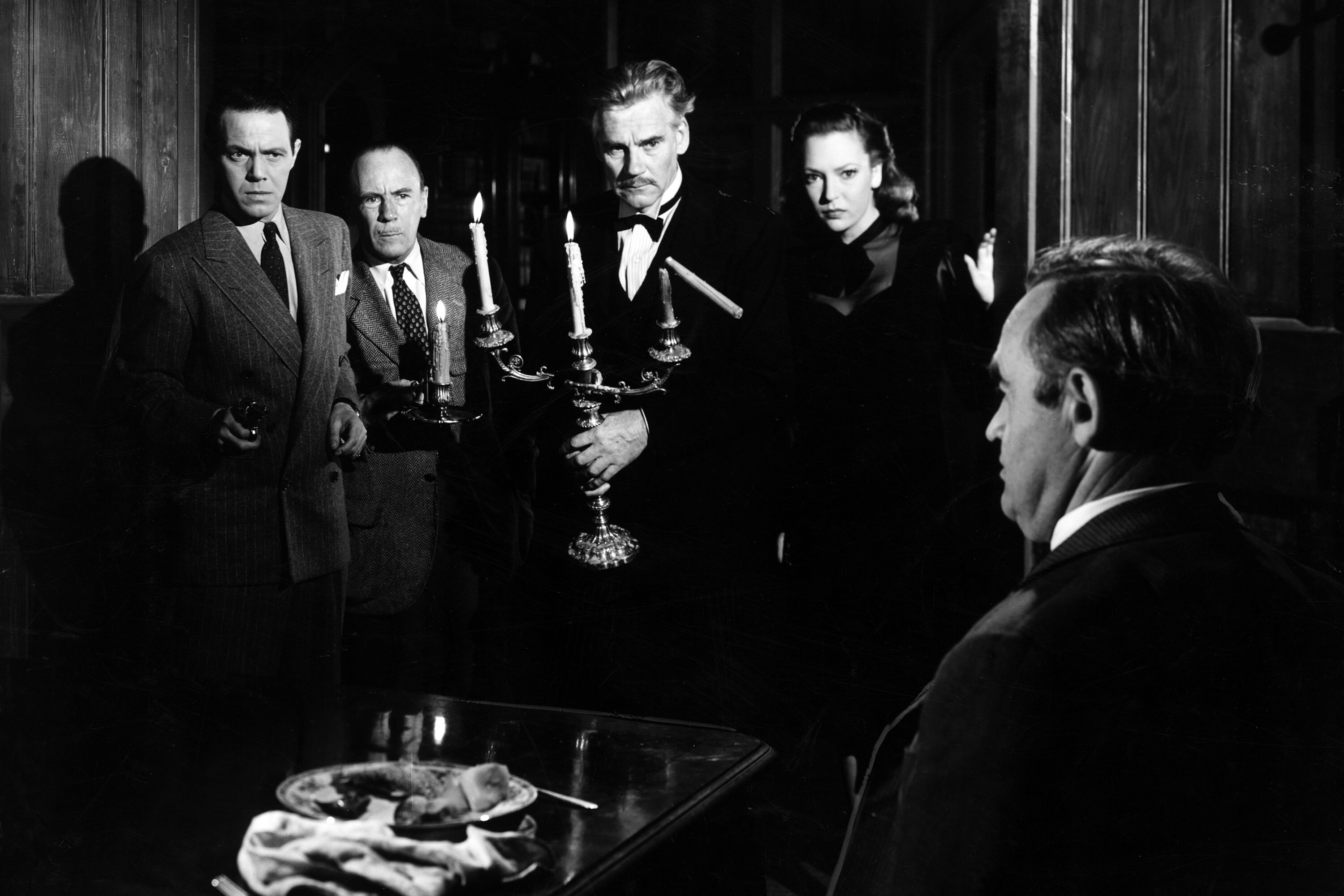
Christie considered the novel her masterpiece, but it was far from an easy writing process. “It was so difficult to do that the idea fascinated me,” she remarked, as quoted in Scott Palmer’s “The Films of Agatha Christie.” The author herself adapted the material for the stage, making a notable alteration in the play that remained in the subsequent film versions: two characters survive at the end. A few more minor changes were implemented in the leap from page to screen, including the addition of Mischa Auer’s Prince Nikita Starloff, who replaced Anthony Marston from the novel.
And Then There Were None holds the distinction of being Hollywood’s first adaptation of a Christie novel. Warner Bros. and RKO contended for the rights, with Twentieth Century-Fox winning out. The picture was well received and spawned at least four more film productions, several of which moved the plot to new locations. Co-star Smith remembered the experience fondly, as quoted in Peter Haining’s “Agatha Christie: Murder in Four Acts”: “It was one of those rare pictures where no corners were cut. Everything from the design to the costuming and the casting was first class, and with a really good script to work with all the actors gave splendid performances. The director René Clair’s ingenuity with the camera and lighting was the icing on the cake.”
Christie’s Miss Marple leads George Pollock’s production of Murder She Said (1961), the first of four pictures in MGM’s series starring Margaret Rutherford as the amateur detective, and the debut appearance of Marple on the big screen. Upon witnessing a murder on a train running next to the one she’s riding, Marple confides in the police. When they aren’t able to corroborate her story, the eccentric sleuth is inspired to take the investigation into her own hands. By the mid-1960s, several adaptations of Christie’s work had been produced for television and film. However, due to the freedom many took with her stories, the author was not enthusiastic about most of the results, including the Miss Marple series; MGM actually adapted two Hercule Poirot novels for the second and third films, swapping Marple in for the famous PI.
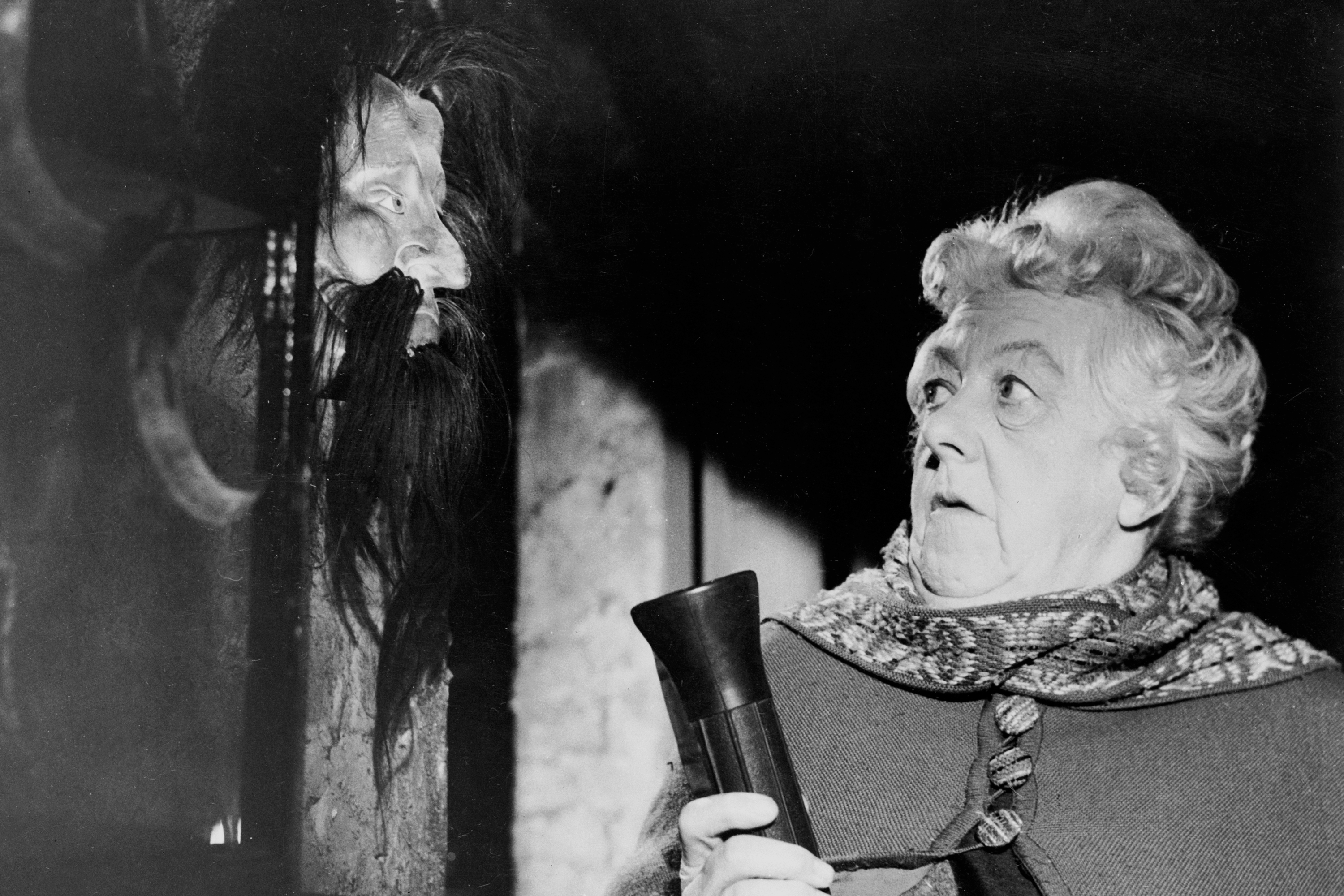
Christie was also initially reticent about Rutherford’s casting, as she felt the actress didn’t physically resemble the petite heroine of her novels. On her end, Rutherford wasn’t keen on the project at first, either. As her unofficial adopted daughter Dawn Langley Simmons recounts in “Margaret Rutherford: A Blithe Spirit,” Rutherford long declined roles that centered around crime. “Besides, my public expects something better of me; they might not approve of a Rutherford Sherlock Holmes,” Simmons quoted the actress. After much thought, discussion and convincing of the movie’s breezy tone, along with financial burdens that the role could ease, Rutherford finally accepted. When Christie and Rutherford met in person, they hit it off.
Despite the early hesitation on both sides, Murder She Said was a hit, making a box-office star of the almost 70-year-old actress, and Marple remains one of Rutherford’s best-remembered roles. After overcoming her concerns, Rutherford came to care for the character. “Perhaps I am old-fashioned, but I think the Miss Marple films did a great service in winning us friends all round the world,” she remarked in her autobiography.
Leonard Maltin called Michael Curtiz’s pre-Code caper The Kennel Murder Case (1933) the “finest Philo Vance film of all time” in his chapter in John Tuska's “Philo Vance: The Life and Times of S. S. Van Dine.” Though this marked the fourth and final time William Powell portrayed the sophisticated sleuth on screen, it was his first outing as Vance with Warner Bros.; his previous three appearances in 1929 and 1930 were in Paramount adaptations. (Author S. S. Van Dine sold the rights to his 12 Vance novels individually, resulting in the stories bouncing around between studios and stars, with the likes of Powell, Warren William, Basil Rathbone and others playing the character.)
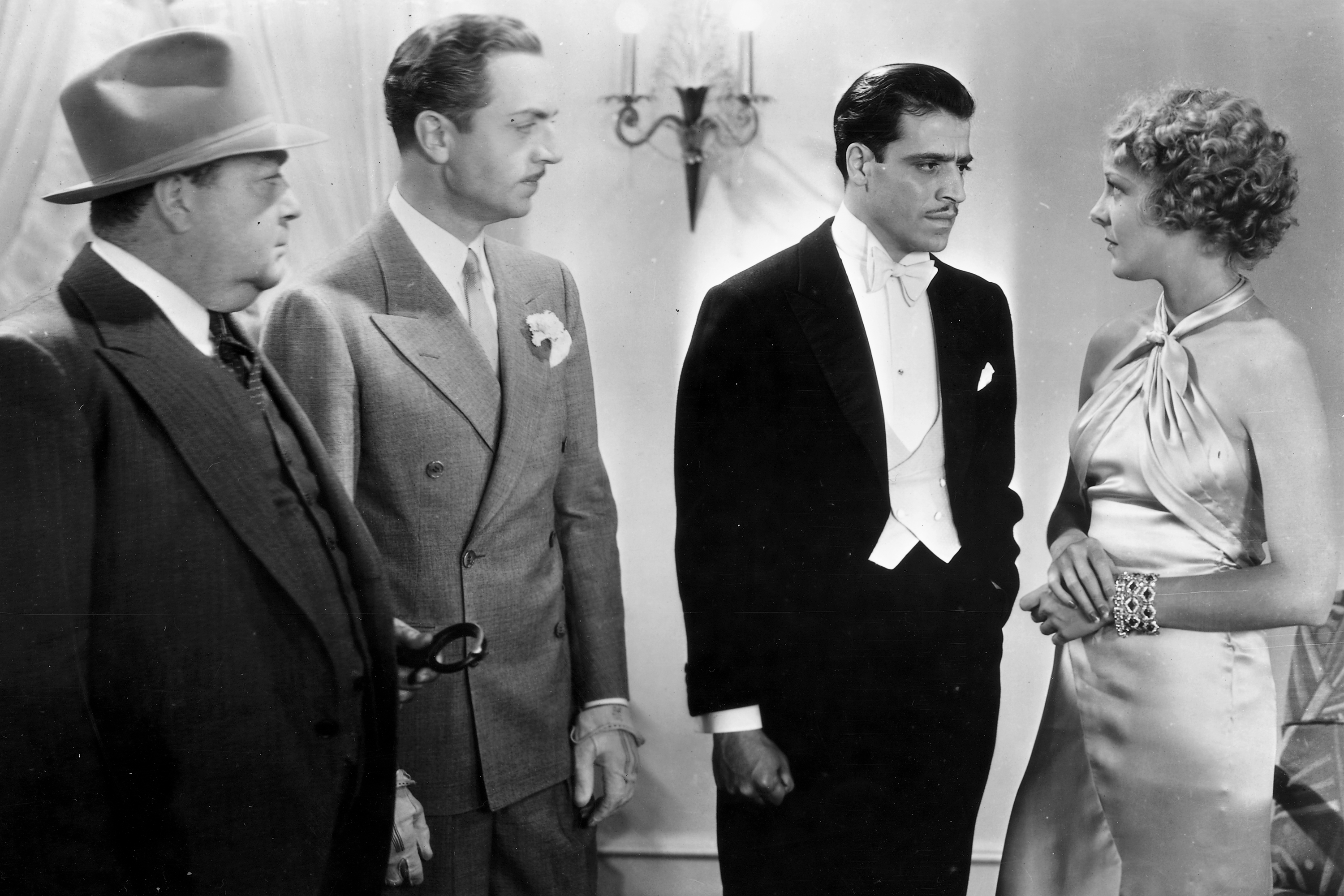
In The Kennel Murder Case, which opens at a dog show, Vance investigates the death of a fellow canine owner initially ruled a suicide. The twists and turns take Vance through a laundry list of suspects, ultimately unmasking the real murderer with the help of—you guessed it—a dog! One of the picture’s most unique elements is a first-person flashback narrated by Vance, unraveling the case using only select sounds pertinent to the murders. That wasn’t the only standout detail, as Curtiz utilized distinctive camera angles, unusual perspectives, innovative transitions and miniatures to keep the proceedings entertaining and moving through the film’s complex plot.
Powell’s Vance was “a likable seeker of truth,” Ron Backer writes in “Mystery Movie Series of 1930s Hollywood.” However, the actor wasn’t fond of the role. In a March 1930 “Talking Screen” interview, Powell bemoaned the lack of action for Vance: “The opportunities of a detective on the screen are too limited. What is his main function? To solve the crime. And how does he do it? By thinking… The interest revolves about him, true enough—but he is like a rock in the center of a whirlpool.” One hopes he enjoyed playing the sleuth he’d soon become most famous for, Nick Charles of The Thin Man series!
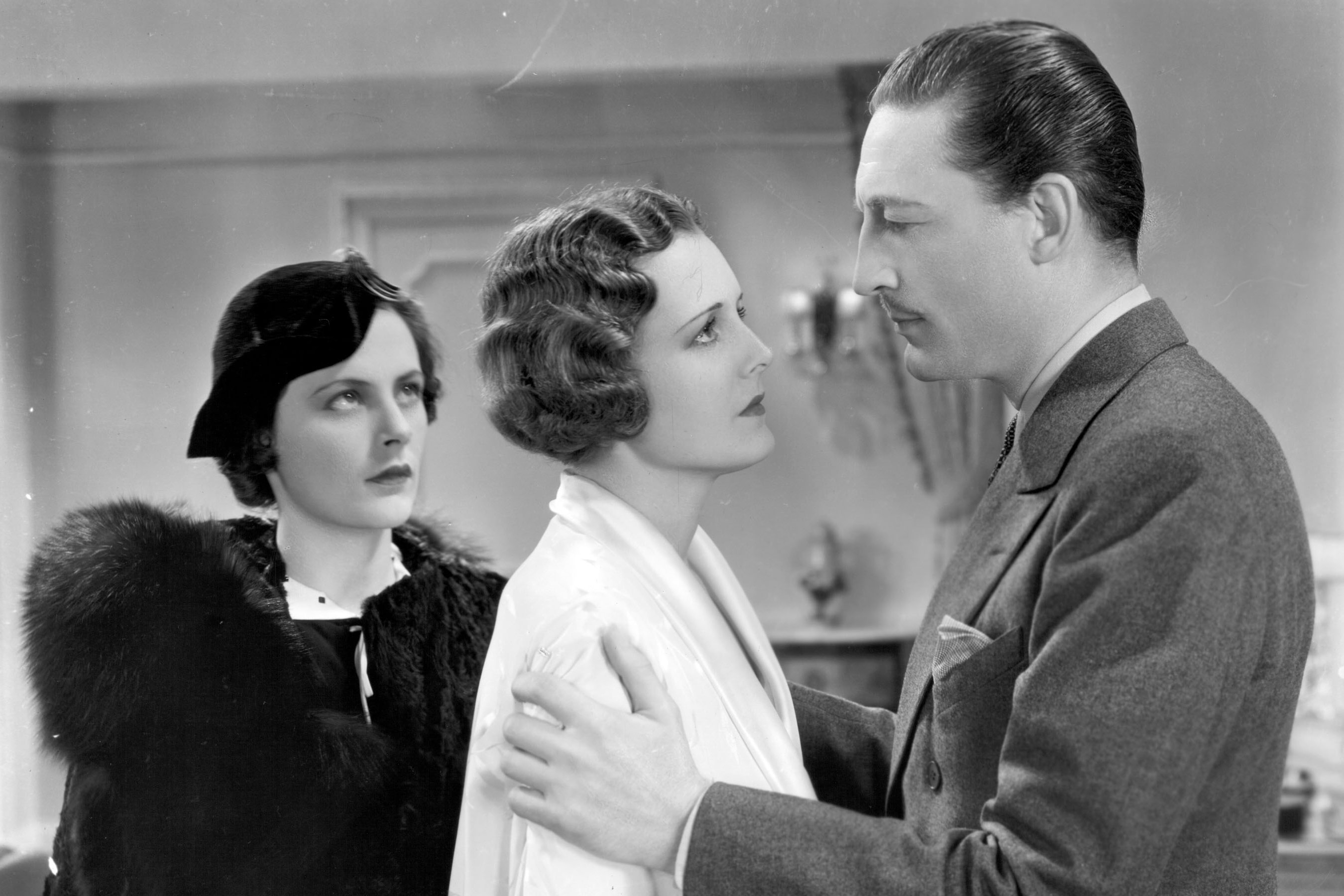
The following year, Powell passed the Vance mantle to William, who starred in The Dragon Murder Case (1934). A mere month later, William leveled up with another well-known literary detective (of sorts): Erle Stanley Gardner’s Perry Mason. Warner Bros. produced six Mason movies in the 1930s, the first four starring William, including the character’s Hollywood debut, The Case of the Howling Dog (1934), and The Case of the Curious Bride (1935). As Backer notes, the first Mason picture positioned the attorney as a more serious man, authentic to the book. In subsequent films, the character’s personality took a turn into comedic territory.
Mason’s appearance in more than 80 novels and short stories generated numerous adaptations across film, radio, comics and TV over the last eight decades, with the most enduring being Raymond Burr’s depiction of the character in the 1950s-1960s TV show and numerous TV movies in the 1980s and 1990s.