Mondays in October | 56 films
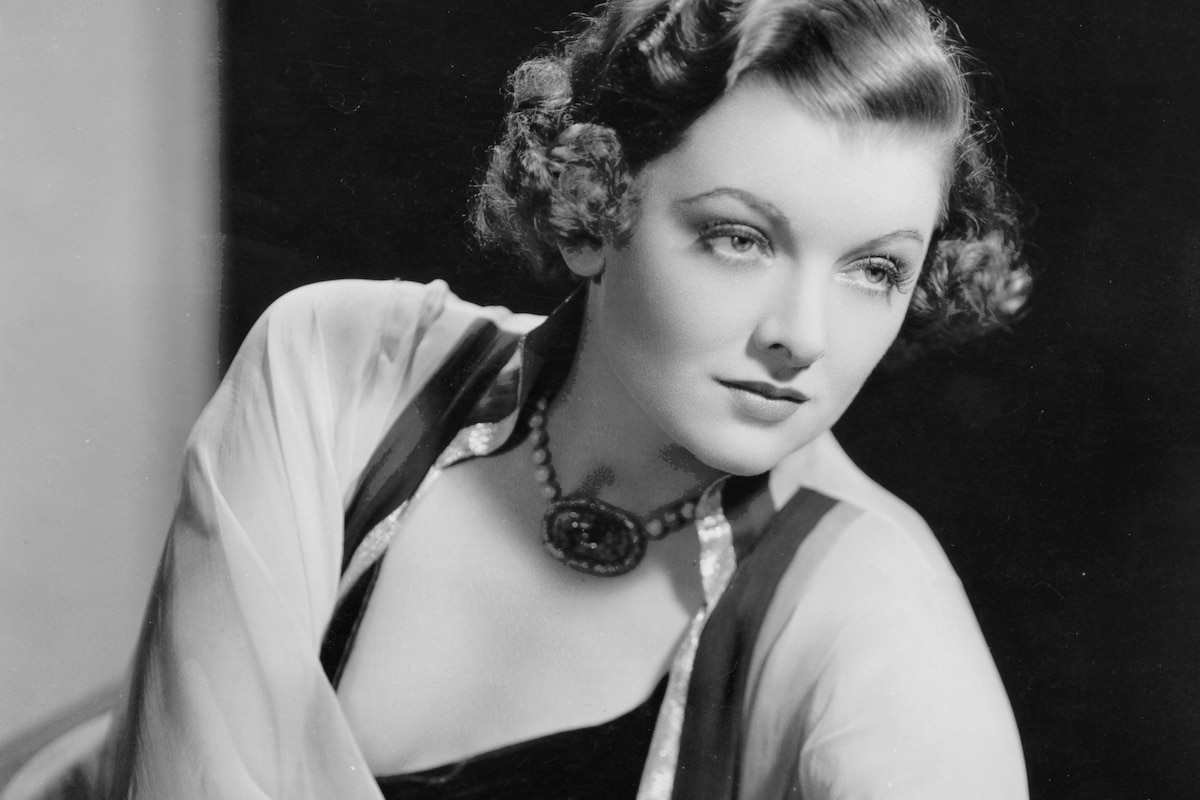
In its 1993 obituary of the actress, the New York Times described Star of the Month Myrna Loy as “spunky and unflappable…the urbane actress personified a liberated wife of intelligence and wry good humor.” Adding that Loy had a “pert face, crinkly smile and a velvet voice,” Loy was also indefatigable. Her feature film career endured an extraordinary 55 years. She was called “The Perfect Wife” and “Queen of Hollywood” during her heyday, which spanned from the mid-1930s to the early 1940s. Her career at MGM is forever intertwined with suave leading actor William Powell. They appeared in 13 films together, most notably as the sophisticated sleuths Nick and Nora Charles in six popular The Thin Man mystery comedies.
When TCM honored Loy with a Star of the Month showcase in 2004, the late beloved TCM host Robert Osborne wrote that Loy thought it ironic that people thought she was the perfect wife. “Some perfect wife I am. I’ve been married four times, divorced four times, have no children and can’t boil an egg.” Men loved her; women wanted to be her. But there was more to Loy than Hollywood glitz and glam. She even stepped away from Tinseltown during World War II to do volunteer work as the assistant head of the American Red Cross welfare activities in New York. Loy also scheduled entertainment for 50 military hospitals. Still, stardom didn’t come easy to Loy. TCM is serving up several titles from her pre-Code days, as well as her MGM hits and character roles from her later years. The 56 films will air Mondays beginning October 5.
She was born Myrna Williams in 1905 near Helena, Montana, on her father’s cattle ranch. After he died of the flu, the family moved to Los Angeles, where she attended Venice High School. When she was 18, she joined the chorus of a stage show and soon began getting film roles. “The teenager was quickly typecast as an exotic temptress, invariably Oriental and often villainous,” said the New York Times. Slinking and gyrating, she was trapped for nearly a decade in the stereotype. She slinks most memorably in The Squall from 1929. Directed by Alexander Korda, who would find success in England as a producer, the campy pre-Code delight finds Loy as a tempestuous gypsy named Nubi. On a dark and stormy night, she escapes her abusive master and finds solace with a farming family. With her wild hair and skimpy clothing, Nubi quickly becomes catnip to all the men in the family. Loy does manage to keep a straight face uttering such lines as “Always the man who wants Nubi and always she get the blame for the trouble. Can Nubi help, can she be beautiful?”
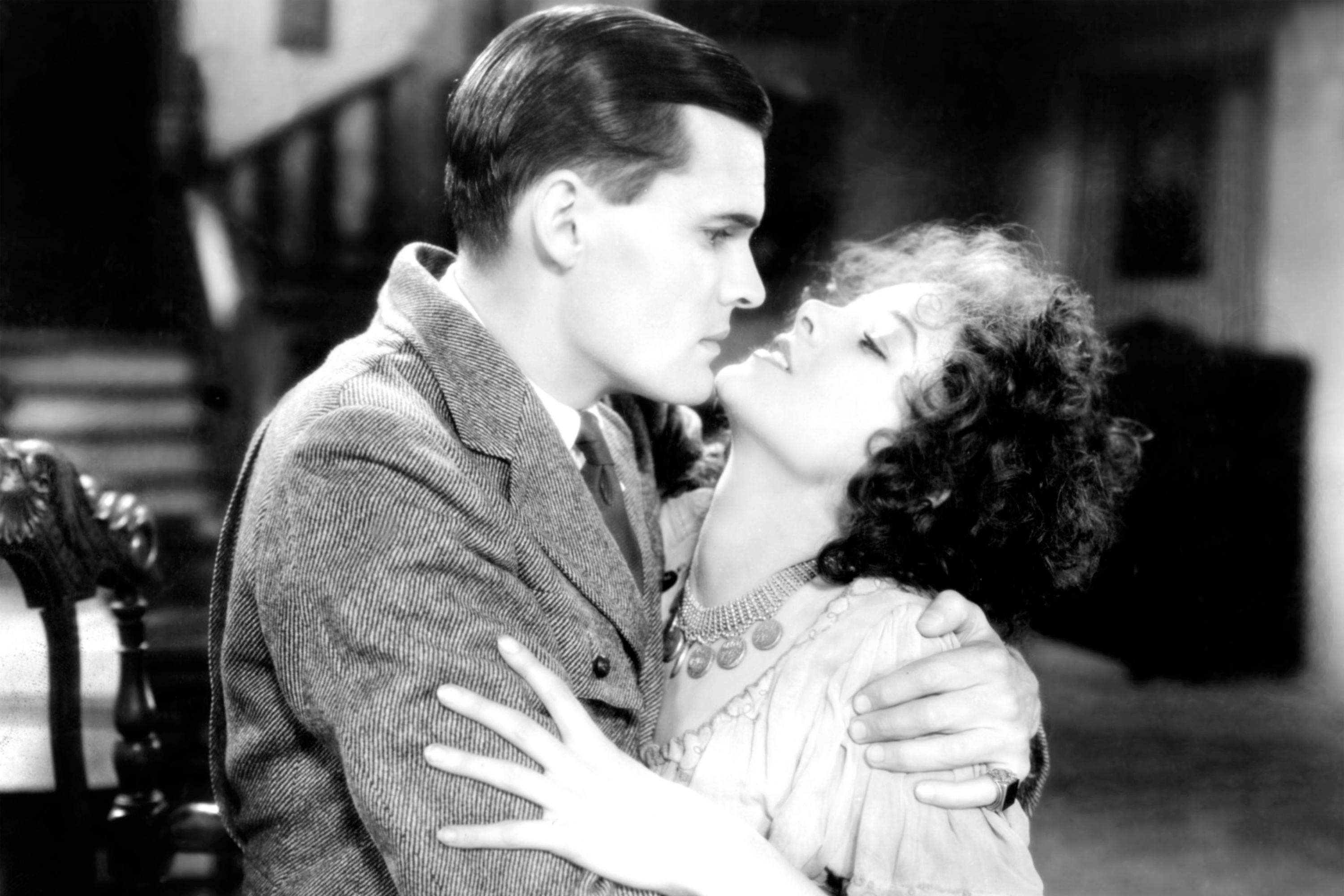
Equally fun is 1929’s Western The Great Divide. This time around, Loy has a field day as Manuella, a hot-blooded Latina servant who has her eye on the owner of a mine. The Truth About Youth from 1930 stars Loretta Young as the typical good girl who discovers her betrothed (David Manners) has fallen for a heartless nightclub singer called the Firefly. Loy gets to dance and sing such pre-Code tunes as “I Have to Have You” and “Playing Around.” Here’s a sample of her risqué dialogue: “If he had any jack, he wouldn't sit there staring at me. He'd be in here crushing the life out of me–and making me like it.”
The year 1932 was a pivotal one in her career, which TCM highlights with eight films, including her first starring role as a manipulative social climber in a low-budget modern-day version of William Makepeace Thackeray’s Vanity Fair. A Letterboxd user noted “Myrna Loy isn’t quite the Myrna she was when she won the ‘Queen of Hollywood’ title, but she’s the best thing” in the film. She gets the opportunity to show off her comedic chops in Rouben Mamoulian’s delightful musical comedy Love Me Tonight as the man-crazy (“Can’t you even get a footman under 40 in this place?”) Countess Valentine, stealing every scene she’s in from stars Maurice Chevalier and Jeanette MacDonald.
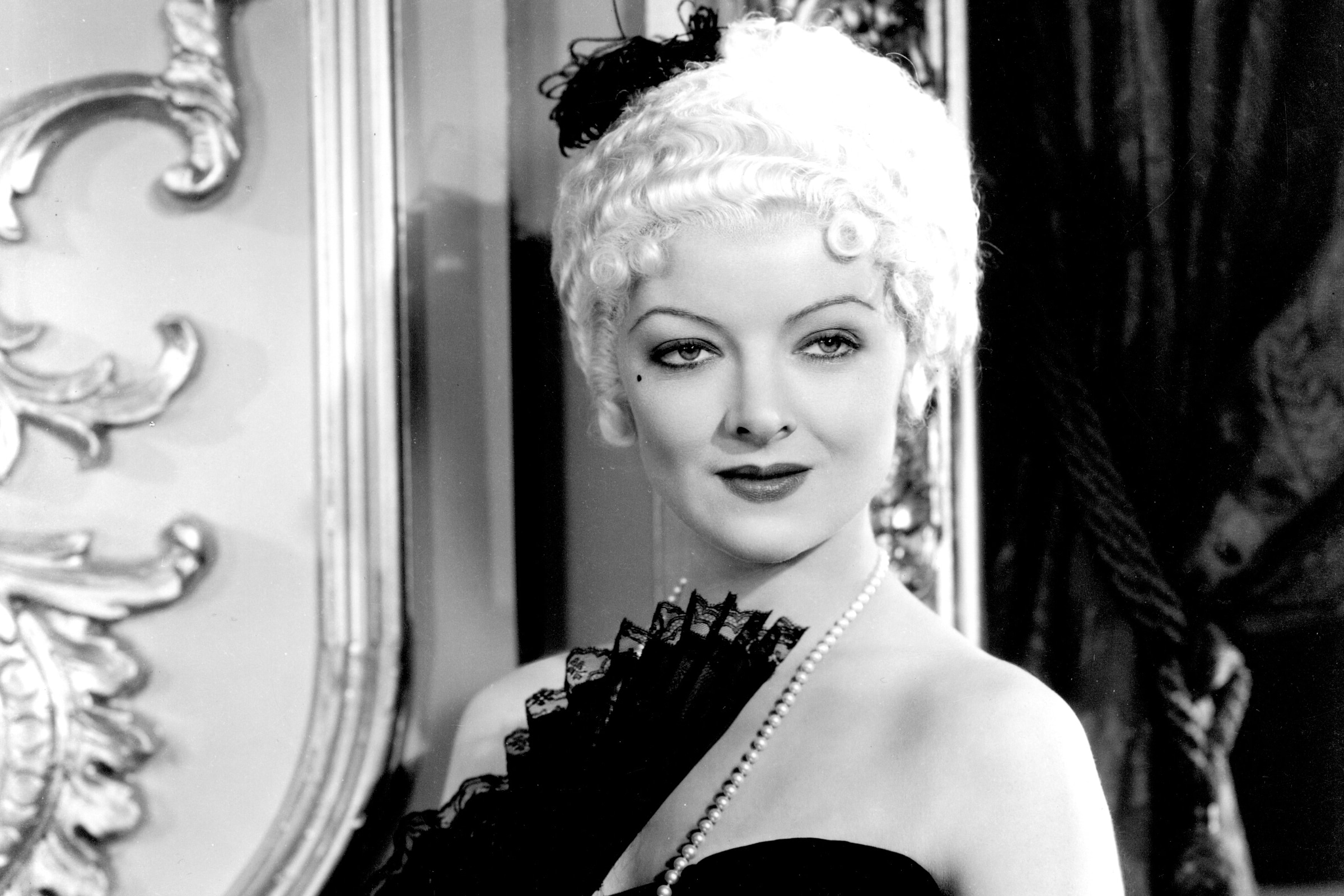
TCM is also airing the violent, strange The Mask of Fu Manchu in which she returns to playing an Asian villain–this time the sadistic nympho daughter of Fu Manchu (Boris Karloff). The New York Times doesn’t even mention her in its pan of the film. Loy’s scripts got a lot better when she joined forces with director W. S. “Woody” Van Dyke, known as “One Take Woody” for his efficiency on set, in the entertaining 1933 Penthouse in which she plays a call girl who helps an attorney (Warner Baxter). Variety was surprised at Loy’s performance, stating, “she reveals new skill in the management of light scenes – light on the surface but with the inference of tenseness in the background.”
Having made a bigger impression on Van Dyke, he cast her in his 1934 crime drama Manhattan Melodrama. You may remember this is the film John Dillinger was watching when he was killed by the F.B.I. outside the theater. Loy plays the girlfriend of a mobster (Clark Gable) and Powell is his childhood friend on the other side of the law who ends up falling for Loy. For her first scene in the movie, Van Dyke needed Loy to run out of a building through a crowd of people and jump into a waiting car. There was one issue, according to TCM.com. Van Dyke didn’t bother to introduce Loy and Powell to each other before the scene. So, when Loy jumped into the car, she landed on Powell’s lap. “He looked up nonchalantly: ‘Miss Loy, I presume?’ I said, ‘Mr. Powell?’ That’s how I met the man who would be my partner in 14 films.”
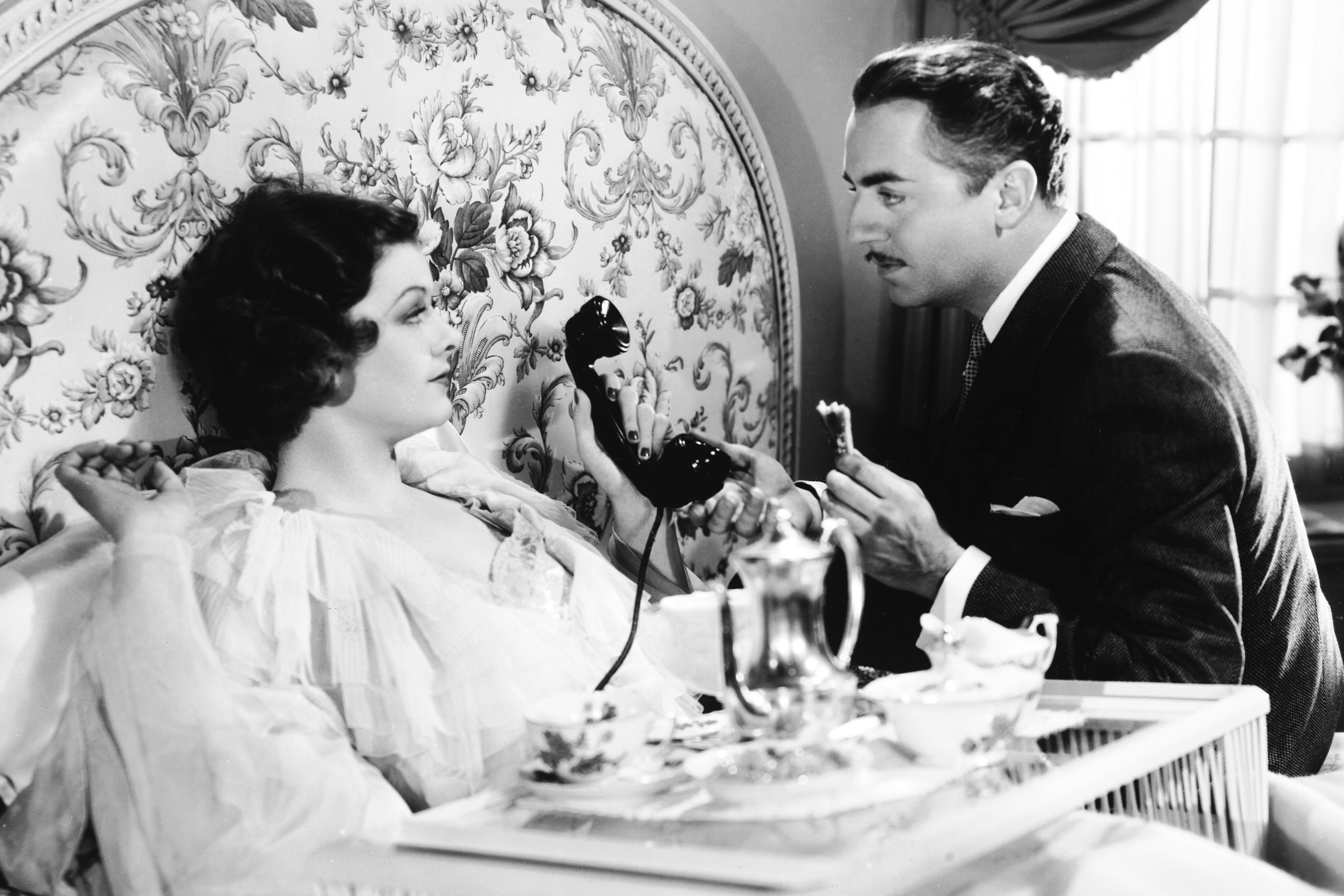
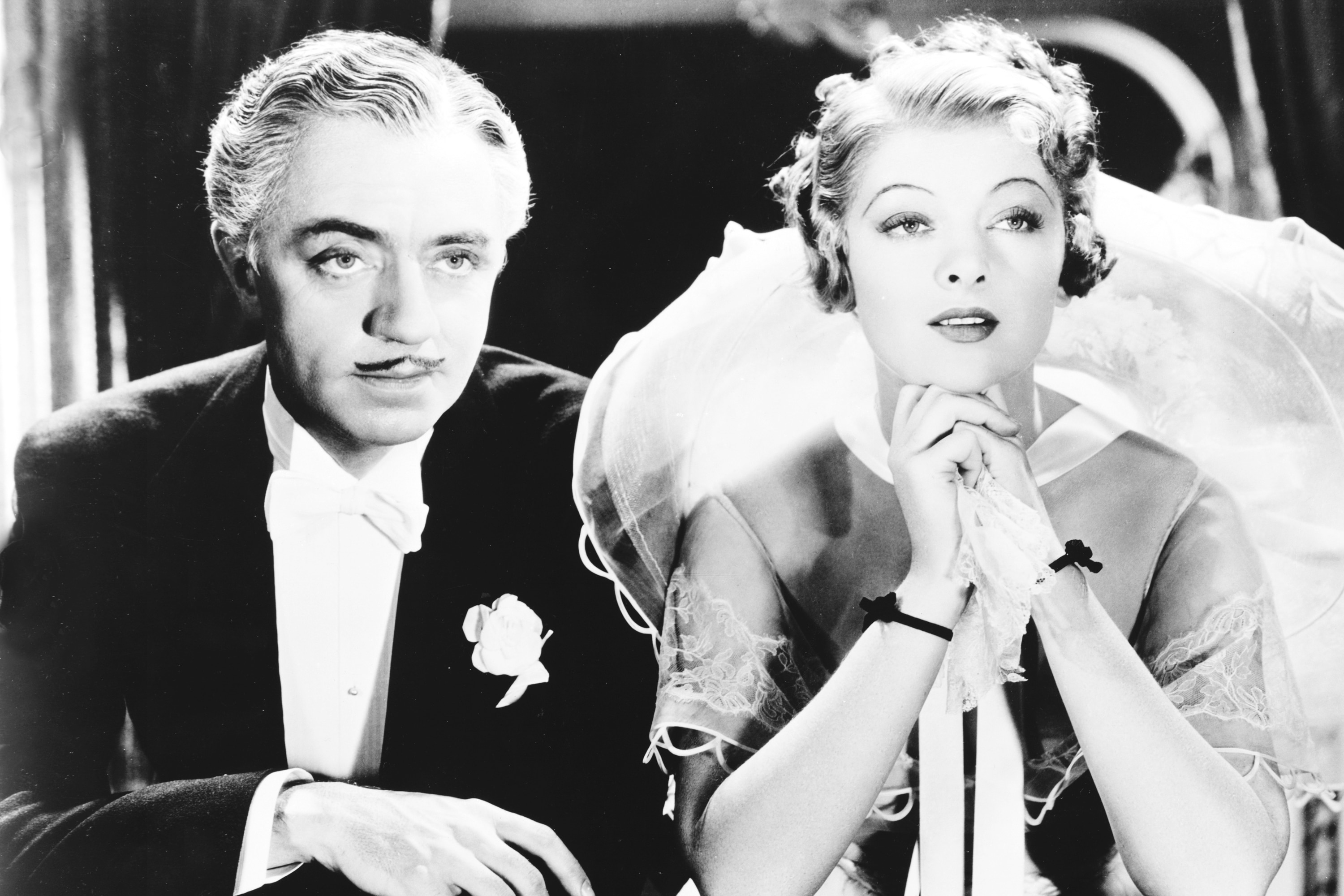
Of course, it was their second film together, The Thin Man (1934), where Loy and Powell created cinematic magic under Van Dyke’s direction. Their dialogue was smart, sophisticated and pre-Code naughty.
Nick Charles: “I’m a hero. I was shot twice in the Tribune.”
Nora Charles: “I read where you were shot 5 times in the tabloids.”
Nick Charles: “It’s not true. He didn’t come anywhere near my tabloids.”
Van Dyke directed the first four of the six Thin Man movies, all airing on October 12. Though the quality declined with the final three entries, especially the final film Song of the Thin Man (1947), the Loy-Powell chemistry never waned. The seven other MGM films Loy and Powell made air on October 5.
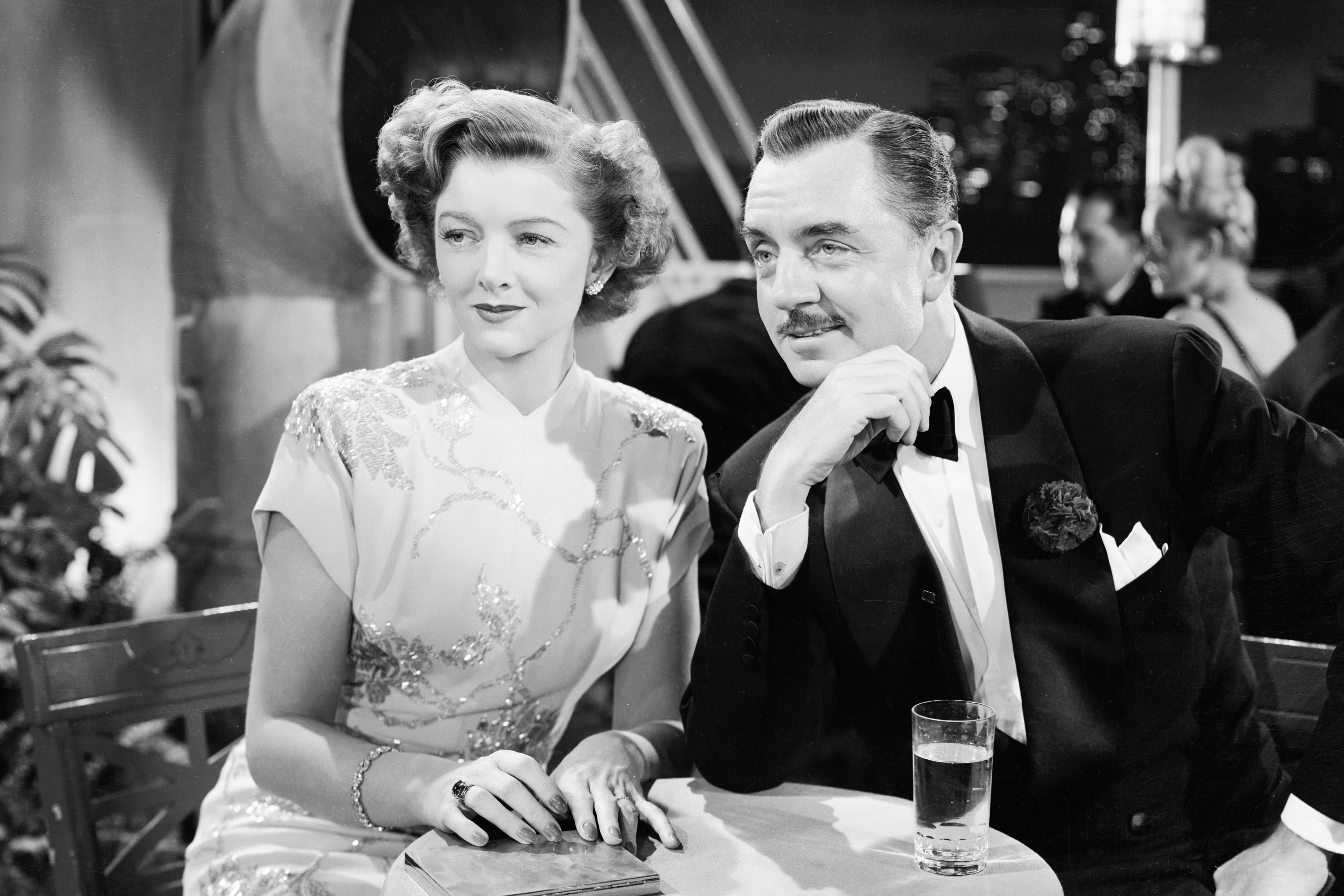
Not every film they made was choice. Take Evelyn Prentice, which was also released in 1934. It’s a minor and predictable affair about the wife of a criminal lawyer whose young boyfriend blackmails her when she tries to end their relationship. The New York Times had nothing but praise for the stars but hated the movie: “Still, Mr. Powell and Miss Loy are surely the most winning of the screen's fictional couples. They are decent, intelligent, delightful and reliably amusing people. But Evelyn Prentice provides them with almost no opportunity for the kind of rippling and urbane humor at which they proved themselves so adept in The Thin Man.” MGM never cast them in a drama again.
Besides Manhattan Melodrama and Evelyn Prentice, October 5th also features three ripping, fun comedies, including Double Wedding (1937), a screwball comedy with Powell abandoning his suit to play a bohemian painter and film director who lives in a trailer next to a bar. Loy plays a strong-willed fashion designer. The film was shut down for several weeks after the death of Powell’s girlfriend Jean Harlow. Then there’s the smart 1936 comedy Libeled Lady, a Best Picture Oscar nominee, which also stars Harlow and Spencer Tracy; the clever I Love You Again (1940), directed by Van Dyke; and 1941’s Love Crazy, in which Powell shaved off his trademark moustache to play Loy’s sister.
The evening concludes with the lavish, though plodding 1936 biography The Great Ziegfeld, which won the Oscar for Best Picture. Powell plays the famed Broadway showman Florenz Ziegfeld and Loy is his second wife, actress Billie Burke. Powell would later say why they worked together so well: “When we did a scene together, we forgot about technique, camera angles and microphones. We weren’t acting. We were just two people in perfect harmony. She has the give and take of acting that brings out the best.”
Loy certainly gave her best in William Wyler’s classic The Best Years of Our Lives (1946) about three veterans trying to adjust to life at home after serving in World War II. Loy is the heart and soul of the drama, which won seven competitive Oscars. Robert Osborne noted, “When producer Samuel Goldwyn needed ‘the perfect wife’ for World War II veteran Fredric March to come home to…it was Myrna he tapped for the part. So eager was Goldwyn to sign her, he agreed to give her first billing ahead of everyone else in the film’s sizeable cast despite the fact hers was, in essence, a supporting role. (Mr. Goldwyn, I might add, gave her a hefty paycheck as well).”
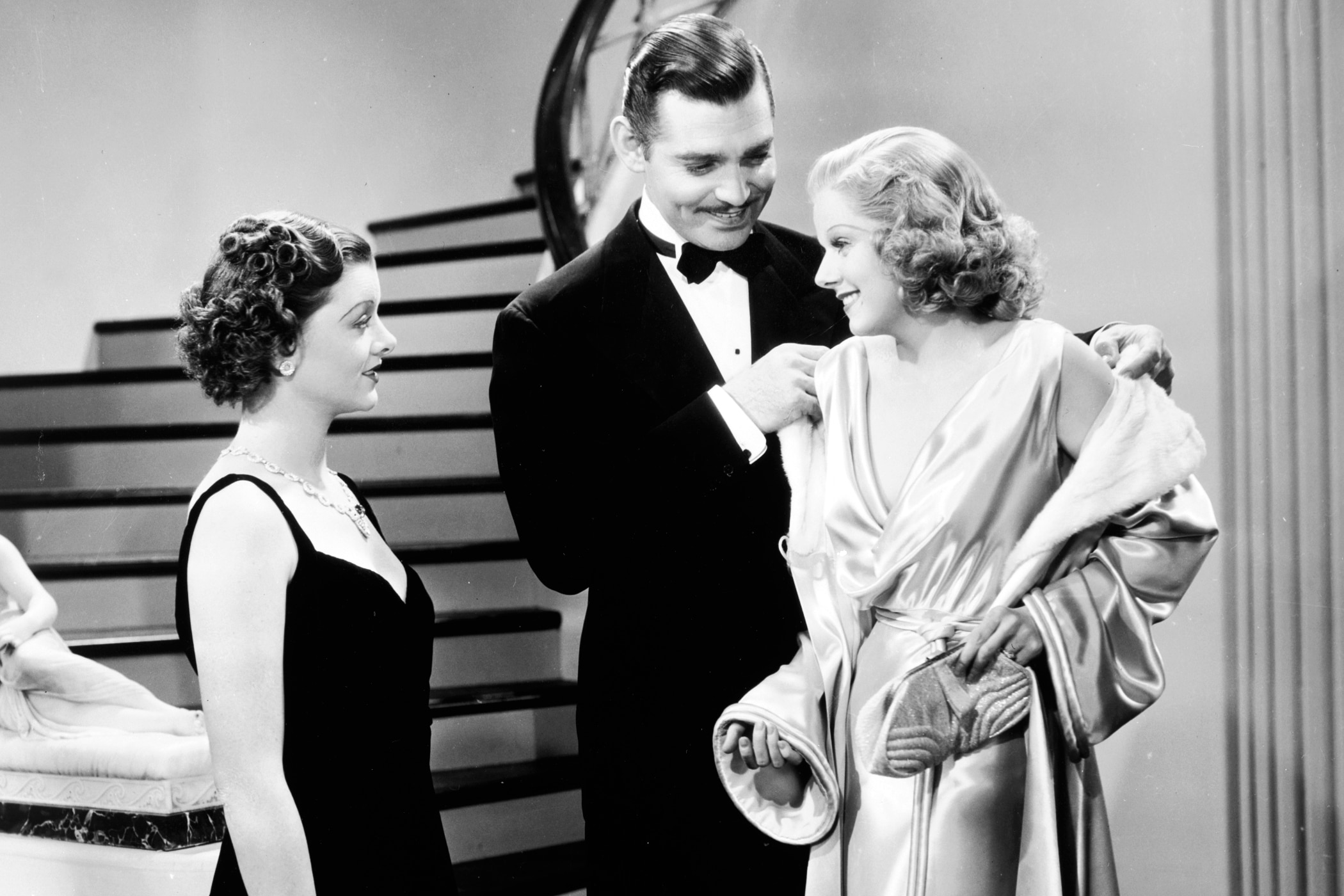
The final Loy evening on October 26 features four of the seven films she made with Clark Gable, who was the King of Hollywood to her Queen, including 1936’s Wife vs. Secretary with Harlow, the 1937 misfire Parnell, and 1938’s Too Hot to Handle and Test Pilot. She was the ultimate mother with 12 kids in the charming 1950 comedy Cheaper by the Dozen and earned fine reviews in the 1960 drama From the Terrace as Paul Newman’s alcoholic mother. And Loy seems to be enjoying herself as a tipsy woman who loves boiler makers in the notable disaster film Airport 1975 (1974). Loy’s month concludes with the rarely seen 1956 comedy The Ambassador’s Daughter, in which she plays the wife of a U.S. senator. The New York Times found her dryly amusing.
Loy continued professionally in films and on TV into the early 1980s. Her last credit was for a guest appearance in 1982 on the NBC sitcom “Love, Sidney.” She took to the stage in the 1960s, touring in such plays as “Barefoot in the Park” and “Janus.” And she made her Broadway debut as a mother, of course, in a short-lived 1973 revival of “The Women.” Hollywood finally took notice of her extensive accomplishments when Loy was honored with career achievement awards from the National Board of Review in 1979 and the Los Angeles Film Critics Association in 1983. Lauren Bacall hosted a 1985 tribute to Loy at Carnegie Hall, describing the veteran actress as a “person, an actress and a face, but also a woman aware of what went on in the country and the world. And she’s a great wit, which I’m a sucker for.” Three years later, Loy received the Kennedy Center Honors.
After never earning an Oscar, let alone a nomination, Loy was given an honorary Academy Award in 1991, two years before her death at 88. Via a satellite hookup from her apartment in New York, Loy kept her thanks simple: “You’ve made me very happy. Thank you very much.”