Tuesdays in May | 21 Films
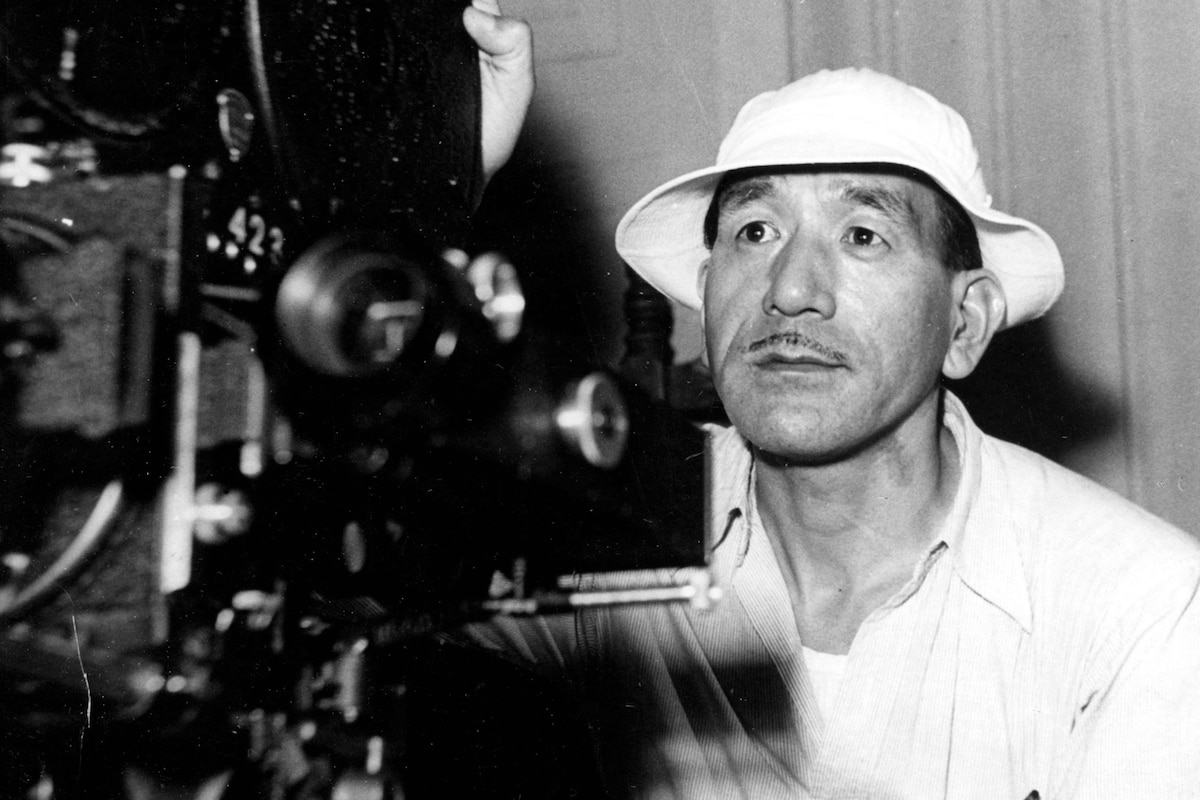
The oft-quoted cliché about Yasujirō Ozu is that he is the most “Japanese” of Japanese directors, a somewhat problematic claim (is there really a single ideal expression of Japanese character?) that nonetheless strives to describe a style and sensibility that rejected the cinematic influences of the West. His evolution is all the more fascinating given his love of Hollywood films as a voracious young film buff. His film career began in the early 1920s as an assistant cameraman at Shochiku, Japan's biggest film studio. He remained at Shochiku his entire career, working his way up to assistant to director Tadamoto Okubo before making his directorial debut in 1927. The film, the only period piece of his career, has not survived. Ozu made every type of genre in those early years, from lighthearted college comedies to crime dramas and romantic melodramas to social dramas, turning out as many as six features a year. But, he really found his voice in shomin-geki, which translates to "home drama," stories that explore the everyday lives of middle and lower middle-class citizens.
Where so many of his contemporaries delved into adventures and elegant period dramas, Ozu’s films are contemporary to his times. From his silent films in the early 1920s to his final film in 1962, An Autumn Afternoon, he set his quietly understated family dramas and modest comedies in the homes and workplaces of everyday citizens trying to make a life for themselves and their children. His films are a veritable survey of Japanese society from the late 1920s to the early 1960s, exploring themes of social expectations, familial responsibility, sacrifice and the collision of traditional culture and modern life, from The Depression through The War to the transition of a new democracy and Western-style economy.
TCM celebrates the legacy of Yasujirō Ozu, proclaimed by film critic and historian David Bordwell as "the greatest director ever to work in the history of cinema," with 20 features plus the TV premiere of a new documentary on the legendary filmmaker.
Tuesday, May 5
Daniel Raim takes a deep dive into the master filmmaker in The Ozu Diaries (2025). Making its TV premiere fresh from a screening at the 2026 TCM Classic Film Festival, Raim's portrait draws from Ozu's diaries to tell the filmmaker's story in his own words. Raim describes the film as his "attempt to sit with him across time—to understand his pain, his joy, his contradictions, and his singular way of seeing the world."
The first night continues with a focus on Ozu's early career, beginning with his hit comedy I Was Born, But… (1932), a "picture book for grown-ups" (as the opening titles read) and a social satire of comic delights that turns on the rebellious young sons of a salaryman. "I started to make a film about children and ended up making a film about grownups," mused Ozu in a 1958 interview. His 24th feature film became his breakthrough success with both audiences and critics, who awarded it first prize at the Kinema Junpo awards.
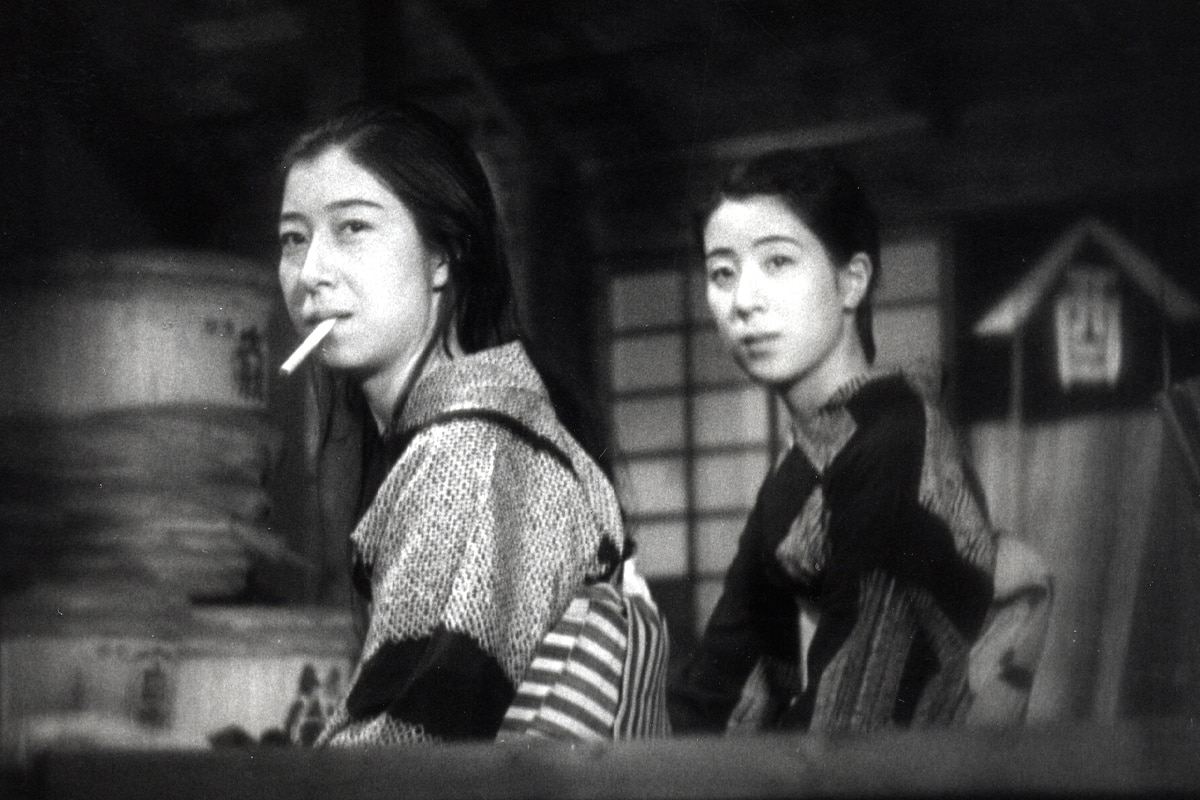
After years of resisting the transition to sound, Ozu feared he was being "left behind by the other directors" and made the leap with The Only Son (1936), the story of a widowed mother who sacrifices her future to send her son to high school. It was one of Ozu's darkest films, but it proved that his style and sensibility could thrive with sound. In the bittersweet drama A Story of Floating Weeds (1934), an itinerant theatrical troupe comes to a remote mountain village where the leader reconnects with his former mistress and his illegitimate son. One of his final silent films, it plays down the melodramatic aspects to focus on the characters and the languid atmosphere of the threadbare troupe on a break from the bustle of the road.
Tuesday, May 12
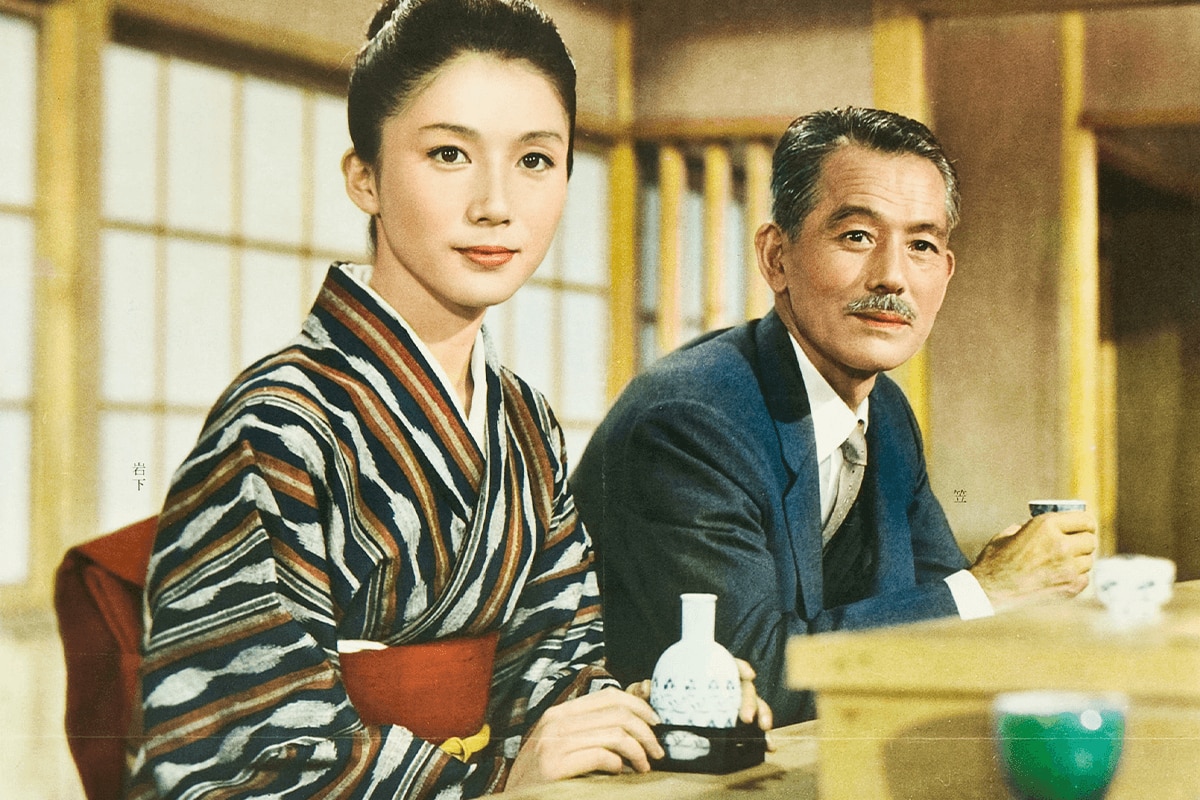
"Pictures with obvious plots bore me," Ozu confessed after World War II. While his subject remained focused on family and marriage, his style evolved through the years to become more simplified and austere. He favored simple and elegant compositions: his camera fixed and unmoving, located low to the ground, as if seen from an observer seated cross-legged on a tatami mat. Between scenes, he cut to "pillow shots," still life scenes of the world around his characters that "cushion" the space between scenes. Framed perfectly by Ozu’s lens, these images are among the loveliest still-life moments seen in 20th-century cinema.
This style and sensibility inform the "Noriko Trilogy," all starring Setsuko Hara playing a character named Noriko (though they are otherwise unrelated). In Late Spring (1949), she's the devoted only daughter of a widower (Chisû Ryû, Ozu's favorite leading man), who is determined to marry her off so she doesn't end up alone. She's an independent-minded modern woman pressured by her traditional parents to marry in Early Summer (1951), and Ryû costars here as her brother. Tokyo Story (1953), a deceptively simple story of an elderly couple who visit their married children in Tokyo, stars Ryû as a father whose grown children are too busy to pay him any attention, and Hara plays the widow of a son who died in The War. Within this simple framework, Ozu creates a quiet but profound drama of the changing face of Japanese culture and the loss of traditional values in modern society. Beloved in Japan, it took decades for international audiences to discover Tokyo Story, but it soon became revered around the world. Since 1992, it has been voted one of the 10 best films ever made in the Sight and Sound critics' polls. In 2022, it ranked number four.
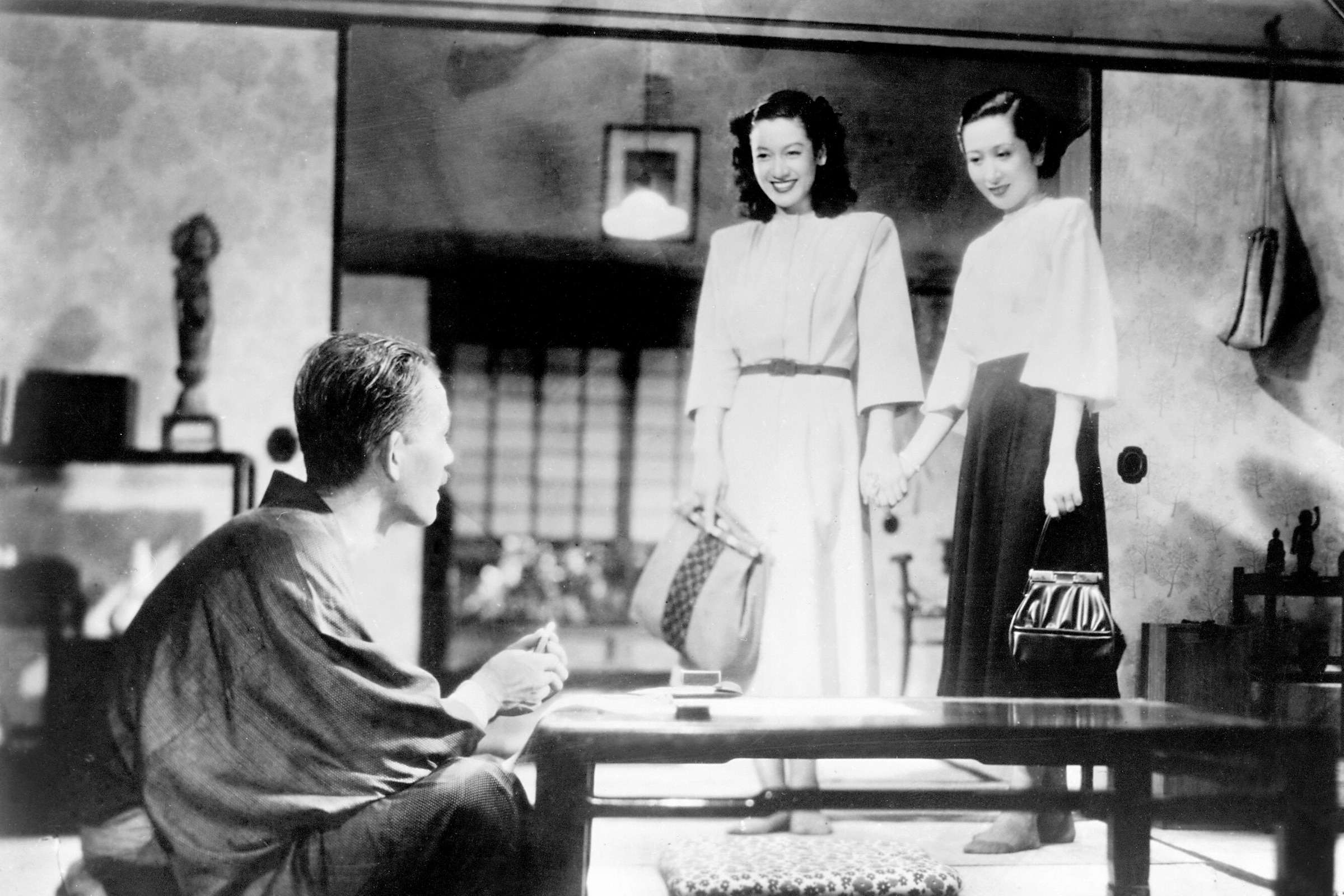
The balance of the evening steps back to Ozu's early sound features. For his second sound feature, What Did the Lady Forget? (1937), Ozu left the lower-middle classes for a comedy about a modern young woman from Osaka who upsets the household of her upper-class aunt and uncle in Tokyo. He was called up to serve in the Second Sino-Japanese War after completing the film and struggled to find a script that the censor office would find acceptable upon his return. He finally made The Brothers and Sisters of the Toda Family (1941), the story of the conflicts that arise when a widowed mother and her unmarried daughter move into the home of the eldest son and clash with the status-conscious daughter-in-law. Audiences, facing their own wartime struggles, made the drama a box-office hit. There Was a Father (1942), the story of a widower (Chishû Ryû in his first leading role for Ozu), his devoted son and the sense of duty that will keep them apart for most of their lives, was another success. The themes fit the propaganda purposes of the government, but while on the surface it celebrates obedience as a virtue and duty as the highest calling, there is an ambiguity in Ozu's tone. Japanese film historian Donald Richie called it "one of Ozu's most perfect films."
Tuesday, May 19
After There Was a Father, Ozu was called back to service. When he returned to Japan in 1946, he found much of Tokyo in ruins. His first post-war film, Record of a Tenement Gentleman (1947), about a middle-aged woman who reluctantly takes in a war orphan wandering the streets, reflected the hardships of those surviving on the margins. The long shadow of war also falls across A Hen in the Wind (1948), an untypically melodramatic story about a woman who prostitutes herself to pay for her son's medical treatment while awaiting the return of her husband. While Ozu was disappointed with the result, film scholar Joan Mellen praised the way Ozu "brilliantly and honestly confronts the postwar moment."
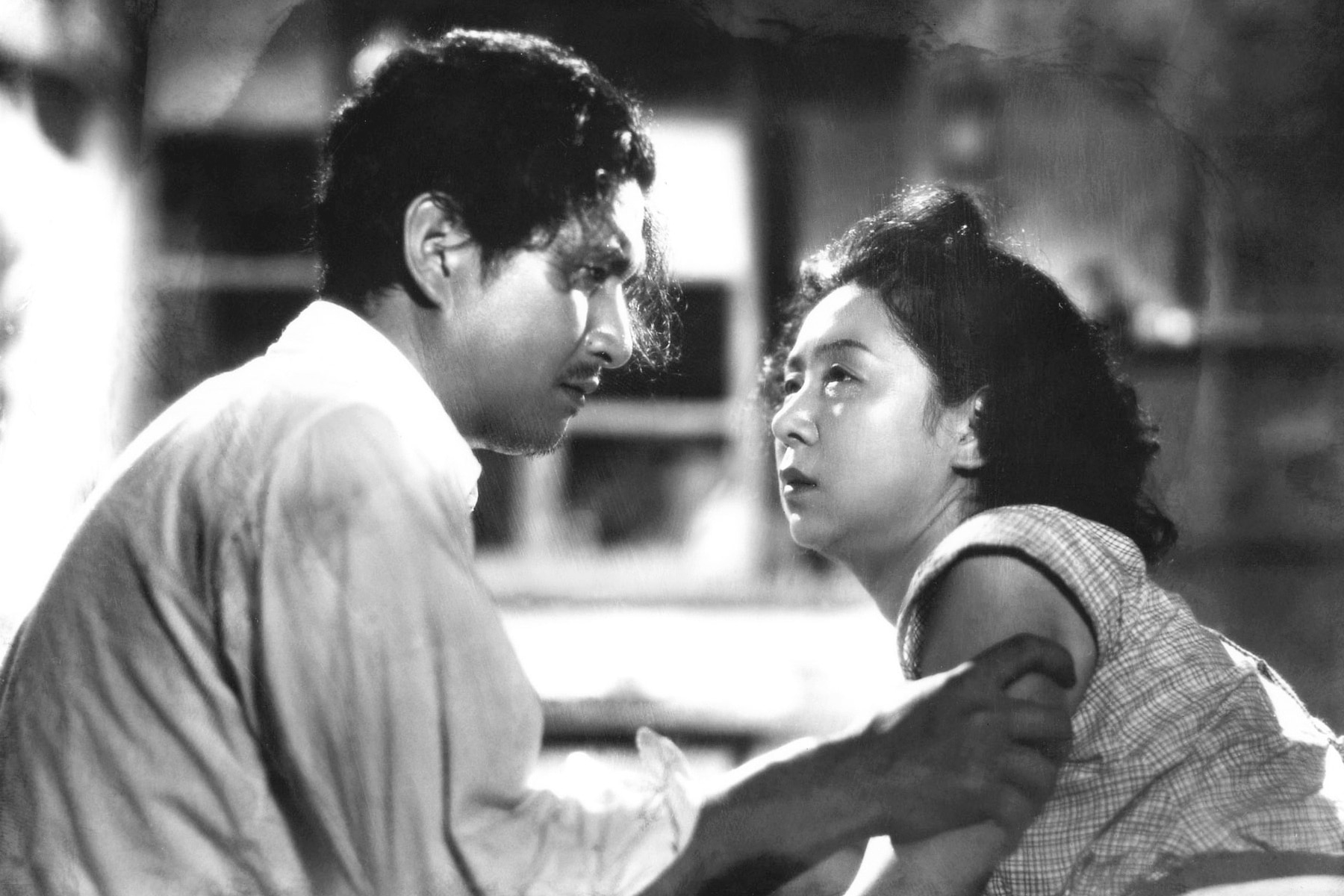
More typical of Ozu is The Flavor of Green Tea Over Rice (1952). A portrait of a marriage on the verge of falling apart, it offers a glimpse of a culture in transition after World War II, where Western conventions (from business suits to baseball games) co-mingle with Japanese pursuits (a pachinko parlor), routines and homes. Early Spring (1956) returns to the milieu of the white-collar worker for the story of a young man becoming disillusioned with life after college. It also sees a shift in Ozu's interest, from the older generations to the lives of young people. Tokyo Twilight (1957), the last film that Ozu shot in black-and-white, is also one of his darkest. The story of two adult sisters, both attempting to escape their increasingly lonely and unhappy lives, confronts abortion, infidelity and suicide.
Tuesday, May 26
Just as Ozu had put off the transition to sound films, he resisted shooting in color until late into his career. "I felt I'd regret it later if I didn't do it now," he explained in 1958. The final night in our series shows that despite his misgivings, Ozu beautifully incorporated color photography into his style.
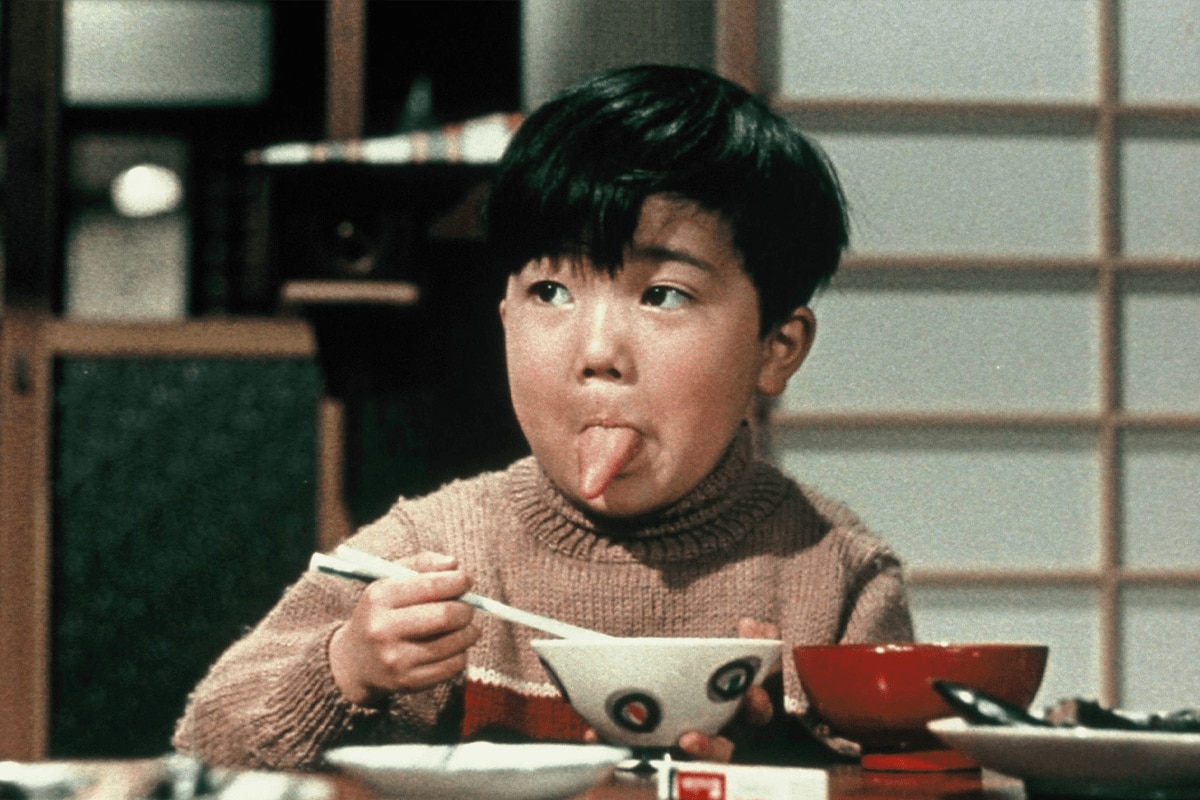
Ozu made his color debut with Equinox Flower (1958), a film that also marked a more modern portrait of the younger generation resisting and even rebelling against the traditions of their parents. Defiance also drives the comedy Good Morning (1959), though the rebels here are two adolescent schoolboys who, after being told they talk too much, protest what they see as the meaningless chatter of adults by refusing to speak at all. Though not a direct remake of his silent comedy I Was Born, But…, it echoes its themes. It also displays the whimsical side of Ozu with fart gags running through the film. In The End of Summer (1961), an aging widower with three grown daughters takes up with an old mistress in retirement, much to the horror of his children. What begins as an earthy, witty comedy, with a patriarch whose mischievous streak is almost childlike, turns melancholy as the children confront his mortality.
Floating Weeds (1959), a remake of his silent classic The Story of Floating Weeds, is a perfect illustration of his mature style, directed with Ozu’s by now inimitable stillness and grace, which gives it a timeless serenity and purity. Though his home studio was Shochiku, he made Floating Weeds for Daiei, home to the great cinematographer Kazuo Miyagawa (whose legacy included 1950’s Rashomon and 1953’s Ugetsu). Their sole collaboration resulted in arguably Ozu's loveliest, most visually expressive film. Late Autumn (1960) is also a remake of sorts, a reworking of Late Spring. Setsuko Hara is now a widowed mother who fears that her daughter is sacrificing her future to remain at home. "Life, which seems complex, suddenly reveals itself as very simple—and I wanted to show that in this film," Ozu wrote in 1960. An Autumn Afternoon (1962), Ozu's final film, revisits the theme one last time with Chisû Ryû once again playing a middle-aged widower seeking a husband for his grown daughter.
Mortality was surely on the aging filmmaker's mind. His mother died while he was shooting An Autumn Afternoon, and Ozu was diagnosed with cancer the next year. He died in 1963 on his 60th birthday. His tombstone features a single character, "mu," which roughly translates to "nothingness" but, according to Richie, "suggests the nothing that, in Zen Philosophy, is everything." It's a fitting sentiment for a filmmaker who expressed a world of emotion and human insight in simple, understated stories of families and their complicated relationships.
Sources:
"Compassionate Detachment," David Bordwell. Criterion Collection Blu-ray of Tokyo Story, 2013.
Japanese Film Directors, Audie Bock. Kodansha International USA, 1978.
"Yasujiro Ozu," Audie Bock, in World Film Directors: Volume One, 1890–1945, edited by John Wakeman. The H.W. Wilson Company, 1987.
Ozu, Donald Richie. University of California Press, 1974.
"Stories of Floating Weeds," Donald Richie. Criterion Collection DVD set of A Story of Floating Week / Floating Weeds, 2004.