Thursdays in December at 8pm ET | 24 Movies
We all feel like we could use a little divine help sometimes. Whether you’re spiritual, religious or simply believe in some kind of higher power, there are times when we want to look beyond the mortal realm and see if an angel or even the Lord might come into our humble lives and give us a little assistance. That’s the theme of this month’s TCM Spotlight airing every Thursday at 8pm ET, where angels, devils and even the Big Guy come down to Earth to steer the lives of ordinary people. Although these can take the form of grand morality plays, other times, the stakes can be far more intimate and quirkier.
Look no further than some of the films from our first night of programming on December 4th, which highlight “Angelic Relationships.” In Here Comes Mr. Jordan (1941), up-and-coming boxer Joe Pendleton (Robert Montgomery) dies in a plane crash only to ascend to Heaven and learn it wasn’t his time yet. A manager in the afterlife, Mr. Jordan (Claude Rains), seeks to rectify the situation only for both Joe and Jordan to discover that Joe’s body was quickly cremated after the crash. Seeking a new body, Jordan places him inside wealthy playboy Bruce Farnsworth, who has his own set of problems as his wife (Rita Johnson) and her lover (John Emery) want to knock him off for the inheritance. Making matters worse, Joe (now in Farnsworth’s body), falls for Bette Logan (Evelyn Keyes), a young woman whose father was framed for fraud by Farnsworth before Joe came along.

What makes the film work so well—aside from depicting Heaven as a comical bureaucracy where even angels make mistakes—is the fun banter between the working-stiff Joe and the quiet grace exuded by Jordan. It makes them a unique comic duo as Joe, rightfully annoyed as if he’s being bounced around by customer service, just wants his shot at the title (“I was in the pink!” he exclaims on numerous occasions), with Jordan calmly talking him down.
A similar grace appears in The Bishop’s Wife (1947), a unique holiday romance featuring Cary Grant as Dudley, an angel trying to bring misguided Episcopal Bishop Henry Brougham (David Niven) back around to what’s important in life. Like many of the movies in this spotlight, there’s a lot of comedy to be found between the mortal and the divine, as in this case, Brougham, who knows Dudley is a divine presence, sees a rival usurping his place in the community. And yet this jealousy (and to be fair, who wouldn’t be jealous of the charming Grant?) only leads to a surprising reconciliation as it is the angel who envies the man.
On December 11th, “Divine Intervention” gets a little zanier in a post-Code world that didn’t have to worry as much about poking a little fun at the presence of the Almighty. Look no further than the sweet, wry Oh, God! (1977) that has the Lord (George Burns) call on Jerry Landers (John Denver), the assistant manager of a supermarket, to serve as his messenger. Carl Reiner’s movie would never have made it past the censors 30 years prior with a God that doesn’t adhere to any single religious faith and admits that he made mistakes like the avocado (“I made the pit too big”). But in 1977, audiences could not only take those perspectives in stride, but also agree with the movie’s secular, humanist approach, where God wants people to work together to make the world better rather than rely on miracles.
However, if you want to get more irreverent, stay up later (or set your DVR) for Monty Python’s take on the Almighty. There’s a bit of God in Monty Python and the Holy Grail (1975). When the Lord tasks King Arthur (Graham Chapman) and his knights with finding the grail, Arthur replies, “Good idea, O Lord!” and God roars back, “’Course it’s a good idea!” But if you want to get really silly with the divine presence, watch Monty Python’s Life of Brian (1979), where Brian Cohen (Chapman) keeps getting mistaken for the Messiah. For a sense of the irreverent, consider how some would see a scene of mass crucifixion as cause for lament. For the Python crew, it’s cause for a musical number.
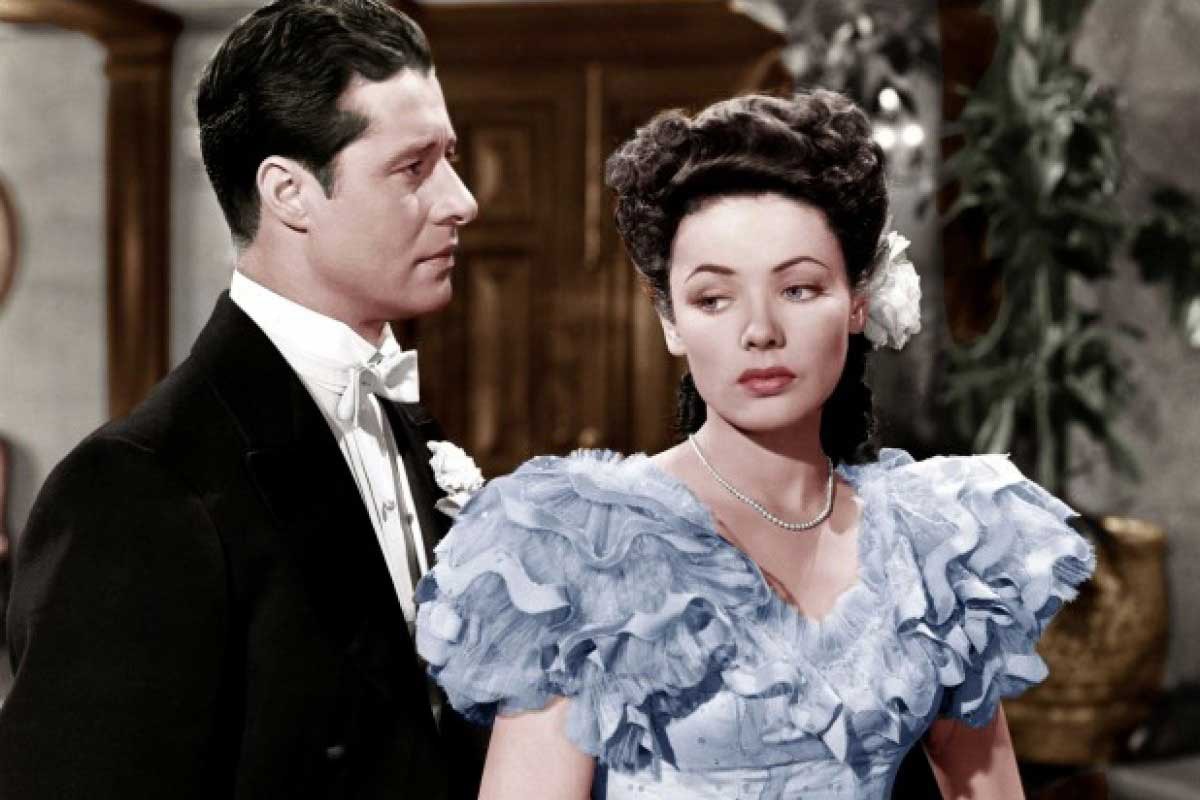
On December 18th, TCM takes us to the Bad Place with “Devilish Struggles,” and perhaps no struggle as devilish as the confusion of titles for “Heaven Can Wait.” Let’s clear it up right now: Here Comes Mr. Jordan was based on Harry Segall’s 1938 play “Heaven Can Wait.” Here Comes Mr. Jordan was later remade as Heaven Can Wait in 1978 (and which you can see at 8pm ET on December 11th). However, the Heaven Can Wait from 1943 that kicks off tonight’s lineup is based on the Ladislaus Bus-Fekete play “Birthday” and has no connection with the Segall story. Instead, the 1943 movie follows the cad Henry Van Cleve (Don Ameche), who believes he deserves to go to Hell for all his misdeeds and shares his life story as proof. It’s a slight, silly affair courtesy of director Ernst Lubitsch that pokes fun at what society considers moral in the grand scheme of things.
To really see the devil at work, stay tuned for Angel on My Shoulder (1946), which has Harry Segall taking his Here Comes Mr. Jordan idea and twisting it for Beelzebub. The mortal this time around is Eddie Kagle (Paul Muni), a gangster just released from prison and eager to get back to a life of crime only to be quickly murdered by his supposed partner, Smiley Williams (Hardie Albright). When Eddie gets sent to Hell, the devil (Rains in an inspired bit of casting), sees an opportunity to put Eddie’s soul in the body of an upstanding judge who looks just like the deceased criminal. Eddie agrees because it will provide the opportunity to get revenge on Smiley, but the more time Eddie spends walking in the judge’s shoes and spending time around his good-hearted fiancée Barbara (Anne Baxter), the more he starts turning away from evil, much to Satan’s chagrin. If you like Here Comes Mr. Jordan, you owe it to yourself to see Angel on My Shoulder, which feels both like a companion piece as well as a sharper take on a similar narrative.
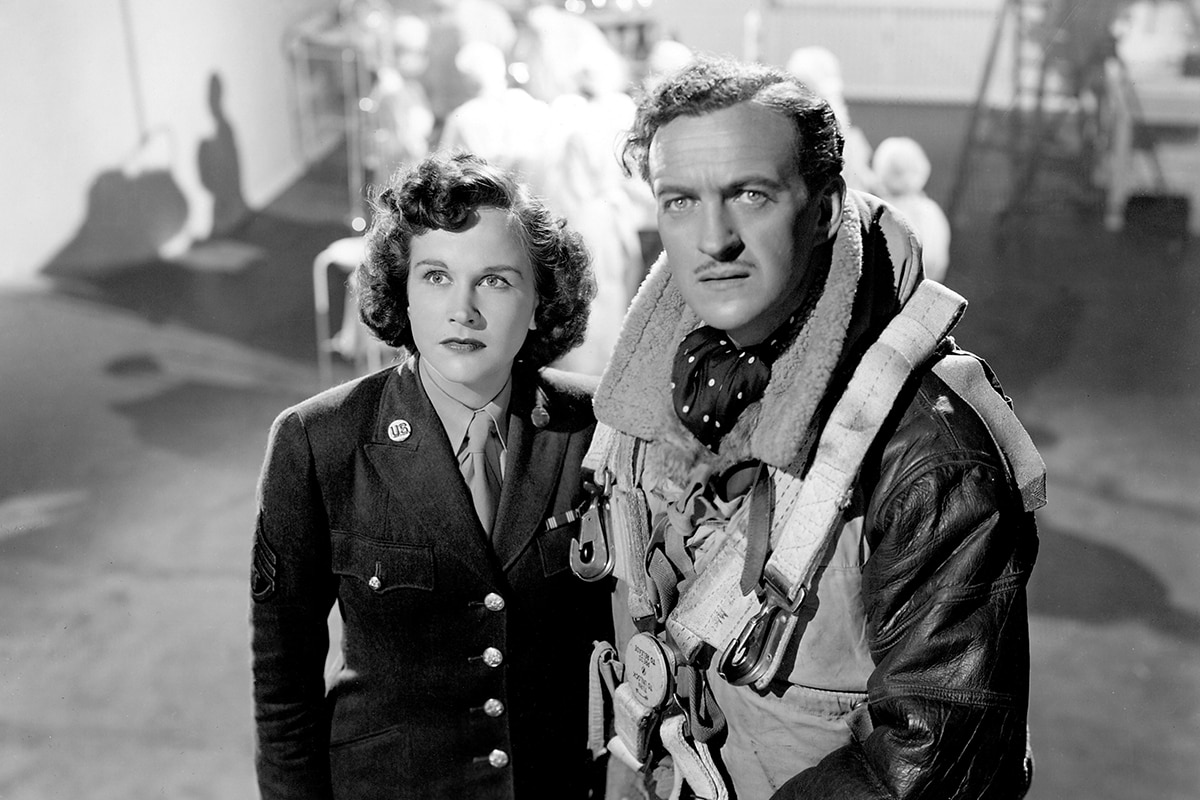
Our spotlight wraps up on Christmas Day with “Angels Are Everywhere” and the evening begins with one of Powell and Pressburger’s best movies, A Matter of Life and Death (1947). A stirring post-war feature, the story follows Peter Carter (Niven), a Royal Air Force pilot shot down during combat. As his plane plummets to Earth, he has a deep, meaningful conversation with June (Kim Hunter), an American radio operator. However, due to the fog, the angels can’t pick him and take him to the afterlife. When they do discover him, he makes the case that he can’t go now that he and June have fallen in love.
The Archers’ dazzling use of color is on full display here as the scenes on Earth are depicted in rich, vibrant Technicolor while the afterlife is rendered in a clean, sterile monochrome. It’s a movie that not only celebrates life and does so within an unapologetically romantic framework, but also feels respectfully mournful, a film not only concerned with death, but particularly all the soldiers who died in World War II. For the movie to bounce between playful (like the scenes with Conductor 71, which has Marius Goring playing the role as comically French) and the melancholy without missing a beat makes it one of Powell and Pressburger’s most indelible accomplishments.
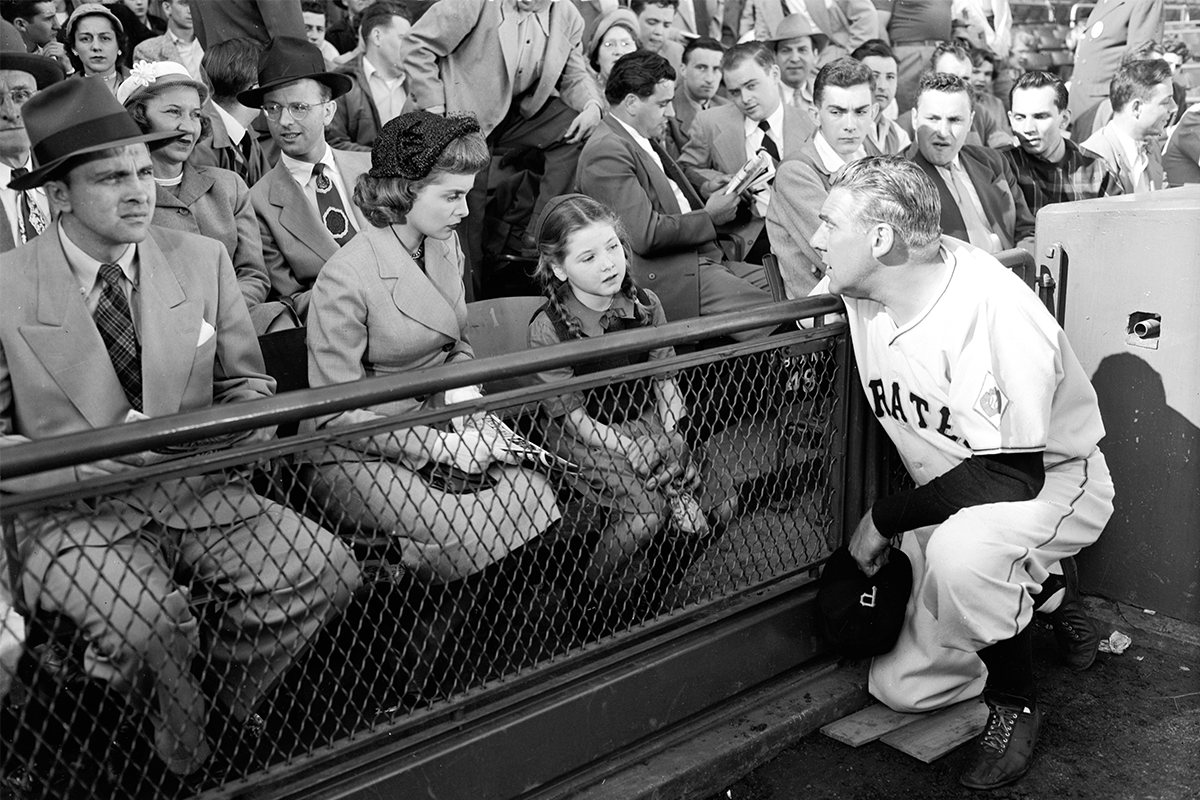
The stakes get somewhat lighter afterwards with the original Angels in the Outfield (1951). Long before the Los Angeles Angels existed, another baseball team needed some help in Clarence Brown’s comedy. Guffy McGovern (Paul Douglas) is a foul-mouthed manager for the woeful Pittsburgh Pirates, but while looking through Forbes Field for his good luck charm, he learns that a team of deceased baseball players will help the team out if Guffy can change his ways. For every fan who has ever prayed for a little help for their beloved team, Angels in the Outfield is an evergreen movie.
If there is a throughline through these stories of divine intervention, it is not that we must give ourselves entirely over to larger powers, but that such power tends to reside in us. We have the free will and choices that make us far more compelling protagonists than angels or demons could ever be. As we head towards a new year, it’s nice to fantasize about a little help from above, but these movies remind us that we can already help each other.