Tuesdays in December at 8pm ET | 17 Movies
Oscar-nominated actress Merle Oberon hid a secret from the public for her entire life. While it was common for screen actors of the early and mid-20th century to fashion new identities and backstories to go with their makeovers, there was more to Oberon than simply a romantic origin story. As far as the public knew, she was born in Tasmania to British parents who died while she was young and raised by relatives in India before moving to England. There were suspicions about her real identity, to be sure, but it was only after her death in 1979 that the truth came out: she was born Estelle Merle Thompson in Bombay, India, of a Welsh father and a mother who was of Burgher ancestry from Sri Lanka.
Estelle, who went by the nickname Queenie, was raised by a single mother in poverty. She was considered a great beauty, but she suffered discrimination from both white and Indian society due to her mixed race. So, she moved to England and reinvented herself, obscuring her Asian ancestry and passing herself off as white with the help of London Films impresario Alexander Korda. He groomed the young beauty for stardom, complete with a new, fictionalized origin story. While today, Oberon's ancestry would be readily accepted by 21st-century audiences, anti-Asian discrimination was rampant in the 1930s and even codified into law. Mixed-race couples were taboo on American screens and Asian immigrants were prevented from becoming citizens in the United States until 1952. Her reinvention was more than public relations; it was necessary to become a leading lady in England and in Hollywood.
TCM salutes her shining talent and impressive career every Tuesday in December.
Tuesday, December 2
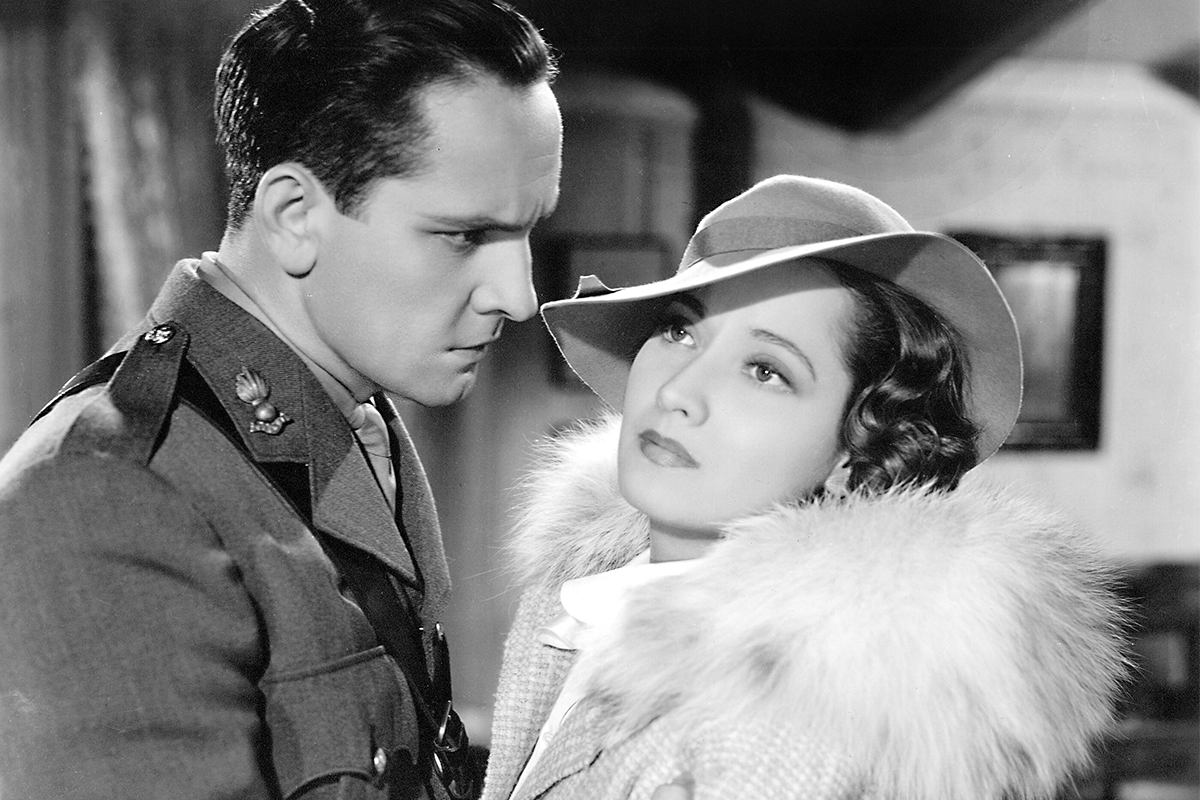
The series opens with Oberon's Hollywood breakout. The young Queenie had been entranced by the 1925 silent film The Dark Angel. When Oberon, newly arrived from England, discovered that Samuel Goldwyn was developing a remake, she lobbied aggressively for the role of Kitty Vane, the English rose loved by two young men who were like brothers. Director Sidney Franklin thought she was too "Oriental" to play a virginal British girl, but Goldwyn saw star potential in Oberon. When the California sun brought out her naturally darker complexion, she endured skin bleaching. All her efforts paid off. The Dark Angel (1935), costarring Fredric March and Herbert Marshall, was a hit. Critics raved over Oberon's performance, which earned the actress her sole Academy Award nomination. Though only a handful of people were aware of it at the time, she was the first actor of Asian ancestry ever nominated for an Oscar. The second came decades later with Ben Kingsley for Gandhi (1982).
The night continues with three films from producer Alexander Korda that made her career in England. The romantic adventure The Scarlet Pimpernel (1934) gave Oberon her first major leading role, playing the neglected wife of a foppish British aristocrat (played by Leslie Howard) who is secretly a dashing hero rescuing French nobles from the guillotine. Oberon fell in love with the charismatic Howard while shooting the film and (despite the fact that he was already married) the mutual attraction fueled their performance. Silent movie superstar Douglas Fairbanks bid farewell to the big screen with The Private Life of Don Juan (1934), in many ways satirizing his own screen persona as the aging lothario. Oberon appears in the supporting role of a fiery Spanish dancer who catches the great lover's eye, and she received her first screen kiss in her big scene with Fairbanks. She was, however, frustrated playing an "exotic" character and yearned to play leading romantic roles.
The evening concludes with the role that launched her career. The Private Life of Henry VIII (1933) was a lavish production for the British film industry, and Oberon was cast in the small but memorable role of Anne Boleyn, the second wife of the notorious king (played by Charles Laughton). The actress studied Boleyn's life and death in preparation for the role and earns the audience's sympathy immediately as she awaits her execution, hinting at her vulnerability behind a mask of poise, dark gravity and royal dignity. The film was a massive hit in both England and the U.S., where it became the first British film to win an Academy Award (for actor Charles Laughton) and earn a nomination for Best Picture.
Tuesday, December 9
After the success of The Dark Angel, producer Sam Goldwyn was quick to capitalize on Oberon's star potential in These Three (1936), based on Lillian Hellman's hit Broadway play "The Children's Hour." The play centers on the damage wrought by the cruel lie of a vindictive student that two female teachers are lovers. The film significantly sanitized the details of it source material, as even a hint of homosexuality was outlawed by the Production Code, but the corrosive power of the lie to destroy the lives and careers of those it maligned still retains its power in Hellman's screenplay. Despite her recent success, Oberon was insecure as an actress playing opposite Miriam Hopkins, already a major star, and young Bonita Granville in the showy role of the scheming student, but William Wyler brought out new depths in Oberon’s nuanced performance.
Far more frivolous is the bubbly Over the Moon (1939), a British romantic comedy featuring Oberon as a young woman who inherits a fortune and goes on a wild spree, much to the dismay of her disapproving fiancé (Rex Harrison). It's a trifle that Oberon carries with effervescent charm, playing a confident young woman who basks in the sudden attention without for a second believing in any of it. Even more lightweight is Affectionately Yours (1941), a Warner Bros. confection that plunged Oberon into slapstick. The project took its toll with punishing physical gags and a mishap with a runaway taxi that came close to seriously injuring her.
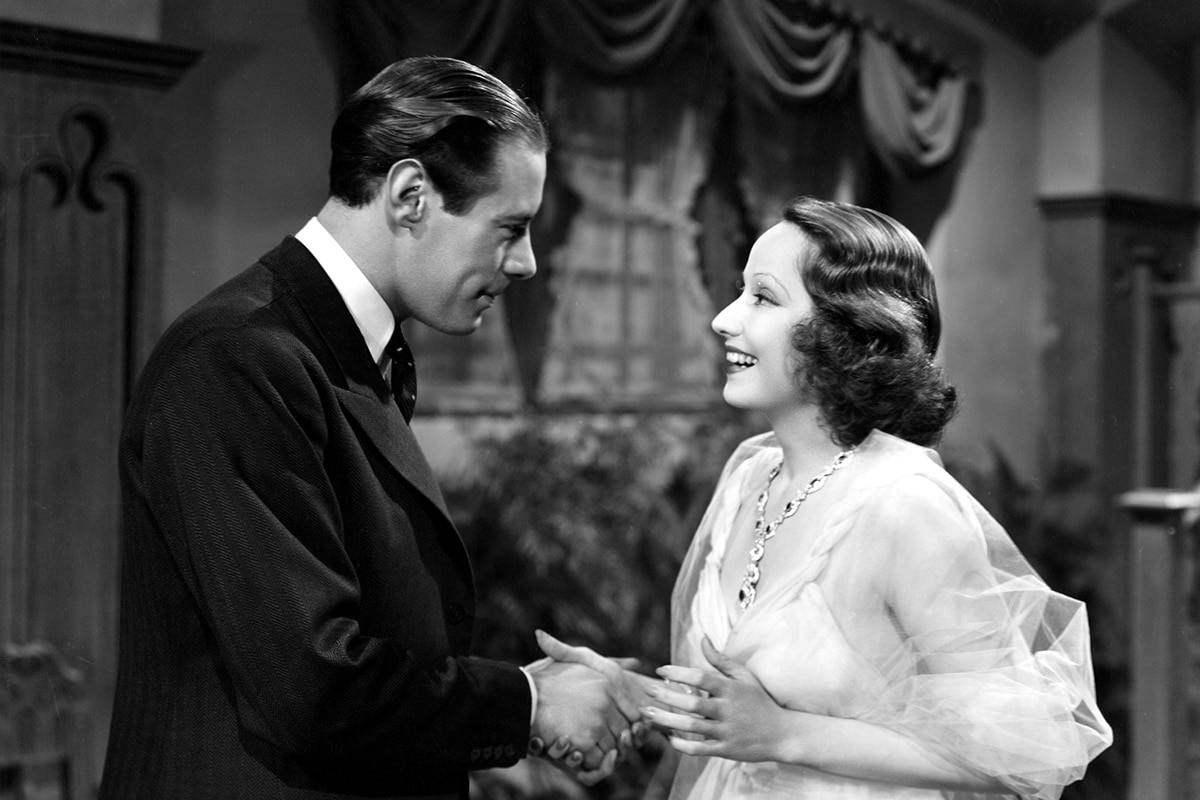
Lydia (1941), however, gave Oberon another role worthy of her talents. Produced in Hollywood by Korda (who had married Oberon in 1939), it's a romantic drama starring Oberon as an unmarried woman who, in old age, looks back over the four men she loved in her life. She underwent three hours of make-up to play the elderly Lydia, which she plays with a wistful quality, while being playful and coquettish as the fiery young society beauty in flashbacks. "I never really acted until now," she reflected decades later to film historian James Robert Parish.
Tuesday, December 16
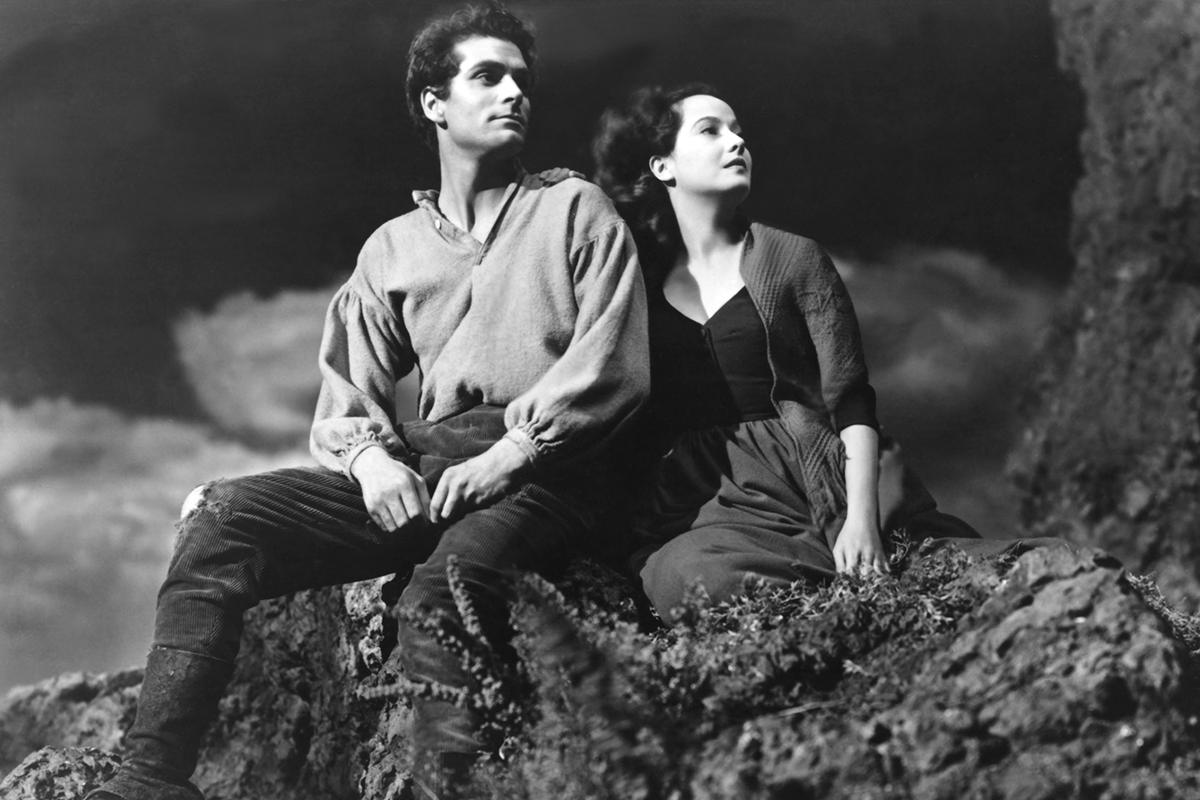
The third evening opens with two films pairing Oberon with the great Laurence Olivier. Wuthering Heights (1939), produced by Goldwyn, reunited Oberon with her These Three director William Wyler. Olivier made his Hollywood starring debut as Heathcliff opposite Oberon's Cathy. While his stage experience was extensive, he was still relatively inexperienced in screen acting and focused his attentions on the actor. It was a difficult shoot for Oberon. Olivier was cruel and condescending to Oberon, at one point berating her until she broke down in tears, and Wyler demanded numerous retakes in scene after scene. She sprained her ankle on location and became so ill after repeated takes of a drenching storm sequence shot in the chill of December that the production shut down. Her performance was praised in The New York Times, but she was ignored at awards time, and the film was upstaged at the Oscars by Gone With the Wind (1939), taking home a single award for cinematography (Gregg Toland).
Before that acclaimed classic, however, Oberon took top billing in The Divorce of Lady X (1938), playing a flighty socialite who charms her way into the hotel room of the flinty barrister played by Olivier. It's a romantic comedy of mistaken identity, a change for Oberon after the melodramas of her Hollywood sojourn, and Oberon brings a sprightly, sweet quality to the performance. It also marked her Technicolor debut and she was delighted with the result, telling one journalist that "color is like finding unsuspected facets in an old friend."
‘Til We Meet Again (1940), a remake of the 1932 romantic drama One Way Passage, cast Oberon as a dying woman who finds love on an ocean liner. It was a troubled production for the actress, who contracted a virus that cost weeks of shooting. The cure, however, proved worse than the illness. An injection of sulfa drugs caused an allergic reaction, causing her face to break out in sores that scarred her skin. Her smooth, exotic beauty was an essential part of her screen identity, and, afraid that the blemishes would end her career, she underwent painful chemical peels to reverse the damage. It was years before her face fully recovered. Yet she was back in front of the cameras in That Uncertain Feeling (1941), a romantic comedy directed by Ernst Lubitsch starring Oberon as a socialite whose unhappiness in her marriage manifests in a case of incurable hiccups. Heavy make-up was required to hide the scars, and she feared another reaction, but her anxiety is undetectable in her deft comic performance.
Tuesday, December 30
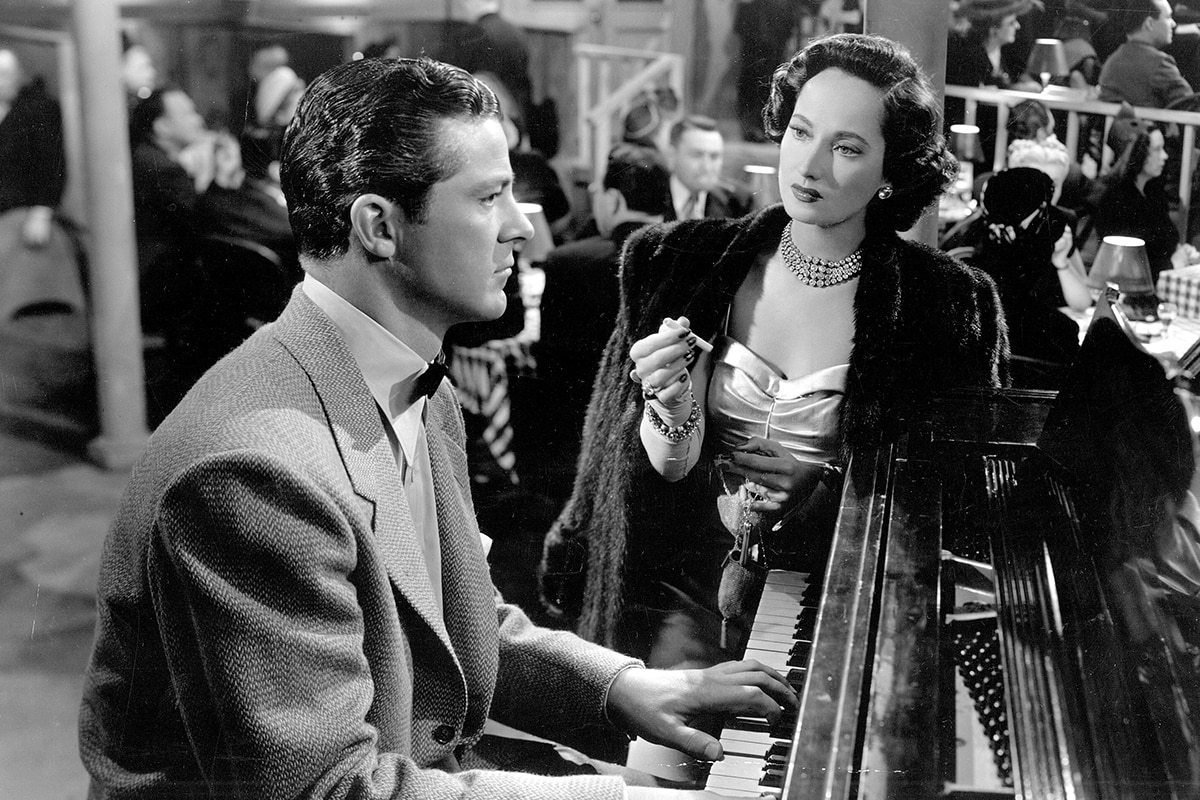
In 1945, Oberon divorced Korda and married Lucien Ballard, a handsome and talented Hollywood cinematographer. They met while filming The Lodger (1944), where Ballard, sensitive to the self-conscious actress, developed a special light mounted on the camera that "washed out" the scars on her face during close-ups. Ballard christened the new light the Obie, after the actress, and Oberon was determined to have him behind the camera of her subsequent films. The final evening opens with two of those collaborations. Berlin Express (1948), a thriller set in post-World War II Europe, was the first Hollywood film to shoot in the ruins of Frankfurt and Berlin. Oberon plays the French secretary to a German peace activist who goes missing and becomes part of a multinational effort to find him. She's a socialite who feigns blindness to romance an embittered blind composer played by Dana Andrews in Night Song (1947), a film that features piano virtuoso Artur Rubinstein performing the character's concerto at Carnegie Hall.
The Lion Has Wings (1939), a celebration of the Royal Air Force, was rushed into production after Great Britain entered the war in Europe. Both Oberon and producer Korda had adopted England as their home and were eager to show their patriotism. Oberon plays a Red Cross nurse married to RAF officer Ralph Richardson in a slim, dramatic story built around documentary footage of the war machine in action, from the factories producing planes and the first mission across the channel.
Our Star of the Month series concludes with a pair of films from Oberon’s late career. The 1940s and 1950s saw a series of (often highly fictionalized) films built around the lives and careers of popular music composers: a musical with a built-in songbook. Deep in My Heart (1954) stars José Ferrer as Sigmund Romberg, who composed such hit stage musicals as "Maytime," "The Student Prince" and "New Moon." Oberon plays Broadway actress and lyricist Dorothy Donnelly in the glossy MGM production, complete with a grand send-off in an elegant death scene. Hotel (1967) marked her final appearance in a major Hollywood film. Based on Arthur Hailey's best-selling novel about the guests and staff of a luxury New Orleans hotel, it's an ensemble piece in the tradition of the classic Grand Hotel (1932) but updated for the 1960s. Oberon brings her grace and gravitas as a duchess being blackmailed by the hotel detective. She made suggestions to enhance the character, many of which director Richard Quine incorporated, and she gave the production its added glamour by wearing expensive jewelry from her personal collection. Though well reviewed, it was not the comeback that Oberon had hoped for and–but for a subsequent, single self-financed picture, Interval (1973)–she retired to the life of a socialite, hostess and philanthropist. She kept the truth of her Asian identity a secret until the end of her life.