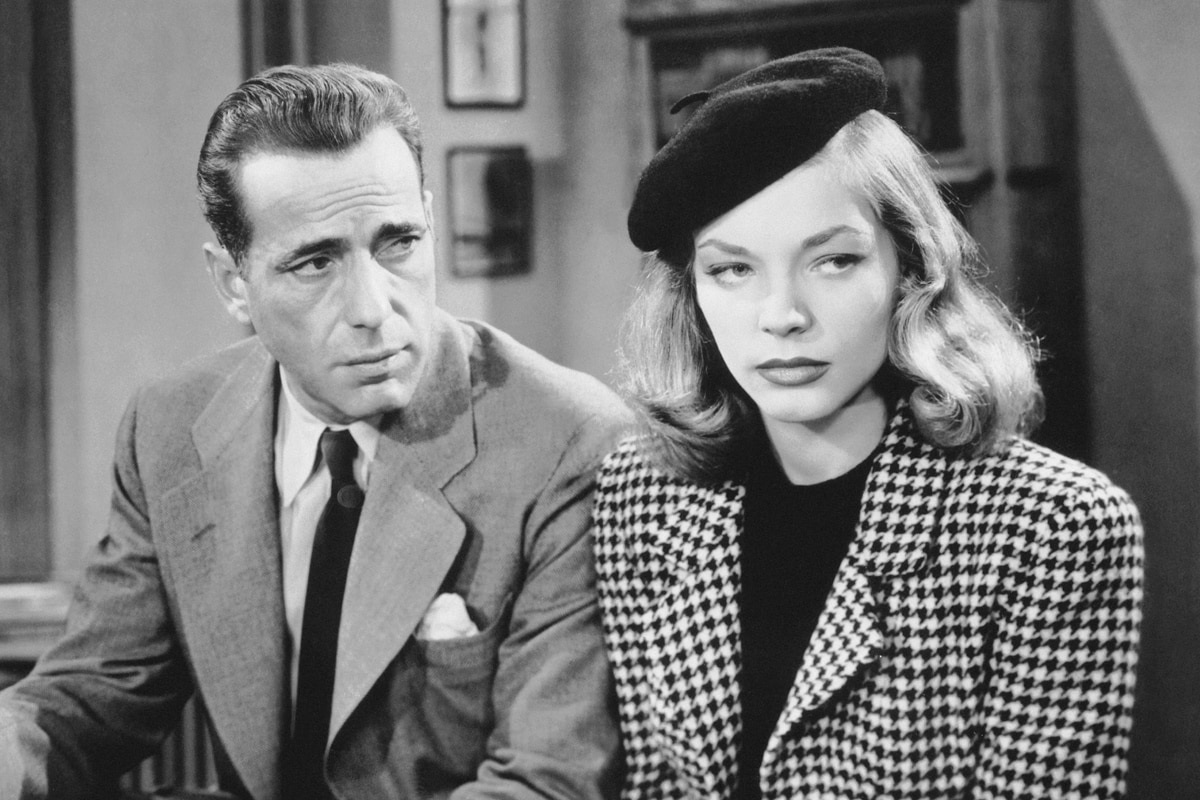
Private Detective Philip Marlowe accepts what appears to be a simple case of tracking down the man who's blackmailing spoiled rich girl Carmen Sternwood. Instead, his investigation leads him down a trail of crime, seduction and murder that exposes the corrupt underbelly of Los Angeles. It also leads to an explosive romance with Vivian Sternwood, who'll do anything to protect her sister, even if it means having to commit murder.
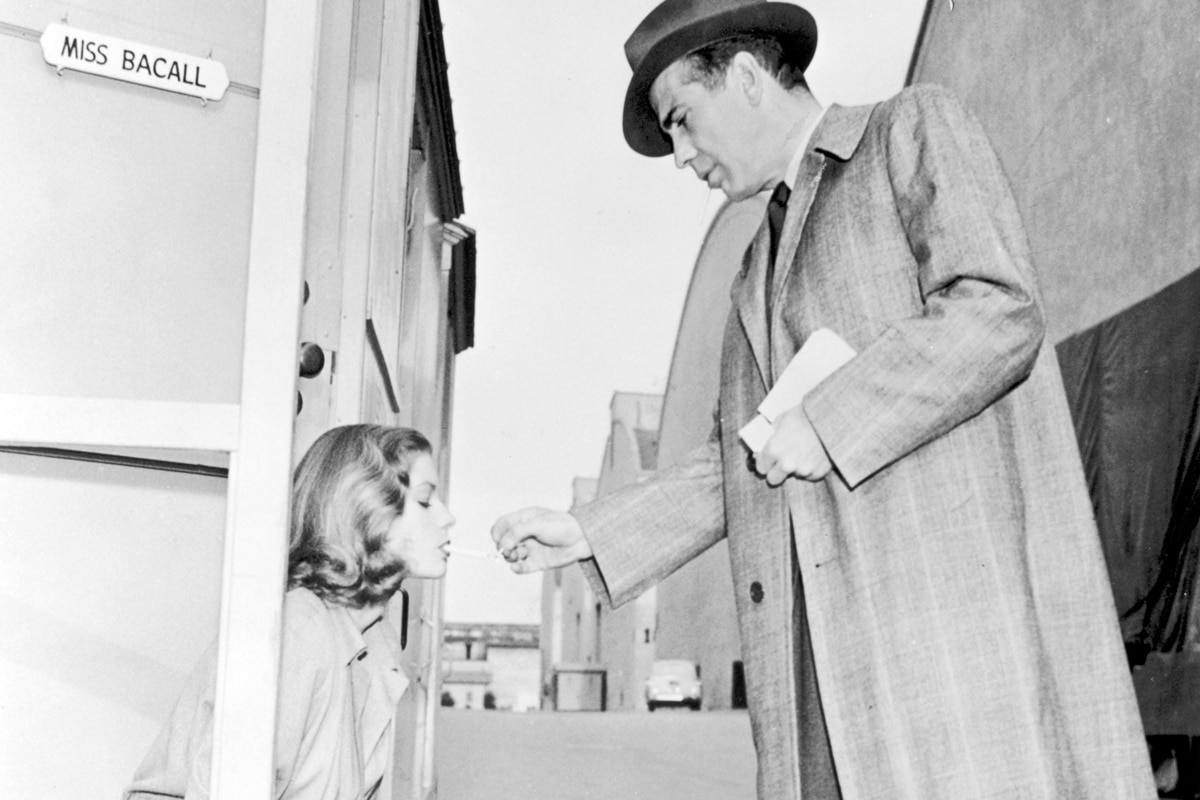
Although they had fallen in love on the set of To Have and Have Not (1944), Humphrey Bogart and Lauren Bacall had stayed apart since then because of his marriage to actress Mayo Methot. Their reunion for The Big Sleep rekindled the romance, however, causing more trouble for Bogart at home as he repeatedly left his wife and then moved back in hopes that she could get her drinking under control. He also started drinking more heavily himself. Despite this, it only hindered a few days of production.
Bogart's indecision over whether or not to leave his wife triggered a bout of nerves for Bacall, whose hands shook whenever she had to light a cigarette or pour a drink during the filming. Director Howard Hawks did not approve of the Bogart-Bacall relationship. He had discovered Bacall, still had her under a personal contract, and felt rather paternal toward her. In addition to lecturing her about staying away from her co-star, Hawks and his wife tried to fix her up with other men, including Clark Gable.
Southern novelist William Faulkner never adjusted to life in Hollywood. While working on the script for The Big Sleep, he told Hawks that the studio atmosphere was stifling him and asked if he could work at home. Hawks agreed. After a few days without hearing from the writer, Hawks called his hotel, only to learn that Faulkner had checked out and gone back to his native Mississippi. When Hawks called him there, Faulkner protested, "Well, you said I could go home and write, didn't you?"
With two writers working separately on the script, Hawks ended up with a film that was too long to shoot. Faulkner proved to be an excellent collaborator, though he returned to Mississippi before the film was completed. Then Hawks brought in frequent collaborator Jules Furthman to further edit the script and make other changes during filming.
Hawks and the writers tried various endings for the story. In one, Carmen (Martha Vickers) attempts to fake a suicide only to discover that her gun is loaded with real bullets rather than blanks. Next, they had Carmen confess to her crimes and walk into an ambush by gangsters. Finally, they wrote it so that Marlowe decided, on the basis of a coin toss, to allow her to leave the house and walk into the ambush. When the Production Code committee objected to the violence, Hawks asked how they would end the film, and they came up with the idea of Bogart forcing the gangster chief out of the house, where the criminal was shot by his own gang. Hawks was so impressed, he offered to hire them as writers.
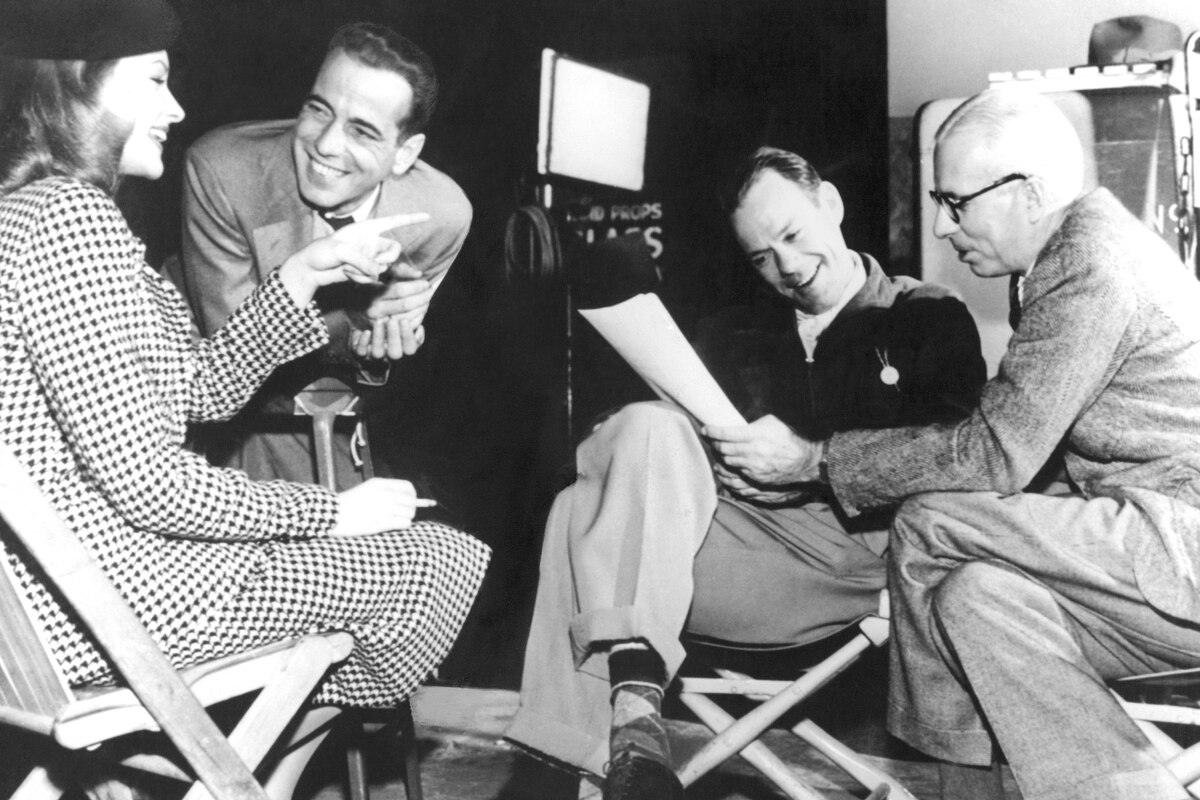
As was the case with most of Hawks's films, The Big Sleep was great fun to make. According to Bacall in “By Myself,” they even got a memo from studio head Jack Warner saying, "Word has reached me that you are having fun on the set. This must stop."
Raymond Chandler's original novel was so convoluted that, according to legend, neither Hawks nor any of the writers could figure out who killed the Sternwood's chauffeur. Finally, he wired the author for an explanation. Chandler suggested one killer, but Hawks wired back that he was nowhere around when the murder took place. Chandler wired back, "Then I don't know either." The story may have been invented by Hawks, however, as the film's initial cut features a scene, written in the first draft, in which Marlowe explains all of the murders, including the chauffeur's, to the district attorney.
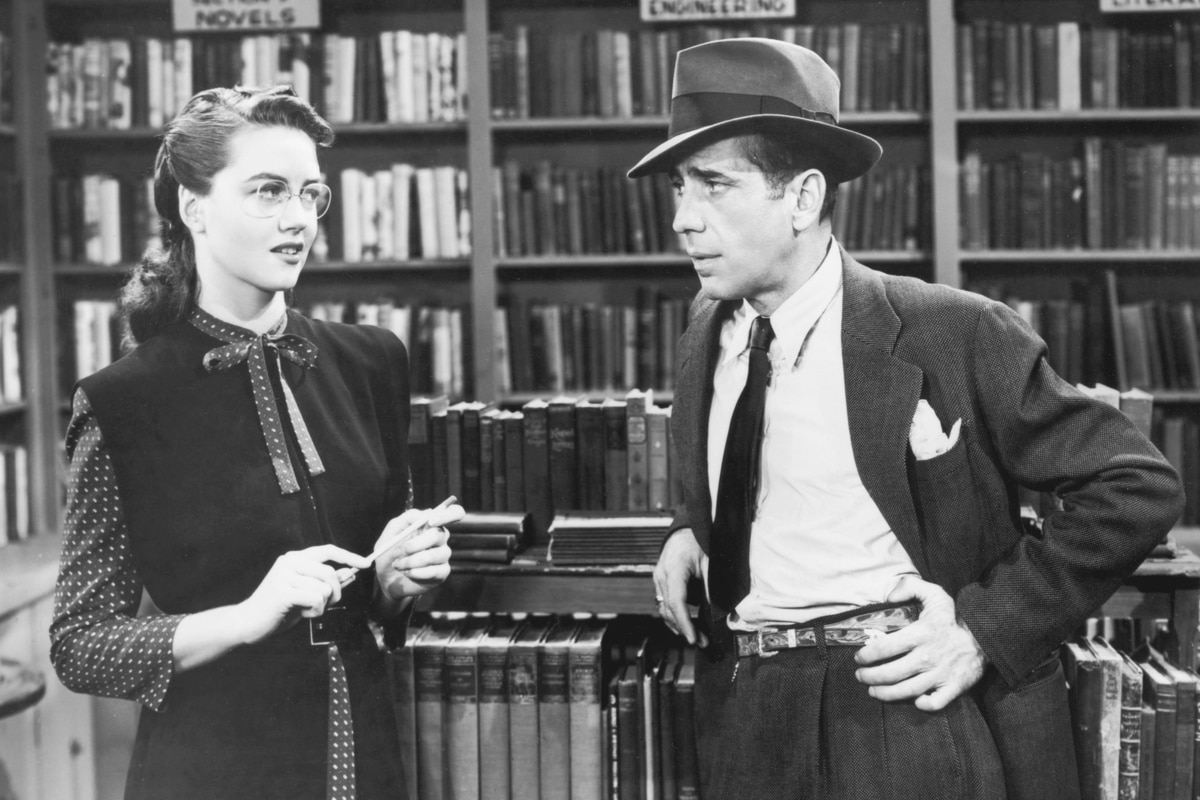
Dorothy Malone was just starting out in movies when she played the bookstore clerk who seduces Bogart. She was so nervous making the scene that they had to add weight to the glass of liquor she offers him to keep her hands from shaking. During shooting, Hawks added the strong implication that Marlowe and the bookstore clerk are about to make love as the scene ends. There is no such indication in the novel, but Hawks was so struck by the 19-year-old that he decided to make the scene steamier.
By the time the film's projected completion date arrived, November 28, 1944, Hawks had shot less than half the script. Although Bogart's marital problems had caused some delays, the main problem was Hawks's continual rewriting. While the studio closed for the Christmas holidays, Hawks and Furthman shortened the script so they could finish the film more quickly and economically, cutting whole scenes to free up sets. He finally finished the film on January 12, 1945, 34 days behind schedule. Because he had kept secondary sets as inexpensive as possible, however, he was only $15,000 over budget.
When the film previewed in February, audience response was good, but the Bogart-Bacall pairing didn't have the same impact as in To Have and Have Not. The problem, many felt, was that they didn't have enough scenes together.
Although Bacall shot another film, Confidential Agent (1945), after this one, Warners' decided to release it first, arguing that the later film was more topical and needed to come out during the final days of World War II. They also felt it showcased Bacall more effectively. The film turned out to be a disaster, however. At the urging of her agent, Charles Feldman, Hawks and the studio built up her part in The Big Sleep and re-shot a scene in which she wore an unflattering veil. The original version was only shown to U.S. soldiers stationed overseas.
Philip Epstein, co-writer of Casablanca (1942), helped Hawks write the new scenes. His goal was to create more sexual chemistry between the stars, playing on the insolence Bacall had shown in To Have and Have Not. His work included the famous horse racing scene, filled with double entendre that sailed right by the industry censors enforcing the Production Code. In later years, Hawks would claim to have written it because the re-takes were forcing him to miss the races at Santa Anita.
In re-cutting the film, Hawks also removed the scene in which Marlowe explains the crimes. The film's success supported his growing conviction that audiences didn't care if a plot made sense as long as they had a good time. In the year that passed between finishing the first version of The Big Sleep and shooting the new scenes, Bacall and Bogart had gotten married. This had strained their relationship with Hawks, who sold his personal contract for Bacall's services to Warner Bros. Hawks didn't even want to direct them in the new scenes unless they promised not to get "mushy all the time," according to Hawks in Joseph McBride’s “Hawks on Hawks.”
The new scenes went into production on January 21, 1946, and were completed a week later. The film's new version previewed successfully on February 8. Warner Bros. executives were so impressed with Lauren Bacall's work in The Big Sleep and the success of her previously released To Have and Have Not that they renegotiated her contract, raising her salary from $350 a week to $1,000. The film's taglines labeled it "The Violence-Screen's All-Time Rocker-Shocker!" and "The picture they were born for!"
Producer-Director: Howard Hawks
Screenplay: William Faulkner, Jules Furthman, Leigh Brackett
Based on the novel by Raymond Chandler
Cinematography: Sid Hickox
Editing: Christian Nyby
Art Direction: Carl Jules Weyl
Music: Max Steiner
Cast: Humphrey Bogart (Philip Marlowe), Lauren Bacall (Vivian), John Ridgely (Eddie Mars), Louis Jean Heydt (Joe Brody), Elisha Cook, Jr. (Jones), Regis Toomey (Bernie Ohls), Sonia Darrin (Agnes), Bob Steele (Camino), Martha Vickers (Carmen), Dorothy Malone (Girl in Bookshop), Charles Waldron (General Sternwood), Theodore von Eltz (Geiger).
BW -118m.