Tuesdays in September | 38 Movies
They’re dashing, heroic, chivalrous, master swordsmen and rescuers of damsels in distress, rushing headlong into daring, romantic adventures with great flair, bravado and acrobatic skill. For the month of September, they’ll be swashing buckles (or is it buckling swashes?) all over TCM in this spotlight on an action-adventure subgenre that began as popular European literature and became a mainstay of film entertainment for decades.
Technically, swashbucklers (as both the films and their protagonists are known) come from the combination of the archaic words “swash” (to swagger ostentatiously while brandishing a sword) and “buckler” (a small shield held in the fist). Somewhere along the line, the shields were dropped, as was any semblance of armor, as our heroes engaged in epic swordfights on land and sea, leaping across tabletops, precariously perched on parapets, bounding across quarter decks. The activity proved to be highly cinematic, making for rousing, visually exciting crowd pleasers, as the 38 pictures in this weekly series demonstrate. (Please check the schedule for showtimes.)
No survey of the type would be complete, or even thinkable, without the greatest swashbuckler of them all, Errol Flynn, so it’s fitting the showcase kicks off with two of his best. One of the most popular films of this type of all time, The Adventures of Robin Hood (1938), not only remains a cherished memory for many audiences but is also a major influence for other filmmakers. One has only to look at the original three entries of the Star Wars series to see its continuing impact: the freedom-fighting outlaws pitted against a powerful and corrupt authority, the daredevil antics, a dash of wry sarcasm and determination not to take itself too seriously and the antagonism-turned-to-love relationship at its heart.
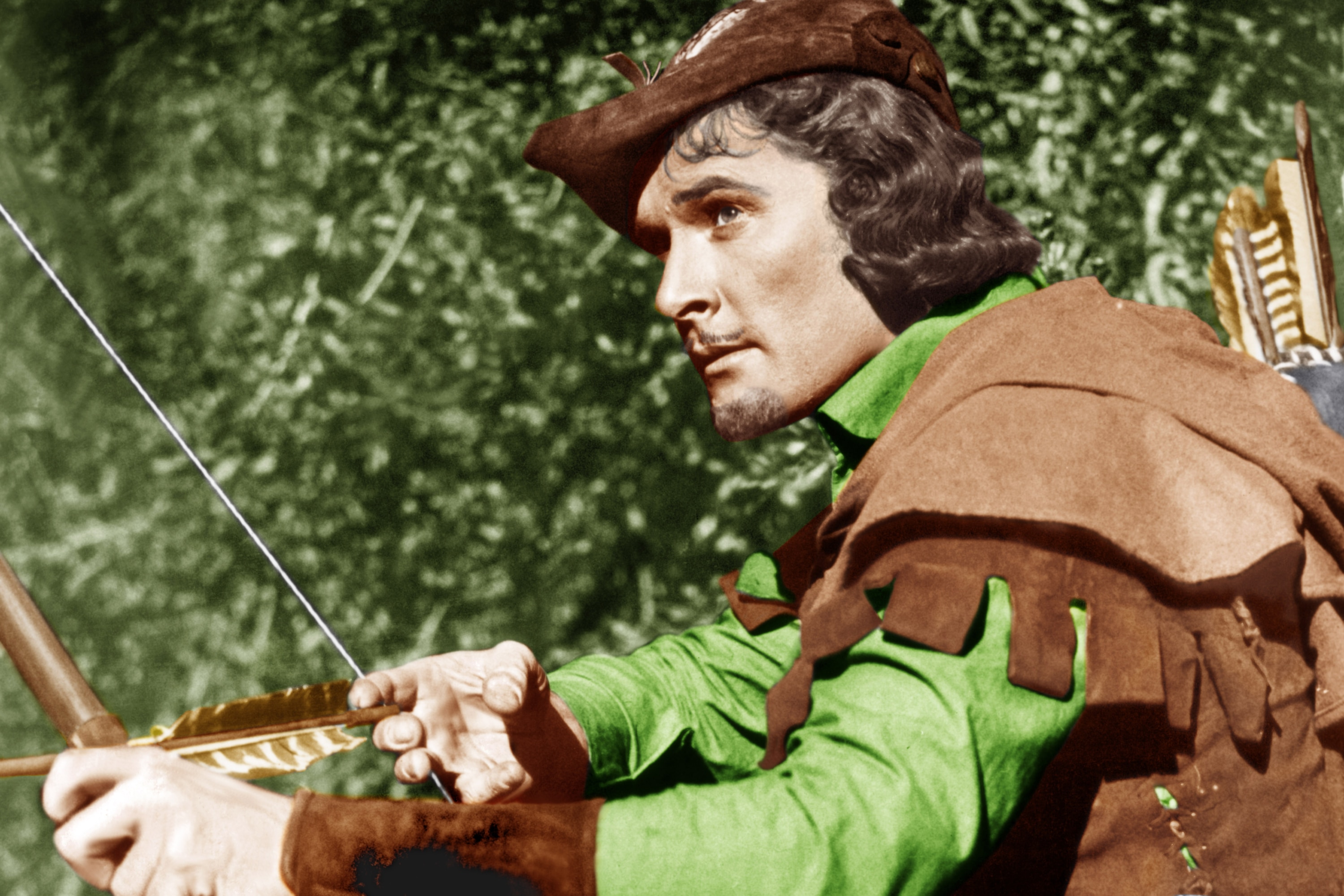
The Michael Curtiz-directed adventure was Warner Bros.' most expensive picture to that date and one of its biggest hits, a blockbuster before the word was even in common use. Flynn first established his swashbuckling credentials—and his stardom—in Captain Blood (1935). Unless you count his minor role in an earlier Perry Mason picture, this was the first of 11 films in Flynn’s legendary (and legendarily fraught) teaming with Curtiz. It was also where he began an eight-film romantic pairing with Olivia de Havilland, who also emerged from it as an important star.
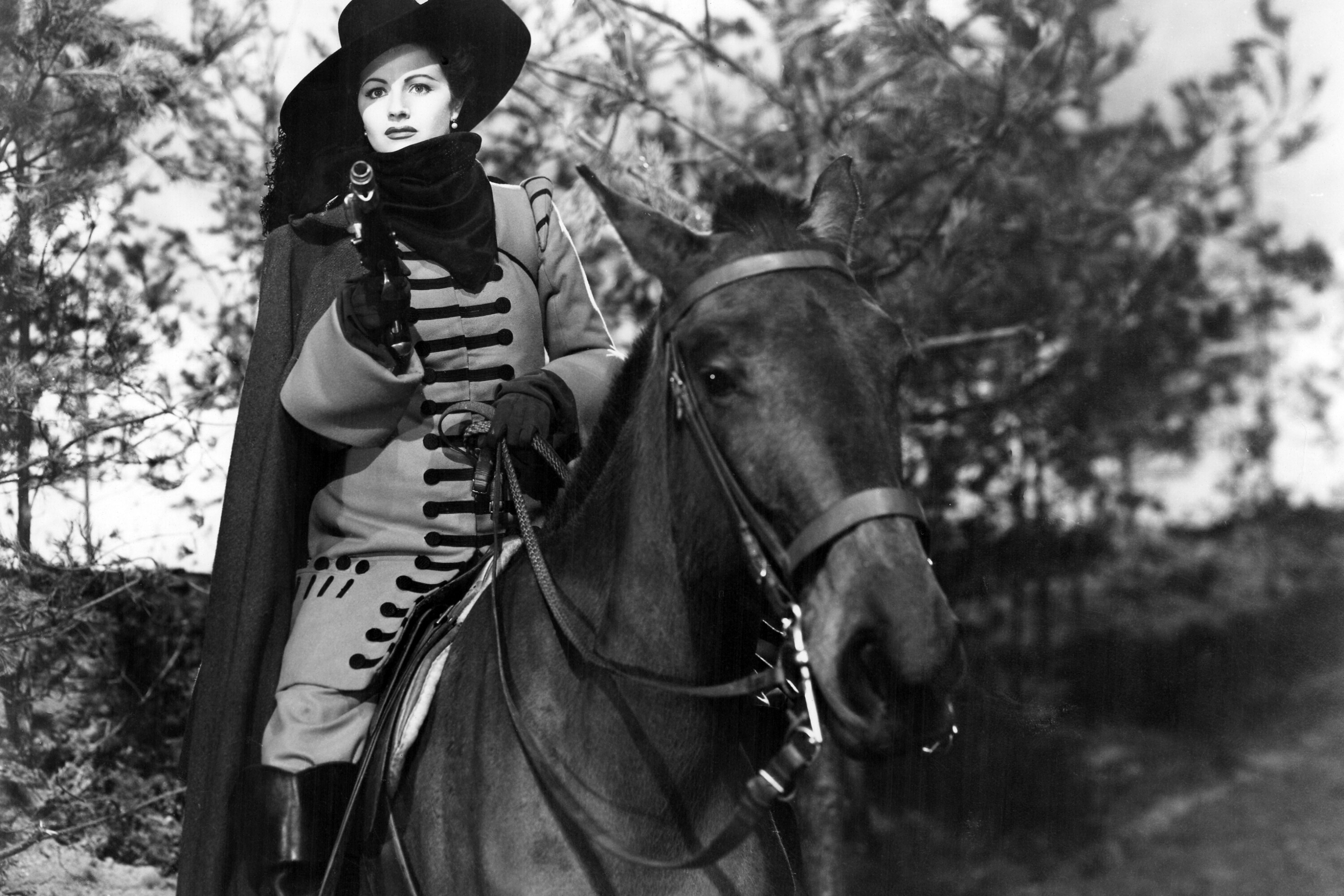
Flynn’s feats of derring-do are also on display in The Prince and the Pauper (1937), based on the Mark Twain classic; The Sea Hawk (1940), a “historically cockeyed” (Bosley Crowther, New York Times) Elizabethan adventure with a plot very similar to Captain Blood, produced to encourage support for Great Britain in its war with Nazi Germany; The Adventures of Don Juan (1948) with Flynn doing his thing as the fabled lover despite the visible effects of advancing age and hard living; and Against All Flags (1952) with Maureen O’Hara donning thigh-high boots to do some swordplay of her own. (For another of the rare female swashbucklers, be sure to catch Margaret Lockwood engaging in a little 17th-century highway robbery in The Wicked Lady, 1945.)
As noted earlier, the genre got its start in novels and stories widely read since the early 19th century. Four authors dominated the field over the course of its popularity, and they are well represented in these screenings. Walter Scott (1771-1832) tended to set his historical adventures much earlier than the usual swashbuckler; Ivanhoe (1952) and Quentin Durwood (1955), both starring Robert Taylor, take place in the Middle Ages. Scott also wrote a novel called “The Pirate,” but in this series, if you choose to watch The Pirate (1948), you’ll get a Judy Garland-Gene Kelly-Cole Porter musical built around a young woman’s romantic fantasies, offering Kelly the chance to cavort athletically in an over-the-top dream sequence.
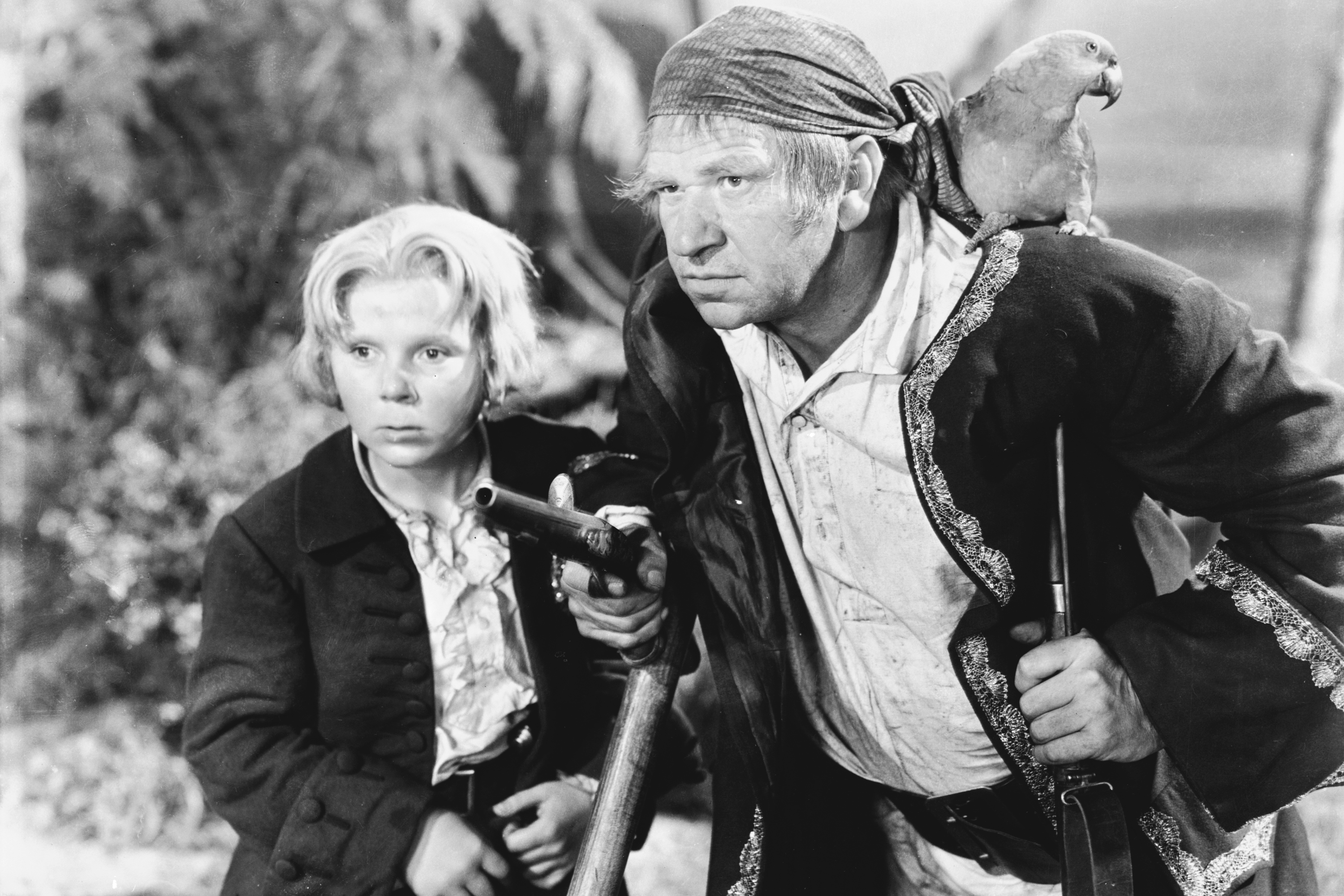
Treasure Island (1934) brought us the image of the pirate that most comes to mind today, clichéd as it may be, from a story by Robert Louis Stevenson (1850-1894), who also penned The Master of Ballantrae (1953) adapted for the screen with—well, look who it is again—Errol Flynn, approaching the end of his career and short life. In addition to the earlier mentioned Captain Blood, the works of Rafael Sabatini (1875-1950) are the source material for The Black Swan (1942), not the Natalie Portman ballet drama but Tyrone Power taking up the buccaneer mantel, not for the first or last time; and the France-set Scaramouche (1952), with Stewart Granger, no slouch at swashbuckling himself as several appearances in this spotlight series demonstrate. Sabatini also wrote the novel that would be adapted as The Sea Hawk (1924), which bears little plot resemblance to the Flynn movie of the same title.
Finally, there’s the prolific Alexandre Dumas père (1802-1870). Several of his works have been made into films, not being shown in this series, but the ones we’re focused on here are the series of stories he wrote about Athos, Porthos, Aramis and the eager young swordsman D’Artagnan in the court of Louis XIII of France. Including every one of the many film versions, not to mention the spoofs, cartoons and spin-offs, would constitute an entire month-long series on its own, but a handful of movies in this TCM Spotlight offer a fun and illuminating deep dive into the practice of screen adaptation.
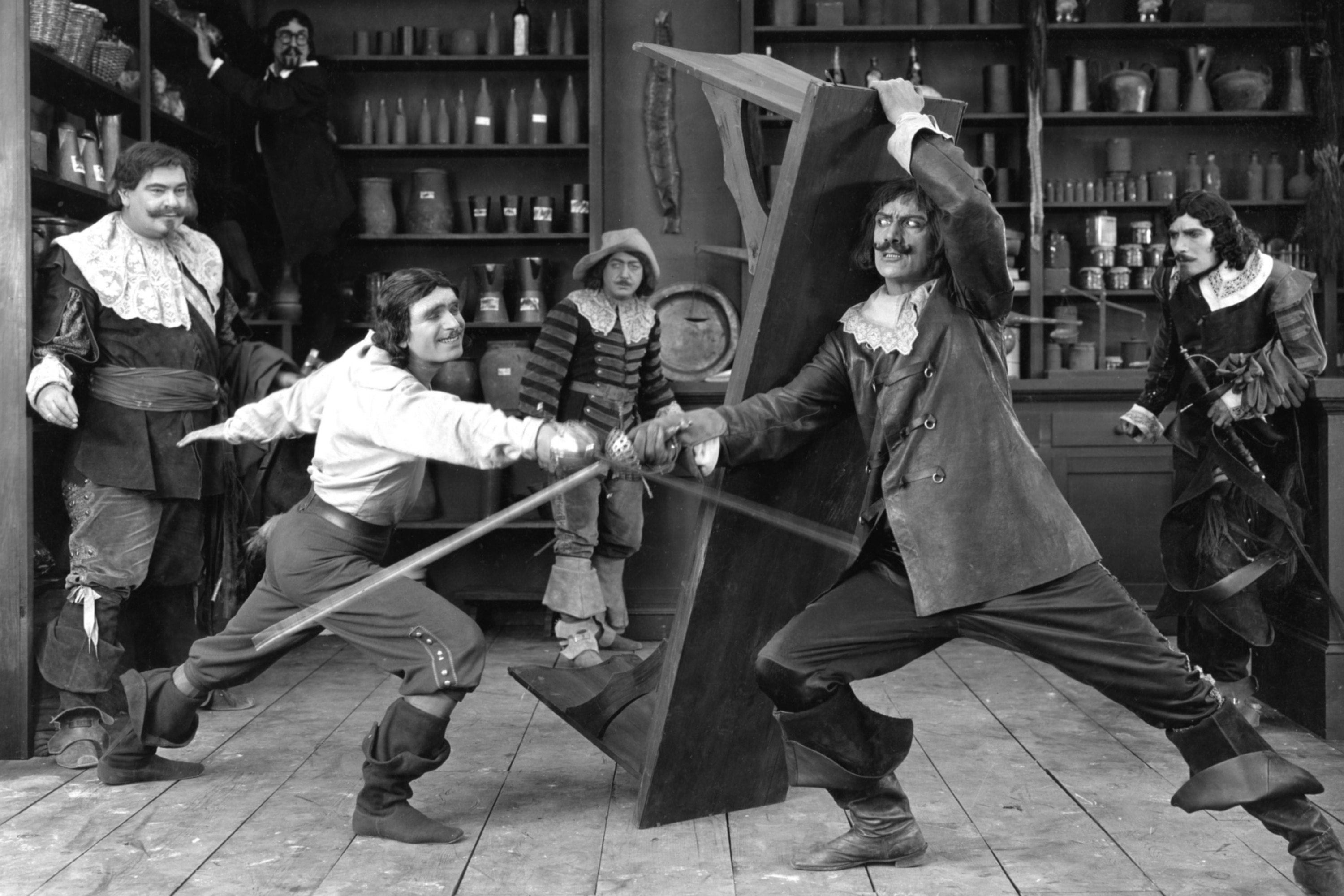
In order of release date (but not screening date), begin with The Three Musketeers (1921), not the first cinematic version (preceded by at least five others) but the most lavish and entertaining to that date. The chief swashbuckler and action hero of the silent era, Douglas Fairbanks, stars as D’Artagnan. This was the first big period adventure film for the actor, produced under his own company’s banner, and the production goes all out on scenery, costumes and set pieces. Small but powerfully athletic, Fairbanks performed his own stunts, including a justly famous handspring balancing on a short dagger, generally considered the most difficult maneuver of his career. Interesting side note: Fairbanks liked the look of the mustache he grew for this role so much he kept it for the rest of his career.
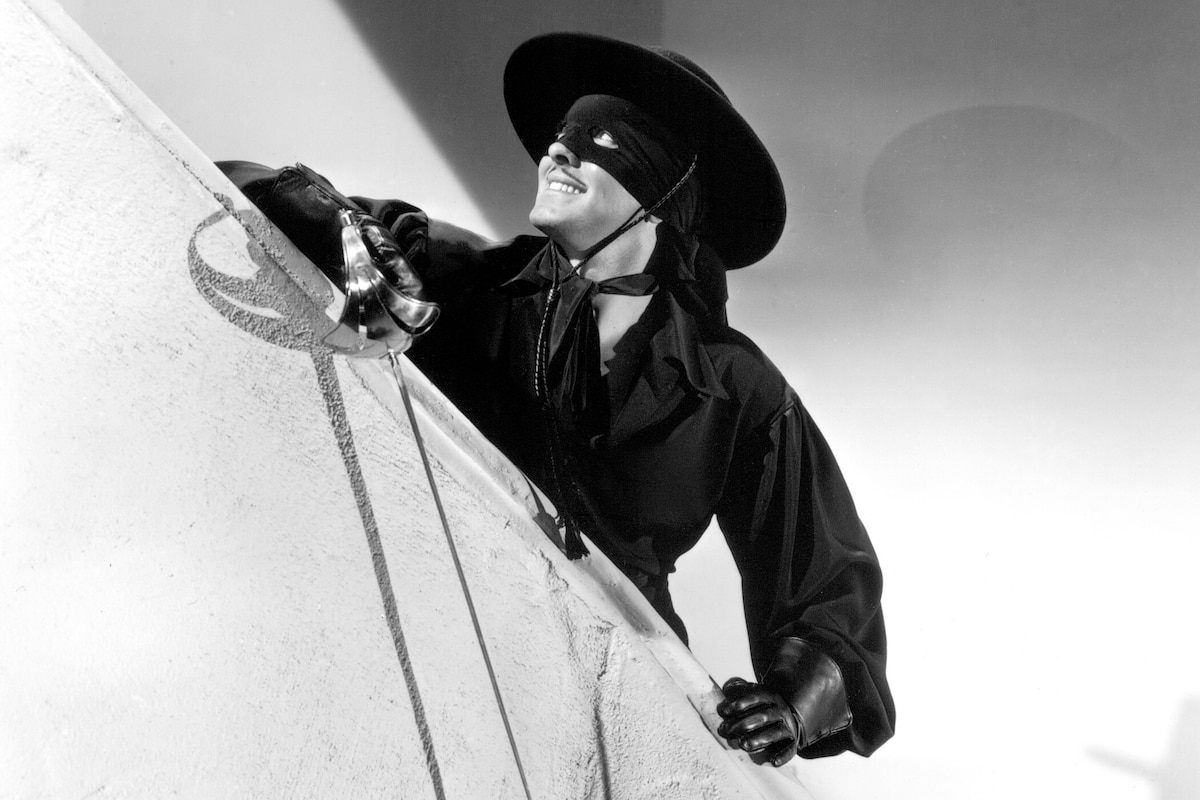
The Three Musketeers (1935) was in most respects a lesser effort than the silent version, but it has some exciting fights choreographed by Ralph Faulkner, who put Errol Flynn through his swashbuckling paces in Captain Blood and The Sea Hawk. Credits also list Fred Cavens as "fencing arranger," and it's likely this master swordsman, who was responsible for so much of the fencing style and techniques seen in Hollywood pictures of this period, was most responsible for the swordplay we see on screen. He began working in movies during the silent era, training Fairbanks for The Mark of Zorro (1920) and The Black Pirate (1926). Cavens was also the fencing master on several Flynn movies screening in this series, and guided Tyrone Power in the remakes of The Mark of Zorro (1940) and The Black Swan.
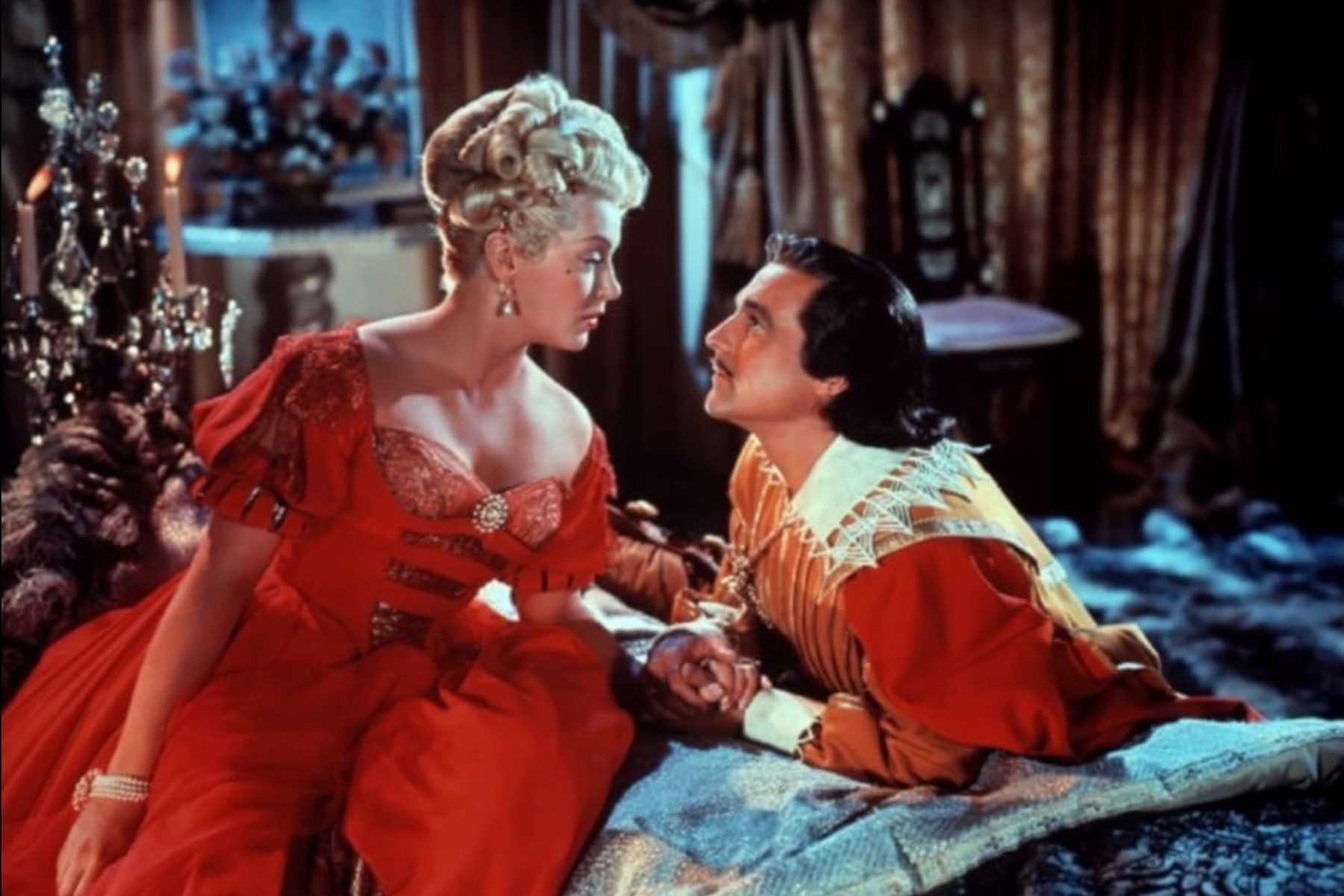
The ageless tale got the full MGM treatment in The Three Musketeers (1948), sparing no expense on production values, Technicolor and a cast of big names, including Gene Kelly as D’Artagnan, Lana Turner as the evil Milady de Winter, June Allyson as the good-hearted Constance and Oscar winner Van Heflin as Athos. This was the first screen version to cover Dumas’ full storyline, instead of just the first part, “The Queen’s Diamonds.” Kelly’s considerable athletic and acrobatic skills are on full display as he mugs and leaps his way through the action sequences as if he were about to break into song.
Finally, we get Richard Lester’s superior version, or at least one of two films he based on the 1844 novel, in The Four Musketeers (1974), following the second half of the story as faithfully and winningly as he had the first half a year earlier. Really meant to be viewed as the sequel to The Three Musketeers (1973), it is nonetheless a more-than-satisfying entertainment, delivering a great mix of humor, romance, visual beauty and bravado while never stinting on the rousing action sequences. Producers Alexander and Ilya Salkind (of later Superman film series fame) realized during production that the story was too much for a single release and decided to release it as two pictures. A lawsuit by the disgruntled cast, upset at being paid for only one film, did not recoup all the salary and benefits they felt they were owed, but the case did result in a new rule, whereby all SAG contracts had to stipulate how many films were being made with a proviso now known as the “Salkind clause.” Among the stars giving it their all despite getting stiffed by the producers are Michael York, Faye Dunaway, Raquel Welch, Oliver Reed and Richard Chamberlain.
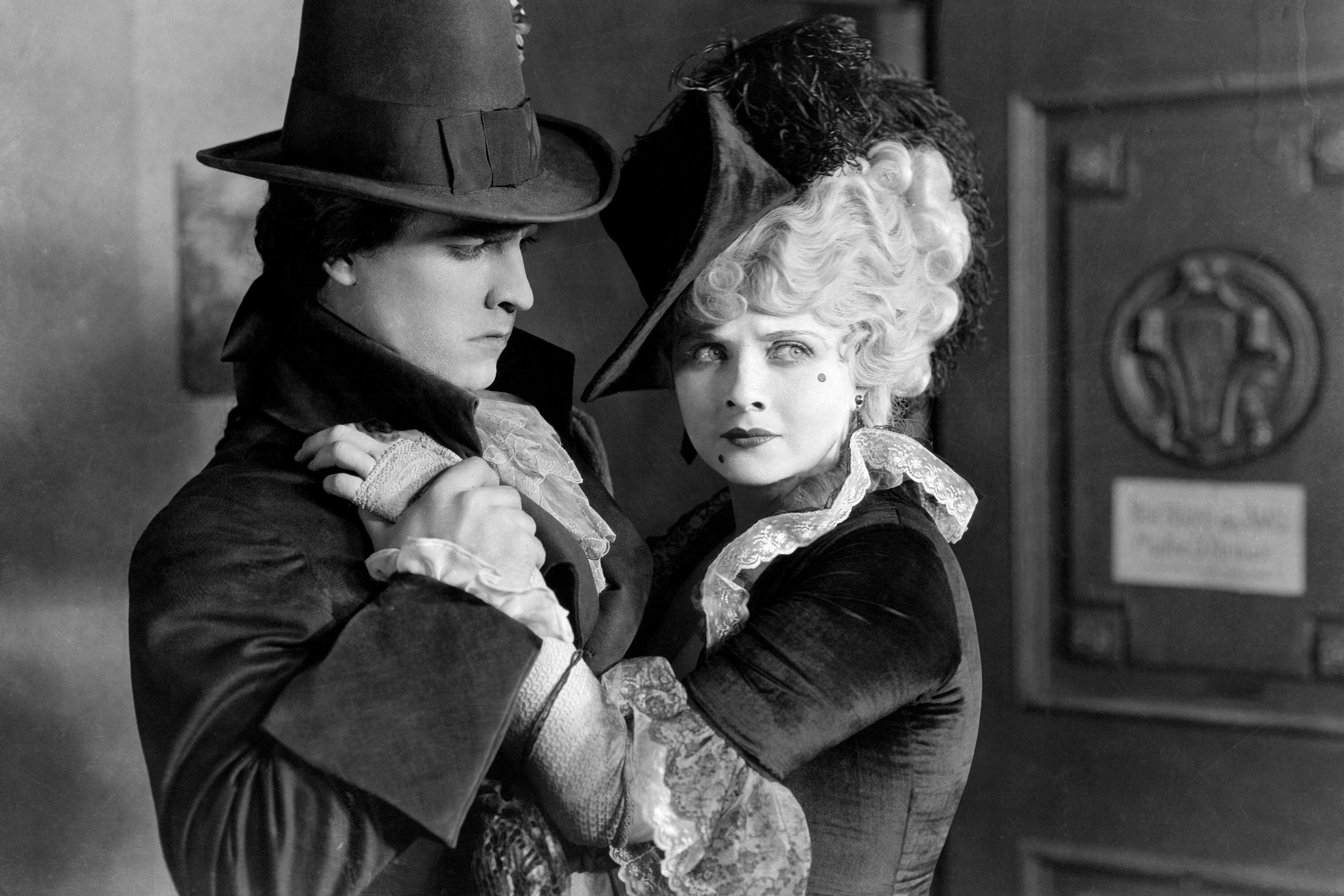
The Three Musketeers is not the only material to get multiple screen treatments over the years. Many of these stories have characters and plots that have been recycled, reconfigured and reimagined, and the final night of the spotlight series gives audiences a chance to see very early silent versions of remakes screening elsewhere in the month: The Mark of Zorro from 1920 with Fairbanks in the role played by Tyrone Power in 1940; the previously noted The Sea Hawk from 1924 sticking to the original source material, unlike the 1940 Errol Flynn version; Sabatini’s Scaramouche (1923) played by silent heartthrob Ramon Navarro before Stewart Granger’s 1952 take on it; and The Prisoner of Zenda (1922) with Lewis Stone, later famous as Mickey Rooney’s dad Judge Hardy, in the lead. Stone turned up again in 1952’s Scaramouche, playing Georges de Valmorin.
In addition to more than a dozen noteworthy films not discussed here, the month-long showcase offers an additional point of interest for film buffs. A key component of adventure films has always been the musical score. (Imagine Star Wars or any Spielberg actioner without John Williams.) This series is a study in scoring, showcasing soundtracks of work by great film composers like Max Steiner, Alfred Newman, Miklós Rózsa and others. Among these, one artist stands out. Erich Wolfgang Korngold was a classical composer of significant international reputation signed by Hollywood in the early days of sound. Often credited with inventing the syntax of orchestral film music, he brought his theatrical, operatic style to the imposing scores for Captain Blood, The Prince and the Pauper, The Adventures of Robin Hood and 1940’s The Sea Hawk.
Finally, the one TCM premiere of this batch is a late entry titled, appropriately and self-referentially, Swashbuckler (1976), a production hoping to ride the coattails of Richard Lester’s two successful musketeer movies. Robert Shaw, James Earl Jones and Peter Boyle were no one’s idea of period-era action heroes, but Geneviève Bujold gives a winning performance as a feisty female duelist. Roger Ebert praised the film’s sincerity and its refusal to come off as a winking pastiche and noted director James Goldstone’s “zest, energy and conviction” in creating a bona fide pirate movie long after the fashion had passed. Nevertheless, it was after the fashion and the film bombed at the box office.