February 7th | 2 Movies
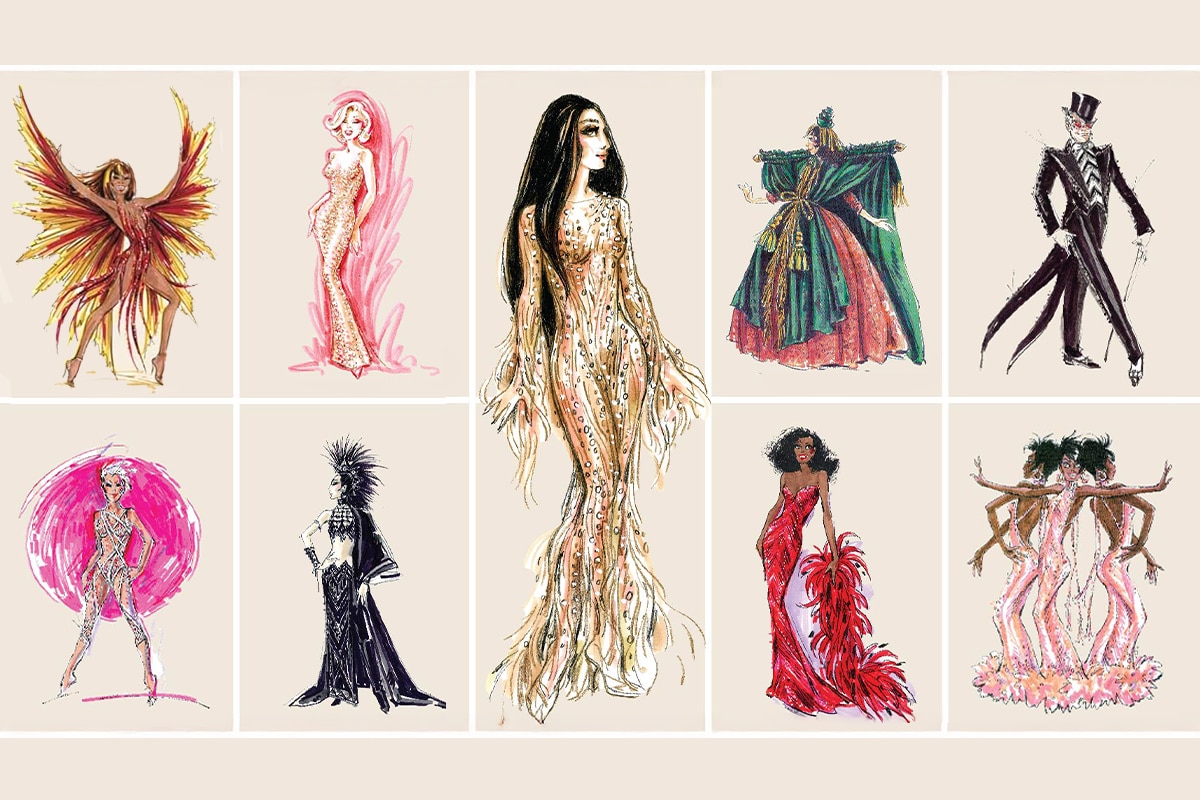
A Bob Mackie creation is something truly special. The legendary costume designer has been dazzling us for over six decades with designs worn by some of the biggest stars in Hollywood history, including Mitzi Gaynor, Carol Burnett, Cher, Raquel Welch, Ann-Margret and Diahann Carroll. Mackie’s work is truly collaborative, joining the vision of one artist with another and opening doors for new possibilities. It takes a certain kind of entertainer to wear a Mackie design; one who is confident and ready to be noticed. His creations are known for being both of the era they were created in and being timeless; something only achievable by a true visionary. Dripping in fringe, studded with rhinestones, adorned with feathers, a Mackie design always emphasizes the style of the woman wearing it.
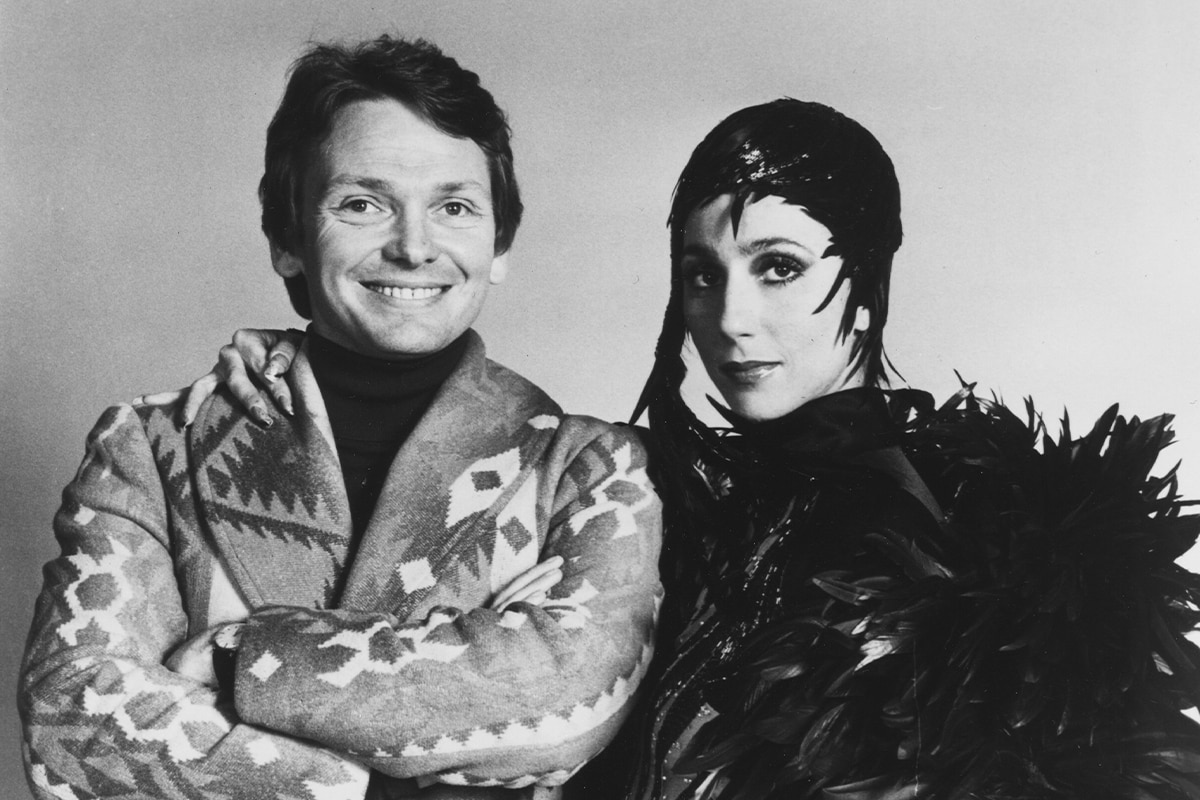
Bob Mackie’s interest in costume design came at a young age. Born March 24th, 1939, in Monterey Park, California, Mackie mostly lived with his grandparents, but when he did spend time with his mother, much of that was spent watching Technicolor musicals. In an interview for the TCM book “Creating the Illusion: A Fashionable History of Hollywood Costume Designers” by Jay Jorgensen and Donald L. Scoggins, Mackie recalled, “I grew up sitting on my sister or mother’s lap, watching movies… I liked the musicals because they were usually Technicolor. They had the most going on. They had the prettiest ladies and they went to the best places. It was certainly a lot nicer than where I lived.” One of his earliest memories was watching Meet Me in St. Louis (1944), a film that piqued his curiosity and still resonates with him today.
Mackie was enamored by the styles of Carmen Miranda—who wore bold colors and tropical headdresses—and Betty Grable—whose costumes emphasized movement and showcased her famous legs. Mackie recalls, “these ladies opened up a whole new realm of possibility for me.” As a child, Mackie would listen to radio shows and come up with costume ideas for the different characters. In high school, he helped sketch costume ideas for school plays. It was watching An American in Paris (1951) that officially influenced Mackie to become a costume designer. He was particularly inspired by Irene Sharaff’s designs for the ballet sequence. Mackie said, “It was truly brilliant and gorgeous…and I said, ‘I could do that.’”
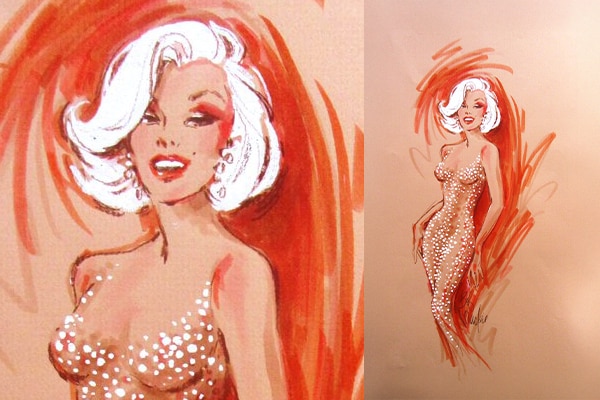
Mackie envisioned a future career as a costume designer on Broadway, but living in California meant starting this journey on his home turf. After high school, he briefly attended Pasadena City College and then moved on to the Chouinard Art Institute, which launched the careers of many costume designers in the business, including Edith Head and Marjorie Best. After Chouinard, Mackie interviewed with costume designer Jean Louis at 20th Century-Fox, who was looking for a new sketch artist. One sketch in Mackie’s otherwise sizable portfolio impressed Jean Louis and hired him on the spot. Mackie went on to work with Jean Louis on sketching designs for the unfinished Something’s Gotta Give (1963) and star Marilyn Monroe’s famous “Happy Birthday, Mr. President” dress—a sheer, form-fitting number bedazzled with rhinestones.
Mackie also worked as a freelance sketch artist for Edith Head at Paramount Pictures on productions such as A New Kind of Love (1963) and Love with the Proper Stranger (1963). In an interview, Mackie said, “I learned a lot from Edith Head [on] how to work with producers, directors, and stars. That was her greatest attribute.” While at the studio, Mackie worked with Frank L. Thompson on films like Love is a Ball (1963).
It was at Paramount that Mackie met Iranian designer Ray Aghayan. He worked as Aghayan’s assistant on films like the Doris Day romantic comedy The Glass Bottom Boat (1966). Mackie and Aghayan went on to become lifelong collaborators and romantic partners. Because many of the big costume designers in the Hollywood studio system, like Head, held on to their positions with no intentions to retire, there was little room for Mackie to advance. He moved over to television, where he found success working on variety shows and television specials, which needed designers who could quickly create a large volume of eye-catching costumes. When Head had to drop out of working on “The Judy Garland Show,” Aghayan stepped in bringing Mackie along with him as his assistant. Mackie said, “What Ray taught me about designing was that it was always about the stars and making them look good; about charging the audience up with their entrance even before they opened their mouths.”
The key to Mackie’s success as a designer was the connections he made. When Mitzi Gaynor needed someone to design costumes for her television specials, she called up Aghayan, who in turn recommended Mackie. He would go on to design countless show-stopping pieces for Gaynor over their five-decade-long relationship. When Carol Burnett saw what Mackie did for Gaynor, she and her producer-husband Joe Hamilton reached out to Mackie for work on “The Carol Burnett Show.”
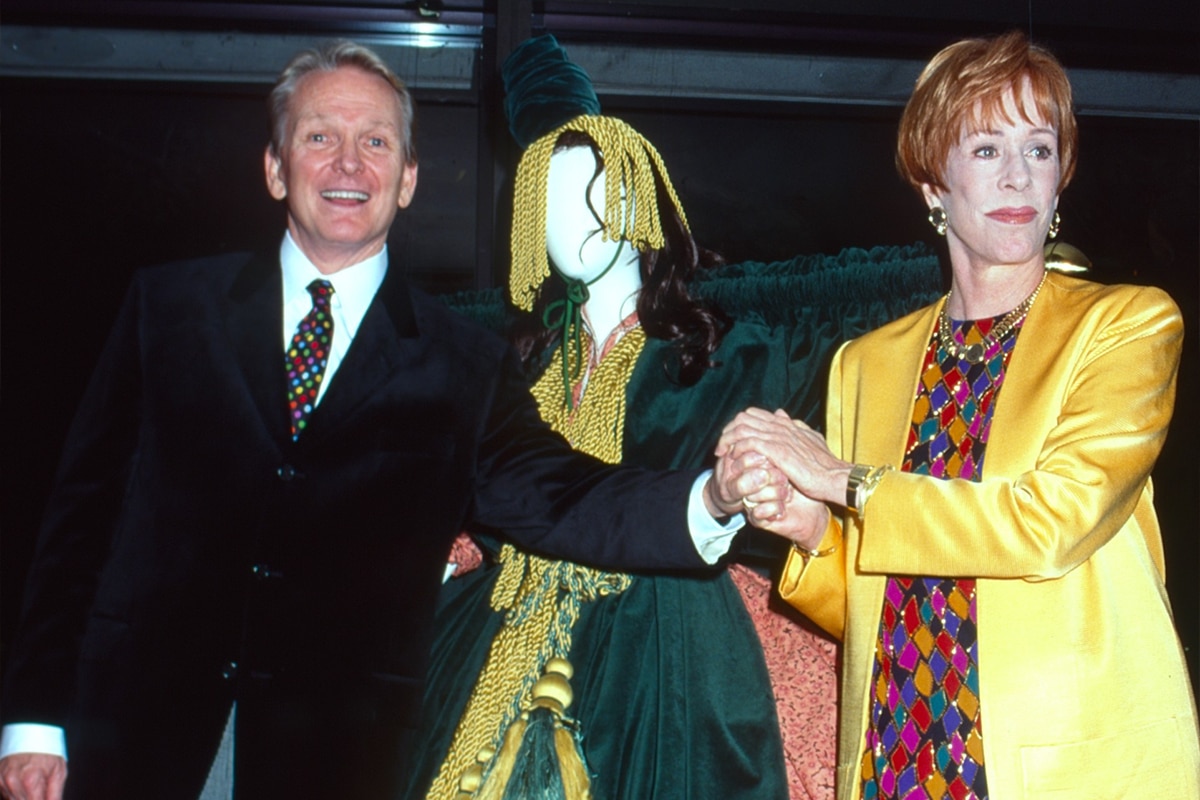
According to the book “The Art of Bob Mackie” by Frank Vlastnik and Laura Ross, Carol Burnett “was wowed by Gaynor’s imaginative, witty and contemporary clothes,” and she went on to say, “Hiring Bob was one of the smartest things I ever did.” It’s estimated that Mackie designed over 17,000 costumes for the show’s 11-year run, including pieces for various classic movie parodies. The most famous of those pieces was “The Dress,” the highlight of the show’s “Went with the Wind” spoof of the classic Gone with the Wind (1939). Burnett played Starlett O’Hara who dons a curtain dress complete with rod and tassels, an exaggerated take on Vivien Leigh’s dress from the movie. Burnett’s appearance in “The Dress” became one of the most memorable moments in television history. “The Dress” is currently on display at the Smithsonian’s National Museum of American History.
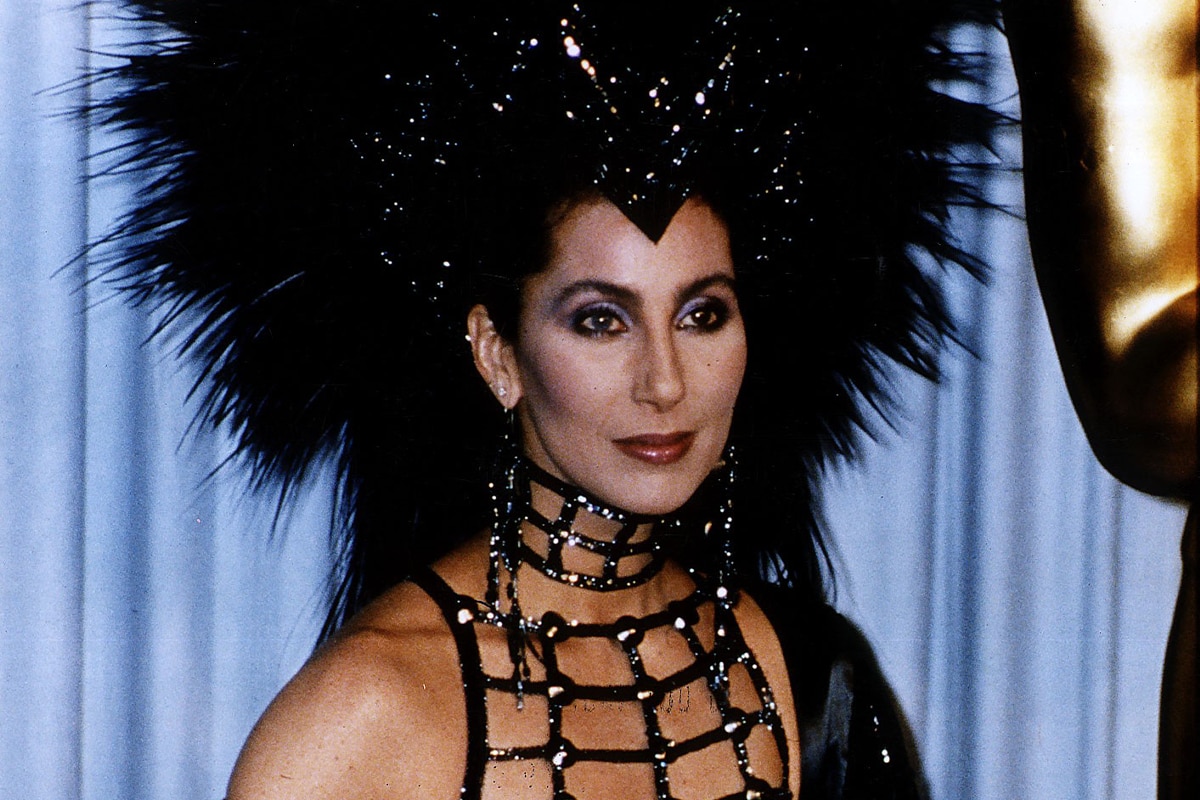
Mackie’s work on “The Carol Burnett Show” caught the attention of Cher, who went on to become one of Mackie’s most fruitful client relationships. Mackie designed costumes for “The Sonny & Cher Comedy Hour” and Cher’s various specials, where Cher delivered one of her famous lines, “Can I hear a little commotion for the dress?” Years later, when Cher was snubbed by the Academy Awards for her performance in the film Mask (1985), the star wanted to get back at the Academy not only for the snub but also for their new dress code. When she presented Don Ameche his Best Supporting Actor Oscar for Cocoon (1985), Cher made a statement in a bold Mackie design. Mackie created an all-black number with an elaborate feathered Mohawk headdress and a showgirl-style top and a dramatic low-rise skirt, leaving room to show off her bare midriff. The outfit caused such a stir that it dominated the headlines the following day.
Mackie returned to the film industry and earned three Academy Award nominations for Best Costume Design. For Lady Sings the Blues (1972), Mackie was brought on last minute when the film’s star Diana Ross wanted to bring on her own designers. Ross had previously collaborated with Mackie, and he worked to create a wardrobe that was not meant to channel Billie Holliday’s look but rather to capture the era in clothing that suited Ross’ body shape and style. Mackie shared his first nomination with Aghayan and Norma Koch.
A few years later, Mackie worked on one of his most challenging projects to date when he was tasked with creating a wardrobe for Barbra Streisand in Funny Lady (1975), the sequel to the Fanny Brice biopic Funny Girl (1968). About working with Streisand, Mackie said, “I don’t like working with people who get themselves involved in all aspects of the production... Barbra is definitely one of those women…but you soon begin to realize that, in her case, she’s a pretty good judge.” His toil paid off, earning him and Ray Aghayan another nomination.
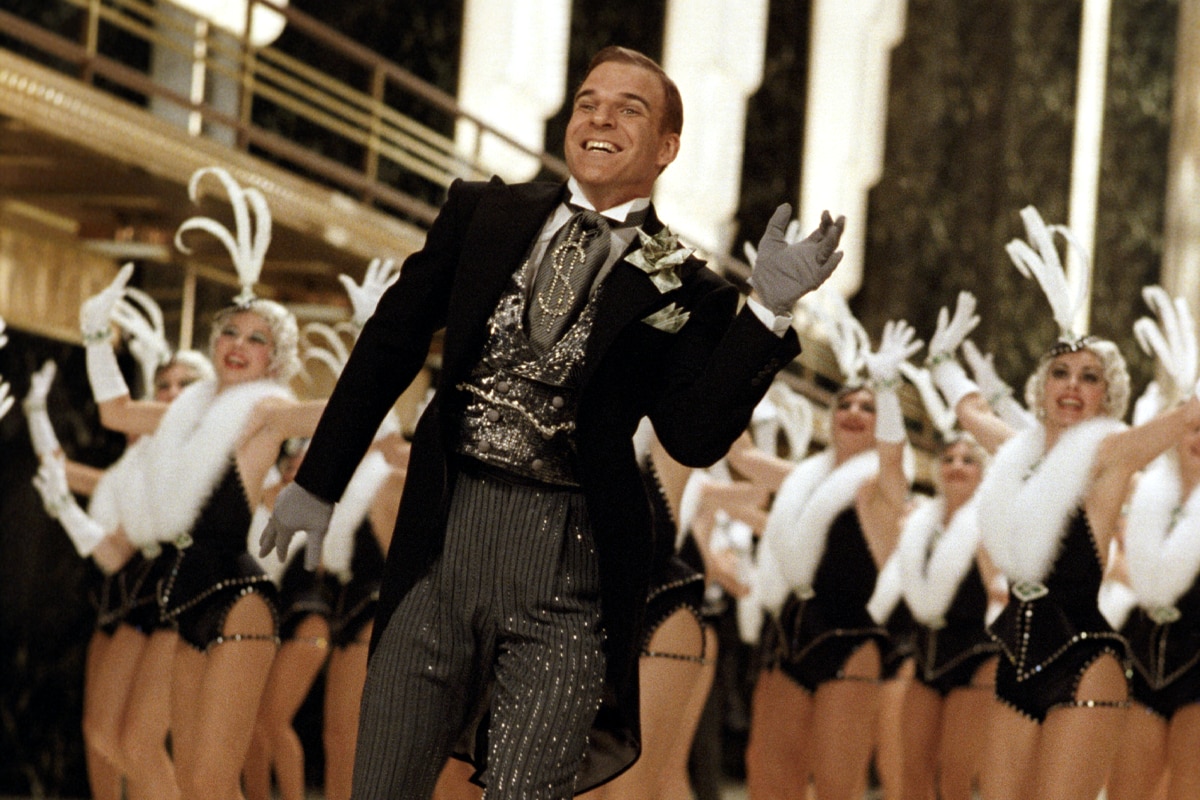
The movie that best showed Mackie’s range as an artist was the musical Pennies from Heaven (1981), starring Steve Martin and Bernadette Peters. Mackie recalled, “It was kind of like doing two films: a realistic Depression-era drama and a Busby Berkeley musical all in one.” Mackie was tasked with designing every costume in the movie from drab to glamorous, demonstrating his ability to work with both realism and fantasy. A lot of attention to detail was placed on period accuracy, which included recreating 1930s undergarments from scratch. Mackie’s work on the film earned him his one and only solo Academy Award nomination.
Although Mackie continued to work primarily for television, he was also hired to design costumes for movie stars, including Ann-Margret for The Villain (1979), Sally Field for Smokey and the Bandit II (1980) and Brooke Shields for Brenda Starr (1989). Movie stars would continue to seek out his work for red carpet appearances, including designing a dress for Madonna for the 1991 Academy Awards, which was both inspired by Rita Hayworth and Marilyn Monroe.
Mackie’s legacy continues today as his designs continue to bridge the gap between the past and the present. Vintage Bob Mackie pieces have been worn in recent years by popular singers like Miley Cyrus, Sabrina Carpenter and Ariana Grande. A new documentary, Bob Mackie: Naked Illusion (2024), directed by Matthew Miele, chronicles the life and times of this unique talent, offering insights into his private life and his many career hits (and rare misses).