January 27 at 6am ET | 4 Movies
On January 27th, 1945, the Soviet Red Army arrived at the Nazi concentration camps at Auschwitz, the site where 1.1 million innocent people were murdered. In 2005, the United Nations chose January 27th as International Holocaust Remembrance Day to commemorate the 6.1 million victims of the genocide of European Jews during World War II. This year, TCM participates in this day of remembrance by showing four films that respectfully and movingly explore the aftermath of this globe-altering part of history, airing at 6am ET.
Perhaps the most honest way to interpret this harrowing part of history on film is through a documentary. French filmmaker (and former officer for the French Resistance) Claude Lanzmann made what many consider one of the most thorough and expansive documentaries about surviving the Holocaust with his 1985 film Shoah. This nine-and-a-half-hour film shares Lanzmann’s interviews (sometimes interrogations) with dozens of bystanders, survivors, resistance fighters and even perpetrators of several holocaust sites across Poland. Lanzmann was originally hired by the Israeli Film Commission to create a standard two-hour documentary that shared the viewpoints of the Jewish people regarding the Holocaust. When Lanzmann committed to exploring the viewpoints of many more individuals and failed to meet his 18-month deadline, Israeli financiers backed out. For over 10 years, Lanzmann continued his pursuit of interviewees. The result was over 350 hours of raw footage.
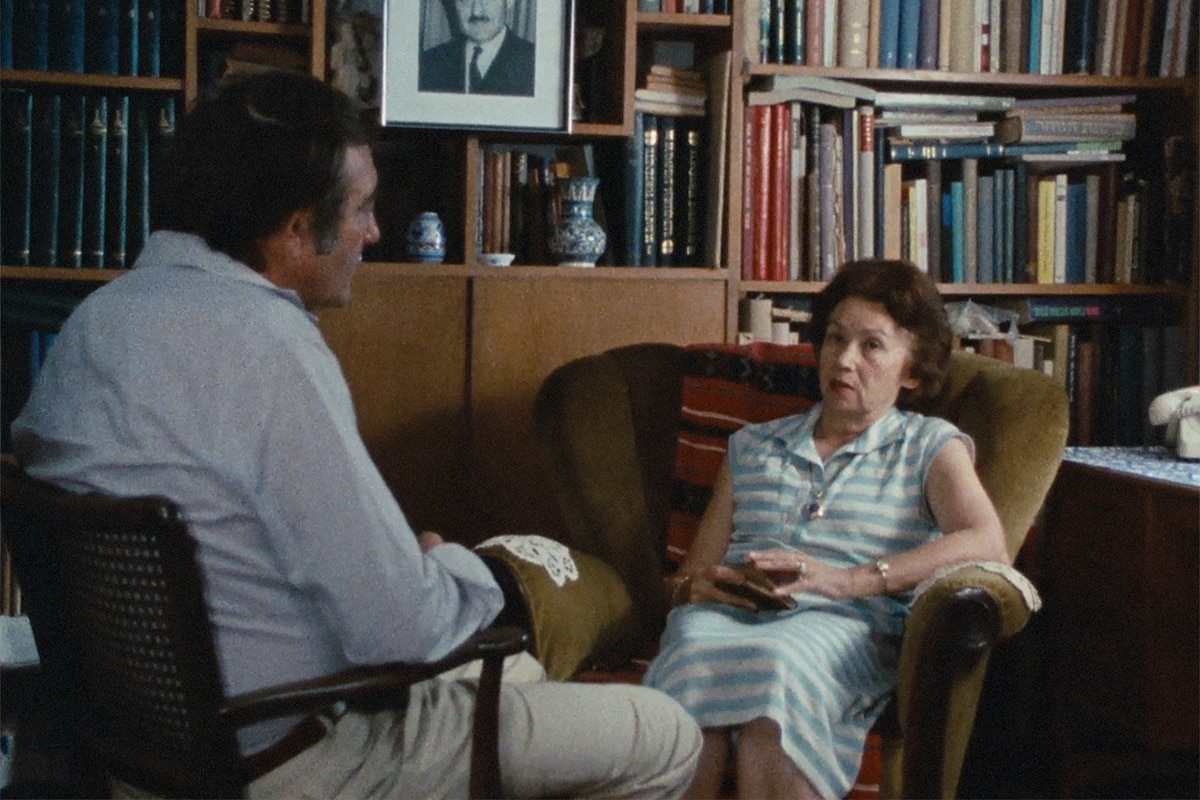
Following the success of the first Shoah, Lanzmann released several more feature documentaries using the outtakes of the original film. The last of these, and ultimately Lanzmann’s last film before his death, was Shoah: Four Sisters (2018). The film looks at the lives of four different women who survived the Holocaust and discusses their pursuit of a new life afterwards. The interviewees include: Paula Biren, who expresses remorse for working for a Jewish women’s police force that deported many innocent and impoverished civilians; Hanna Marton, who escaped to Palestine with her husband and 1600 other Jews via train; Ada Lichtman, who was forced by the Germans to clean and redress dolls taken from Jewish children; and Ruth Elias, who survived both the Theresienstadt and Auschwitz concentration camps while pregnant. Like the previous installments in the Shoah series, this last film contains no actual footage of the Holocaust itself, relying completely instead on the memories of those who actually experienced it. Because it involves a smaller number of interviews, the film devotes all its time just to the four women and Lanzmann’s response to their testimony. This minimalist approach doesn’t make the interviewees’ testimony any less effective or gripping.
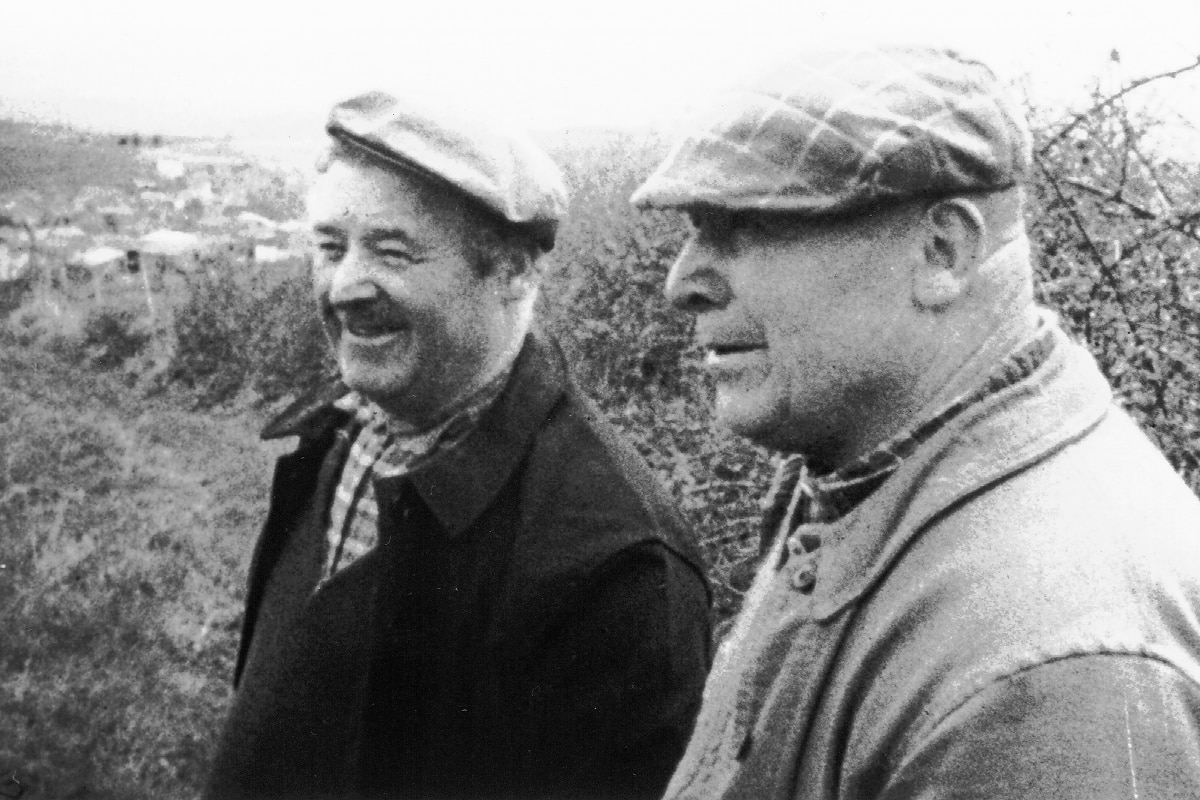
Of all the countries to fall under German rule during World War II, the largest and most powerful was France. The German occupation of this once-mighty country marked a major turning point in the course of the conflict. In turn, the fall of France and how it happened is among the most frequently studied and discussed parts of the war for historians and filmmakers alike. Frankfurt-born director Marcel Ophuls and his family first fled Germany for France in 1933, when he was six years old, only to be forced to flee from Nazi-occupied France for America in 1940. Upon his return to France in 1950, Ophuls originally set out to be a fiction filmmaker, serving as an assistant for such noted directors as Francois Truffaut and Anatole Litvak. His first two feature films, Love at Twenty (1962) and Banana Peel (1963), were both modestly received by audiences. Ophuls found his greatest success when he switched to documentary.
The first of these was The Sorrow and the Pity (1969). This four-hour, two-part film first examines the fall of France under German invasion, then discusses how different factions of the French people chose to either resist or collaborate with the Nazi occupiers. Among the fascinating interviews are conversations with Pierre Mendes, who was tried and imprisoned by the Vichy government, and with Christian de la Maziere, one of the thousands of French youths who chose to fight alongside the German forces. Ophuls would continuously return to the subject of World War II for the remainder of his career. Among these additional films are The Memory of Justice (1976), about the Nuremberg Trials, and Hotel Terminus (1988), about Nazi war criminal Klaus Barbie. The latter won Marcel Ophuls the Academy Award for Best Documentary Feature of 1988.
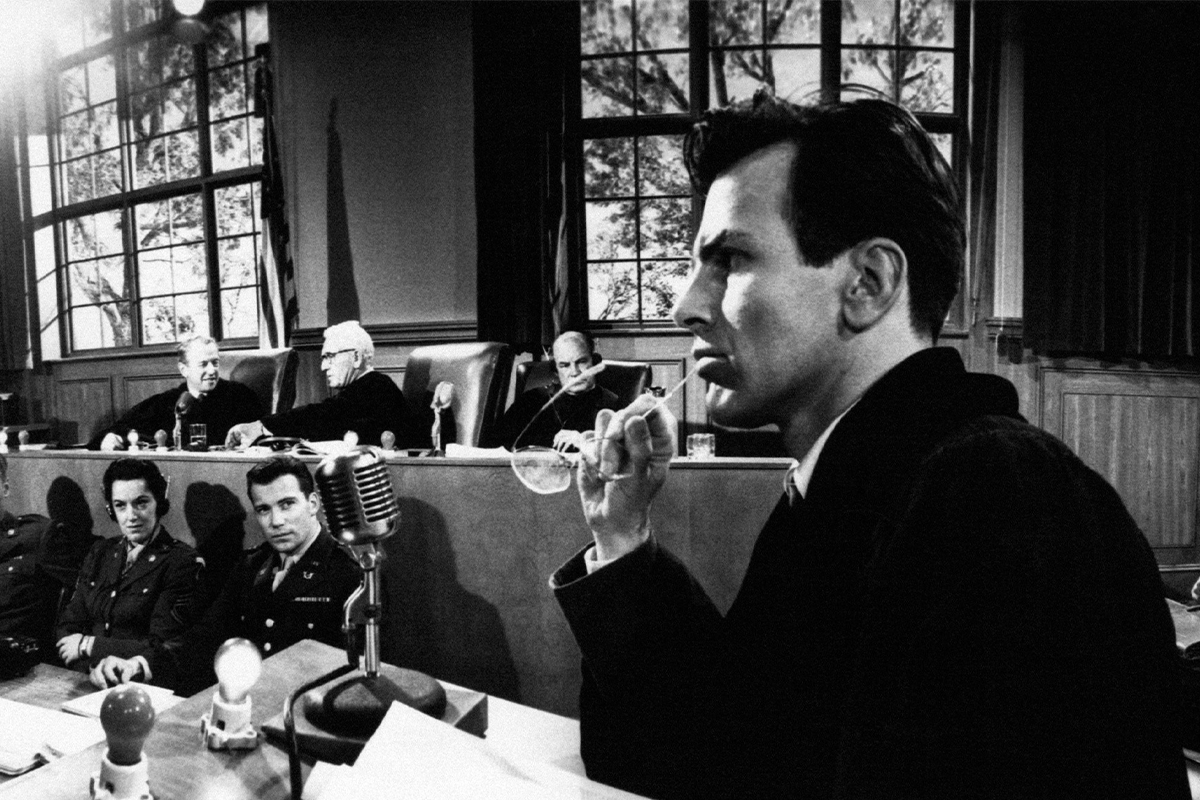
In the immediate aftermath of World War II, the Allied forces held a year-long series of International Military Tribunals in the then American-occupied area of Nuremberg, Germany, to try several leaders of the defeated Nazi German forces for their war crimes against humanity. A number of documentary and narrative films have been made about the trials. Probably the most famous is Stanley Kramer’s Judgment at Nuremberg (1961). Spencer Tracy plays Chief Judge Dan Haywood, who must preside over the trials of four German judges and jurists accused of sentencing innocent people to imprisonment or death for their religious or racial identities. The only accused judge not to loudly plead his innocence is elderly Dr. Ernst Janning (played by an almost unrecognizable Burt Lancaster). Judge Haywood spends his time outside the courtroom trying to understand the German citizens and how and why they allowed Hitler and the Nazi party to rise to power.
Austrian-born actor Maximilian Schell (who had fled German-occupied Vienna as a child) plays Attorney Hans Rolfe, who is burdened with the near-impossible task of defending the Nazi judges. Rounding out the all-star cast are Marlene Dietrich as Frau Bertholt, the widow of a German general executed by Allied forces; Richard Widmark as aggressive prosecutor Col. Tad Lawson; Montgomery Clift as a man physically sterilized by the Nazis; and Judy Garland as a woman whose friendship with a Jewish man caused them both to be incarcerated. With only about 15 minutes of screen time apiece, the appearances of Clift and Garland in the film are little more than cameos. However, their heartbreaking performances earned them both Oscar nominations. The film received 11 Oscar nominations in total, winning Best Actor for Schell and for Abby Mann’s screenplay adaptation of his own teleplay. The teleplay had originally been produced as a live television special in 1959, starring Claude Rains as Judge Haywood and Schell in his first performance as Defense Attorney Rolfe. The Nuremberg trials continue to fascinate storytellers. In his recent film Nuremberg (2025), writer/director James Vanderbilt told the true story of an American psychiatrist who monitored the mental health of some of the high-ranking Nazi officials who were brought to trial.
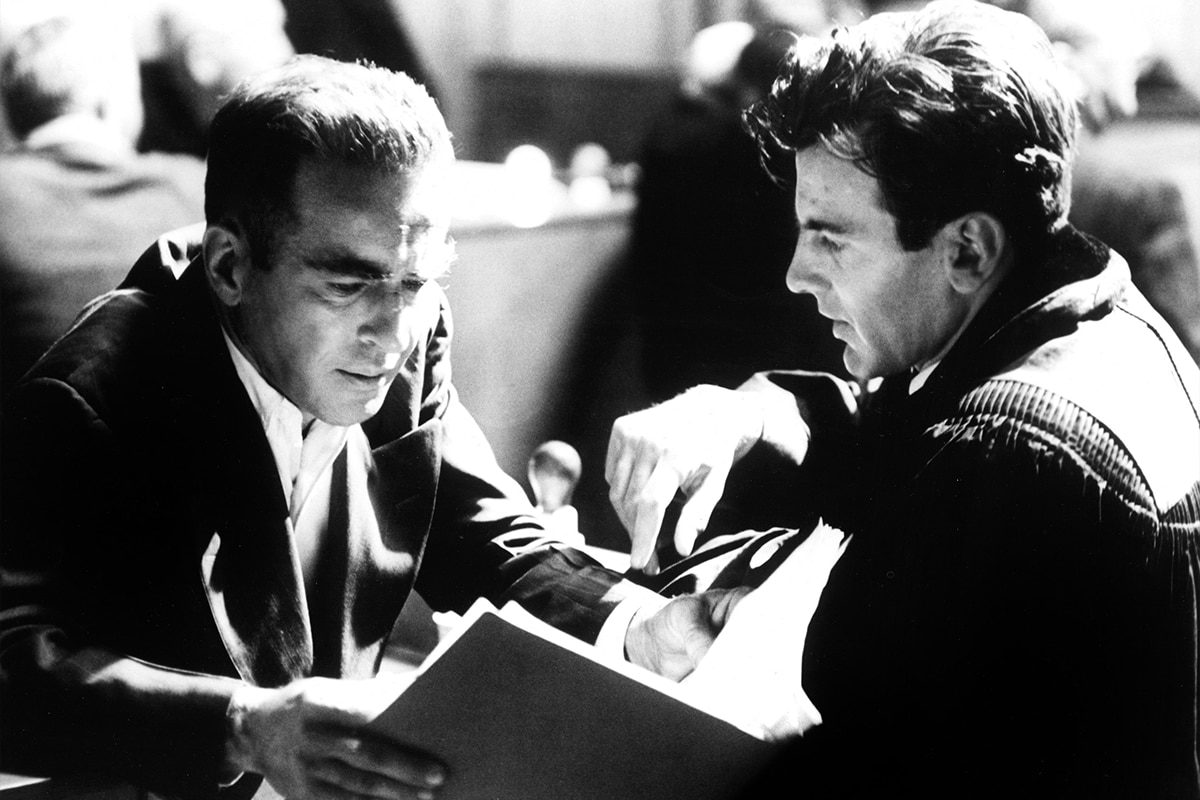
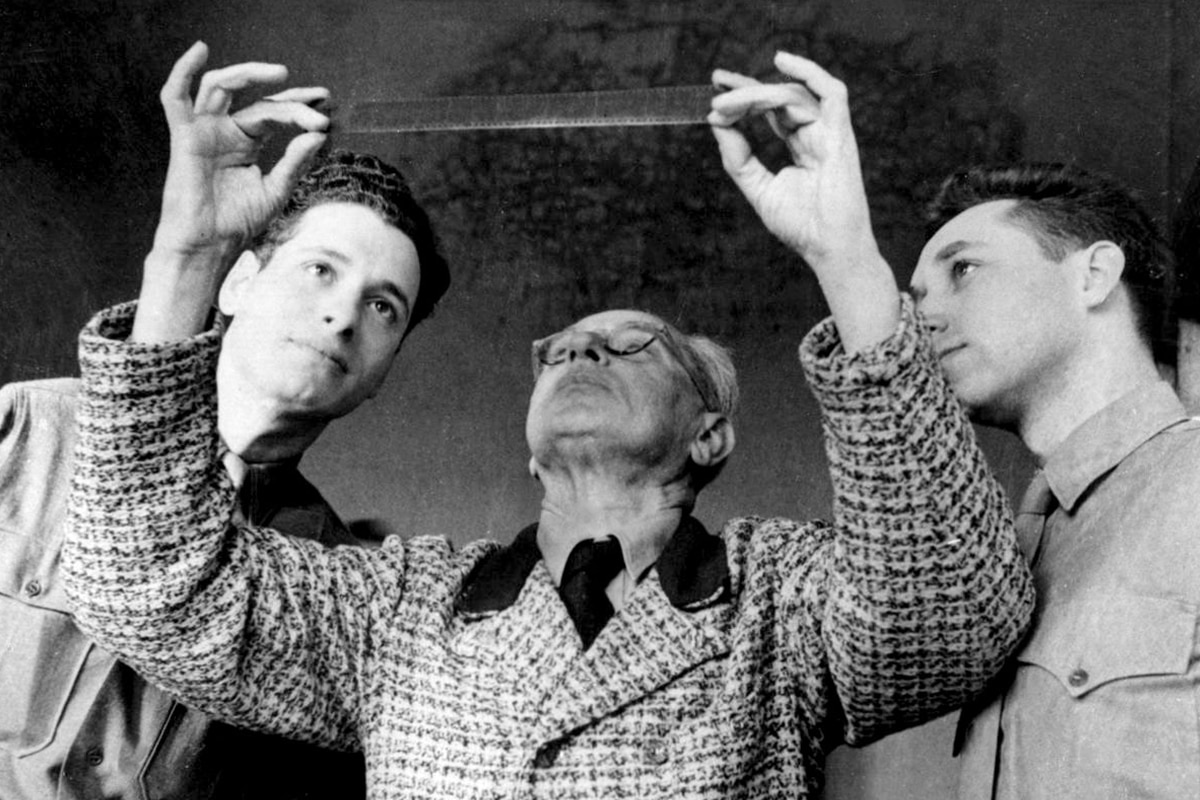
Throughout its history, the medium of film has been used not only as a source of entertainment and escapism but also as a powerful tool that can document real life and human behavior. During World War II, the great John Ford took a break from directing classic Hollywood movies to serve as the head of the photographic unit for the U.S. Office of Strategic Services. One of the most consequential things he did while serving in this position was sending brothers Budd and Stuart Schulberg (sons of producer B.P. Schulberg) on a mission to gather photographic evidence of Nazi war crimes to be used for their prosecution during the Nuremberg trials. Over the summer of 1945, the Schulbergs traveled across war-ravaged Europe, gathering hundreds of hours of footage of the atrocities committed by the Nazis. When Budd Schulberg returned to Hollywood in the fall to resume screenwriting (he would eventually win an Oscar for On the Waterfront, 1945), Stuart stayed in Europe to film the Nuremberg trials. He turned his resulting footage into the documentary Nuremberg: Its Lesson for Today (1948).
Only three years later, in the earliest stages of the Cold War, U.S. authorities chose to bury the documentary. In Filmmakers for the Prosecution (2021), documentarian Jean-Christophe Klotz worked with Stuart Schulberg’s daughter, Sandra, to find whatever footage was still readily available and tell this entire story of her family’s critical involvement in chronicling the war. The Second World War remains perhaps the most frequently addressed period in all of movies. Hopefully, with great films like these and so many more, the world will continue to learn from its history and be changed for the better.