January 19 at 6am ET | 13 Movies
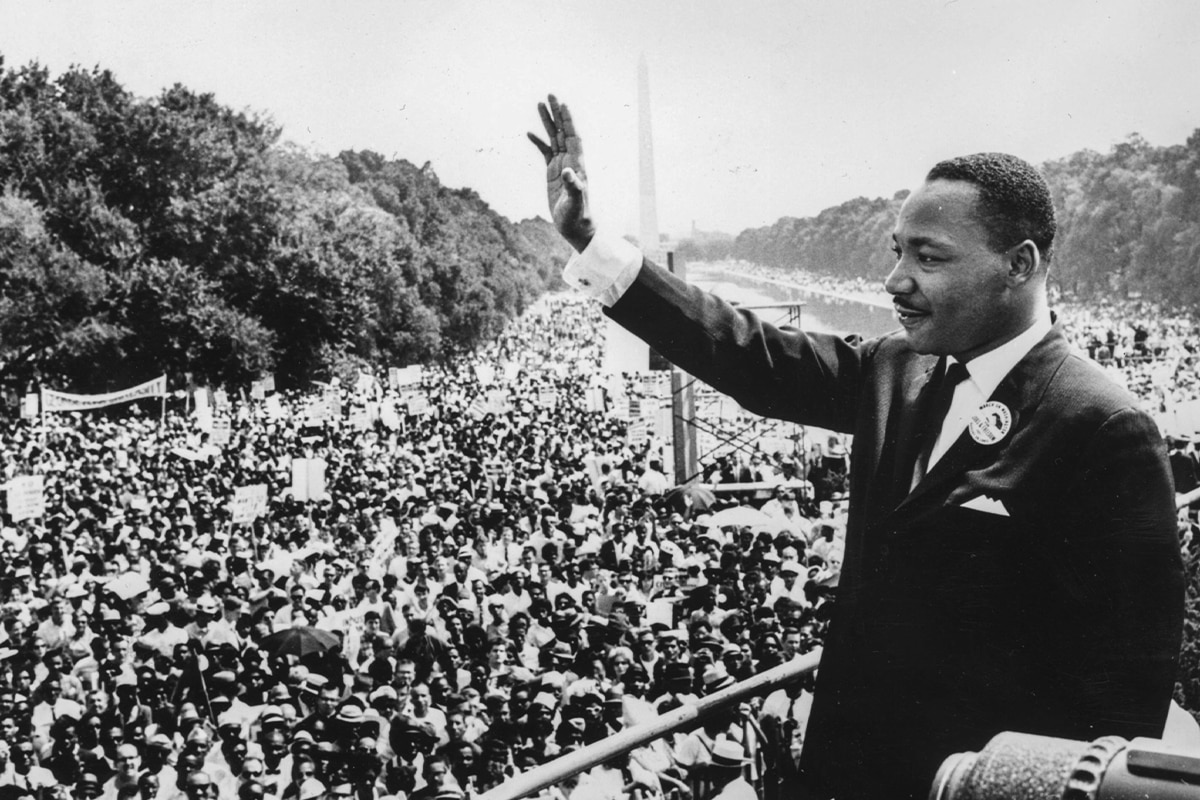
First observed in 1986, Martin Luther King Jr. Day is celebrated every third Monday in January and honors the most impactful leader of the Civil Rights Movement. King led the crusade for social, economic and political rights for Black Americans. His powerful speeches stirred a nation; one that he dreamed would “rise up and live out the true meaning of its creed: we hold these truths to be self-evident, that all men are created equal.”
Movies provide us a portal into this important time in our nation’s history. In celebration of Martin Luther King Jr. Day, TCM honors this movement with 13 films that highlight the struggles and triumphs of this era, beginning on January 19th at 6am ET.
Intruder in the Dust (1949), directed by Clarence Brown and starring Juano Hernandez and Claude Jarman Jr., was one of four social issue pictures released in 1949 that tackled the subject of race. The others were Pinky, Home of the Brave and Lost Boundaries. William Faulkner’s Southern Gothic novel about a Black man on trial for the murder of a local white man was a hot property in Hollywood even before it hit bookstands. Selznick International, Universal and Warner Bros. all made bids, but ultimately it was sold to MGM. Intruder in the Dust is notable for Hernandez’s standout performance, its depiction of the segregated South, on-location shooting and seamless blending of coming-of-age story with crime drama.

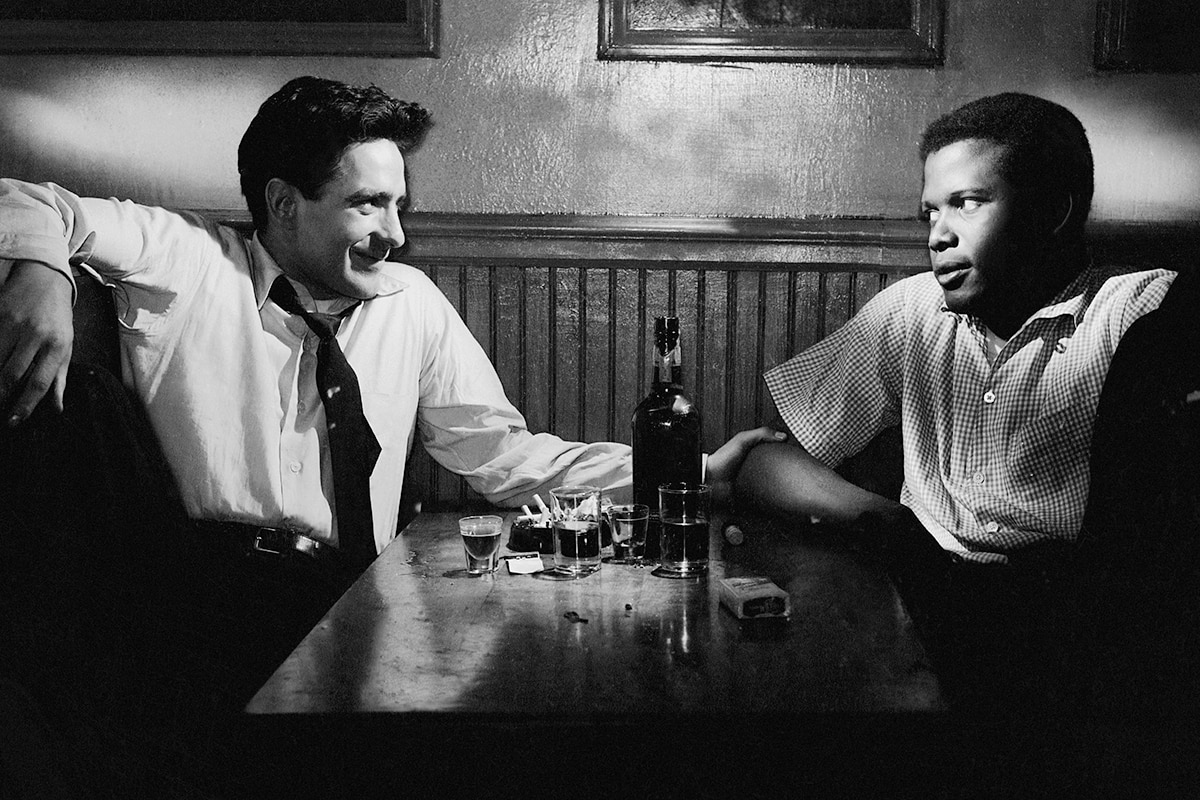
A shift began happening in Hollywood, and actor Sidney Poitier led the way by demonstrating new possibilities for Black actors on screen. In 1955, Poitier starred in the live teleplay “A Man Is Ten Feet Tall,” a hard-hitting drama about a railroad worker tormented by his past and present situations. Poitier almost didn’t get the role when NBC demanded that he publicly denounce his friendships with Paul Robeson and Canada Lee because of their political affiliations. According to the AFI, “after Poitier refused, [writer Robert Alan] Aurthur and others worked out a compromise that allowed him to take the role.” A couple of years later, Martin Ritt directed the remake of the teleplay, Edge of the City (1957). Starring John Cassavetes and Poitier, Edge of the City was groundbreaking in its depiction of an integrated workplace and interracial friendship. The film received praise from critics as well as the NAACP and Urban League.
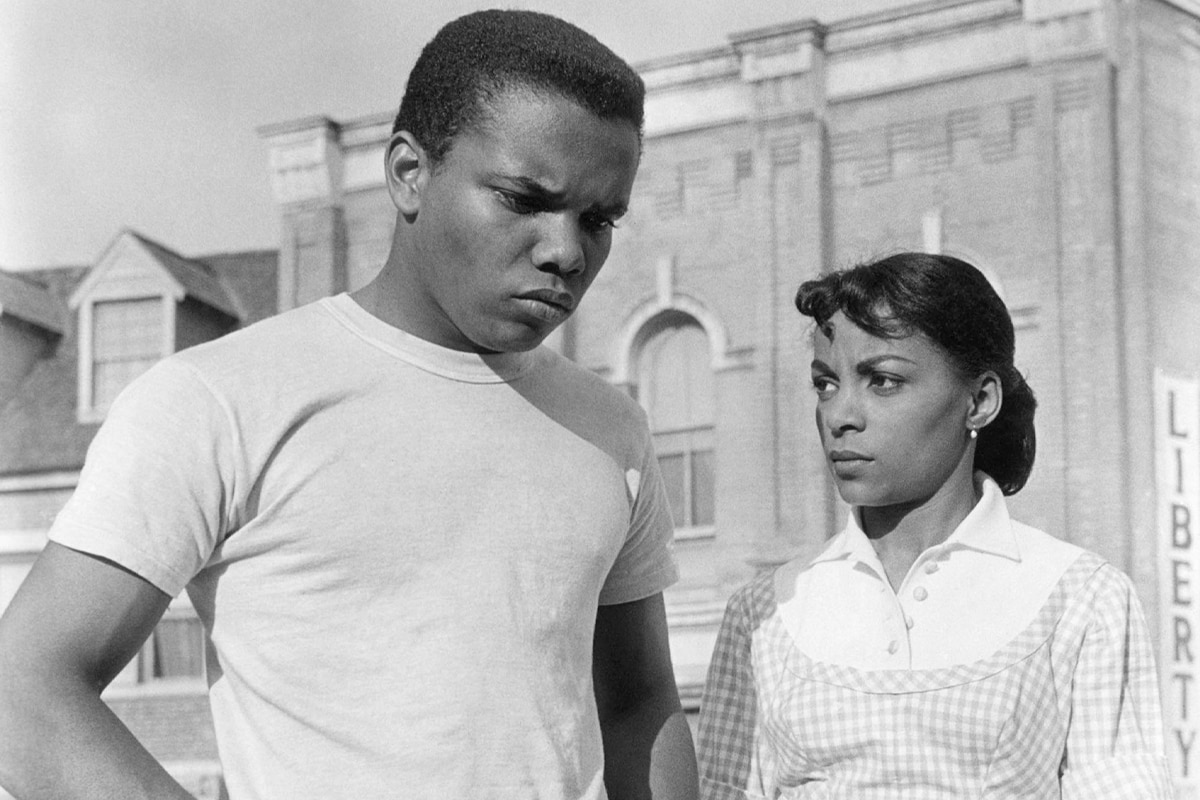
Singer Johnny Nash—still some years away from his hit single “I Can See Clearly Now”—made his debut as a teen crooner in the late 1950s. Burt Lancaster saw silver screen potential in Nash and signed him to his production company Hecht-Hill-Lancaster to star in Take a Giant Step (1959). Based on Louis S. Peterson’s stage play and directed by Philip Leacock, Nash plays Spence Scott, a Black teenager whose family lives in a predominantly white neighborhood. Despite having enjoyed some upward mobility, Spence struggles with the effects of racism in his everyday life. Peterson was the first Black playwright to have a successful drama debut on Broadway.
While distributing films on the topic of race caused challenges for studios, the platform of television provided a new opportunity for a much bigger audience. In her autobiography, Cicely Tyson writes about the debut of her made-for-television movie The Autobiography of Miss Jane Pittman (1974): “50 million people tuned in—nearly a quarter then of the nation.” Based on Ernest Gaines’ bestselling novel about a 110-year-old Black woman whose life spanned from the Civil War to the beginning of the Civil Rights Movement, Tyson played the character from early adulthood to old age. Transforming Tyson into a 110-year-old woman took six hours of makeup—applied by artists Stan Winston and Rick Baker. The television broadcast of the film was a major event. Tyson recalled, “When Jane Pittman aired in January 1974, it ran straight through for 110 minutes, with just one commercial break at the start and another at the end.” Her performance in the film was one of the crowning achievements of her career and earned her two Emmy awards.
A breakthrough in filmmaking, Say Amen, Somebody (1982) was the first documentary to focus on gospel music and its importance in Black culture. According to AFI, director George T. Nierenberg came onto the project believing that “he was able to offer a ‘fresh point of view’ on the subject due to his lack of familiarity with the music.” He spent a year visiting churches and looking for gospel singers who would make great subjects for his film. He ultimately chose Reverend Thomas Dorsey—the self-proclaimed “father of gospel music”— and the dynamic Mother Willie Mae Ford Smith.
Nominated for an Academy Award for Best Documentary, Freedom on My Mind (1994) chronicles the resistance the Black community in Mississippi faced in the days leading up to the Voting Rights Act of 1965. Directors Marilyn Mulford and Connie Field interviewed activists as they recalled the protests leading up to the Democratic National Convention, the work of the Mississippi Freedom Democratic Party and ultimately the stronghold Jim Crow laws had on the region.
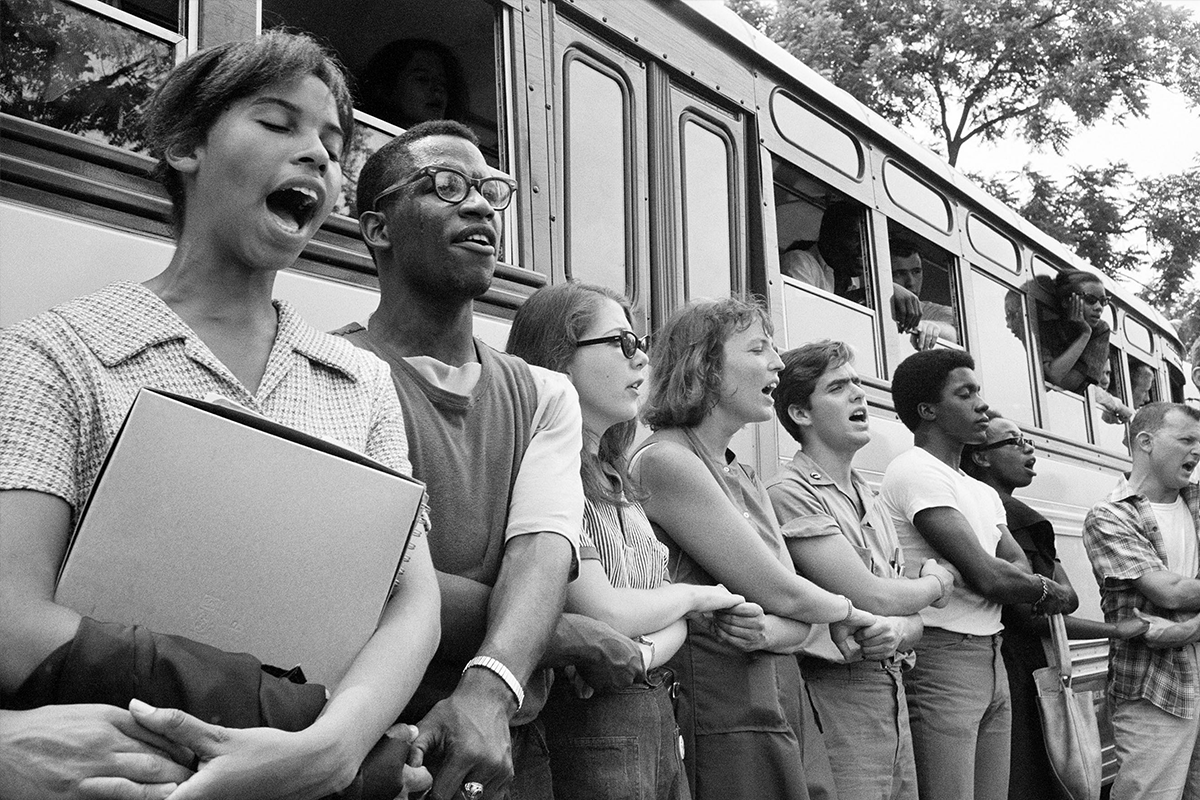
Premiering on TCM this month is writer James Baldwin’s documentary I Heard It Through the Grapevine (1982). Filmed in Atlanta, the birthplace of Martin Luther King, Jr., Baldwin looks back on the days of the Civil Rights Movement now that nearly two decades have passed. The documentary includes conversations between Baldwin and various intellectuals, newsreel footage and archival photographs and Baldwin’s travels through Atlanta as he reminisces on major milestones of the era.
One of the great documentaries of the 20th century, King: A Filmed Record from Montgomery to Memphis (1970) is a patchwork of archival footage that chronicles the work of Martin Luther King Jr. from 1955 to 1968. Directed by Sidney Lumet and Joseph L. Mankiewicz, this film includes previously unseen footage of King as well as key moments in his life and career, including the Montgomery Bus Boycott, the March on Washington, the Selma to Montgomery marches and King’s funeral service. Interspersed throughout the documentary are soliloquies performed by some of the top actors working in Hollywood at the time. These include Harry Belafonte, James Earl Jones, Paul Newman, Joanne Woodward, Anthony Quinn and Charlton Heston. The release of the documentary was publicized as a “one-time-only” event to be held on March 24th, 1970, with proceeds going to the MLK Special Fund.
Made in response to King’s assassination and the rise of the Black Panther Party, Uptight (1968) stars Julian Mayfield as Tank, a member of a Black militant group in Cleveland who becomes an informant when the group begins arming themselves for a race war immediately after King’s assassination. Mayfield and fellow Hollywood blacklist refugees director Jules Dassin and actress/activist Ruby Dee, took John Ford’s The Informer (1935)—set in the 1920s during the Irish War of Independence—and adapted it into a modern-day story of Black resistance. The production was plagued with issues including FBI surveillance and harassment from a local militant group. After the film wrapped, Paramount struggled to promote the film, and according to “Tablet Mag,” “members of the youthful audience accused the movie of being insufficiently revolutionary.” Uptight has since been recognized as a precursor to the blaxploitation genre.
The Black Panther Party became the subject of various documentary works after its rise. Belgian director Agnès Varda spent time in Oakland, California during the summer of 1968, capturing footage of party members as they protested the incarceration of co-founder Huey P. Newton. Her short film Black Panthers (1968) features a jailhouse interview with Newton and a speech delivered by activist Kathleen Cleaver about the role of women in the movement and a return to natural hairstyles. In an interview, Varda said, “I think this short film bears witness to one brief, specific moment in the tormented history of Black Americans.”
The Chicago-based production company The Film Group made a series of seven modules called “The Urban Crisis and the New Militants,” which examined various forms of Black resistance and dissent. Module #6, Black Moderates and Black Militants (1968), is a 10-minute short film in which three members of the Chicago Black Panther Party debate with a high school principal on steps towards ending racism. A few years later, The Film Group released the provocative documentary The Murder of Fred Hampton (1971). Director Howard Alk and producer Mike Gray went to great lengths to investigate the late-night ambush of activist Hampton’s home and the obstruction of justice that followed.
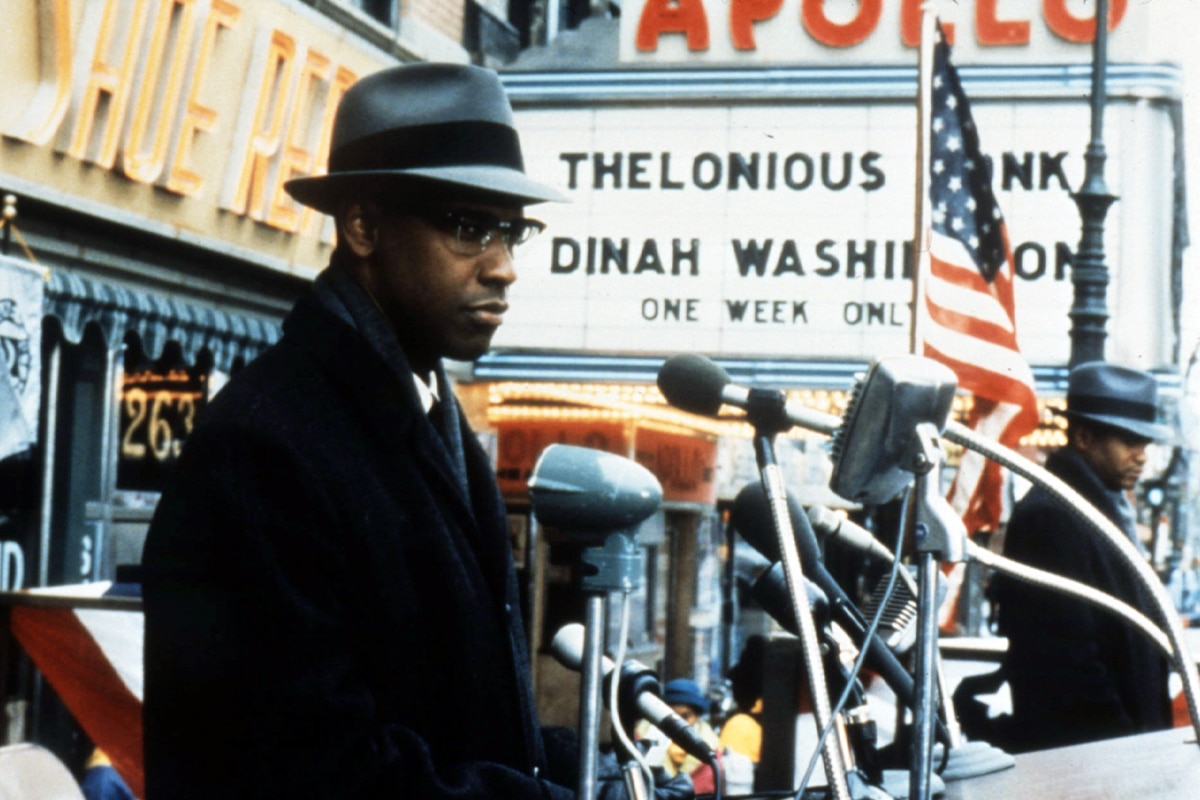
Based on Malcolm X’s autobiography co-written with Alex Haley, Spike Lee’s epic Malcolm X (1992) is an all-encompassing biography of the Black civil rights leader and revolutionary. The film had been years in the making with several screenwriters and directors considered for the project. According to AFI, when Warner Bros. moved ahead with Norman Jewison, Spike Lee insisted “that only a Black director could tell Malcolm X’s story.” Producer Marvin Worth agreed and hired him on as director. Denzel Washington delivers a powerhouse performance as the charismatic leader and earned an Academy Award nomination for Best Actor. Notable cast members include Angela Bassett as Malcolm’s wife Betty Shabazz, Delroy Lindo as a Harlem Gangster and Spike Lee himself as Shorty, Malcolm’s best friend.