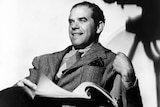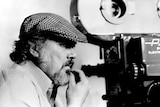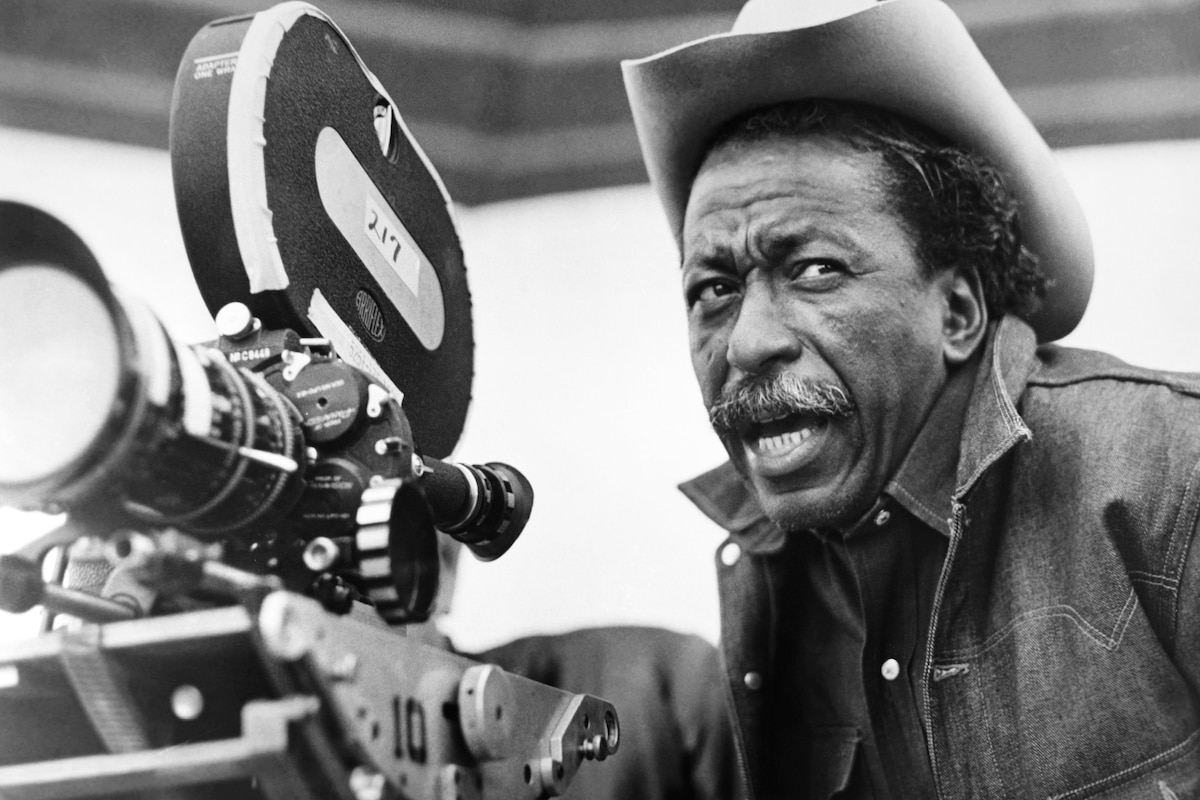
With significant accomplishments to his credit as a photographer, journalist, filmmaker, screenwriter, novelist, poet, composer and librettist, Gordon Parks may well be the 20th century’s African-American Renaissance Man par his excellence. He won over 20 awards and received 23 honorary degrees in literature, fine arts and humane letters. Parks became Hollywood's first Black studio film director, but he first gained acclaim as a preeminent photojournalist at LIFE magazine from 1948-68. His subjects included such diverse topics as the Black Muslims, Ernest Hemingway's Paris and life in American ghettoes. “The Learning Tree,” Parks's autobiographical novel about growing up Black in 1920s Kansas, provided the foundation for his moving, sometimes didactic and stunningly photographed 1969 feature debut, which he produced, wrote, directed and scored.
In 1989, The Learning Tree was among the first 25 films deemed culturally, historically, or aesthetically significant enough to be included in the National Film Registry for future preservation. However, it was his second feature, Shaft (1971), that would have a far greater cultural impact. The detective thriller, starring Richard Roundtree as private investigator John Shaft, became a major commercial success, saving a then-financially struggling MGM from bankruptcy. The film was pitched as a low-budget crime film that eventually earned back over 10 times its $500,000 budget and spawned an era of films known as “Blaxploitation,” as studios sought to make cheaply made Black-led films for urban audiences. Shaft generated a hit theme song, two sequels (the first, 1971's Shaft's Big Score, was also helmed by Parks) and a TV series.
Continuing to work in the action genre for the next several years, Parks displayed increasing technical and narrative proficiency and was rewarded with bigger budgets for his efforts, such as for his 1974 film The Super Cops. What was missing was the personal and committed elements in evidence in The Learning Tree. He recaptured some of those qualities in Leadbelly (1976), a fine if somewhat sanitized biopic about legendary blues singer Huddie Ledbetter. Perhaps Parks's most accomplished film, Leadbelly boasted a strong and charismatic central performance by Roger E. Mosley (best known as laid-back helicopter pilot T.C. on TV's “Magnum, P.I.”), great music and awe-inspiring cinematography from Bruce Surtees. Produced by a tax shelter group and copyrighted by a Netherlands entity, the film failed to find the large audience it so richly deserved due partially to poor marketing and distribution, but moreover because young modern filmgoers neither knew nor cared about the subject. This turned out to be Parks' swan song as a feature director.
Parks went on to write several volumes of poetry and fiction. An accomplished self-taught pianist, he composed a number of piano sonatas, a symphony and other works for the concert stage. Parks directed and composed music for several interesting projects for PBS in the 1980s, including the 1984 historical drama Solomon Northrup's Odyssey and his autobiographical documentary Gordon Parks: Moments Without Proper Names (1987). He ushered in the 1990s with “Martin” (PBS, 1990), an original, five-movement ballet about the life of Dr. Martin Luther King Jr. Parks served as executive producer, director, composer, keyboardist and documentary photographer for this boldly ambitious project. His oldest child of four was Gordon Parks Jr., who was best remembered as the director of Superfly (1972), Thomasine & Bushrod (1974) and Aaron Loves Angela (1975). Parks Sr. died on March 7, 2006, at aged 93.
(Edited: August 2026 by Quatoyiah Murray)