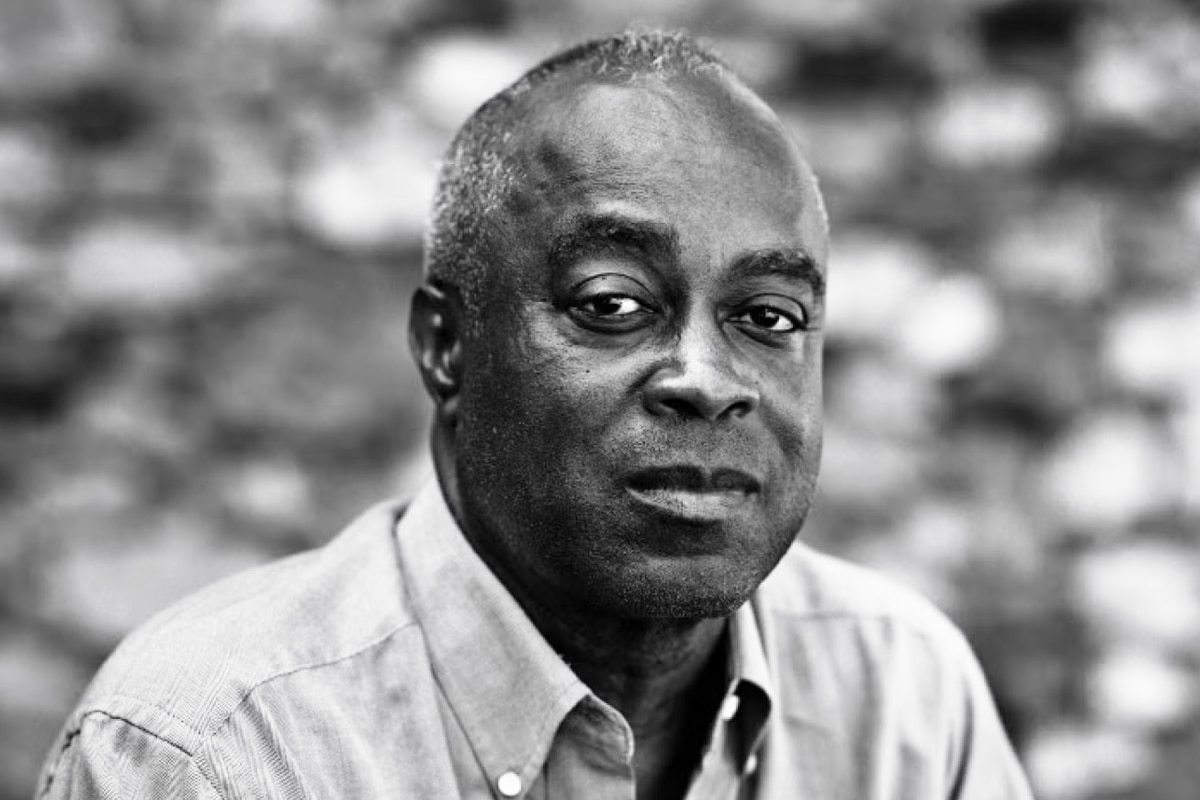
A director, producer, writer, editor, actor, photographer and cinematographer, Charles Burnett is one of the giants of American independent film and a leading voice of Black cinema since the late 1970s. His films Killer of Sheep (1978), My Brother’s Wedding (1983), To Sleep with Anger (1990) and The Annihilation of Fish (1999) have put the stories of Black Americans into theaters in a way rarely seen from Hollywood. His work has led him to be called, “The nation’s least-known great filmmaker and most gifted black director,” by The New York Times, and he became a recipient of the Academy of Motion Picture Arts and Sciences’ Governors Award in 2017.
Born in Vicksburg, Mississippi on April 13, 1944, Burnett was the son of a nurse’s aide and a military father. When he was three, his family moved to the Watts neighborhood of Los Angeles, which would have a major impact on Burnett’s life and outlook. The Southern folklore of his work combined with the modernity of urban and family life was reflected in his surroundings as Burnett noted the large number of Southerners who had migrated to the area. While Burnett was always interested in art, he felt that he required a stable job, so he studied electronics at Los Angeles City College. However, his creative impulses pushed him to take a turn towards writing, and he eventually earned his B.A. in writing and languages from the University of California, Los Angeles.
He went on to earn his Master of Fine Arts in theatre arts and film at UCLA, which would be a formative experience. Burnett, along with fellow students like Julie Dash, Larry Clark, Jamma Fanaka, Billy Woodbury and Haile Gerima, would become members of the Black Independent Movement, also called the “LA Rebellion.” Shaped by the Civil Rights Movement of the 1960s, these filmmakers would infuse their work with influences from the race films of the silent era to the heavily neorealist works of Vittoria de Sica and Roberto Rossellini in 1940s Italy. These films highlighted class conflict within American families and a distinctive view of Black American history and culture separate from Hollywood’s limited rendering. These films also served as a response to the Blaxploitation works of the era, choosing to focus on intimate personal drama rather than outsized crime thrillers.
These influences came to fruition in Burnett’s master thesis, the stunning 1978 feature, Killer of Sheep. On a shoestring budget of less than $10,000, Burnett spent five years toiling away on the story, which follows a slaughterhouse worker (Henry Gayle Sanders) in Watts and features placid snapshots of life for its neighborhood residents. The film struggled to find an audience in its initial release due to the rough quality of the 16mm print, but thankfully, a restoration by UCLA into a 35mm print and a trip through film festivals in the early 1980s at Berlin and Sundance would create a devoted following of cinephiles. The director Kathleen Collins (Losing Ground, 1982) would say of the film that she had never seen “working-class black life captured with such completeness.”
Burnett continued this focus on intimate relationships among Black families with his second feature, My Brother’s Wedding. The tragicomedy follows Pierce Mundy (Everett Silas), who is torn between his loyalties to his childhood friend (Ronnie Bell) and his brother (Monte Easter), who is about to marry into a higher social class. “[Pierce] has a distinct romantic notion about life in the ghetto and yet, in spite of his naive sensitivity, he is given the task of being his brother's keeper,” Burnett said of his protagonist. “He feels rather than sees, and as a consequence his capacity for judging things off in the distance is limited.” Similar to Killer of Sheep, the film had a rocky launch as producers rushed an unfinished cut to a New York festival screening, and a mixed review in the New York Times scared off distributors. It wouldn’t be until 2007 that the movie finally received a theatrical release.
Thankfully, Burnett didn’t slow down and made the riveting To Sleep with Anger. With the biggest budget yet for Burnett (a still modest $1.4 million), the movie is a crackling family drama where mysterious southerner Harry (a sublime Danny Glover in one of his most beguiling performances) turns up on the doorstep of a Los Angeles family and proceeds to break open fissures of resentment and jealousy. As Burnett told film critic and programmer Ashley Clark in Film Comment in 2016, the influence of Black folklore and mysticism in the movie came from his upbringing. “My mother and grandma had these superstitions . . . Some people they wouldn’t even let in the house,” said Burnett. “They would sense this bad karma about people. A lot of this stuff I considered at one time kind of silly and ‘country,’ but as I grew up . . . I began to change my mind and respect them.”
Burnett didn’t purposely eschew mainstream entertainment, as seen from his crime thriller The Glass Shield (1994). The film follows a couple of rookie L.A. sheriffs who investigate a conspiracy around the arrest of a Black suspect (Ice Cube). Although the movie played at major festivals, like the 1994 Toronto International Film Festival, Miramax gave the film a summer release. While not a smash hit, the movie demonstrated Burnett could make a Hollywood feature that didn’t shy away from systemic problems in American society. He continued to demonstrate his range with the lovely romance The Annihilation of Fish (1999), a film that put revered actors Lynn Redgrave and James Earl Jones at the center of the feature. Jones’s “Fish” is a man suffering from mental illness, and yet Burnett made sure the film focused on the character’s humanity rather than his diagnosis. “We had to make sure it didn’t look like we were making fun of it and not respecting people with issues of mental illness,” Burnett told The Film Stage for the film’s 25th anniversary re-release. “We were always concerned about that.”
As Burnett continued to make theatrical features, he would also begin to expand into other arenas including TV movies, like Oprah Winfrey Presents: The Wedding (1998) and Finding Buck McHenry (2000), the latter of which won a Daytime Emmy award. Burnett also directed short films such as The Final Insult (1997) and Olivia’s Story (2000), as well as directing documentaries including Nat Turner: A Troublesome Property (2003) and After the Lockdown: Back in LA (2021). Working as a true independent with an eye towards Black stories, it’s unfortunate that mainstream recognition proved elusive. And yet Burnett’s influence remains undeniable with works like Killer of Sheep and To Sleep with Anger having a clear impact on the next generation of Black filmmakers and movies like Kasi Lemmons’s Eve’s Bayou (1997), Ava DuVernay’s Middle of Nowhere (2012) and Barry Jenkins’s If Beale Street Could Talk (2018).
More importantly, despite working without major studio support, Burnett’s films have endured thanks to the preservation and distribution efforts that continue to bring his movies to new audiences. Milestone Films was instrumental in not only restoring My Brother’s Wedding but also working with Burnett to re-edit the movie to achieve his original vision. Despite The Annihilation of Films being released in theaters in 1999, it wasn’t until a restoration by UCLA and The Film Foundation alongside Milestone that it finally received a DVD and Blu-ray release in 2025. New generations continue to connect with Burnett’s films, not only because of his thoughtful artistry and devotion to stories outside the Hollywood machine, but through the specificity of his cinematic language that showcase the vibrancy and nuance of Black American life, whether it’s the abattoirs of Los Angeles or a later-in-life interracial romance between a widow (Lynn Redgrave) and a Jamaican immigrant (James Earl Jones). The richness of Burnett’s artistry always shines through, and why he remains an essential voice of American cinema.
(Edited: August 2026 by Quatoyiah Murray)