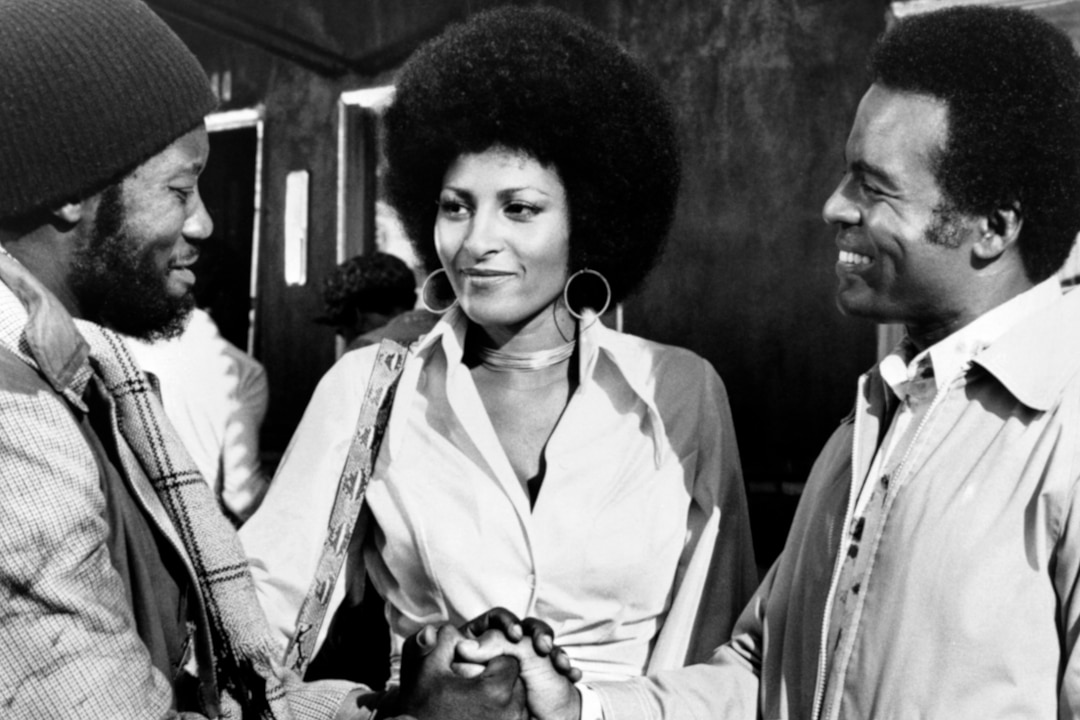
Although his name is as inextricably linked with the Blaxploitation as Jim Brown or Fred Williamson, Hill made only two features during the iconic era, both starring the iconic Pam Grier. Coffy (1973) was a woman's revenge picture about a grieving nurse going ballistic on the drug pushers who turned her teenage sister into a junkie. Inexplicably profitable, Coffy begat an immediate sequel, which Hill titled Burn, Coffy, Burn (in the declarative vein of the Blacula [1972] follow-up Scream, Blacula, Scream, 1973), until the sales department of American International Pictures decided sequels weren't good box office.
Given very little prep time, Hill turned the aborted sequel into the stand-alone feature Foxy Brown (1974), which hit the grindhouses a mere 10 months after Coffy's premiere. Foxy Brown (yes, that's what it says on her California driver's license) offers more of the same, with Hill working hard at nothing so much as outdoing himself and the original film's trademark audience-pleasing set pieces of ultra-violence.
Jack Hill hated the title Foxy Brown. Hill endured a combative relationship with American International Pictures and had no say in casting, set building or costuming and was never even invited by the studio to view the finished film.
Given 18 days to shoot Foxy Brown, Hill wrapped principal photography one day under schedule. Hill had to fight with his producers to keep Foxy Brown's subplot about prostitute Claudia's estranged husband and young son.
Grier's stunt double on Foxy Brown was Jadie David, who also stood in for the actress in Coffy, Sheba, Baby (1975), Friday Foster (1975) and Drum (1976), as well as 20 years later in John Carpenter's Escape from L.A. (1996).
Antonio Fargas was cast in Foxy Brown on the strength of his appearance in Robert Downey Sr.'s Putney Swope (1969).
Foxy Brown was produced for the same budget as Coffy—"$500,000 and not a penny more." Because AIP had to pay Hill and Grier more than they had for Coffy, money was saved for Foxy Brown by casting stuntmen in speaking parts. After the success of Coffy, Pam Grier insisted on wardrobe approval for Foxy Brown...and got it.
Kathryn Loder had worked with Hill before on the women-in-prison film The Big Doll House (1971), but was primarily a New York stage actress.
The bandages worn by Terry Carter in the film's hospital scene were applied by Hill's future wife Elke, a German nurse.
Many interiors for Foxy Brown were filmed inside the rundown Ambassador Hotel. The interiors of Miss Kathryn's home were shot in a rented house in Benedict Canyon.
Villain Peter Brown had been one of the three stars of the comic TV western “Laredo” (1965-67), alongside Neville Brand and William Smith.
The corrupt and lecherous judge, Harry Holcombe, later appeared as a kindly old grandfather in TV spots for Countrytime lemonade. Seen briefly in Foxy Brown is Russ Grieve, who would earn his own piece of cult movie immortality as parboiled paterfamilias "Big Bob" Carter of Wes Craven's The Hills Have Eyes (1977).
Foxy's method of obtaining a razor blade to cut her bonds was Grier's idea. She later played a razor-toting prostitute in Fort Apache the Bronx (1981).
Although Foxy Brown was not the commercial hit that Coffy was, it has become the more notable and culturally memorable cult favorite.
Quentin Tarantino wrote Jackie Brown (1997) as a tribute to Foxy Brown, and named Grier's title character after Jack Hill.
See also: The Plot Thickens Season 4: Here Comes Pam
Sources:
Jack Hill audio commentary, Foxy Brown DVD, MGM Home Entertainment, C® 2001
"#1 Bad Ass: An Interview with Stuntman-Actor Bob Minor," by David Konow, Shock Cinema No. 28, May 2005.