In partnership with The Film Foundation, iconic film director and classic movie lover Martin Scorsese's exclusive monthly contribution to the TCM newsletter Now Playing in October, 2015.
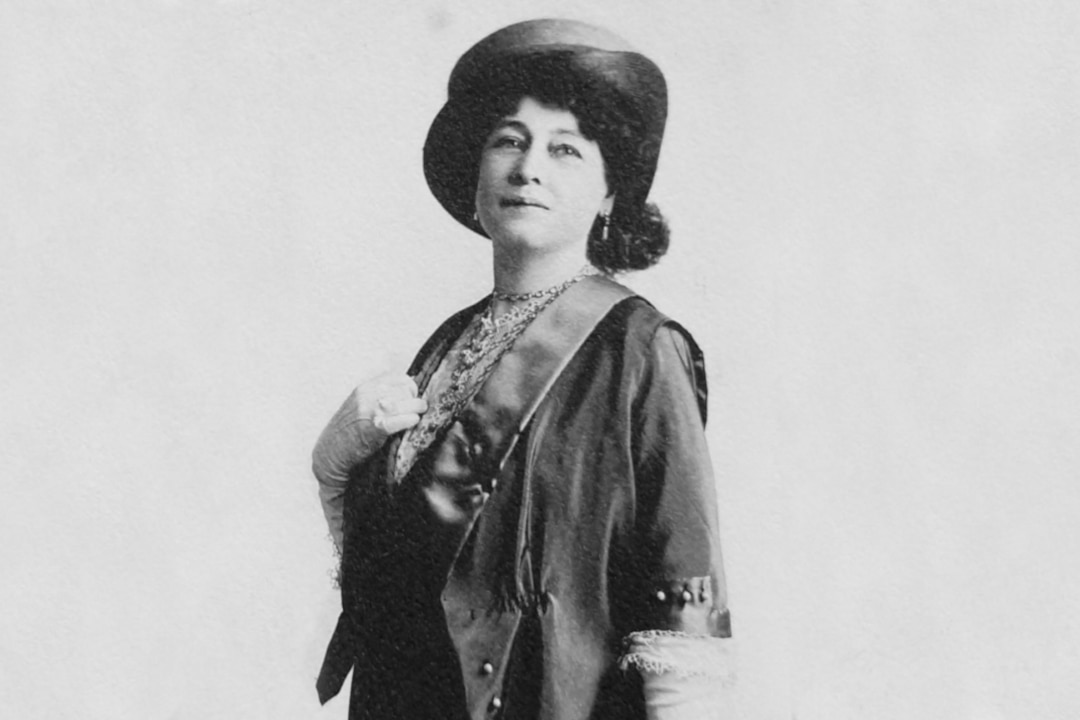
This month, TCM is saluting women filmmakers from throughout the history of cinema, including Dorothy Arzner, Ida Lupino, Agnès Varda, Shirley Clarke, Elaine May, Chantal Akerman, Lina Wertmüller, Jane Campion, Sofia Coppola, and many others along the way. And it all begins with Alice Guy-Blaché, a genuine pioneer–a pioneer in visual storytelling, right alongside Griffith and Chaplin, and the Lumières and Méliès before them; and, the very first woman filmmaker, who actually owned and operated her own studio. A few years back, I had a chance to really study her work, and I was amazed. She was trying absolutely everything–comedies, vaudeville skits, melodramas, trick photography, double exposures, color tinting, even very early experiments with synchronized sound (using the "Chronophone" system). And many of her pictures have passages that are visually stunning: for instance, La Passion, her 1906 epic version of the life of Jesus, based on the watercolors of James Tissot; or the 1912 film Falling Leaves.
Blaché started in France, first as a secretary at Gaumont, where she became head of production and started making her own films in 1896. She made hundreds of pictures before moving to America and setting up her own company, Solax, first in Flushing and then in Fort Lee, New Jersey. Like Méliès and Griffith, she was caught short by the rapid and massive changes in the industry: tastes changed, storytelling became increasingly sophisticated, the center of production shifted from east to west, and the company was sold off. She made her last film, Tarnished Relations, in 1920. She returned to France two years later, and though she was later awarded the Legion of Honor (in 1953), very few people remembered either her or her life as a filmmaker. At some point, this woman who had helped to actually create not only the industry of filmmaking but the art of telling stories with moving pictures, decided to look for some of her old films. Alice Guy-Blaché couldn't find a single title. She died in a nursing home in New Jersey at the age of 94, with over 1000 films to her credit, all of them long forgotten. Of those titles, 130 have now been found. TCM is showing five of her shorts (including La Passion, known here as The Birth, the Life and the Death of Christ, and Falling Leaves) and her 1916 feature The Ocean Waif. If you don't know these films or the extraordinary woman who made them, this is a good place to begin.
And then there's Walter Matthau, whose October 1st birthday is being celebrated with seven of his pictures–actually, you'll have a nice day in front of your monitor, because the Guy-Blaché pictures are programmed to follow. Many of the titles were made early in his career, before he became the master of gruffness. One of these, Elia Kazan's A Face in the Crowd, is a remarkable picture and Matthau is excellent in it. But he found his own proper tone, like a musician, in the mid-1960s with Billy Wilder and the comedies written by Neil Simon, the best of which is The Sunshine Boys, with Matthau and the great George Burns as two aging vaudevillians who are talked into making a comeback. This picture is a lesson in comic mastery and, at this point, a piece of history. Whenever I feel like weeping with laughter, I watch The Sunshine Boys.