In partnership with The Film Foundation, iconic film director and classic movie lover Martin Scorsese's exclusive monthly contribution to the TCM newsletter Now Playing in March, 2016.
TCM has curated a fascinating selection of films about art and artists for this month. There are 18 titles in all, and the bulk of them were made in Hollywood in the '40s and '50s. The arts played an interesting role during this period in American moviemaking: there was a shared idea of bringing culture to the masses, and in the '40s you started to see pictures like Carnegie Hall and I've Always Loved You, featuring lengthy passages from the classical repertoire and stories set within the world of classical music (of course, there was also Disney's Fantasia). I suppose that the mood of the moment helped to make The Red Shoes possible–that was the picture that Gene Kelly screened for the MGM executives when he was trying to get a different kind of American musical off the ground. An American in Paris (not showing as part of the series) was truly revolutionary, using color schemes in its climactic ballet patterned after the work of different painters, including Vincent van Gogh and Toulouse-Lautrec. The massive success of that picture undoubtedly paved the way for John Huston's film about Lautrec, Moulin Rouge, made a couple of years later (the entire color scheme of Moulin Rouge, brilliantly shot by the great DP Oswald Morris, was patterned after Lautrec's paintings), and Minnelli's own film about Van Gogh, Lust for Life.
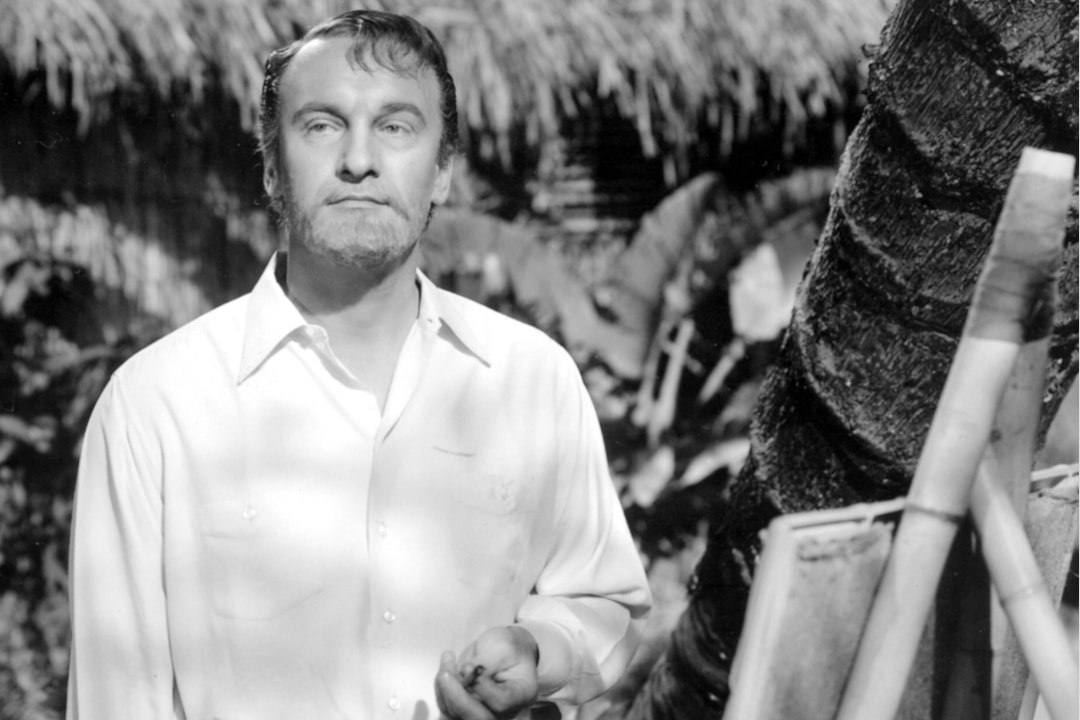
TCM is also showing The Moon and Sixpence, the first film directed by Albert Lewin, a former assistant to Irving Thalberg and an independent producer at the time. Lewin's picture was adapted from the Somerset Maugham novel about a painter named Charles Strickland, played by George Sanders, based on Van Gogh's friend Gauguin. Lewin was a very special filmmaker–you have the sense when you watch his pictures that he was extremely well-read and immersed in the fine arts, and that he also had a powerful affinity for the mystical, the magical, the uncanny–and his follow-up, an adaptation of Wilde's The Portrait of Dorian Gray, was one of his very best pictures. For the actual portrait, he commissioned the Chicago-based painter Ivan Albright, and he asked Ivan's brother Malvin to paint the "before" self-portrait of the young Dorian (Malvin's work was finally rejected, and he was replaced by the Portuguese painter Henrique Medina).
Today, you can see Ivan Albright's truly upsetting painting of Dorian Gray in the American wing of the Art Institute of Chicago (the picture was shot in black and white, but the image of the final painting is in Technicolor). There are a few other pictures being shown that also include the participation of some very good American painters, including John Decker (Scarlet Street and The Two Mrs. Carrolls–Decker also painted a portrait included in Brute Force, not being shown) and Dolya Goutman (The Moon and Sixpence). And there are some other great pictures, including A Bucket of Blood by Roger Corman, the 2-strip Technicolor film The Mystery of the Wax Museum, Tarkovsky's Andrei Rublev (quite an overwhelming experience) and Orson Welles' remarkable F for Fake, a movie that was truly years ahead of its time.