In partnership with The Film Foundation, iconic film director and classic movie lover Martin Scorsese's exclusive monthly contribution to the TCM newsletter Now Playing in November, 2014.
Is the road movie a genre? Maybe, but that seems too limiting. The characters are in constant motion, and as the settings change, so do their outlooks and circumstances–the relationship between people and place is dynamic. There are road novels: Twain's Huckleberry Finn; Melville's greatest work (the road becomes the sea), Peter Handke's books of the '70s (which had a great effect on the films of his collaborator, Wim Wenders), and, of course, Kerouac's “On the Road.” There is road music: “Blue” and “Hejira” by Joni Mitchell; Bob Dylan's “Blood on the Tracks;” so much of Woody Guthrie's music. Whitman's “Leaves of Grass” is the great American epic poem of the road. There are the photographers of the road, like Walker Evans and Robert Frank. And of course, at the beginning, there's “The Odyssey” (the road home) and “The Book of Exodus” (the road to freedom).
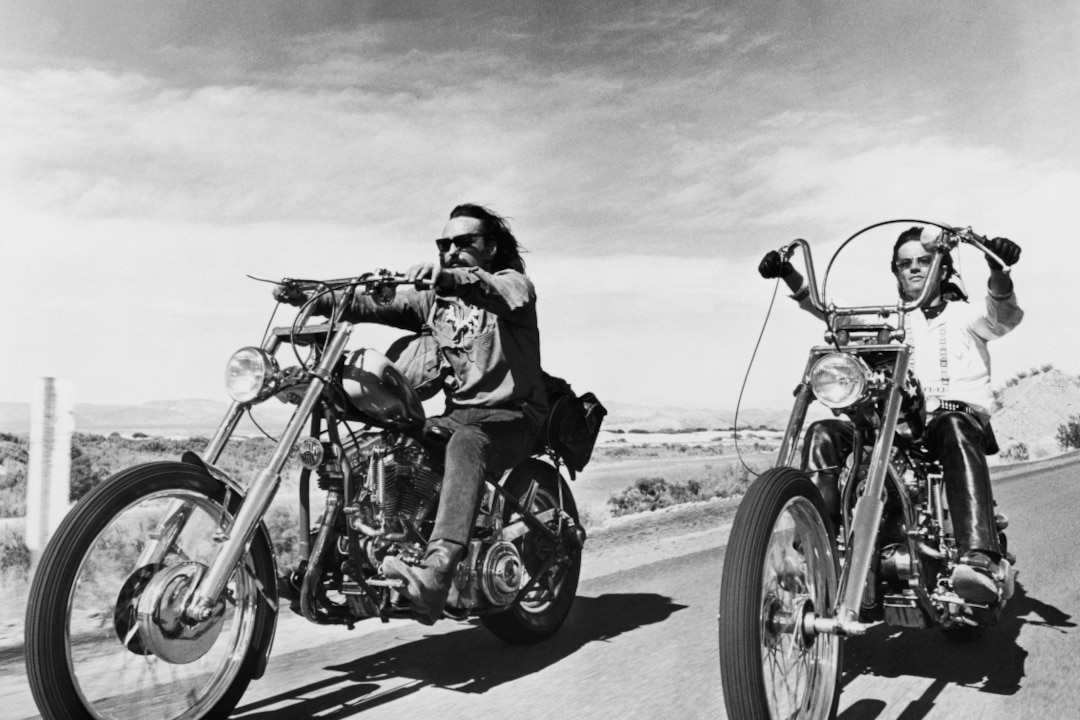
The movies have taken to the road at different times, for different reasons. In the last few years, Alexander Payne, the Coen Brothers and Paul Thomas Anderson have made some very special road pictures, melancholy but magical. In the '70s, following the massive success of Easy Rider, the road movie was extremely popular in America and, to a slightly lesser extent, in Europe. It was a way of expressing many common impulses and ideas of the time: finding yourself by getting away from routines, getting out of the city and rediscovering America on your own terms–in other words, a personal journey. In the earlier post-war era, there's often a sense of unease, rootlessness and imbalance in the road films.
In the '30s, the economic factor is obviously front and center, the feeling of people being driven out of their homes and onto the road. In a comedy like Frank Capra's wonderful It Happened One Night, one of the oldest pictures in TCM's tribute to the road movie this month, the road is a great leveler–the rich, the poor, the middle class, everybody's equal. (This is a very American series, with the exceptions of two great European films: Bergman's Wild Strawberries and Dino Risi's Il Sorpasso.) The terrible desperation expressed in Capra's film, in the scene where the boy cries when his mother passes out from hunger, is at the heart of Wild Boys of the Road, made one year earlier. It's a vivid picture: tough, shocking, and extremely poignant.
Preston Sturges' Sullivan's Travels, made almost a decade later, is about a film director getting much more than he bargained for: a real, inside perspective of the life of the poor and the dispossessed that he'd naively hoped to "experience," and it changes his point of view. Detour and Gun Crazy, two of the greatest films noir, both zero in on the kind of desperation that Sullivan sees along the way. By the time of Five Easy Pieces and The Last Detail, the mood of the country had changed: there was a general kind of disenchantment. In Albert Brooks' Lost in America, it's in a comic key: you think you're following in the footsteps of Easy Rider and you wind up getting a job for $5 an hour as a crossing guard.