Sundays in July | 4 Movies
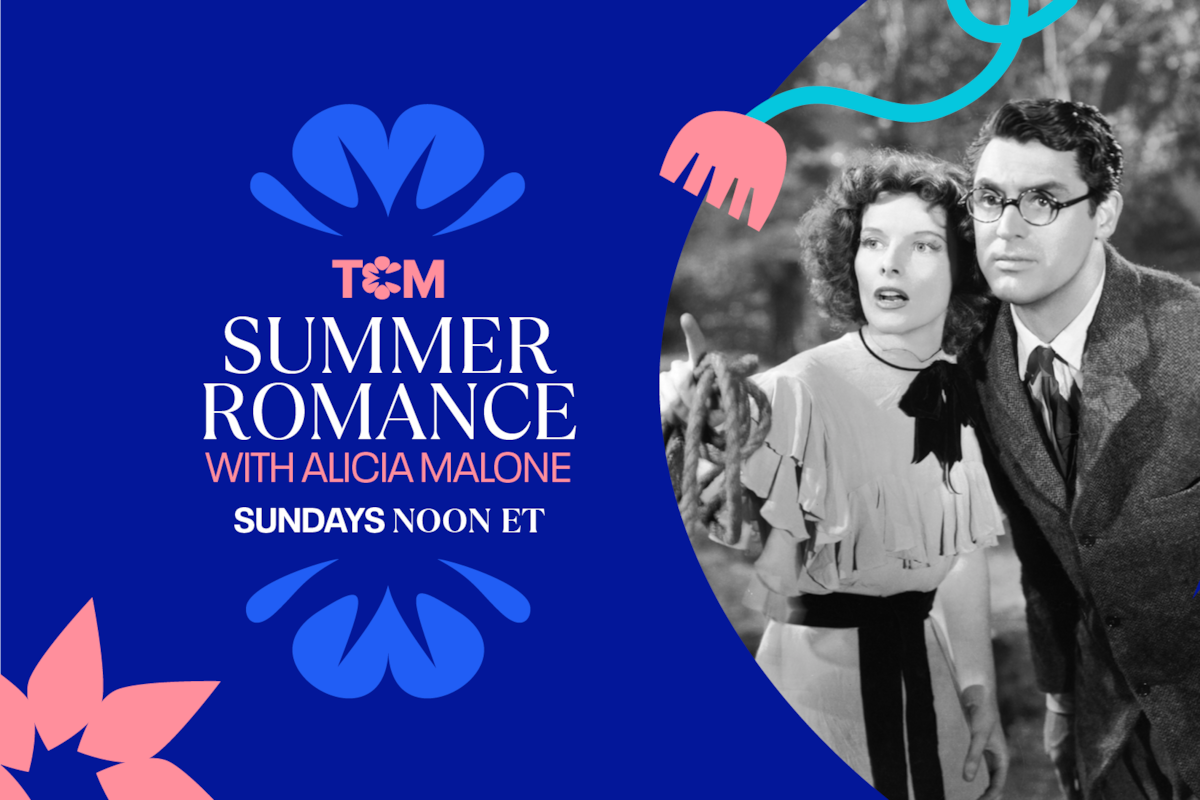
“Shall I compare thee to a Summer’s Day?” “Summer Lovin’ had me a blast!” “They say when you marry in June, you will always be a bride.” So much has been said, written and sung about the magic of falling in love in the good old summertime (pun intended). As it has throughout the history of art, the human fascination with falling in love has been a source of some of Hollywood’s most beloved movies. It almost wouldn’t feel like summertime without that special date movie. This July, TCM continues its series, Summer Romance, hosted by Alicia Malone, on Saturdays at 12 pm ET.
Two of the undisputed titans of movie romance (and movies in general) are superstars Katharine Hepburn and Cary Grant. Three of their on-screen pairings—Bringing Up Baby (1938), Holiday (1938) and The Philadelphia Story (1940)—are each considered essentials of the romantic comedy genre. Of these three classics, Bringing Up Baby is perhaps the quirkiest and easily accessible comedy. Grant plays David Huxley, a timid paleontologist who has long been working on completing a massive Brontosaurus skeleton and is hesitantly engaged to Alice (Virginia Walker). David finds a potential donor to his museum in Elizabeth Random (May Robson), a wealthy New England society woman. Unfortunately, Elizabeth’s wacky niece Susan (Hepburn) also has her sights on David. She believes that he is the right person to help her take her pet leopard, “Baby,” back to her Connecticut home.
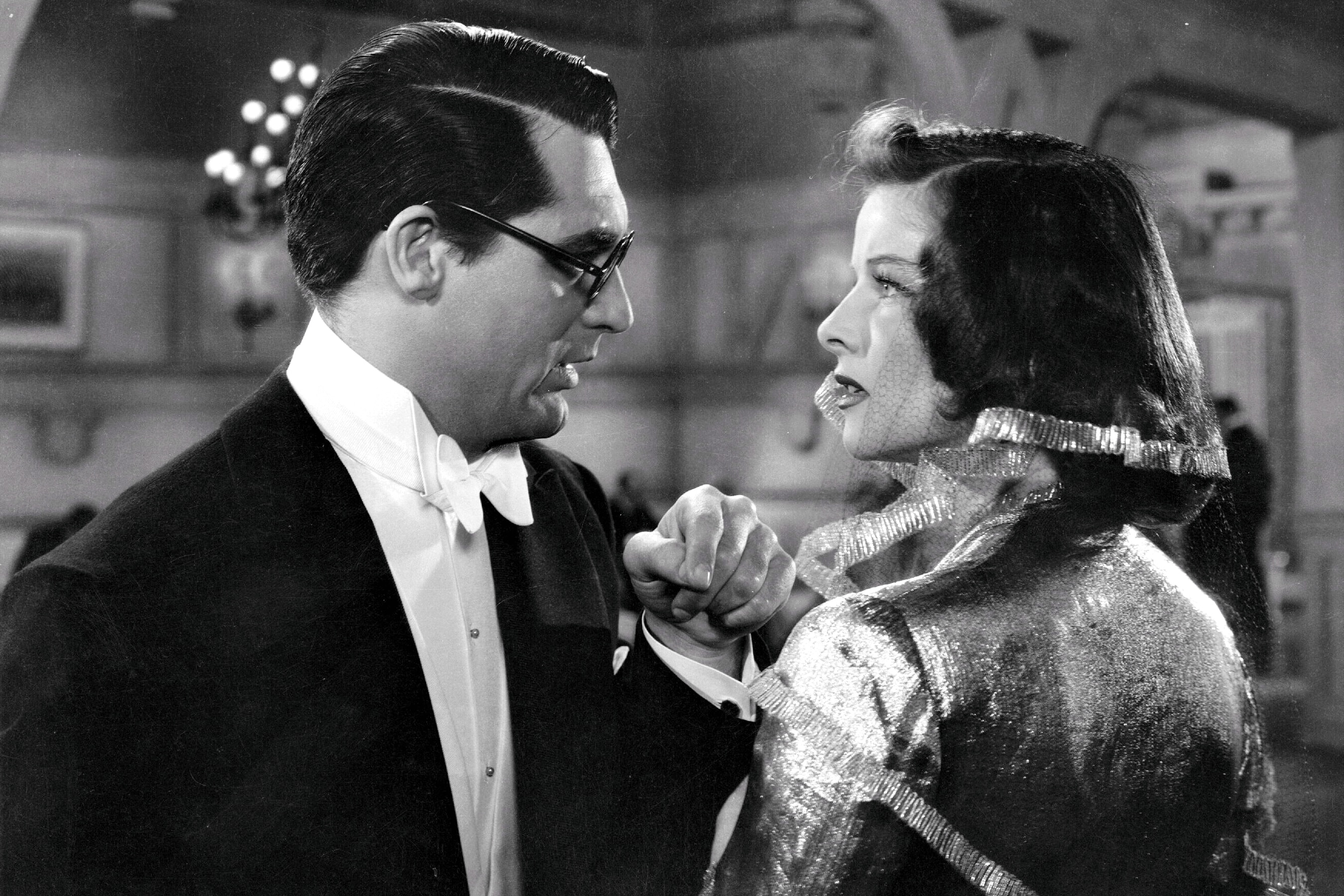
Director Howard Hawks first read this original short story by Hagar Wilde in Collier’s magazine in early 1937 and found it enormously funny. Having just signed a multi-picture deal with RKO, Hawks convinced the studio to buy the film rights and hire Wilde to write the screenplay alongside John Ford’s then go-to screenwriter, Dudley Nichols. Nichols wrote the character of Susan, specifically with Hepburn in mind (a headstrong Connecticut girl from a rich family shouldn’t have been much of a stretch). This being her broadest comedy role to date, Hepburn initially overacted and had to be talked into playing her character straighter. Grant was also insecure, fearing he couldn’t be convincing as the intellectual David.
Hawks was patient with his actors, allowing them to improvise and find their own unique comedic chemistry together. Though now seen as a screwball comedy staple and well-reviewed at the time, Bringing Up Baby was completed behind schedule and over budget, ultimately becoming a box-office flop. This was another in a series of disappointments in Hepburn’s career in the late 1930s that culminated with the actress being deemed “Box Office Poison” by the Independent Theatre Owners Association. With this news, the fearless Hepburn chose to buy out her contract from RKO Pictures and go independent. Though she made one more, now classic but then disappointing film, Holiday for Columbia, it was not until her triumphant stage and screen comeback in The Philadelphia Story that Hepburn fully regained her stardom. A status she maintained for the rest of her incredible career.
If the late 1930s and ‘40s are now viewed as the golden age of the screwball comedy, then the late ‘80s and ‘90s are the heir apparent. One of the very best from this period was Norman Jewison’s comedy Moonstruck (1987). In an Oscar-winning performance, Cher plays Loretta Castorini, a widowed Brooklyn-Italian woman who accepts a proposal of marriage from Johnny Cammareri (Danny Aiello). Though she admittedly doesn’t love Johnny, Loretta believes that she can have the proper Italian marriage she should have had with her first husband. However, this kind of thinking around traditional marriage doesn’t leave Loretta’s parents (Olympia Dukakis and Vincent Gardenia) particularly happy for their daughter. When Johnny leaves for Sicily to be with his dying mother during her last days, he asks Loretta to invite his estranged brother Ronny (Nicholas Cage) to their wedding. The fiery Ronny is the antithesis of his brother and makes Loretta realize that a convenient but loveless marriage may not be what she needs after all.
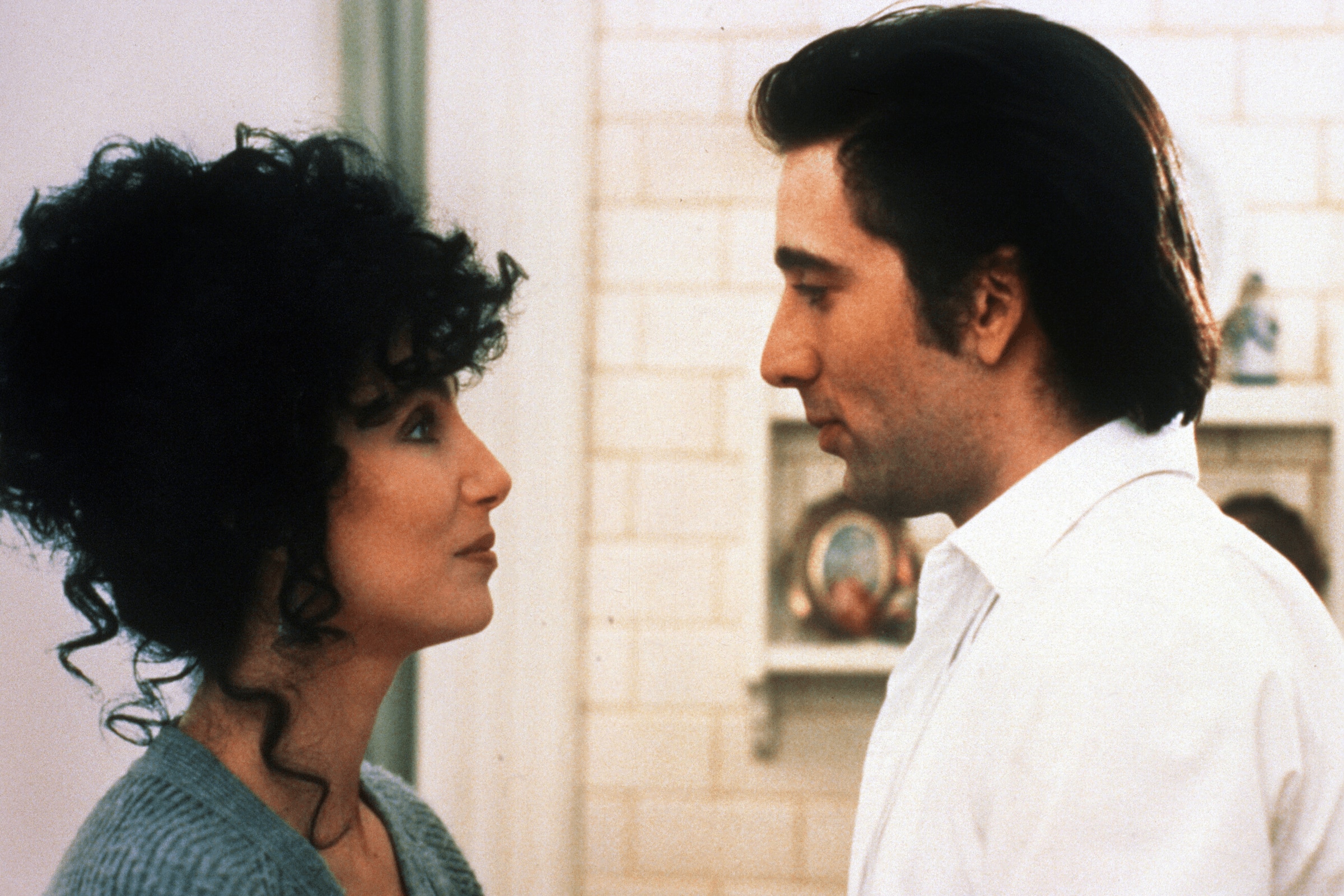
Playwright John Patrick Shanley originally wrote his Oscar-winning screenplay as a vehicle for Sally Field. Though she was eager to work with the popular young writer, Field felt that she couldn’t convincingly play a Brooklyn-Italian and ultimately declined the role of Loretta. When director Norman Jewison signed on to the project, he suggested Cher for the role. The pop diva was coming off a string of popular movies, including Mask (1985) and The Witches of Eastwick (1987), and was now hesitant about making this smaller comedic drama. Like Field, she was also insecure about convincingly playing a New York Italian. Jewison convinced her to take the part, insisting it would seal her status as a capable actress.
Jewison was not adamant about correctly casting based on ethnicity (Cher being of Armenian heritage, Dukakis of Greek, etc.). Instead, he believed that each actor’s unique personality could bring the “operatic” sense he wanted for the picture. For his part, Jewison took his entire cast to watch a production of Puccini’s “La Boheme” and incorporated the opera throughout the movie. The result was an enormous critical and commercial success, now regarded as another romantic comedy classic.
One of the great things about romantic comedy is how it can find laughs and romance within the most unlikely of circumstances. The housing shortage in Washington, D.C. during World War II became an unlikely inspiration for a handful of popular romantic comedies in the early 1940s. The quintessential one of these was George Stevens’ The More the Merrier (1943). Charles Coburn plays Benjamin Dingle, a retired businessman who has been summoned to Washington to advise on the city’s housing shortage. Unfortunately, Benjamin has arrived in the city two days early, and there is not a single hotel room to be found. He answers an ad for a shared apartment. Though she is hesitant, young office clerk Connie (Jean Arthur) agrees to let Benjamin share the apartment. Seeing an opportunity, Benjamin chooses to rent out half of his half of the apartment to young soldier Joe (Joel McCrea) for a week before he is shipped overseas. Hilarity and romance ensue as the trio makes the most of their awkward living situation.
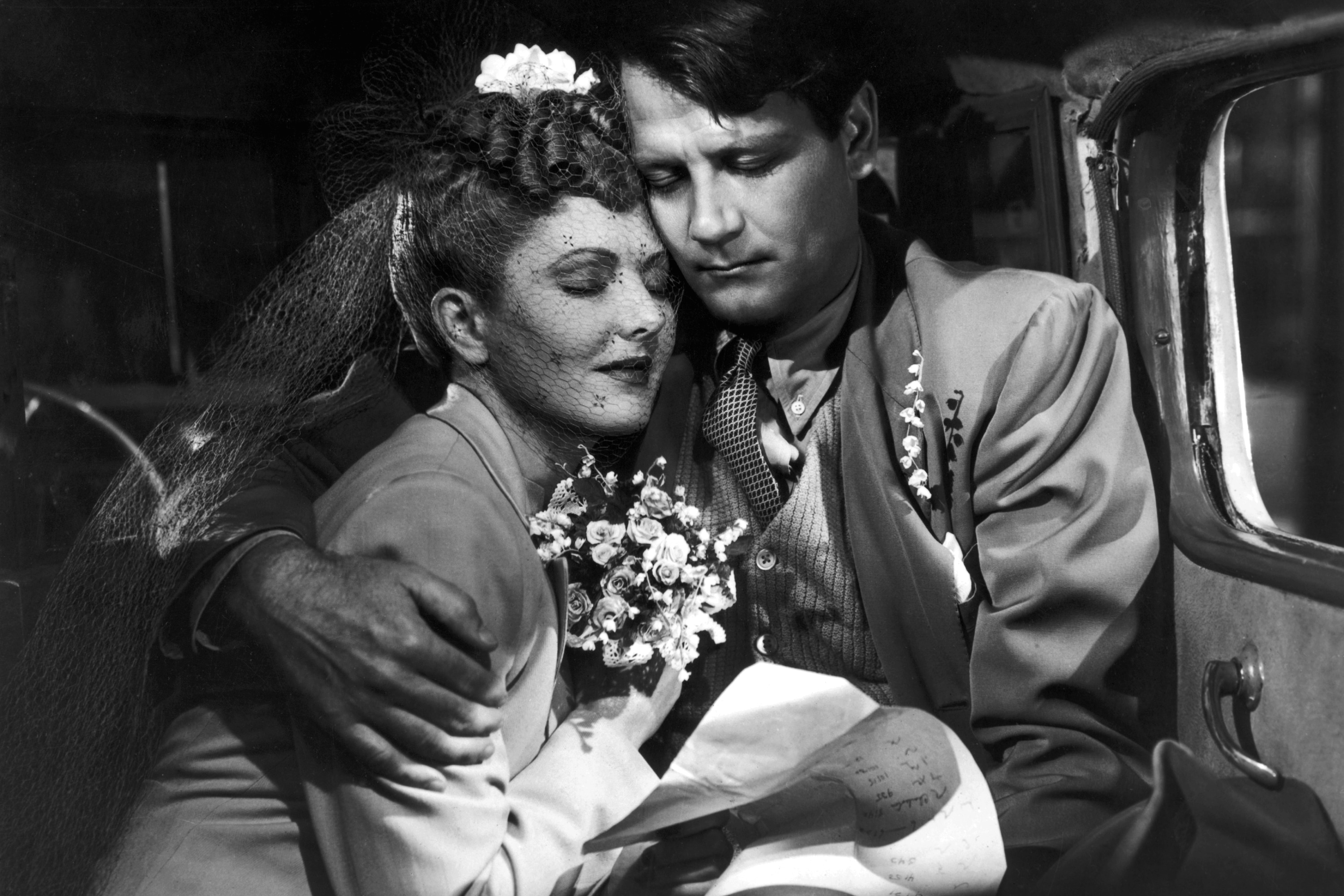
This film was a real passion project for star Jean Arthur. Not only would the film be a great star vehicle for her, but it would bring her one picture closer to finishing out her contract with Columbia Pictures. For some time, the star had been clashing with the notorious studio head Harry Cohn. Arthur purchased the film rights to Garson Kanin’s play “Two’s a Crowd” herself and recruited her husband, Frank Ross Jr., to co-write the screenplay. Arthur was also able to have her choice of director with Stevens, with whom she’d just made The Talk of the Town (1942), and Joel McCrea as her leading man.
The result was an instantly beloved film that earned six Academy Award nominations, including Best Picture and Director for Stevens, Screenplay for Robert Russell and Frank Ross, Actress for Arthur and a win for Coburn as Best Supporting Actor. Despite the success of this film, it marked the end of an era for several on the production. Though he went on to make many more incredible films, this would ultimately be George Stevens’ last romantic comedy before his shift to predominantly dramas and Westerns. Same for leading man Joel McCrea. And Jean Arthur would only make three more films after 1943, before unofficially retiring from leading roles. She made her final big screen appearance in Shane (1953)
Ironically, some of the most beloved film romances tell the story of romances that are ultimately not meant to last. One of the most beloved of all is Sydney Pollack’s The Way We Were (1973). Barbra Streisand plays Katie Morosky, a Marxist Jew who loudly advocates for social justice and anti-war causes. Robert Redford is Hubbell Gardiner, a star athlete and talented young writer. The two first meet in college in the 1930s, when they are on opposite ends of the popularity spectrum. They are reunited following World War II, when Hubbell is a returning Naval officer and Katie is working at a New York radio station. An unlikely romance begins between the two opposites, and together they venture to Hollywood, where Hubbell seeks to make the most of his writing career. But are their differences just too much for their romance to last, and can it survive the rise of the McCarthy-era blacklist?
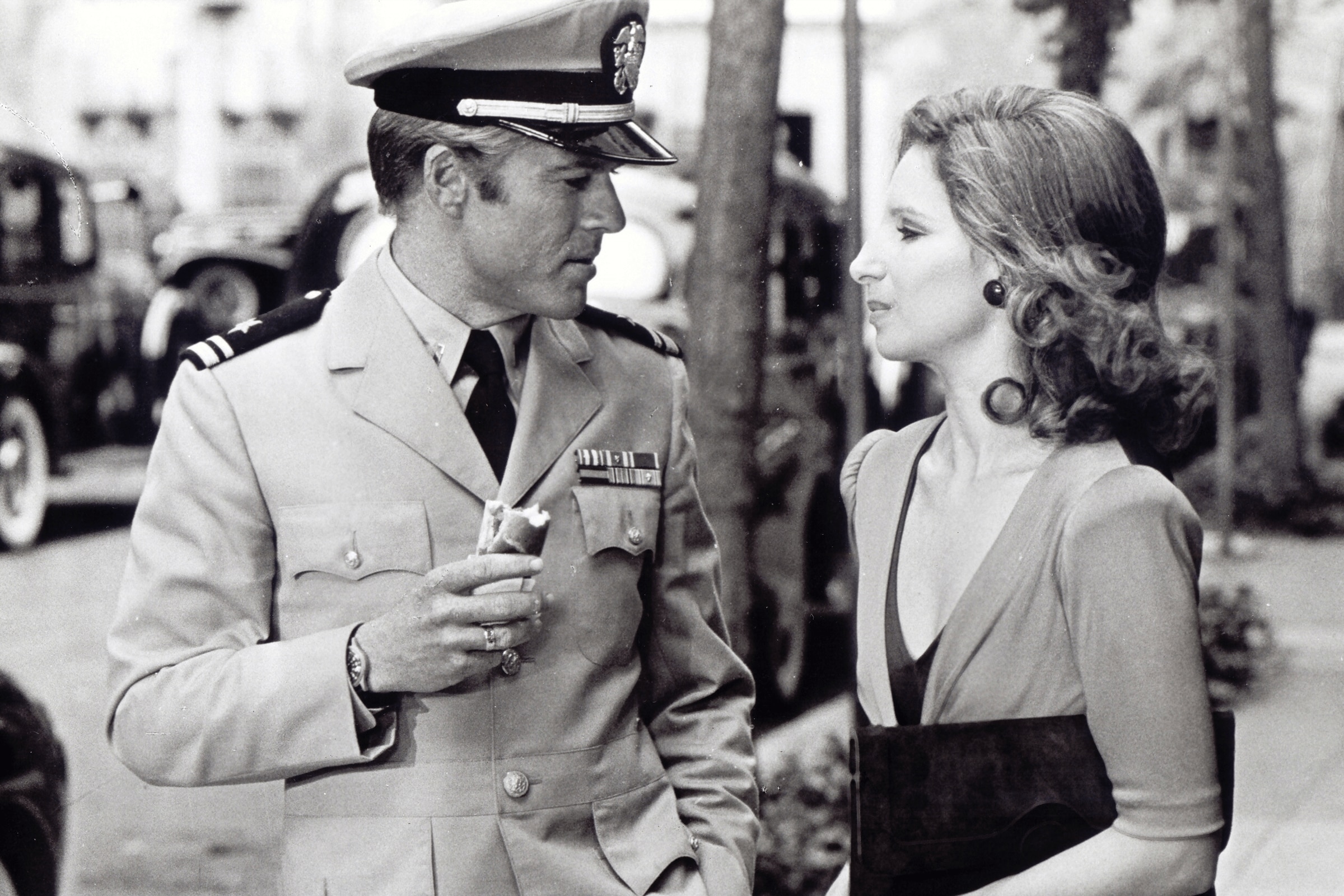
This story was the brainchild of the great Arthur Laurents (the blacklisted screenwriter who wrote the books for the theatrical masterpieces “West Side Story” and “Gypsy”). He based his short story on a real young woman he’d known as a student at Cornell. Laurents and producer Ray Stark thought it would be a perfect vehicle for then-superstar Barbra Streisand. She and Laurents both agreed on Pollack as director, in no small part because he could convince his friend, Redford, to play opposite Streisand. Redford had little interest in the role of Hubbell, a character he felt was little more than a “Ken Doll.” Pollack agreed that Redford’s role should be expanded to be equal to Streisand’s. This decision ultimately elevated the characters’ romance and intensified the chemistry between Streisand and Redford. The result was one of the most successful movies of the year and a still-beloved romance.
The film’s iconic title song, unforgettably performed by Streisand, also became a mega-hit, winning both the Oscar and Grammy Awards for Song of the Year. Both the song and the film’s lasting powers are due to the universal truth they tap into. The universal truth that even if a great relationship (whether it be a romance, a friendship or a partnership) is not meant to last forever, it doesn’t make it any less significant. Because what does last forever are all the wonderful, wonderful (cue the music) memories…
Whether a summer romance is meant to last a month or a lifetime, it is movies like these that make us continue to hope for either. And it is movies like these that will certainly last forever.