This article was originally written about programming for the TCM Now Playing newsletter in June 2026.
Variety is the spice of life, and in these lazy summer days, TCM has plenty of variety. From the sci-fi stories by one of America’s greatest directors to the eclectic career of an Oscar-winning filmmaker to films celebrating Juneteenth and LGBTQ+ Pride to the 100th birthday of the “2000-Year-Old Man,” there’s an embarrassment of riches throughout June.
Spielberg Sci-Fi: June 9 at 8pm ET
Ahead of Steven Spielberg’s return to science fiction with his new movie Disclosure Day (2026) in theaters June 12, we’re running a trio of his sci-fi films. Close Encounters of the Third Kind (1977) was Spielberg’s first feature to deal with extraterrestrials, but also an essential picture to show that after Jaws (1975), he wasn’t a flash-in-the-pan adapter of a beach read; he was a serious auteur who could continue to show audiences things they had never seen before. In the film, Richard Dreyfuss stars as Roy Neary, an electric utility lineman who has a close encounter with an alien ship, which drives him, along with others who have had similar encounters, on a monomaniacal quest to find the extraterrestrial vessel. While there’s plenty of Spielberg magic here, especially in using music to communicate with the aliens, it’s also a movie where a man is driven to extremes by his obsessions, arguably losing his sanity along the way.

Spielberg also embraced darker tones in the early 2000s. A.I. Artificial Intelligence (2001) began as a Stanley Kubrick production when he bought the rights to Brian Aldiss’ short story “Supertoys Last All Summer Long,” but then passed them over to Spielberg in the mid-90s. Spielberg’s story of a robot child (Haley Joel Osment) in a Pinocchio-like quest to become a real boy and reconnect with his mother contains some of the director’s saddest and most poignant imagery, fearlessly exploring ideas of what it means to be human. His follow-up, Minority Report (2002), is far more of an action blockbuster, but retains the acerbic, icy view of humanity from Philip K. Dick, who penned the original novella. Tom Cruise stars as a cop in the division of “pre-crime,” where suspects are investigated and convicted before a crime even occurs. He then must prove his innocence when he’s accused of a future homicide. While there’s plenty of Tom Cruise running, the film is ahead of the curve with its focus on a surveillance state so advanced that it can seal one’s fate by determining one’s destiny. It’s also, as of this writing, the only Spielberg movie where a guy has to chase after his own eyeballs.

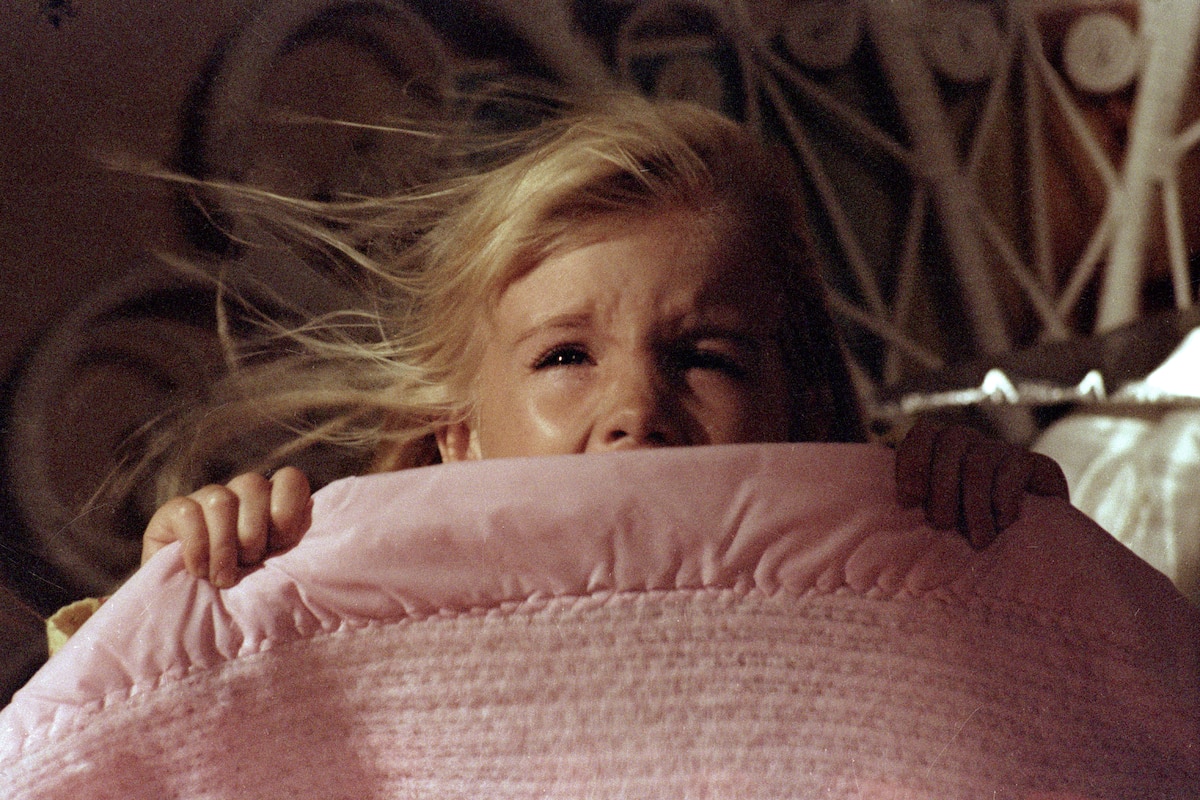
The night ends with one of the most acclaimed horror films of all time, ranked by The New York Times as one of the Best 1000 Movies Ever Made, Poltergeist (1982). Tobe Hopper directed this terrifying tale of a suburban family who must survive in the haunted house they recently moved into. Spielberg co-wrote the screenplay with Michael Grais and Mark Victor and co-produced the picture with Frank Marshall, making it his first producing job with another director leading the project. The film became a major box-office success and earned three Oscar nominations for Best Original Score, Sound Effects Editing and Visual Effects. It also spawned two sequels and a 2015 remake.
Directed By George Roy Hill: June 16, 23 and 30 at 8pm ET
George Roy Hill quietly became one of the highlights of New Hollywood, showcasing new stars in genre treats, dancing on the grave of the Production Code with a youthful bravado. Throughout June, TCM will showcase not only Hill’s biggest movies but explore his career over three Tuesdays, shining a spotlight on a director who is overdue for revisiting. On June 16, viewers can see his earlier works from the 1960s, starting with his debut feature Period of Adjustment (1962) starring Jane Fonda and Jim Hutton.

Hill’s career exploded at the end of the decade with Butch Cassidy and the Sundance Kid (1969). Working from a script by the great William Goldman, Paul Newman and Robert Redford star as the eponymous outlaws, respectively. Similar to how Bonnie and Clyde (1967) reinvented gangster tropes a couple of years earlier, Hill was unafraid to make a Western unlike anything Hollywood had made before. There’s a thoroughly modern sensibility running through the whole piece, yet it never plays as anachronistic. Instead, Hill wisely sees his leads as almost counterculture figures, seeking their next rush and yet constantly in over their heads.
The chemistry between Newman and Redford made for one of the best pairings in Hollywood history, and Hill wisely reteamed them for his Oscar-winning feature, The Sting (1973). A towering tale of con artist savvy, Hill and his heroes have fun with the narrative twists that keep everyone on their toes as grifters Johnny Hooker (Redford) and Henry Gondorff (Newman) attempt to outwit crime boss Doyle Lonnegan (Robert Shaw). The film would not only win Best Picture but also earn Hill an Oscar for Best Director.

Between these two features, Hill would attempt an adaptation of Kurt Vonnegut’s acclaimed, anti-war, sci-fi novel Slaughterhouse-Five (1972) about a man who becomes “unstuck” in time. The picture, which will make its TCM debut on June 30th at 10:15pm ET, highlights a recurring theme in Hill’s work about men in states of arrested development as the world rapidly changes around them, while also showcasing the filmmaker’s elasticity in moving through various genres.
For example, Hill would make one of the great sports comedies with Slap Shot (1977), the story of a minor league hockey team led by an aging coach (Newman in his third and final feature with Hill), who can’t win games but starts drawing a crowd because of their violent brawls on the ice. Underneath the silliness, especially from the scene-stealing Hanson Brothers, you have a sharp satire about how people find violence inherently entertaining, and how that creates a prison for how men are able to express themselves.

Juneteenth: June 19 at 8pm ET
In the middle of the month, TCM celebrates Juneteenth, which commemorates the end of slavery in America. But at 9:45pm, there’s a fascinating feature from across the pond—The Song of Freedom (1936). This British production, which is the first fully surviving feature from Hammer Film Productions, forefronts Black characters in a way that Hollywood rarely did at the time. It also comes from a country that abolished slavery in 1838, creating a unique depiction of racial relationships and Black history, which comes alive through Paul Robeson’s lead performance as Johnny Zinga. Johnny, with his melodic voice, goes from being a dockworker to an international opera star, but he learns that the medallion he’s possessed since he was a baby means he’s the leader of an African tribe. It’s a challenging movie that provides distinct insights into British ideas regarding race and colonialism in the 1930s.

The evening will also play host to the French romance Zou Zou (1934) starring Josephine Baker, Daniel Petrie’s acclaimed adaptation of A Raisin in the Sun (1961) starring Sidney Poitier, Zoltán Korda’s Cry, the Beloved Country (1951), the James Baldwin documentary I Heard It Through the Grapevine (1982) and the sci-fi drama The World, the Flesh and the Devil (1959) starring Harry Belafonte.
Happy 100th Birthday, Mel Brooks: June 28 at 2:30pm ET
With his friend Carl Reiner, Mel Brooks became the “2000-Year-Old Man,” in a series of hilarious radio sketches, but on June 28th, he will become the 100-Year-Old Man. TCM will celebrate the birthday of an artist who has brought the world so much laughter by showcasing five of his movies, starting at 2:30pm ET with The Twelve Chairs (1970), featuring Brooks alongside Ron Moody and Frank Langella as the three men in 1920s Soviet Russia looking for lost jewels hidden inside a dining chair that was lost during the revolution. Having fallen into obscurity, the film is one that Brooks ranks as one of the pictures he’s most proud of alongside 1967’s The Producers (which will air afterwards at 4:15pm) and Life Stinks (1991).

We also couldn’t properly honor Brooks without running some of his landmark spoofs. If you can only make time for one, you may want to revisit Spaceballs (1987), Brooks’ hilarious spin on Star Wars and other blockbuster sci-fi features. The film will finally receive a sequel, and no, it’s not “The Search for More Money,” as Yogurt (Brooks dressed up like Yoda) said in the movie. The follow-up, Spaceballs: The New One, is currently slated to arrive in theaters on April 23, 2027. May the Schwartz Be with You.
LGBTQ+ Independent Voices (Pride): June 29 at 8pm ET
TCM will also celebrate the independent filmmakers who have contributed to LGBTQ+ cinema. The charming British comedy Beautiful Thing (1996) and its warm and winning story of first love will make its TCM debut. A Channel 4 drama that proved so popular it earned a theatrical release, Beautiful Thing follows teenagers Jamie (Glen Berry) and Ste (Scott Neal) as they start to live together when Jamie’s mom, Sandra (Linda Henry), allows Ste to stay over as a way of avoiding his abusive household. As they spend time together, Jamie and Ste start to fall for each other, and yet this is just one aspect of Hettie Macdonald’s winning picture, which highlights how people in a working-class community emotionally support each other. Based on the play by Jonathan Harvey (who also penned the screenplay), it’s the rare film of its era to unabashedly celebrate gay love rather than feeling the need to add a tragic twist.

The night will also feature other indie LGBTQ+ films well worth your time, including the TCM debut of the queer Canadian romantic drama Winter Kept Us Warm (1965), alongside Donna Deitch’s tender lesbian romance Desert Hearts (1985), Stephan Elliott’s delightful road trip comedy The Adventures of Priscilla, Queen of the Desert (1994), Gus Van Sant’s debut feature Mala Noche (1986) and Jean Cocteau’s French fantasy Orpheus (1950).
For a full listing of films, check the TCM website schedule.
