Mondays in June | 14 movies
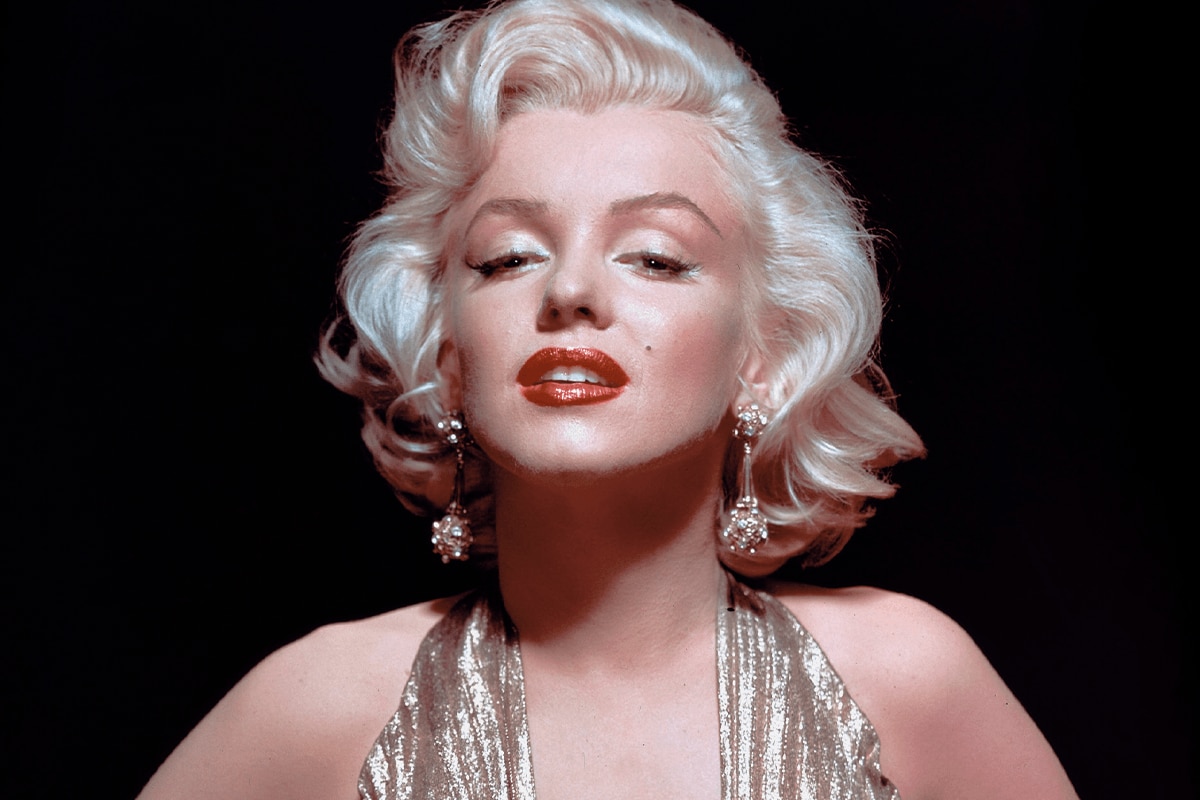
The word “icon” gets thrown around a lot these days. But few people have embodied that term like Marilyn Monroe. Her duality made her alluring. She was the glamorous movie star and the girl next door. She was a seductress and an innocent. Below the surface, Monroe was a complex woman—intellectually curious, ambitious and tormented by her own insecurities. The bona fide blonde bombshell rose to superstardom during her lifetime. And in the years since her untimely death, Marilyn Monroe continues to be a household name. She’s been mythologized in countless biographies, documentaries and biopics. Often imitated but never rivaled, Monroe continues to be a source of fascination for us all.
Monroe was born Norma Jeane Mortenson on June 1st, 1926, in Los Angeles, California. Her mother Gladys, who worked as a film cutter in Hollywood, named her daughter after movie star Norma Talmadge. Monroe had a troubled childhood. She married young, and when that relationship ended, she decided to make a fresh start. In her autobiography “My Story,” co-written with Ben Hecht, she reflected on this transitional period: “This is the end of my story of Norma Jeane. Jim and I were divorced. And I moved into a room in Hollywood to live by myself. I was nineteen, and I wanted to find out who I was.”
In Hollywood, she took acting, dancing and singing lessons and spent hours in front of the mirror reading from scripts. Auditions became a way of life for the budding actress. She eventually signed with 20th Century-Fox and, at the behest of studio executive Ben Lyon, changed her name to Marilyn Monroe. She made her film debut in the delinquent teen drama Dangerous Years (1947). Several uncredited performances in Fox productions followed, with some of her scenes ending up on the cutting room floor.
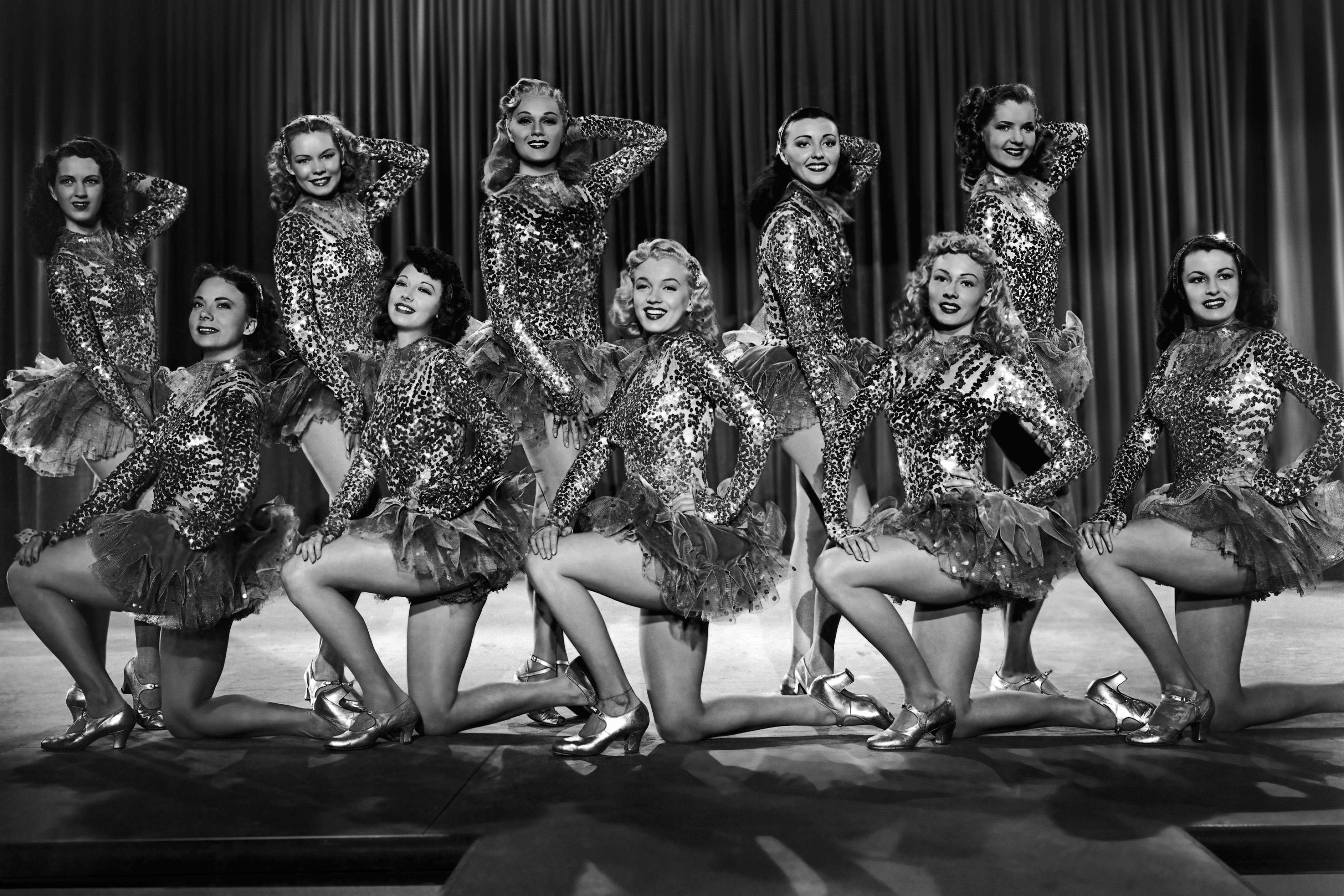
Monroe briefly stepped away from Fox and signed a contract with Columbia Pictures, which resulted in just one film: Ladies of the Chorus (1948). It was her first of many roles playing a showgirl who finds love outside of her tax bracket. A chance audition with Groucho and Harpo Marx for the comedy Love Happy (1949) changed this. The Marx Bros. were impressed by the young actress’s sex appeal. Groucho described Monroe as “Mae West, Theda Bara, and Bo Peep all rolled into one.”
For Fox, she continued with various small roles, including playing a chorus girl in the Western A Ticket to Tomahawk (1950) and the roller derby movie The Fireball (1950). Over at MGM, she played Dick Powell’s love interest in the boxing movie Right Cross (1950). Director John Huston invited Monroe to audition for the part of Angela Phinlay, the mistress to the corrupt lawyer and fixer played by Louis Calhern in the film noir The Asphalt Jungle (1950). Monroe was eager for the opportunity. In her autobiography, she wrote, “I knew this part wouldn’t be cut out of the picture because it was vital to the plot.”
Her performance in The Asphalt Jungle caught the eye of Fox executive Darryl F. Zanuck, who came to the realization that Fox could have a star on their hands. She was cast in All About Eve (1950), the backstage drama directed by Joseph L. Mankiewicz. In the film, she plays Ms. Claudia Casswell, an aspiring actress and arm candy to George Sanders’ Addison DeWitt. Her role was a fitting counterpart to Anne Baxter’s ingenue Eve Harrington. Both are opportunists who use their charms to manipulate for the same end goal. Monroe felt intimidated by star Bette Davis and had trouble delivering her lines. Her insecurities as an actress were on full display, and she would soon develop a reputation for being difficult to work with. She became known for her chronic tardiness, forgetting lines and for her co-dependent relationships with acting coaches Natasha Lytess and Paula Strasberg.
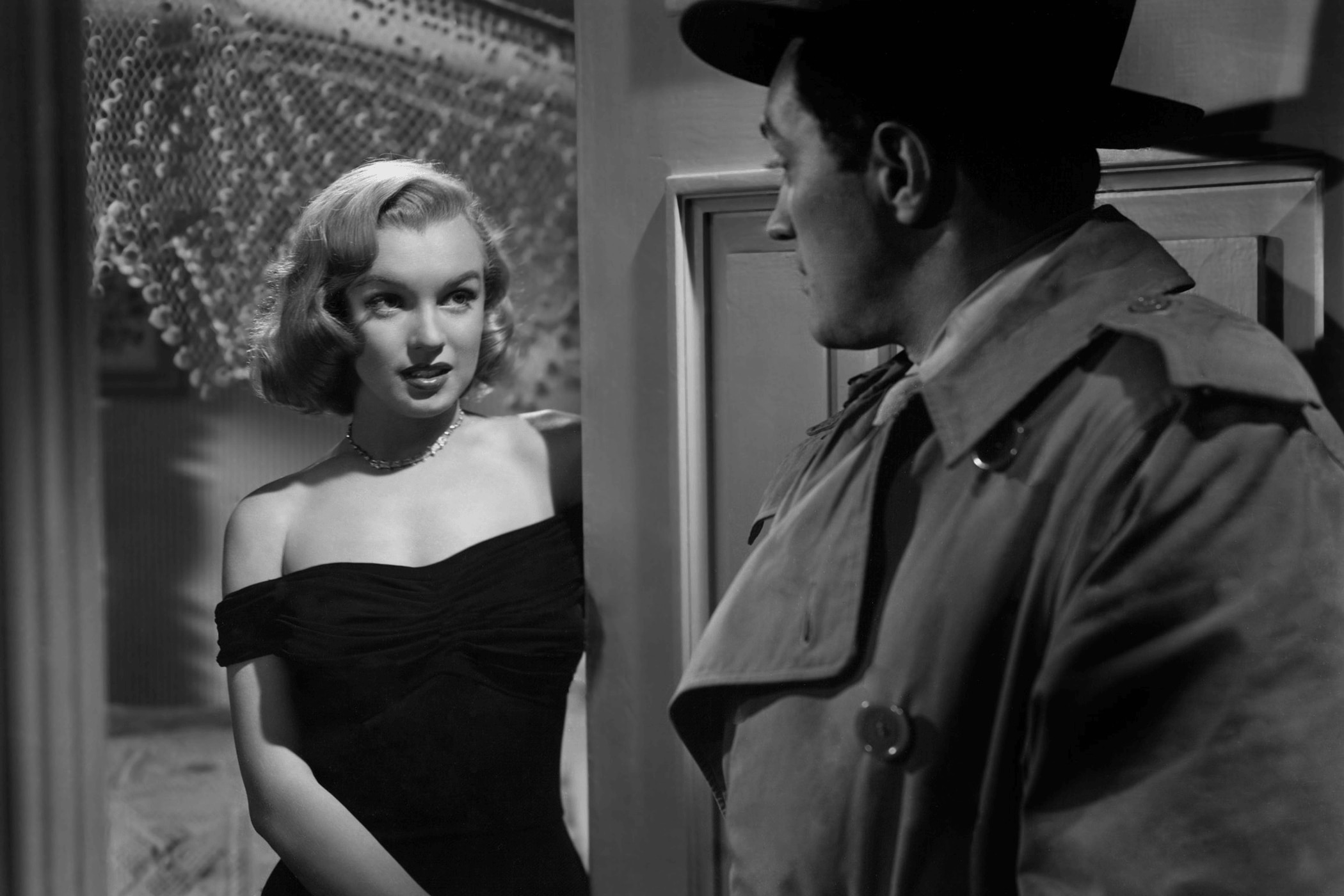
Monroe signed a new contract with Fox. Her next assignments included supporting roles in romantic comedies like As Young As You Feel (1951), Love Nest (1951), Let’s Make It Legal (1951) and We’re Not Married! (1952). When she became a major star, these films were later repackaged and rereleased to capitalize on public interest.
Monroe demonstrated her dramatic range in her next two pictures. On loan out, Monroe was cast as Peggy in the Fritz Lang drama Clash by Night (1952). She plays a cannery worker who is in a toxic relationship with the protagonist’s brother. Monroe received fourth billing after stars Barbara Stanwyck, Paul Douglas and Robert Ryan. In later years, Stanwyck recalled, “[Monroe] wasn’t disciplined, and she was often late, but she didn't do it viciously, and there was a sort of magic about her which we all recognized at once. Her phobias, or whatever they were, came later; she seemed just a carefree kid, and she owned the world.”
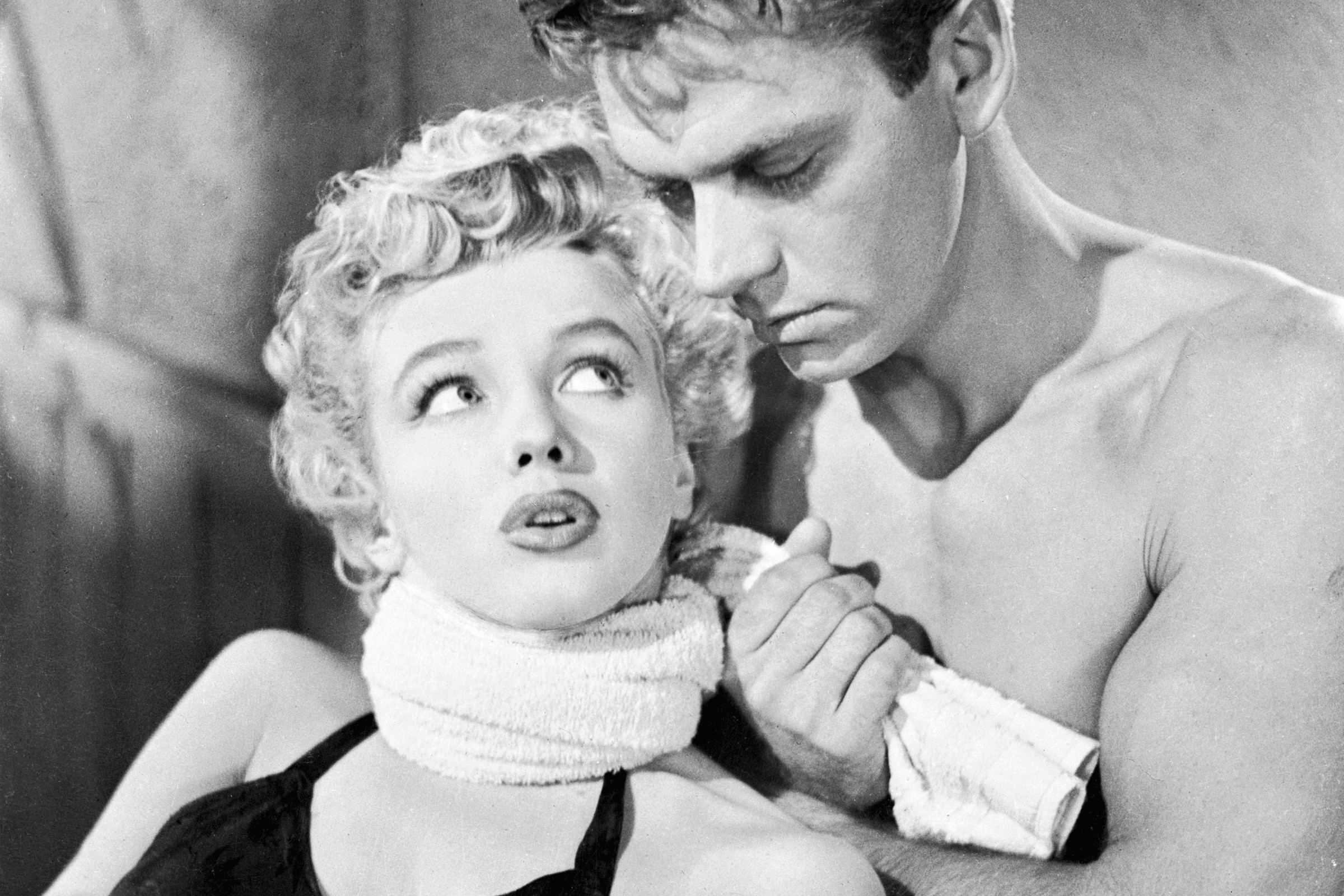
Arguably, Monroe’s best dramatic performance came in Don’t Bother to Knock (1952). In this psychological thriller starring Richard Widmark and Anne Bancroft, Monroe plays Nell Forbes, a mentally unstable babysitter. She’s described in the picture as “silk on one side and sandpaper on the other,” evocative of her character’s unpredictable mood swings.
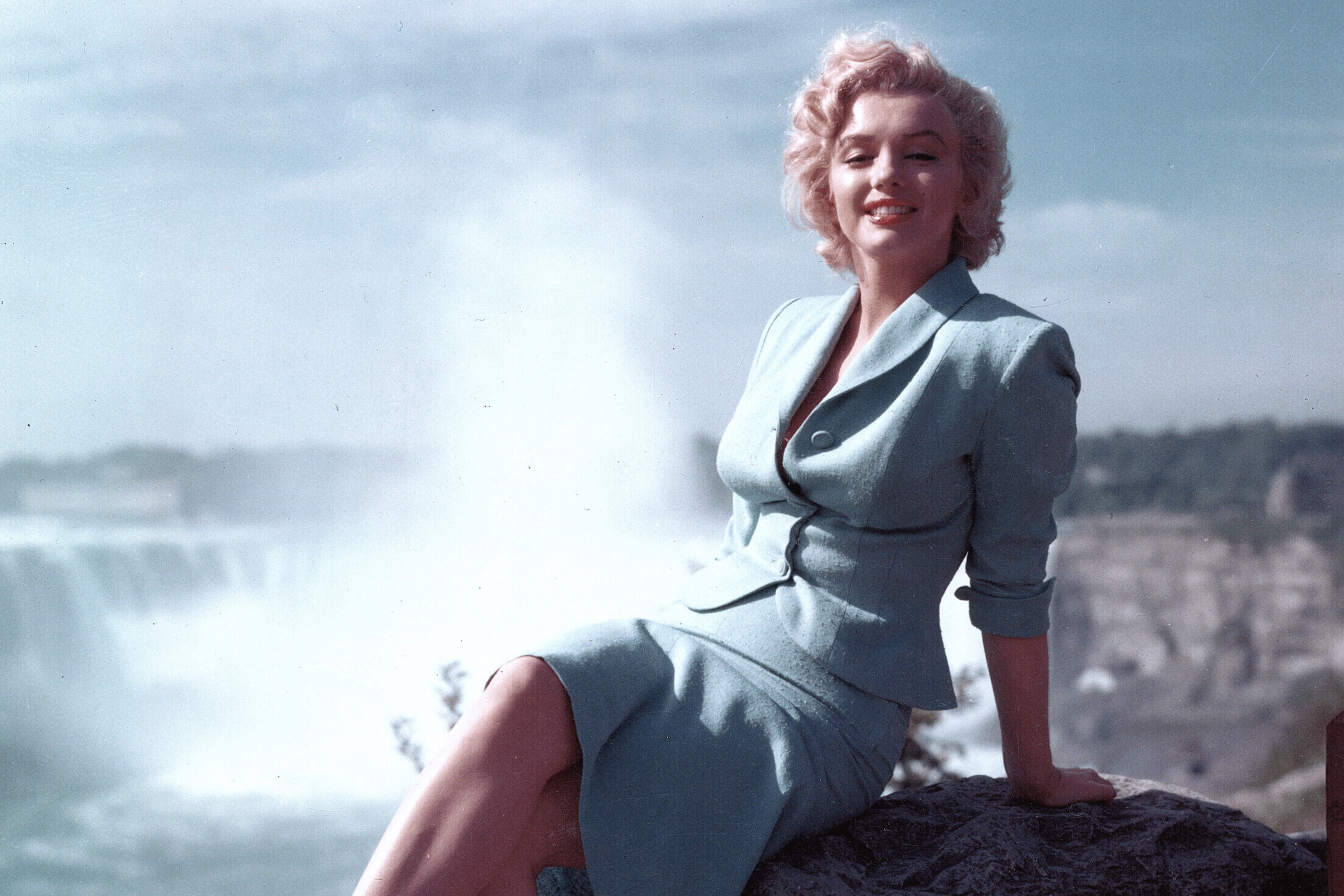
Monroe was on the precipice of major stardom when she landed the starring role in director Henry Hathaway’s film noir Niagara (1953). The executives at Fox realized they had a hot commodity on their hands and the role of Rose Loomis—the film’s sultry femme fatale—was elevated from supporting player to leading lady. Niagara marked Monroe’s first film in color. Once she renegotiated her contract with Fox, she insisted that all of her pictures moving forward be in color. This was a strategic business move, ensuring that she would only be cast in major productions.
Billed as “the world’s most fabulous gold-digging blonde,” Monroe’s co-starring role in Gentlemen Prefer Blondes (1953) cemented her status as a superstar. Directed by Howard Hawks and adapted from Anita Loos’ novel and stage adaptation, Jane Russell and Monroe star as a pair of showgirls on a cruise heading to Paris. Russell and Monroe play opposites to great effect—blonde and brunette, naive and cynical— and have wonderful onscreen chemistry. The movie is best known for Monroe’s musical sequence “Diamonds Are a Girl’s Best Friend,” where Monroe dons a pink dress with matching opera gloves—a hat tip to Rita Hayworth’s famous “Put the Blame on Mame” outfit from Gilda (1946). It’s a landmark performance and has been imitated by many, including Madonna, Nicole Kidman and Ryan Gosling.
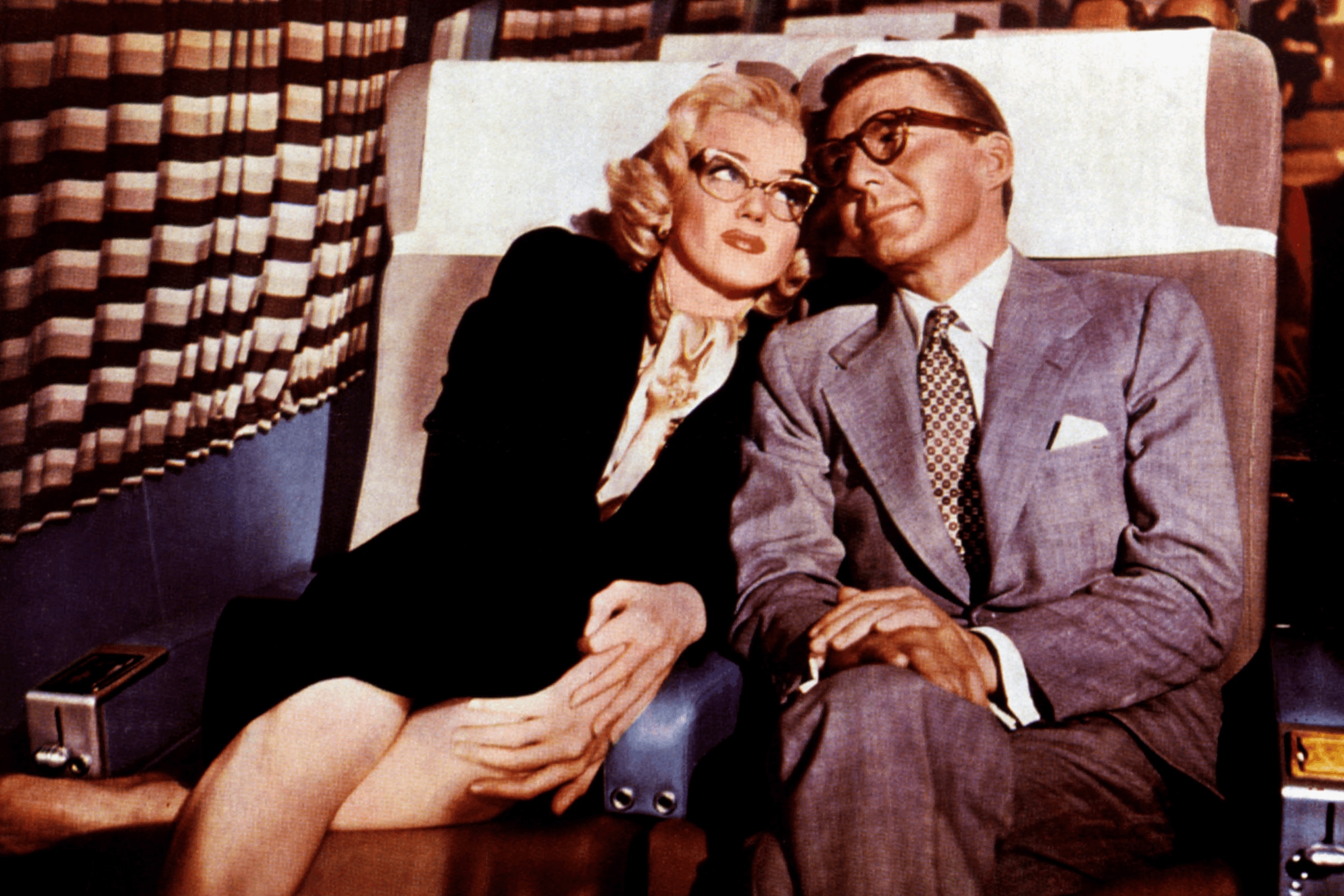
The next move for Monroe was a starring role in Fox’s How to Marry a Millionaire (1953). Monroe, Betty Grable and Lauren Bacall play three eligible bachelorettes who set out to marry wealthy men but find true love instead. It became the fourth-highest grossing film of 1953. Despite her success, Monroe still suffered from what we refer to now as “imposter syndrome.” About working with Monroe, Bacall wrote, “Marilyn was frightened, insecure—trusted only her coach and was always late… And yet I couldn’t dislike Marilyn. She had no meanness in her…. There was something sad about her—wanting to reach out—afraid to trust—uncomfortable.”
Her role in the Fox Western River of No Return (1954) was a low point in Monroe’s career. She butted heads with Otto Preminger, a notoriously difficult director who did not appreciate how Monroe’s acting coach kept interfering with production. Filmed on location in the Rocky Mountains, the production took a physical toll on Monroe, who injured her ankle and almost drowned.
When we think of Marilyn Monroe, there are three iconic looks that come to mind: the Bob Mackie-designed “Happy Birthday, Mr. President” dress in 1962, the “Diamonds Are a Girl’s Best Friend” pink dress and the white flowy dress in The Seven Year Itch (1955), both designed by William Travilla. The image of Monroe playfully pushing down her skirt as the wind from a subway grate blows it up has become evocative of her unique brand of innocence and sexuality. In Billy Wilder’s movie, we only see a glimpse of her legs. However, the full-length publicity photos shot in front of a thousand spectators are what most remember.
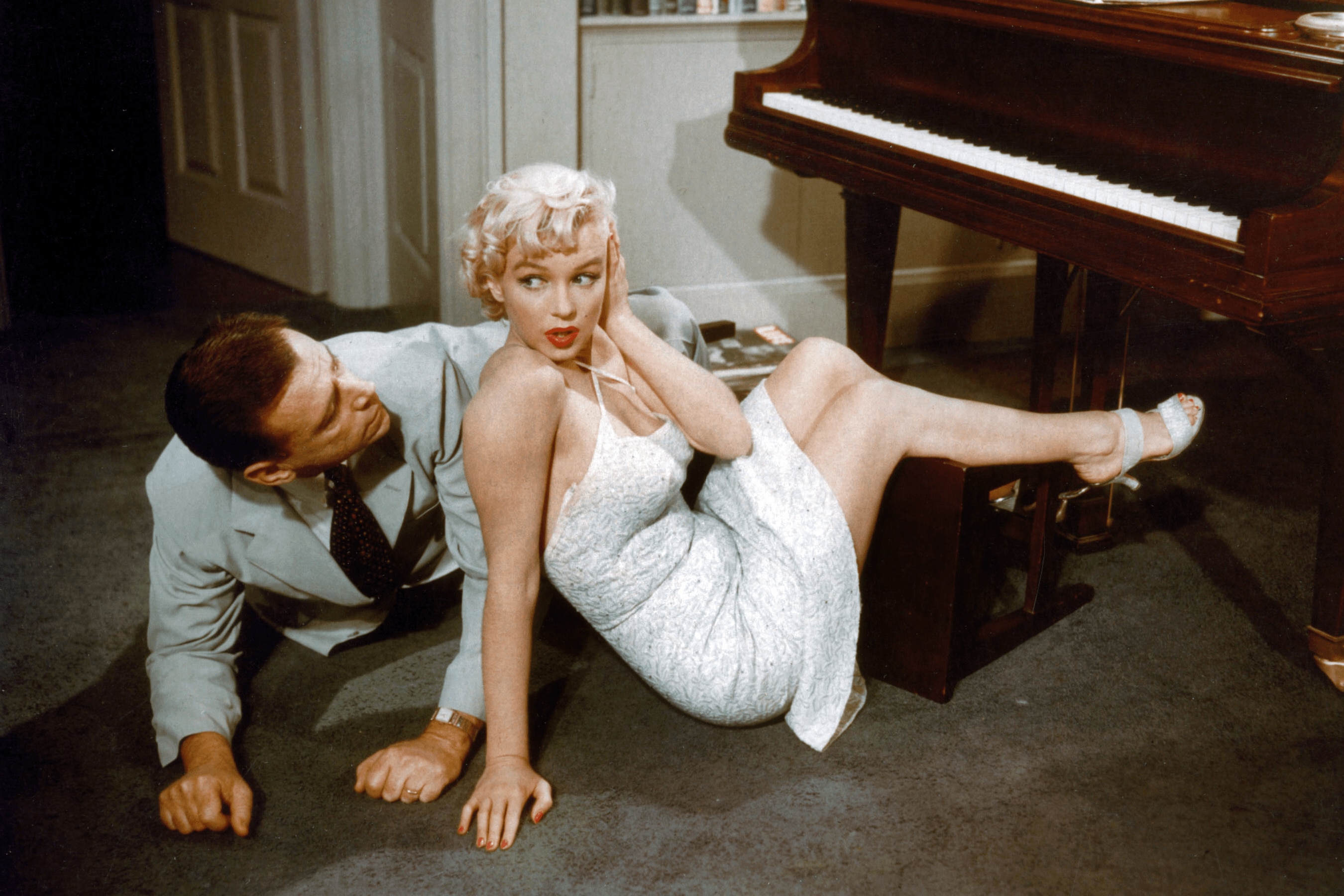
Monroe took a year off from Hollywood, studied at the Actors’ Studio and formed Marilyn Monroe Productions with producer Milton H. Greene. With this new entity, she hoped to have more bargaining power in selecting her directors and leading men and in influencing cinematography, costuming and makeup. She negotiated a new seven-year contract with Fox, and her production company produced two movies. The first was Bus Stop (1956). Directed by Joshua Logan, the film stars Monroe as a saloon singer who falls in love with a hot-headed cowboy, played by Don Murray. Monroe had the most creative control in her career with this picture, transforming her appearance and diction to best suit her vision for the role. Her next production was The Prince and the Showgirl (1957), a romantic comedy directed by and starring Laurence Olivier. This was Monroe’s only film made outside the United States.
By this time, Monroe was married to writer Arthur Miller, who had become more involved in his wife’s work. It took some convincing from Miller and producer Harold Mirisch to get Monroe to agree to star in Billy Wilder’s Some Like It Hot (1959). Tony Curtis and Jack Lemmon play two musicians on the run from the mob who cross-dress and join Monroe’s all-female band as a disguise. About Monroe, Curtis said, “She knew she was limited and goddamned well knew what was right for Marilyn. She wasn’t about to do anything else.”
Monroe laid everything bare in what would be her last completed film. Based on an Arthur Miller story and directed by John Huston, The Misfits (1962) stars Monroe as a divorcee who falls for a free-spirited cowboy, played by Clark Gable. The film became known for being the swan song for both Monroe and Gable and for its stellar cast of players, including Montgomery Clift, Thelma Ritter and Eli Wallach. On her review of the film, critic Pauline Kael wrote, “Monroe has never worked her vulnerability so fulsomely before…” Unfortunately, after The Misfits had wrapped, everything seemed to go downhill from there. It was clear that she was battling her own demons. Her next project, Something’s Got to Give (1962) was never completed. Marilyn Monroe passed away that same year on August 4th, 1962, at the age of 36. Her career and life continue to fascinate audiences today, and her face has become embedded in popular culture, exemplified in Andy Warhol’s “Marilyn Diptych,” making her one of the most recognizable talents of her generation.
Monday, June 1
| 8:00 PM | Gentlemen Prefer Blondes (1953) |
| 9:45 PM | How to Marry a Millionaire (1953) |
| 11:30 PM | Monkey Business (1952) |
| 1:30 AM | Ladies of the Chorus (1949) |
Monday, June 8
| 8:00 PM | Clash by Night (1952) |
| 10:00 PM | Don't Bother to Knock (1952) |
| 11:30 PM | The Asphalt Jungle (1950 |
| 1:30 AM | Right Cross (1950) |
Monday, June 15
| 8:00 PM | Bus Stop (1956) |
| 10:00 PM | The Seven Year Itch (1955) |
| 12:00 AM | Niagara (1953) |
Monday, June 22
| 8:00 PM | Some Like It Hot (1959) |
| 10:15 PM | The Misfits (1961) |
| 12:30 AM | The Prince and the Showgirl (1957) |