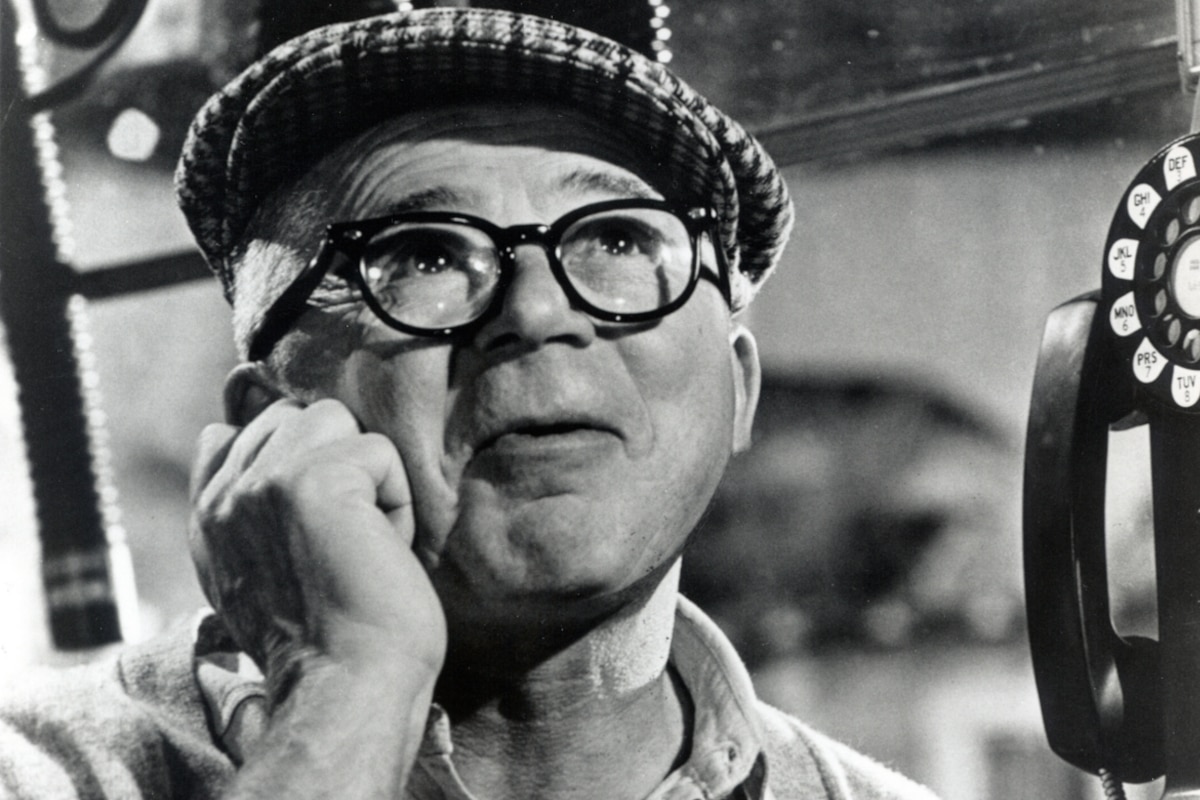
Billy Wilder might have had the most deliciously dirty mind in Hollywood. The director dug into racy, controversial subjects with cynical wit and straightforward insight. Wilder defined film noir classics, sex comedies and buddy films with a career that inspired a new generation of filmmakers. Wilder might have been born in Vienna, but American culture influenced him from the earliest days. Given the name Samuel, Wilder's mother called her son 'Billy' in honor of Buffalo Bill Cody. The name stuck.
He was as restless as his namesake and left law school to become a journalist. While grinding out articles for a Berlin newspaper, Wilder joined with future film directors Fred Zinnemann, Robert Sidomak and Edgar G. Ulmer to make a short film, “Menschen Am Sonntag” (1929). Billy was bitten by the film bug. By the mid-1930s, he had written seven scenarios and even tried his hand at directing. After Hitler's rise to power in 1934, Wilder fled his homeland. Once in Hollywood, Wilder and roommate Peter Lorre had to learn English quickly if they wanted to join the American film industry. Together, the German expatriates learned the language and began staking their territory in the Dream Factory.
As a writer, Wilder could craft realistic relationships with sharp dialogue; he proved this in his scripts for Ninotchka (1939) with Greta Garbo and Howard Hawks' Ball of Fire (1941). As a filmmaker, Wilder was well acquainted with the shadowy, brooding style of German Expressionism. He put these two qualities together to create a landmark film noir, Double Indemnity (1944). He followed this cinematic triumph with a risky project, the story of an alcoholic on a three-day binge. Not the usual subject matter for a Hollywood studio, The Lost Weekend (1945), nevertheless, claimed the Academy Award for Best Picture. By the end of the decade, Wilder dared even to paint a portrait of Hollywood stardom gone awry in Sunset Boulevard (1950). At the same time, he was capable of creating first-rate entertainments that were unlikely to offend anyone, such as his adaptation of Agatha Christie's courtroom drama, Witness for the Prosecution (1957) starring Charles Laughton, Marlene Dietrich and Tyrone Power.
Each of these films is an undisputed classic today, but even at the time, his films were lauded. Six of his screenplays were nominated for Oscars between 1941 and 1950. Three of his eight Best Director nominations came during this period. Billy Wilder claimed the American Dream; he was successfully playing by his own rules.
By the end of the '50s, as censorship guidelines were easing, Wilder's projects became even more daring. Sex was central to Wilder's world and Hollywood celebrated his candor. He directed Marilyn Monroe in two of her most sensuous roles, The Seven Year Itch (1955) and Some Like It Hot (1959). After working with Monroe, Wilder's scripts became even more poignant. Yes, there were sexual themes, but more often than not, Wilder was pointing his finger at the dishonesty of lying lovers. In The Apartment (1960), Wilder took an incisive look at corrupt businessmen exploiting their employees for sexual favors. With One, Two, Three (1961), Wilder poked fun at both communism and capitalism when he had James Cagney play an aggressive marketing director for Coca-Cola stationed in East Berlin during the Cold War. In Irma La Douce (1963), the world of a Parisian prostitute was lovingly painted in Technicolor tones. And with Kiss Me, Stupid (1964), Wilder finally stepped over the line with the story of a struggling composer who tricks a lothario into having an affair with a woman posing as his wife in order to sell a song.
The film, which seems so innocent today, was scandalous in its day. Critics called Kiss Me, Stupid pornographic smut and buried the picture. Audiences ignored it. Today, the film is a risque farce with great performances by Dean Martin and Kim Novak. The critical lambast deeply affected Wilder; this would be his last sex comedy. Another major disappointment for the director was The Private Life of Sherlock Holmes (1970), which is now considered one of his most overlooked and underrated works. A fascinating glimpse into the man behind the legend, Wilder's film wasn't afraid to explore the detective's addiction to cocaine or his estrangement from women.
Wilder brought together the dynamic combination of Jack Lemmon and Walter Matthau in 1966 with The Fortune Cookie. Lemmon played a sports cameraman hurt at a football game. Matthau played his brother-in-law, a shyster lawyer named 'Whiplash Willie,' who frantically schemes to collect insurance money. The uppity Lemmon and the curmudgeonly Matthau provided the perfect counterpoint. Director and stars teamed again for The Front Page (1974), a remake of the newspaper classic, and Buddy, Buddy (1981), the story of an assassin and a sad sack ready to commit suicide.
Wilder's work is an amazing string of hits. From sarcastic and cynical social commentary to outrageous sex farce, Wilder pushed his audiences to look at their own values and morals. He was an outsider who wasn't afraid to point out the hypocrisy of his adopted home.