This article was originally written about TCM Remembers in the TCM Now Playing newsletter in March 2019.
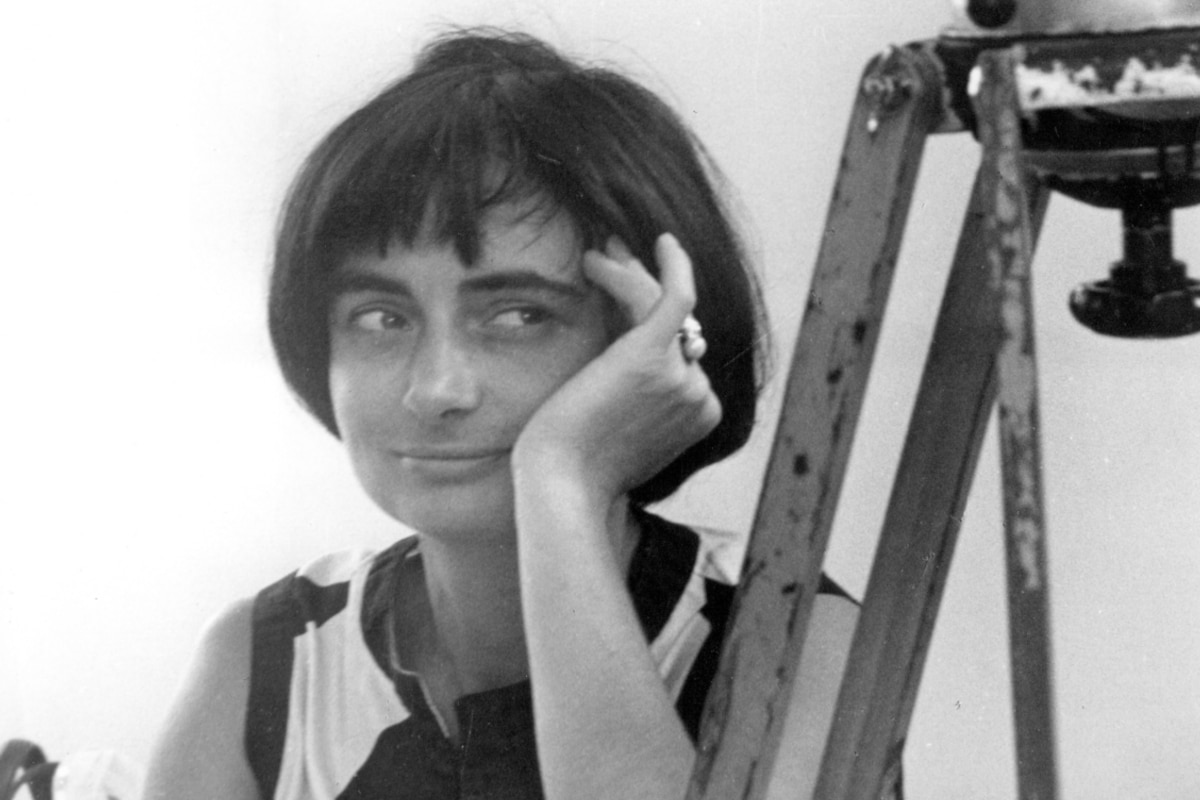
Often called the "grandmother of the New Wave," Belgian-born French film director Agnes Varda passed away in Paris on March 29, 2019, at the age of 90. Although not a member of the Cahiers du cinema critical fraternity, which formed the core of this movement, Varda completed her first feature, La Pointe Courte, in 1954, five years before the New Wave's first films. With almost no academic or technical knowledge of film (though she had been a still photographer for Jean Vilar's Theatre National Populaire), Varda told two parallel tales (a structure inspired by William Faulkner's "Wild Palms"): the jagged romance of a young married couple and the struggles of the fishermen in the village of La Pointe Courte. Critic Georges Sadoul called this work "certainly the first film of the Nouvelle Vague," and it set the tone for Varda's career to come, combining fiction with documentary and also, in its debt to Faulkner, illustrating Varda's desire to expand the language of film. "I had the feeling," she said later, "that the cinema was not free, above all in its form, and that annoyed me. I wanted to make a film exactly as one writes a novel."
Unfortunately for Varda, La Pointe Courte (which was edited by Alain Resnais, who initially refused to work on it because Varda's techniques were close to those which he was developing) would be the only feature she would make in the 1950s. Although she lit the fuse under the New Wave, it was not until the explosive feature debuts of her male counterparts that Varda received another opportunity to direct a feature, Cleo From 5 to 7 (1961), which established her as a significant talent on the international film scene. In Cleo, the story of two hours of a woman's life as she waits to hear if she has cancer, we witness the emergence of a great Varda theme, borrowed from Simone de Beauvoir: "One isn't born a woman, one becomes one."
From her first film to her most recent projects, Varda has shown a strong connection to the Earth, becoming a kind of cinematic Mother Nature, whose characters have been personifications of wood and iron (La Pointe Courte), sickly trees (Vagabond, 1985), animals (Les Creatures, 1966) and food (“Apple” of One Sings, The Other Doesn't, 1977). The world of Agnes Varda is one expansive Garden of Eden, where characters can live without the human burden of morality or sin, whether that world is the French Riviera (the short "Du cote de la cote" 1958), the city (Cleo from 5 to 7), or the country (Le Bonheur, 1965; Les Creatures, Vagabond). Varda knows that this Eden is a mythical place that exists only in the minds of her main characters, and for this reason, her films also contain contrasting elements: troubled characters (the struggling fishermen of La Pointe Courte or the suicidal wife of Le Bonheur) or less picturesque surroundings (the frozen landscape of Vagabond).
Although Varda's initial impact on cinema was a powerful one, by the mid-1960s her career as a commercial filmmaker began to wane. After the improvisational and obscure Lions Love (1969), about an avant-garde woman director who goes to Hollywood, Varda completed only one more fictional commercial feature over the next 15 years–the epic feminist tale of womanhood and motherhood, One Sings, the Other Doesn't. She remained active by directing numerous shorts and documentaries, but much of her work went unseen or unnoticed.
It was not until the mid-‘80s that Varda reemerged in the commercial realm. While Kung Fu Master! (1987) was a misnamed and rather tentative story of the abortive romance between a middle-aged woman (Jane Birkin) and a 14-year-old video game buff (played by Varda's son Mathieu). Vagabond, a documentary-style feature about a young French female wanderer, was arguably her best work to date. It dealt with all her major concerns: the independence of women, the coexistence with nature, the need for freedom, the acceptance of chance, the cyclical nature of birth and death, the personification of nature, and the seamless blending of documentary and fiction. Sadly, the illness and death of Varda's husband, filmmaker Jacques Demy, helped to inspire her affectionate docu-valentine to his youth in Jacquot/Jacquot de Nantes (1992).