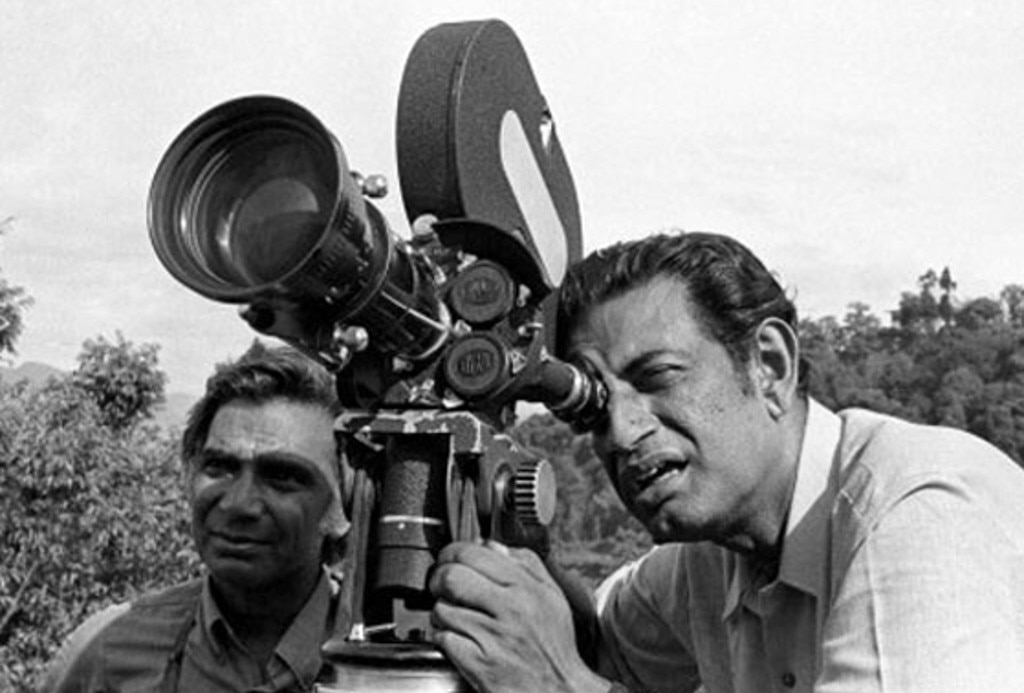
Satyajit Ray, India's most internationally renowned filmmaker, was born into a family prominent in Bengali arts and letters for fifteen generations. Ray directed a total of 36 films, encompassing feature films, documentaries, and short subjects.
In 1940, after receiving his degree in science and economics, he attended Rabindranath Tagore's world university in rural Santiniketan. Tagore, the dominant figure in India's cultural renaissance, had a strong influence on Ray, whose humanist films reaffirm his Bengali heritage within a modern context.
In 1942, Ray returned to Calcutta, where he spent the next ten years as layout artist and art director for a British-run advertising agency. In his spare time he wrote film scenarios, among them an adaptation of Tagore's novel Ghare Baire, which producers rejected when Ray refused to make changes. With India's independence in 1947, Ray co-founded Calcutta's first film society with Chidananda Das Gupta and wrote articles calling for a new cinema.
His reputation as a graphic artist brought offers to illustrate books, including an abridged edition of Bibhuti Bhusan Banerjee's classic novel Pather Panchali in 1946. Pather Panchali tells the story of Apu, a young boy growing up in a poor rural village in Bengal, and his family’s struggle to survive amid hardship and change. Through its quiet realism and lyrical imagery, the film captures the beauty and sorrow of everyday life. After an influential encounter with Jean Renoir in Calcutta in 1949 and a business trip to London in 1950, where he saw Vittorio De Sica's The Bicycle Thief (1948), Ray set out to script and direct Pather Panchali. The film, shot on location on weekends, failed to attract backers and could not be completed until a request from the Museum of Modern Art in New York to include it in their Indian art exhibit led the West Bengal government—in an unprecedented move—to provide funds.
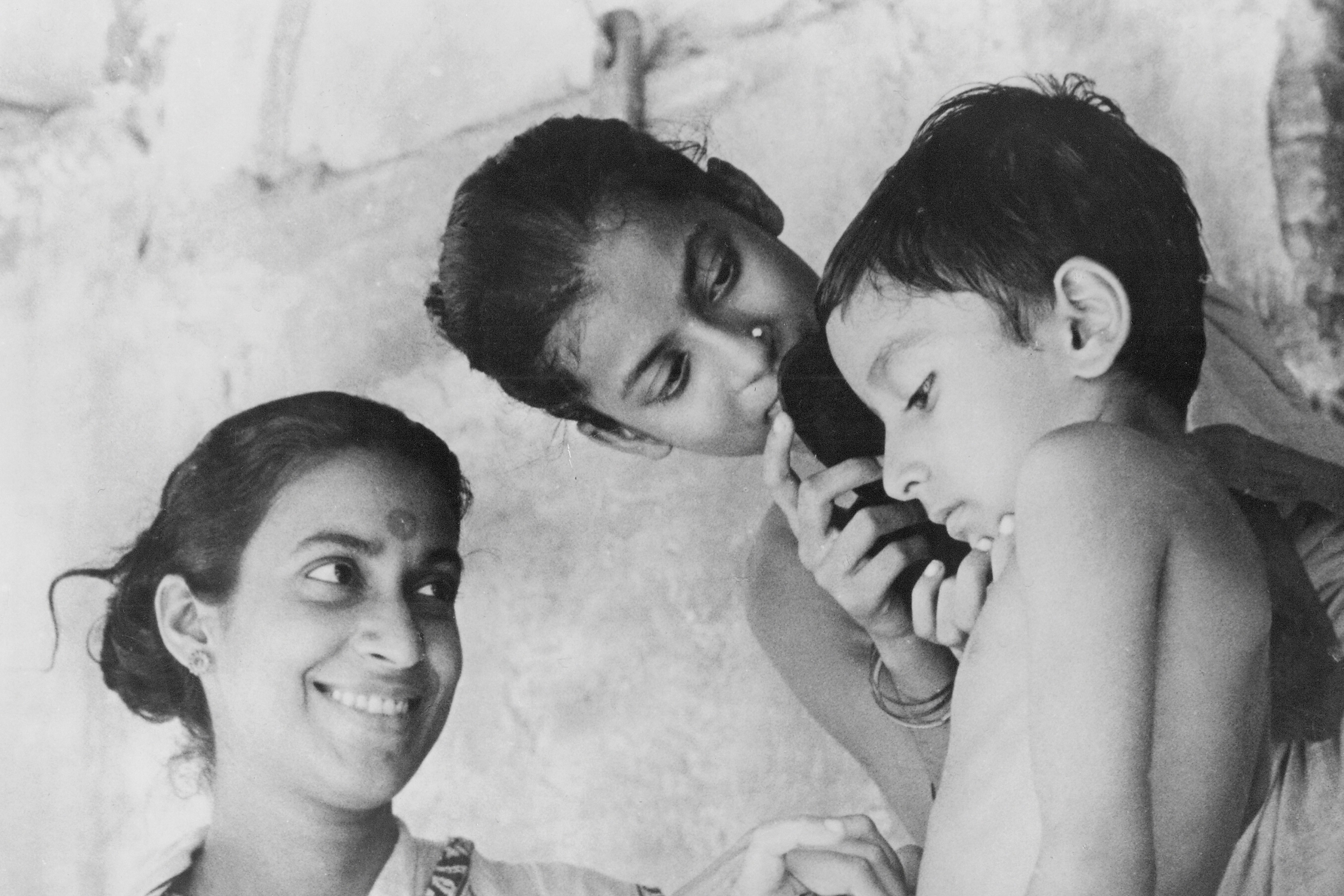
Pather Panchali (1956) won several international awards and established Ray as a world-class director, as well as being a box-office hit at home. Artistic and financial success gave Ray total control over his subsequent films; in his numerous functions—writer, director, casting director, composer (since 1961), and cinematographer (since 1963)—he was able to continue Tagore's example in theater of welding the arts into a unified entity. Two sequels also based on the novel (Aparajito 1957, The World of Apu 1959) completed the acclaimed Apu trilogy, whose slow-paced realism broke with the song-and-dance melodramas of Indian cinema. Using long takes and reaction shots, slow camera movements, and—in Kanchanjangha (1962)—real-time narrative, Ray allows the meticulous accumulation of details to reveal the inner lives and humanity of diverse Bengali characters.
In 1961, Ray revived Sandesh, a children's magazine founded by his grandfather, to which he continued to contribute illustrations, verses, and stories throughout his life. Beginning in 1969, he also made four popular children's films which contain an unobtrusive yet distinct political awareness. Earlier in his career, Ray was criticized by Indian critics for failing to deal with Calcutta's immediate social problems. And although he defended his humanist (versus ideological) approach, Pratidwandi (1971) signaled a shift toward political themes. The films follows Siddhartha, a young man in Calcutta, as he navigates unemployment, disillusionment, and moral conflict in a rapidly changing, politically charged society. The film portrays the frustrations of India’s urban youth and marks one of Ray’s most politically conscious works. In the 1970s, Ray's films acquired a bitter tone and deviated from his usual classical style, with the abrupt use of montage, jump cuts, and flashbacks.
In 1964, Ray directed Charulata / The Lonely Wife, often considered his most accomplished film. Based on Tagore’s short story Nastanirh (Broken Nest), it tells the story of Charu, a lonely wife in 19th-century Bengal, who finds herself growing close to her brother-in-law, Amal. Ray often said Charulata was his personal favorite, noting it was the only film he would make exactly the same way again.
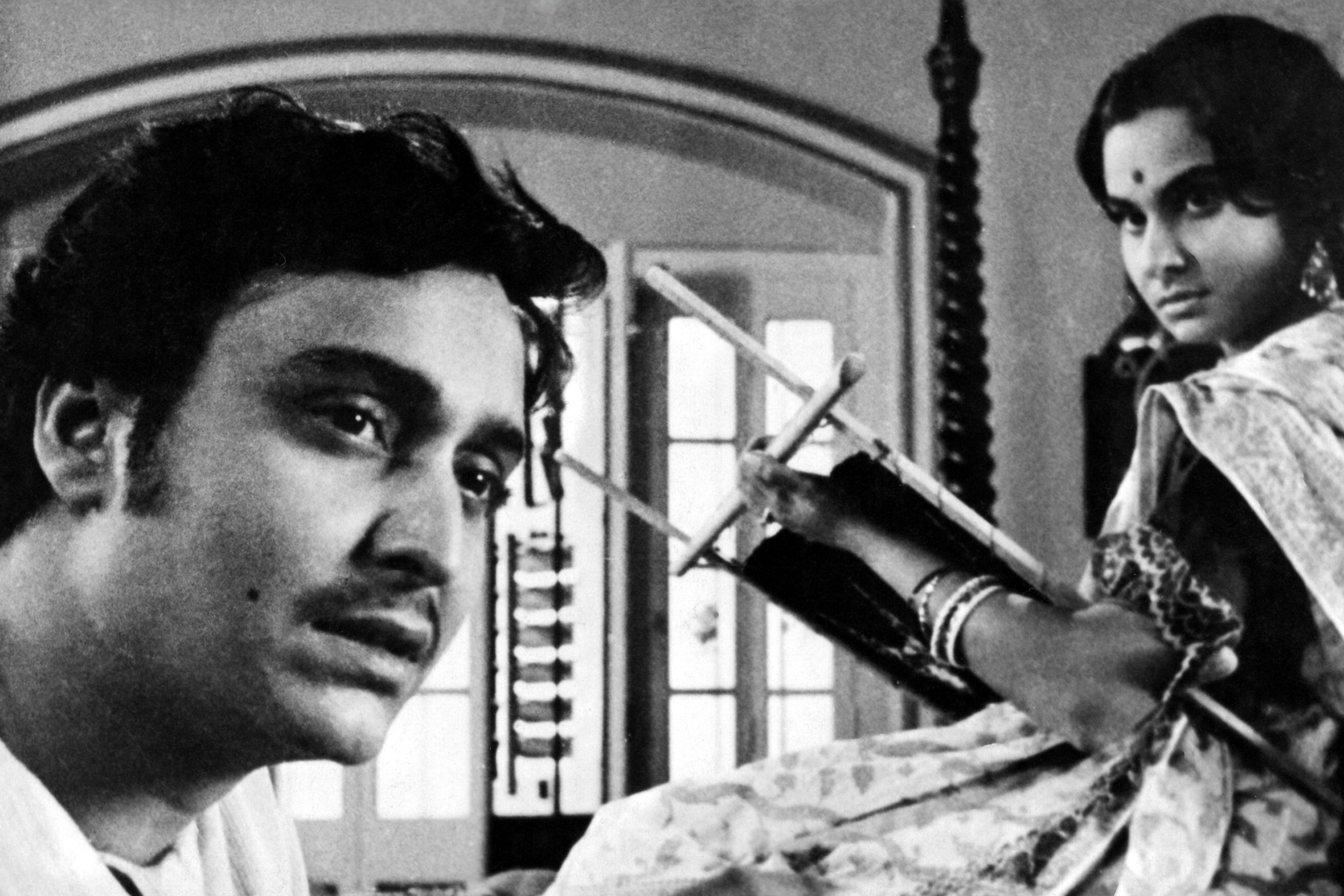
Ray's Ghare Baire / The Home and the World (1984) was a return to his first screen adaptation. While shooting, he suffered two heart attacks and his son, Sandip, completed the project from his father's detailed instructions. Ray continued to write prolifically, completing 13 half-hour TV screenplays to be directed by Sandip, and returned to directing in 1989 with an adaptation of Ibsen's Enemy of the People. In 1992, the year of his death, Ray was awarded an honorary Oscar for “his rare mastery of the art of motion pictures, and for his profound humanitarian outlook, which has had an indelible influence on filmmakers and audiences throughout the world.”
His other celebrated works include Jalsaghar / The Music Room (1958), Mahanagar / The Big City (1963), and the Goopy–Bagha trilogy (1969–1992).
On the occasion of Ray’s birth centenary in 2021, the International Film Festival of India honored his enduring legacy by renaming its annual Lifetime Achievement Award the Satyajit Ray Lifetime Achievement Award. In 2024, Forbes ranked Ray eighth among the greatest film directors of all time in its list of The 30 Greatest Film Directors of All Time.