Former monthly contribution by TCM host Ben Mankiewicz to the TCM newsletter Now Playing in October, 2010.
Humphrey Bogart. World War II. Shot during the war and set in North Africa. Bogart plays a reluctant hero. I love Casabla...I'm sorry, what? This isn't Casablanca (1942)? So no Ingrid Bergman? Bogie must have a different and exciting love interest. Wait, he has nobody? There are no women in the whole movie? What is this?
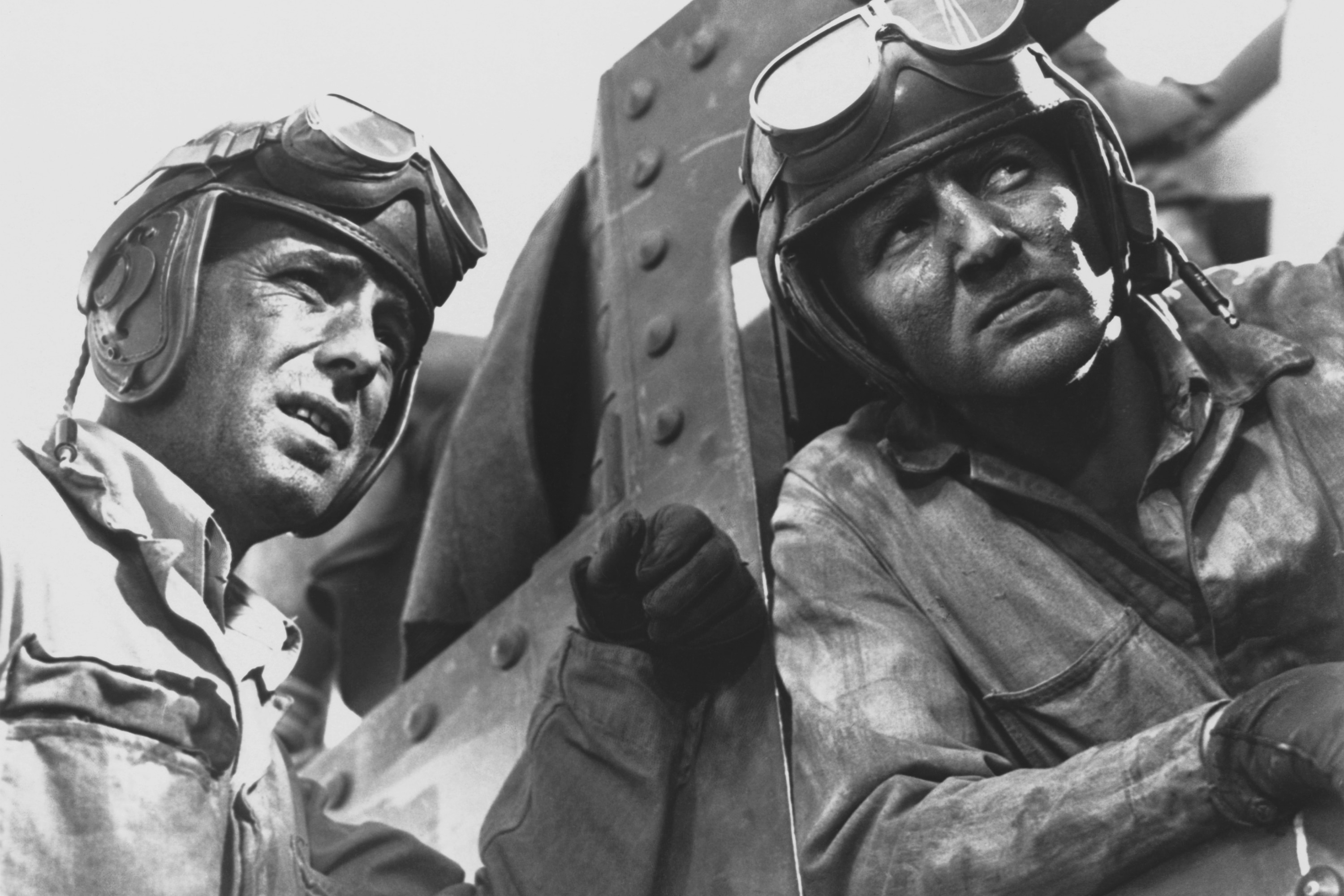
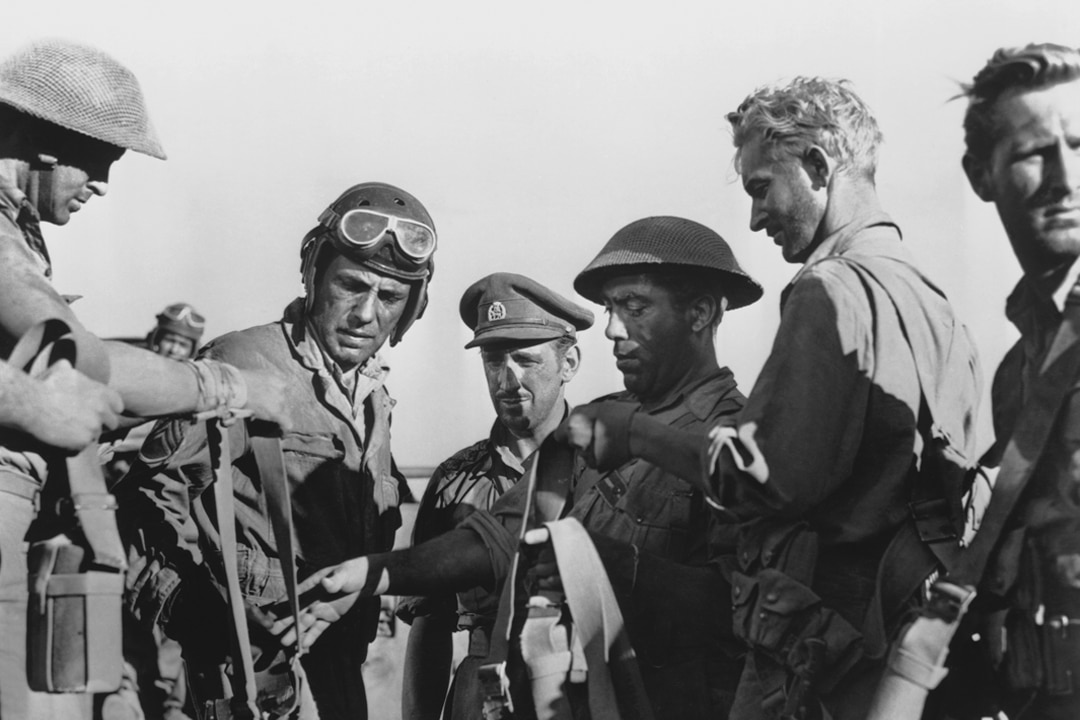
This is one of the first movies Bogart made after Casablanca, released almost exactly a year after Casablanca made its New York premiere. Other than the North African setting, the movie is really nothing like Casablanca. Bogie plays an American tank commander–he and his two remaining crewmen (Bruce Bennett and Dan Duryea) are forced to retreat from advancing Nazis. They're on their own in the parched Libyan desert, their lives constantly in danger. Yet their humanity never wavers as they pick up other lost souls of the war along the way, including four British soldiers, a free French fighter, a Sudanese Sargent Major (Rex Ingram) and his Italian prisoner (J. Carrol Naish, who was nominated for an Oscar) and, eventually, a German pilot (Kurt Krueger).
There's enviable camaraderie among the men. They're hungry and thirsty–mostly thirsty–as they scour the barren, war-ravaged landscape for water. Significantly, the enemy soldiers–the Italian and, more notably, the Nazi–are treated with dignity, remarkable for a movie produced during the war.
Critics liked the picture, and no wonder. It's a top-notch war movie. “Variety” gave it a review you might not expect, given the cast, describing it as "packed with pithy dialogue, lusty action and suspense..." I find myself simultaneously amused and pleased that a 1943 review of a movie with an all-male cast would be praised for its "lusty action."
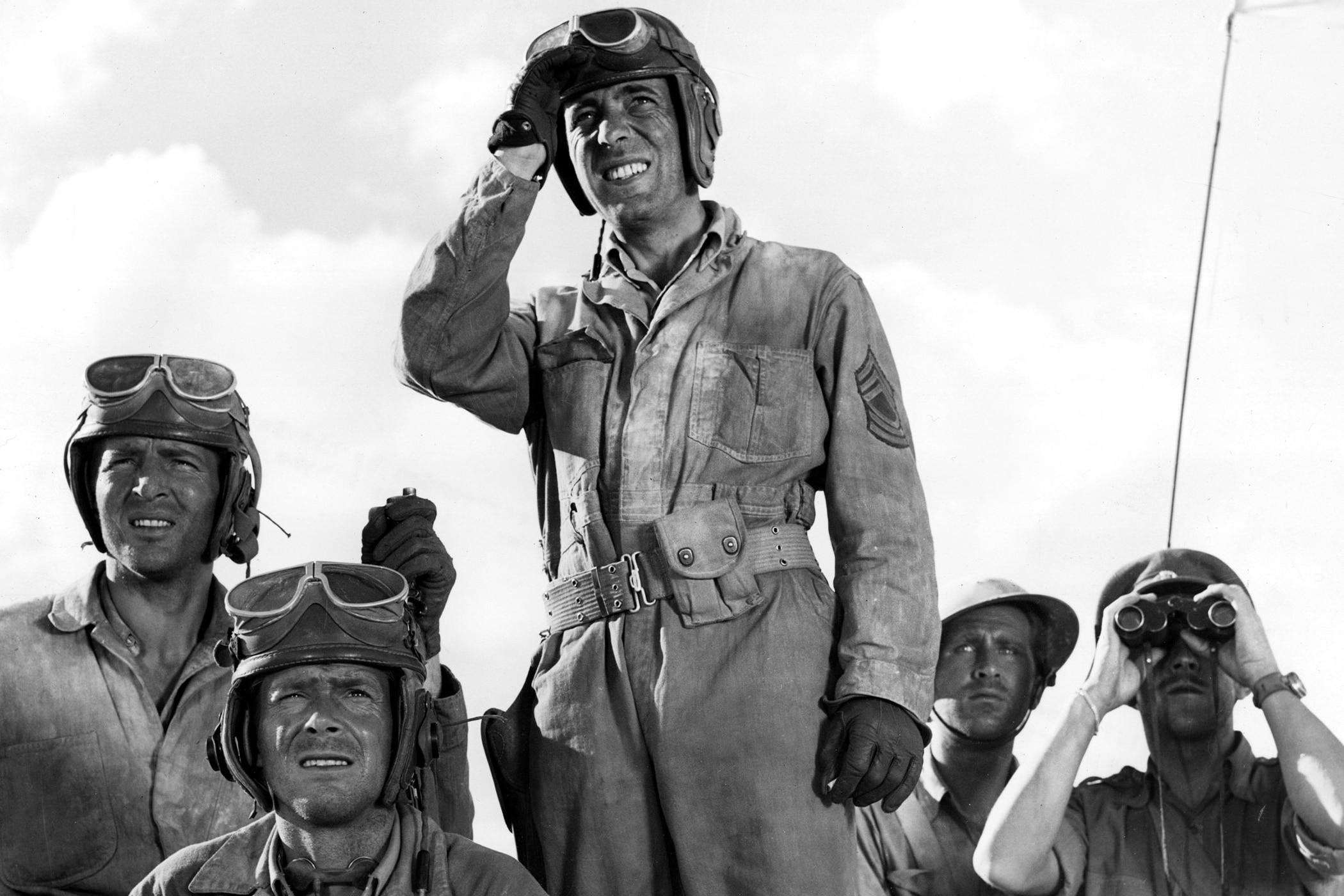
I have one sliver of criticism, though–a familiar one in war movies of the era. Though the lives of the men hang in the balance at every moment, there's a paucity of fear among them. They say they're scared, but they seldom demonstrate it. In Casablanca, even Paul Henreid as Victor Lazlo walks around the city as if he's heading to dinner and a show. Only Peter Lorre as Ugarte shows real fear. In Sahara, there's a sense that facing death is just another day in the desert. Maybe that's the point, but I always find it a shortcoming in war movies.
But there's a lot to love here–a great cast supporting Bogart as he fights the Nazis in North Africa, a comfortable place for classic movie fans.