Former monthly contribution by TCM host Ben Mankiewicz to the TCM newsletter Now Playing in January, 2017.
There are few genres I enjoy more than a prison movie. But if there is one, it's an escaping-from-prison movie. Fundamentally, we're a society with respect for law and order. I mean, we don't want killers, maulers, bankers and bandits to escape from prison, yet I can't think of a prison movie where we aren't rooting for the escapee. Humans, we're a complicated bunch.
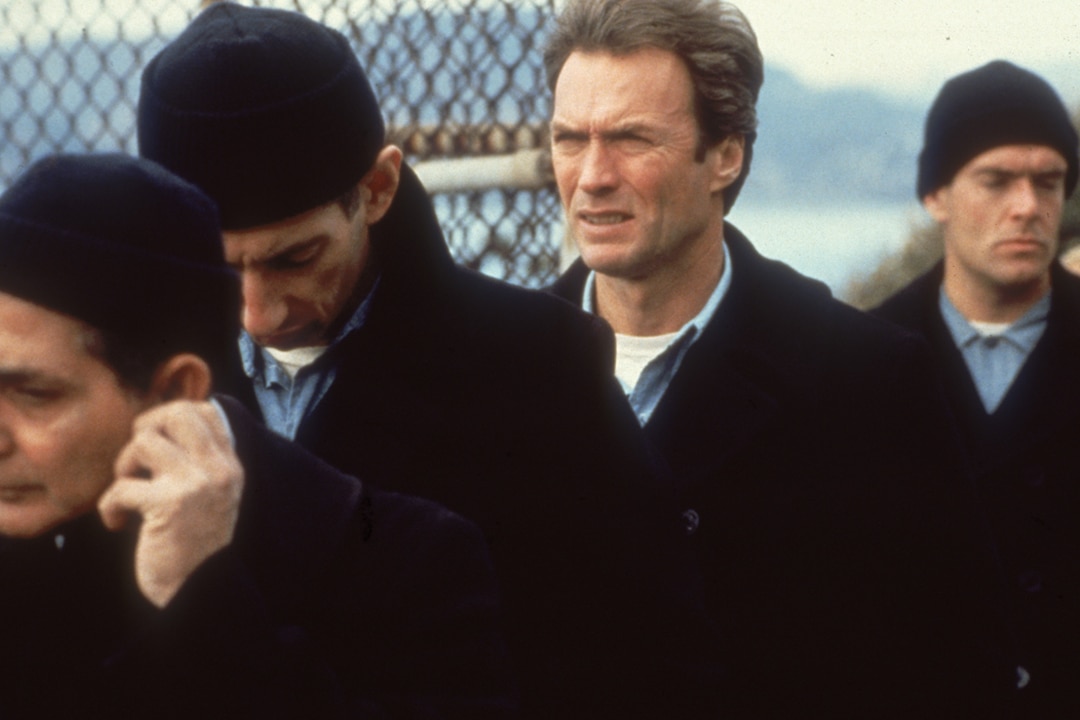
Significantly, Escape from Alcatraz comes from the team of director Don Siegel and star Clint Eastwood. It marked their fifth and final time working together (Quick Don Siegel aside #1: Siegel's 1962 film, Hell is for Heroes, with Steve McQueen and Bob Newhart–yes, that Bob Newhart–remains among my top war movies). Most famously, they made Dirty Harry in 1971 (Don Siegel aside #2: He considered another picture from 1971, The Beguiled, their best collaboration).
Siegel often succeeded by putting his characters in hostile environments–places they had to escape from–and nothing fits that scenario better than a prison. But the drama in Escape from Alcatraz doesn't grow out of intense action. Siegel draws tension from the details of the meticulous escape plan, the monotony of the escapees' routine and the dark silence of their breakout. There's no chase, no gunfight, no hiding from guards and dogs.
Adding to the intrigue of Escape from Alcatraz–it's based on a true story. On the night of June 11, 1962, three inmates at Alcatraz Federal Penitentiary, Frank Morris (played by Eastwood) and two brothers, John Anglin (Fred Ward) and Clarence Anglin (Jack Thibeau), placed the heads of paper-mâché dummies on their pillows and escaped by chipping away around the ventilation grilles in their cells leading to the airshaft. And it worked. They got out using makeshift rafts out of raincoats to drift away into the bitterly cold water of the San Francisco Bay. Did they survive? That's unknown, though Siegel directs us to a slightly less ambiguous conclusion in the movie.
Siegel made just two more pictures, his last coming in 1982, 40 years after he started in Hollywood (Don Siegel aside #3: That first Hollywood movie was Casablanca. Michael Curtiz directed it, but Siegel directed the scene-setting opening montage). You know what? I've got two more good Don Siegel asides. #4: His third and final wife had been Clint Eastwood's assistant. And #5: Eastwood dedicated his brilliant Western, Unforgiven, to two men who helped mold him into the director he's become, Sergio Leone and Don Siegel.