December 15 and 29 | 10 Movies
It’s no wonder so many people feel overwhelmed by the digital revolution happening before our very eyes. The haste with which personal devices and AI have infiltrated everyday life, along with the resulting exhaustion, has prompted many to re-examine their relationship with technology. The 2026 study “Return of Touch: The Human Advantage,” released by The Harris Poll and marketing company Quad, revealed that 75 percent of Americans “believe a simpler relationship with technology feels like a lifestyle upgrade rather than a sacrifice.” With that, many people, especially those in Gen Z, have embraced tech of yesteryear, from flip phones to vinyl and everything in between.
This month, TCM spotlights low tech, showcasing 10 movies that feature primitive equipment and systems—by today’s standards, that is! For those looking to reduce their digital footprint, this lineup is an excellent place to start for inspiration.
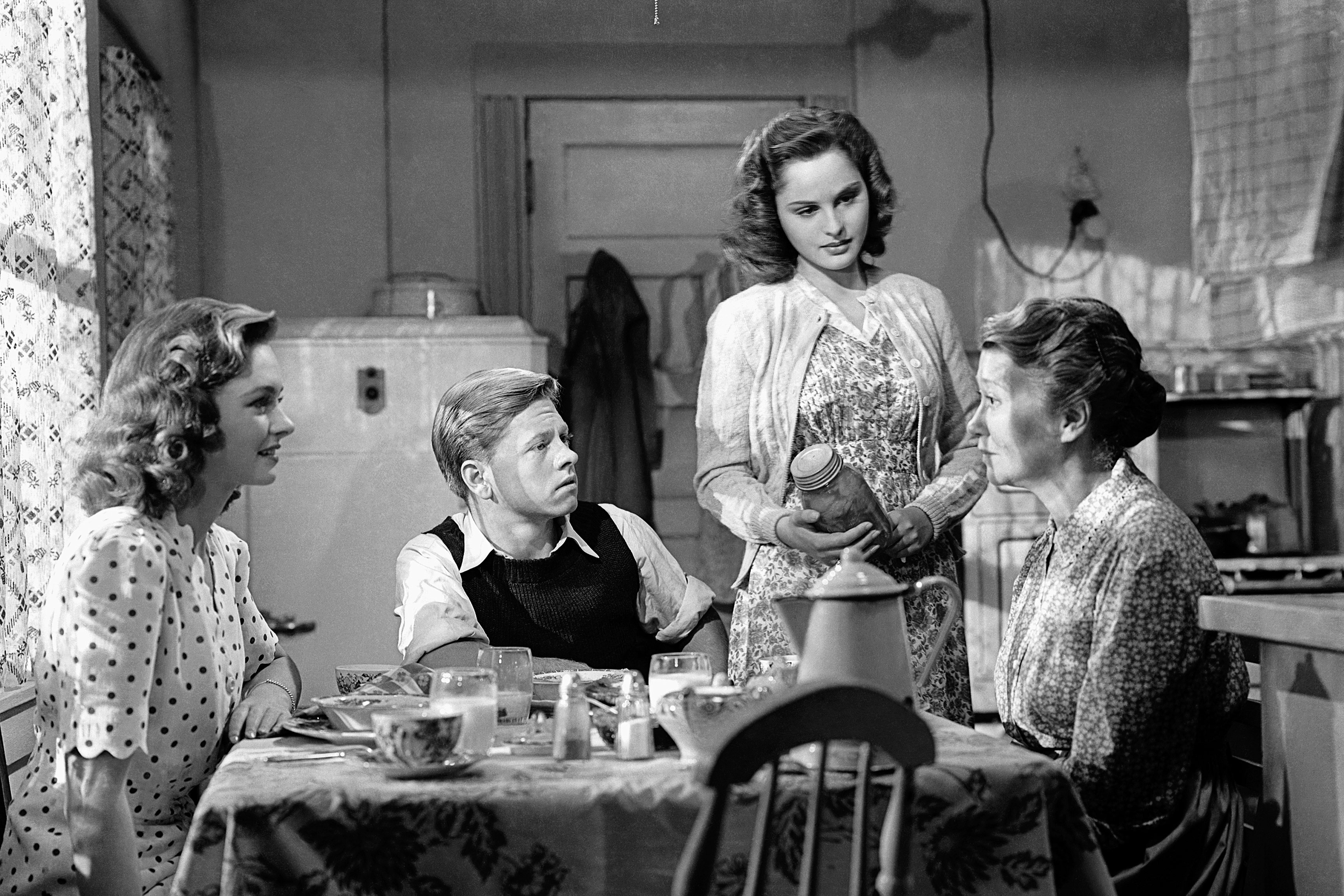
Samuel Morse transmitted the first telegraph message in 1844, and as infrastructure for the technology expanded, people around the world began to communicate through these networks. During WWII, telegrams became a vital tool for communication from governments to everyday folks, as exemplified in Clarence Brown’s The Human Comedy (1943). The film centers around teenage Homer (Mickey Rooney), who takes a job as a delivery boy for a local telegraph company to help support his family. Through his daily deliveries, he witnesses the highs and lows of wartime; the grief he shares with families relaying the sad news of loved ones’ deaths, proving how heavy a slip of paper can be. Writer William Saroyan initially penned a 200+ page script for The Human Comedy based on his own childhood experiences. While he was replaced by screenwriter Howard Estabrook, Saroyan eventually published the story in novel form right before the movie’s release and went on to win an Oscar for Best Writing, Original Story.
Though telegrams were widely used throughout the first half of the 20th century, the telephone ultimately proved more popular. Alexander Graham Bell’s innovation, patented in 1876, has evolved in its various forms right along with the movies. For one, party lines have been around almost as long as the telephone itself, a way of providing service at a cheaper cost and in situations with more limited resources. Since they offered no privacy, gossip and other deceit abounded. That was the case in Michael Gordon’s Pillow Talk (1959), the first pairing of Doris Day and Rock Hudson and one of the top-grossing movies of the year. The classic rom-com centers around New York neighbors, songwriter Brad (Hudson) and interior decorator Jan (Day), who share a party line. Jan’s work competes daily with Brad’s flirting, resulting in comedic conflict. The relative anonymity of a shared line across apartment buildings enables the ruse that leads to romance, and the tech lends itself perfectly to the use of split screen, which boldly creates a level of intimacy that culminates in the film’s famous bathtub scene.
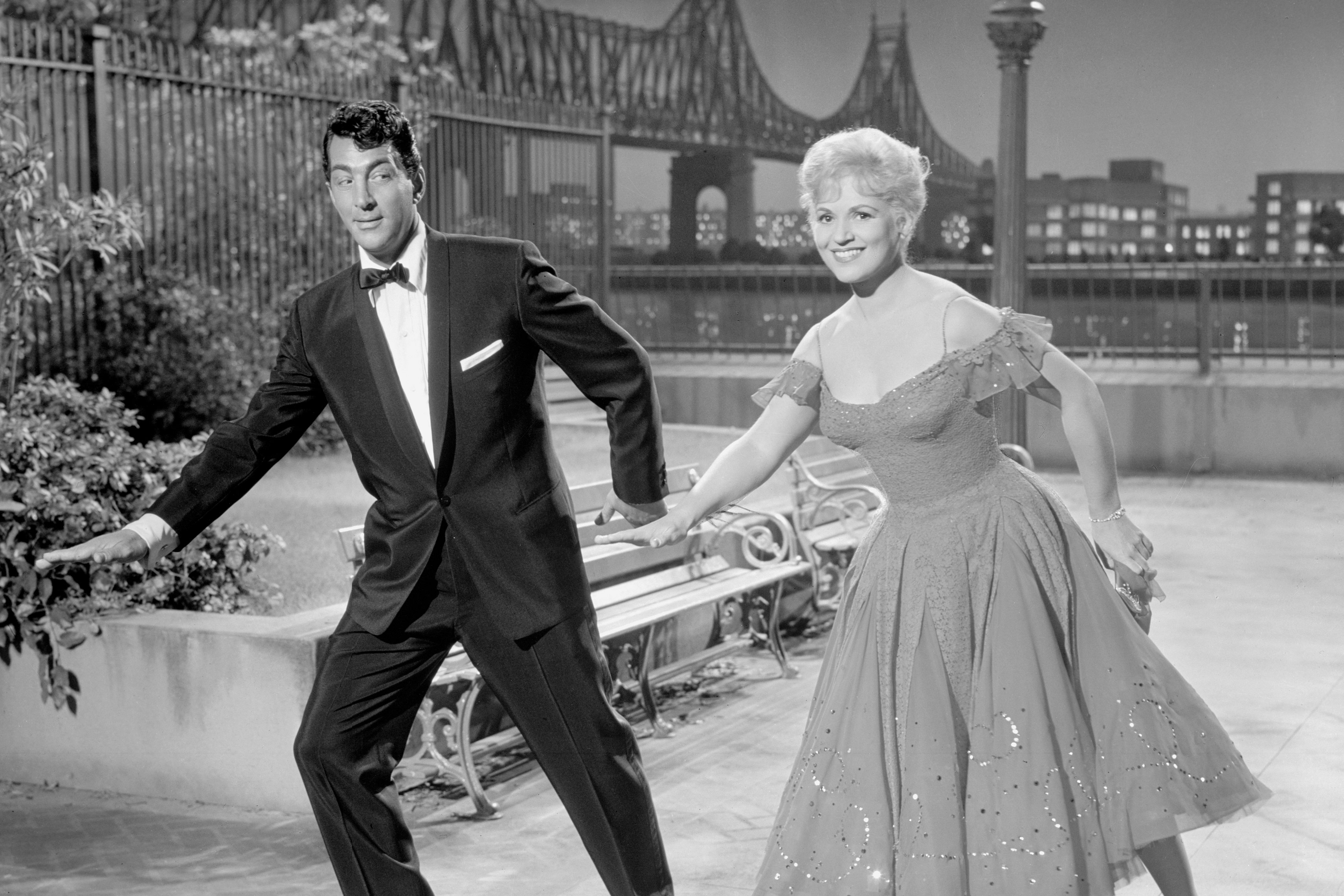
Deceit plays a role in Vincente Minnelli’s Bells Are Ringing (1960), too. Judy Holliday stars in her last Hollywood film as Ella, a switchboard operator working at a local answering service. Her position grants her access into her customers’ personal lives… which she’s not supposed to meddle in. Because this is a comedy, though, of course she does, ranging from accidentally changing coded bets for a bookie to helping apprehensive playwright Jeffrey (Dean Martin) believe in himself. In his “New York Times” review, Bosley Crowther lauded Holliday’s performance, a role she reprised from the hit Broadway musical, and even alluded to the supporting role Bell’s invention plays, writing, “You can take our word for it: ‘Bells Are Ringing’ owes more to Miss Holliday than it does to its authors, its director (Vincente Minnelli) or even to Alexander Graham Bell.”
The idea of having a phone in your car was very novel for most Americans in the middle of the 20th century. Billy Wilder’s Sabrina (1954), the classic love triangle between Sabrina (Audrey Hepburn) and the two sons of the family her chauffeur father works for, playboy David (William Holden) and CEO Linus (Humphrey Bogart), showcases this in a scene in which Linus speaks into a corded phone while being shuttled to the office. The fleeting tech appearance makes for an amusing curio, underscoring Linus’ workaholic tendencies.
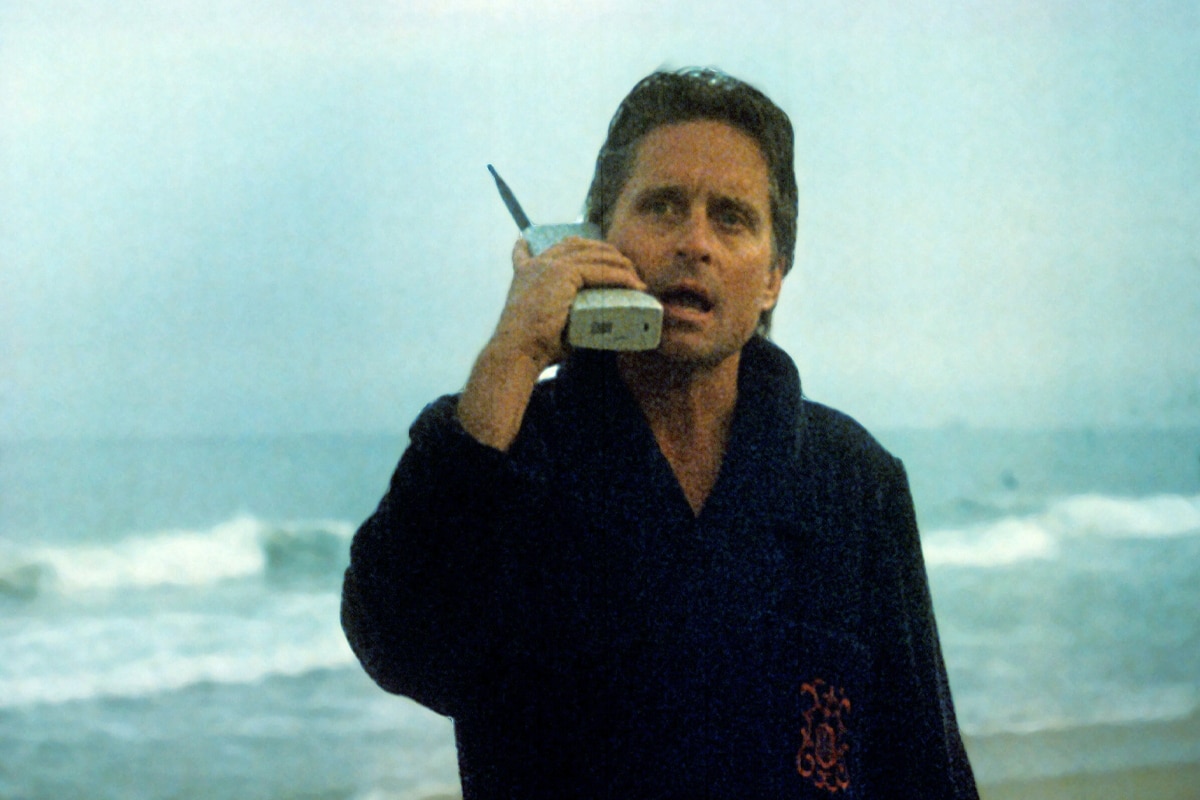
A mere two decades after Sabrina, that cord on the car phone was ditched, and the early mobile phone was born. It wasn’t until the early 1980s that the first commercially available cell phone, Motorola’s DynaTAC 8000x, would be featured in a movie. Oliver Stone’s Wall Street (1987), making its TCM premiere, finds determined young stockbroker Bud (Charlie Sheen) entangled in a web of prosperity and power in his quest to make it to the top, led by his mentor, merciless investor Gordon (Michael Douglas). While not the first film to feature Motorola’s clunky, two-pound phone nicknamed “the brick,” Gordon and Bud’s uses of the device, which retailed for almost $4,000 in the 1980s, effectively capture the elements of avarice and authority the film flaunts.
Motorola made another name for themselves when they coined the term “pager” in 1959. Sound and voice features were soon introduced, a development featured heavily in Arthur Hiller’s The Hospital (1971). The satirical dark comedy, penned by Paddy Chayefsky, follows the life of Dr. Bock (George C. Scott), who is dealing with some drama in his personal life. Work isn’t much better; pandemonium abounds in the New York teaching hospital he runs, besieged by a slew of fishy deaths purportedly due to careless treatment that turn out to be a perverse reign of terror railed against the ruthlessness of modern medicine. Pagers, initially envisioned as assistive devices for professionals, are positioned as an invasive representation of cold, overbearing bureaucracy, with the sheer cacophony and pull the technology has on doctors heightening the inherent disarray that leads to countless calamities.
Don Medford’s To Trap a Spy (1964), an expanded version of 1964’s “The Man from U.N.C.L.E.” TV pilot, also paired intense environments with high-tech devices. The feature centers around agent Napoleon Solo’s (Robert Vaughn) efforts to foil US magnate Andrew Vulcan’s (Fritz Weaver) planned assassination of an African Prime Minister with the help of Elaine (Pat Crowley), Andrew’s former girlfriend. Surveillance devices and mobile communications went hand in hand with spy stories; in this case, Napoleon uses a handheld radio shaped like a cigarette case to connect to Channel D and the team at U.N.C.L.E. wherever he is, from a car to a party.
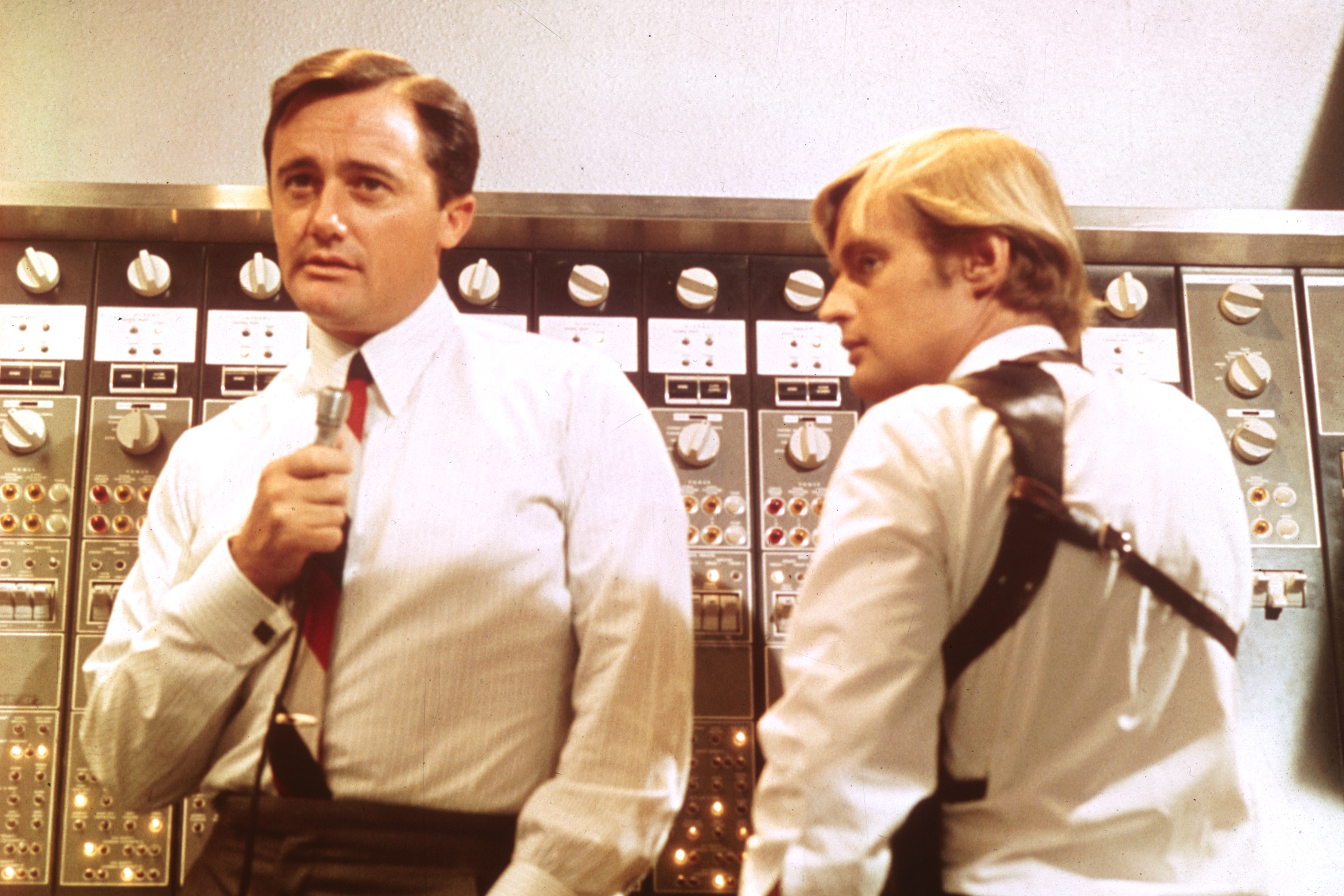
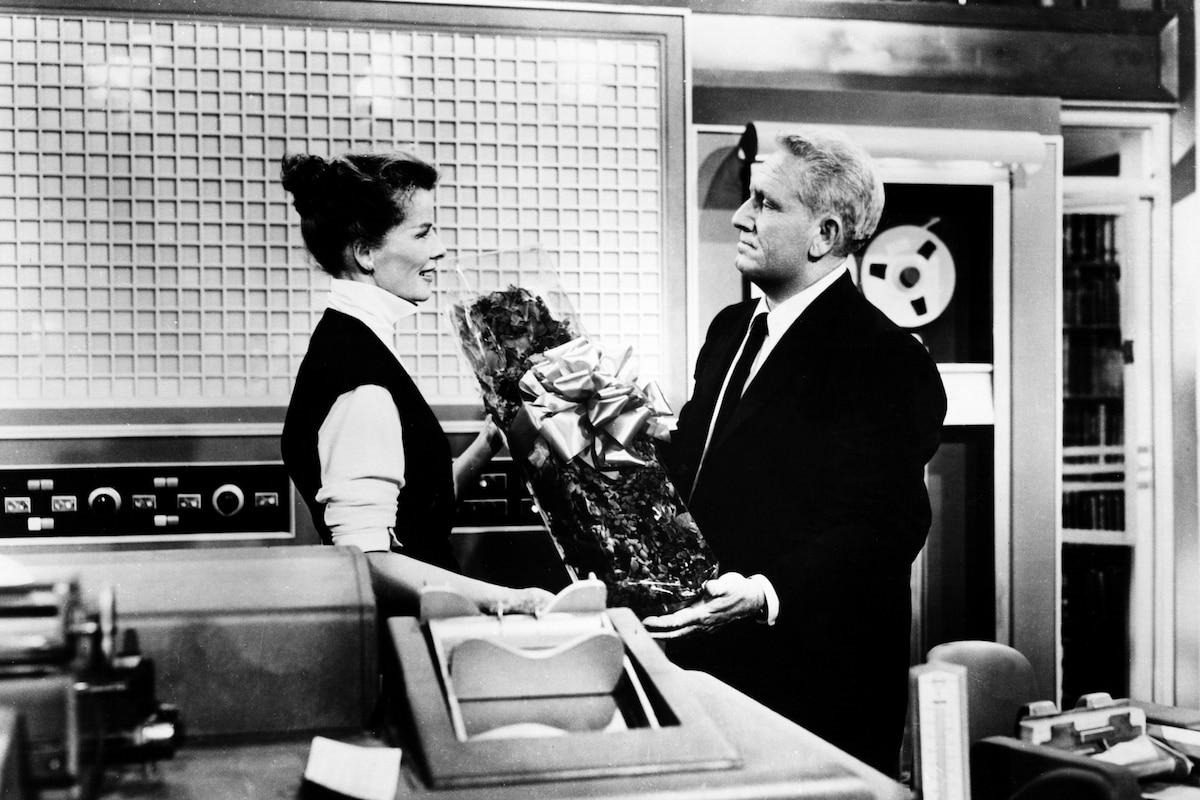
The mobile phones of today are basically mini-computers, so it’s hard to remember there was a time when computers were gigantic. Walter Lang’s Desk Set (1957) features such a colossal device, the EMERAC (Electromagnetic Memory and Research Arithmetic Calculator), nicknamed Emmy. Efficiency expert Richard (Spencer Tracy), Emmy’s inventor, deems the broadcast research library run by Bunny (Katharine Hepburn) a good candidate for Emmy’s services, creating an environment of uncertainty, trepidation and unintentionally humorous mishaps for Bunny and her team of expert researchers. As one of the first movies to examine the professional ramifications of the computer, Desk Set captured the very real apprehension that the technology could supplant humans in the workforce, a fear that has moved into the realm of reality today.
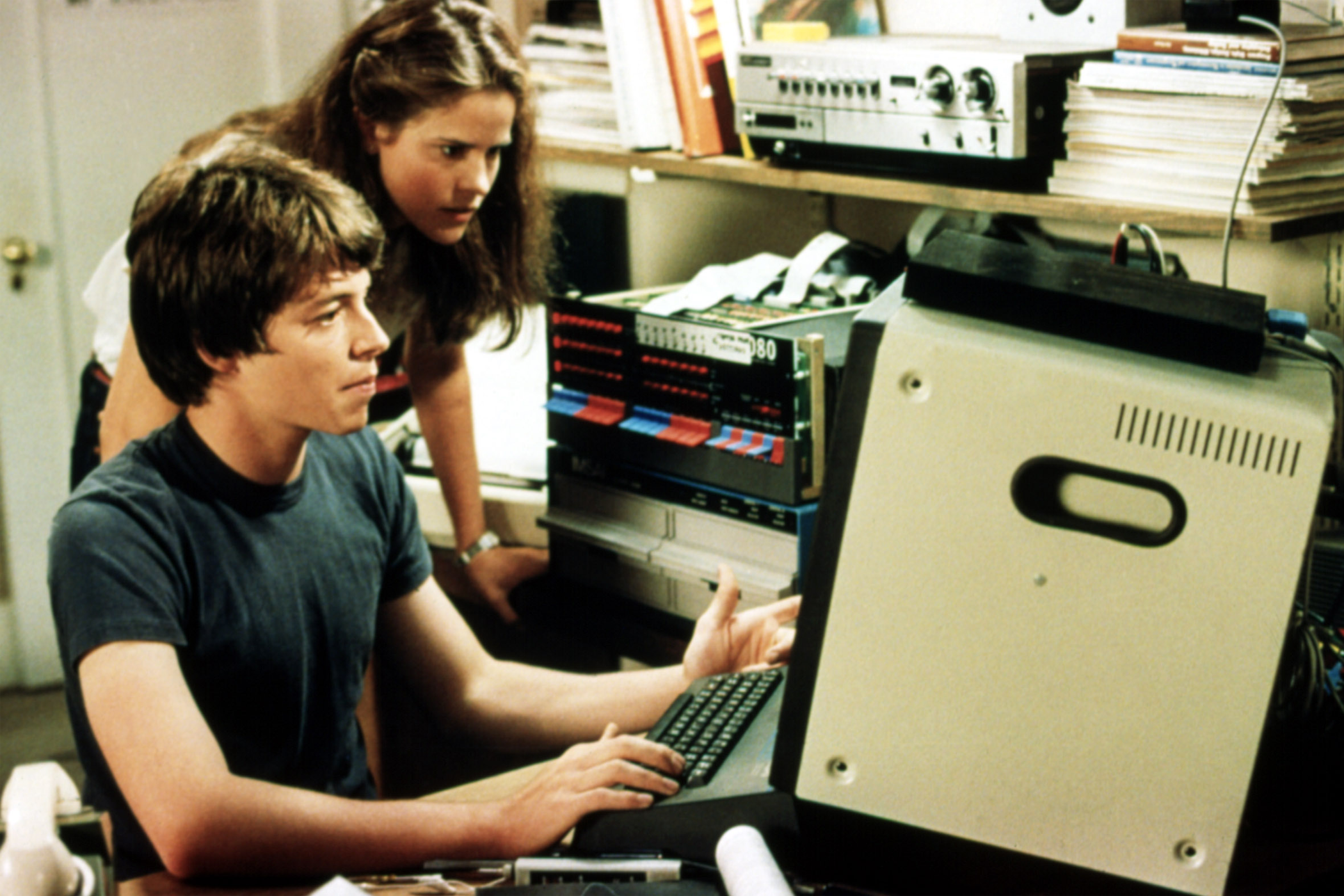
Almost three decades later, John Badham’s WarGames (1983) featured a supercomputer—a much more chilling one. The thriller stars Matthew Broderick as David, a teen hacker who inadvertently infiltrates a military computer, WOPR (War Operation Plan Response), programmed to run various war simulations as a way to remove humans from the process in the event of a nuclear attack. When the innocent game David believes that he’s playing threatens to set WWIII in motion, he and classmate Jennifer (Ally Sheedy) team up with reclusive computer scientist Dr. Falken (John Wood) to save the world. From David’s home computer setup featuring eight-inch floppy disks to the limitations of WOPR’s high-stakes modeling and early AI learning, WarGames cautions against the dangers of fully eliminating humans from the equation.
In a category all its own, at least in TCM’s low tech spotlight, is the Automat. These classic eateries, featuring coin-operated, self-serve compartments with a variety of prepared food, could conceivably have shown up in any other movie in this spotlight, given their long history. Lisa Hurwitz’s documentary The Automat (2021) traces the saga of the famous Horn & Hardart chain, from their first store in Philadelphia in 1902 to the closure of their final New York City location in 1991, featuring memories from the likes of Mel Brooks, Ruth Bader Ginsburg, Colin Powell and Carl Reiner. The documentary mixes nostalgia with examples showcasing how democratic the automat was, appealing to and bringing together people from all walks of life.