November 8 and 15 | 4 Movies
David O. Selznick was a titan of classic Hollywood. His two greatest impacts of the era were arguably Gone with the Wind (1939) and Rebecca (1940). The former retains the title of the highest-grossing movie of all time (adjusted for inflation) and had a turbulent production where Selznick had to guide the epic through multiple directors, a massive budget and censors. In 1939, he brought British director Alfred Hitchcock stateside, earning a Best Picture award for the adaptation of Daphne Du Maurier’s romantic thriller starring Lawrence Olivier and Joan Fontaine.
These movies and other major hits have loomed large in the public consciousness since their release, alongside other Selznick hits like Dinner at Eight (1933), A Star Is Born (1937) and The Third Man (1949). But thanks to a collaboration between The Film Foundation and Disney, four movies from the Selznick Library have been restored and will play on TCM this November. These films, while they had varying levels of success at the time of their release, haven’t all persevered for the public like other Selznick features. These restorations will give current audiences a chance to appreciate some of the producer’s later work and provide a better understanding of his career and artistry.
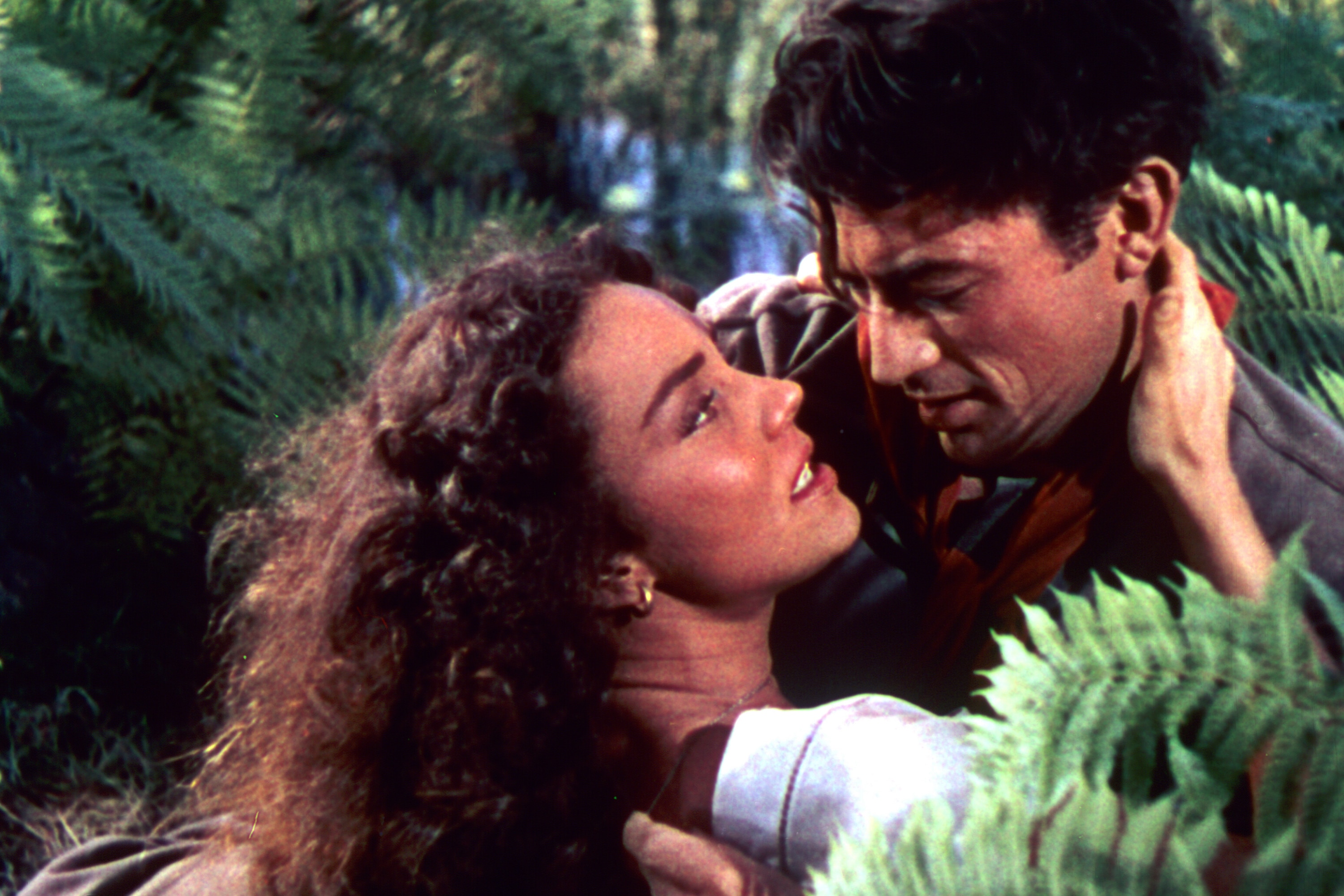
On Sunday, November 8th, TCM will kick off the evening with Gone to Earth (1950), released in the U.S. two years later as The Wild Heart. Based on the novel by Mary Webb and directed by the director-writer team of Michael Powell and Emeric Pressburger, the film stars Selznick’s wife Jennifer Jones as Hazel Woodus, a young woman who lives in the Shropshire countryside in 1897. She becomes caught in a love triangle between scheming squire Jack Reddin (David Farrar) and gentle, kindly minister Edward Marston (Cyril Cusack).
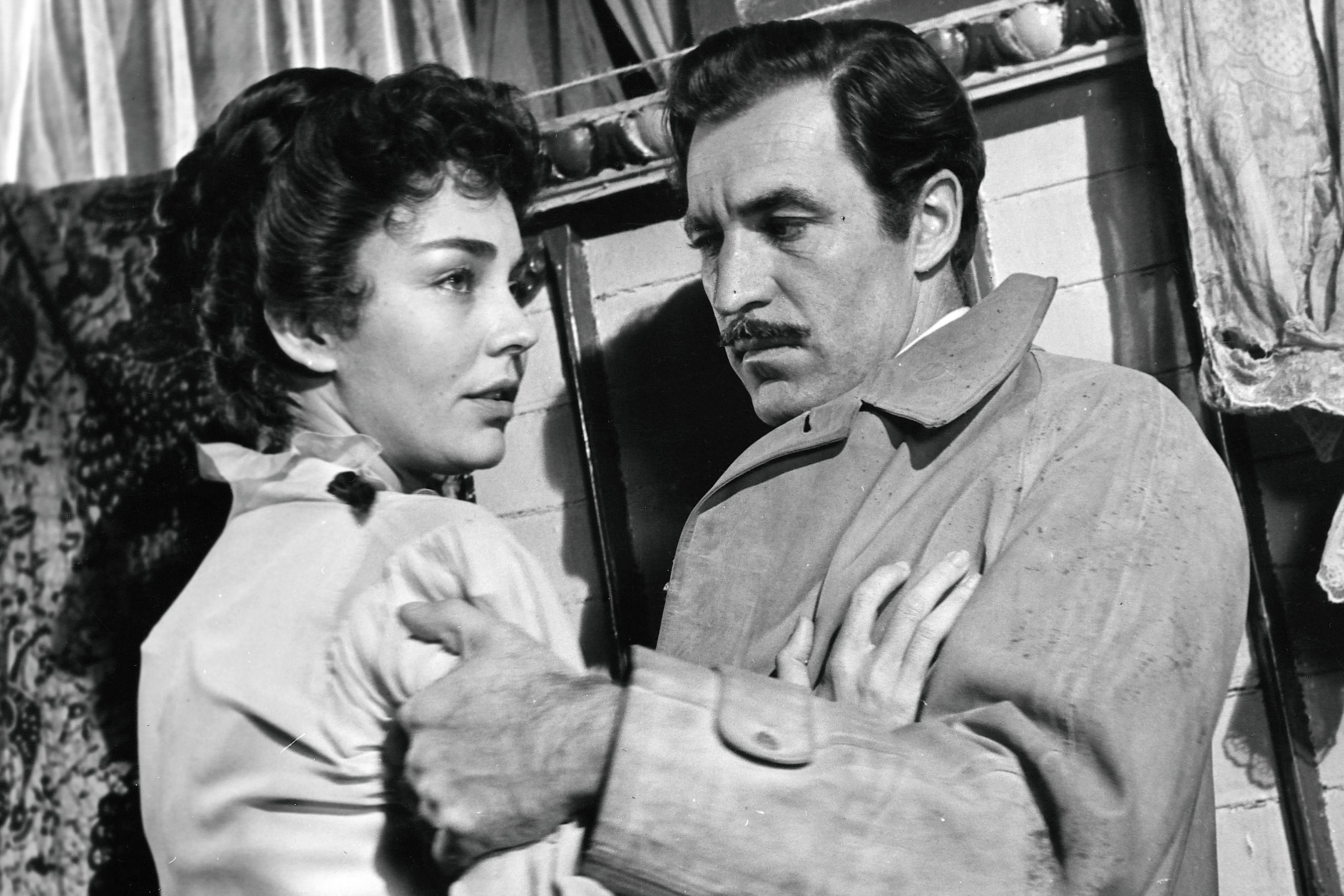
As usual with a Powell and Pressburger movie, the cinematography is stunning, as if Technicolor was made for the talents of Powell and Pressburger. Largely shot on location, the directors make the landscape come alive, which helps emphasize Hazel’s love of nature and how her protection of animals makes her a part of the wilderness rather than the domesticated world of the village. We see this land through Hazel’s eyes, and we understand what will be lost if she gives it up to live a “proper” life as a wife and mother. She finds herself torn between the stability, comfort and love provided by Edward and the wild, callous and mercurial affections provided by Jack. What it means to be “wild” and what it means to be “tamed” come alive through Jones’s fierce performance.
However, despite the excellent work by Powell and Pressburger as their own production company, The Archers, Selznick found himself dissatisfied with Gone to Earth. They had taken almost none of his rambling memos and notes, so Selznick chose to sue the directors to change the feature. However, after losing the court case, he still had the rights to change the American release. This led to Wild at Heart, where Rouben Mamoulian directed extra scenes including a prologue, more explanatory additions and more close-ups on Jones. He also removed scenes regardless of how useful they were to the plot. Wild at Heart was cut down to a scant 82 minutes, with narration to paper over the gaps.
Thankfully, TCM viewers will get to see Gone to Earth in its restored glory. Running at 110 minutes, this version not only lands all the emotional impact, but trusts the viewer to go along with Hazel’s journey, understanding that close-ups aren’t the only way to convey Jones’s terrific acting and the tension she holds at the center of the picture.
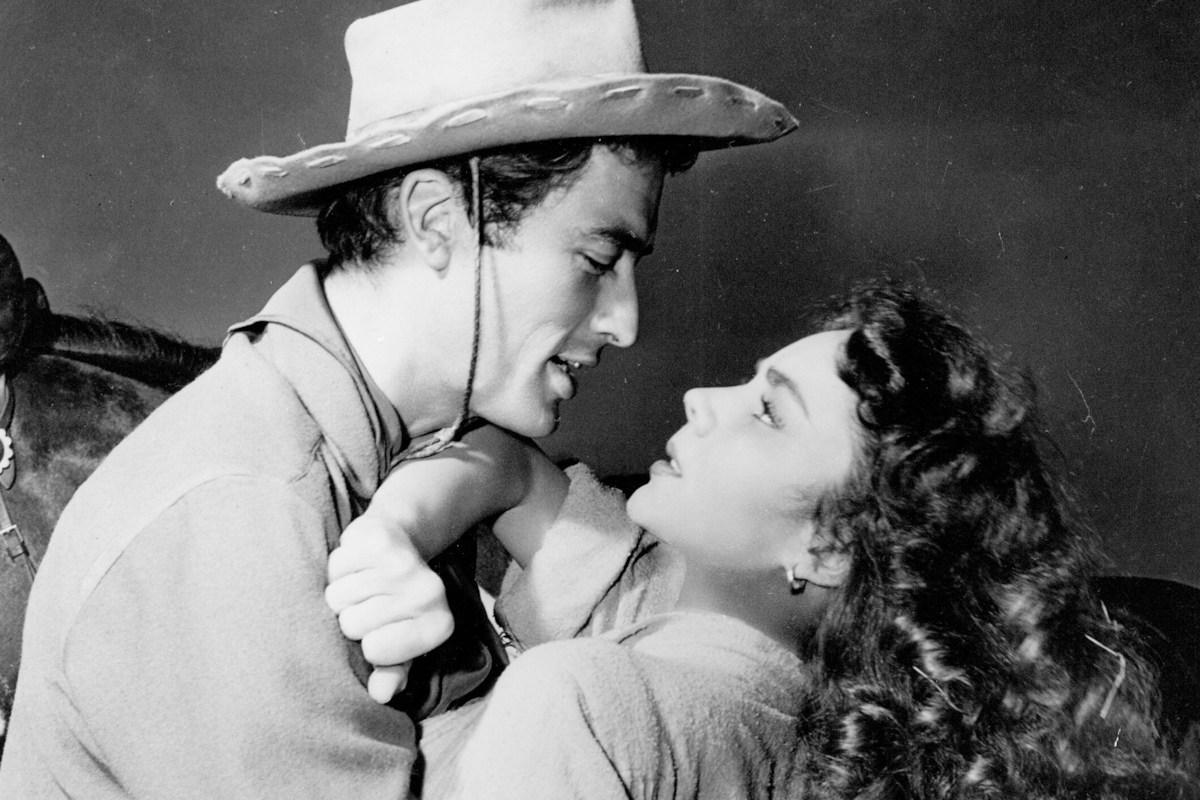
Viewers will also likely note the plot and thematic similarities in Gone to Earth and the night’s following feature, Duel in the Sun (1946). Jones plays Pearl Chavez, a young, biracial woman sent to live with his father’s old flame, Laura Belle (Lillian Gish), after her father (Herbert Marshall) is executed for murder. Once there, Pearl finds her affections torn between Laura’s sons: the upright, progressive Jesse McCanles (Joseph Cotton) and the brusque, violent Lewton “Lewt” McCanles (Gregory Peck). As the Western epic unfolds, Pearl’s pursuit of both men becomes a reflection of her self-esteem, with Jesse holding out a life of respectability and love, while Lewt represents jealousy and carnal desire.
Although Selznick and Jones were not yet married, they were in a relationship, and he saw the movie as a vehicle for her. Before Jones landed the role, the adaptation was in the hands of author Niven Busch, who worked to produce it at RKO with Oliver H.P. Garrett writing the script. He originally wanted Veronica Lake for the lead role. He then offered it to Hedy Lamarr, but she couldn’t take the part due to her pregnancy. When the role was finally offered to Jones, Selznick became so demanding that RKO sold it to Selznick at a profit.
Due to Selznick’s erratic demands, numerous directors cycled in and out of the project. King Vidor received credit, but other filmmakers who worked on the movie included Josef von Sternberg, Sidney Franklin, William Dieterle and even Selznick himself. Perhaps the most impressive aspect of Duel in the Sun is that despite such a tumultuous production, it still coheres beautifully, leaning into the darkness of the post-war era and setting the template for the more textured turn the Western genre would take in the years ahead. Martin Scorsese cites it as the first movie he ever saw (he was six at the time), and he continues to revere it, utilizing its influence as recently as his 2023 movie Killers of the Flower Moon. Long out of print and unavailable to stream, this restoration on TCM offers viewers a rare chance to discover this gorgeous, thoughtful Western.
The following Sunday moves to two of Selznick’s movies with Alfred Hitchcock. The first is Spellbound (1945), which emerged from Selznick’s positive experiences with psychoanalysis, along with the novel “The House of Dr. Edwardes” as its starting point. Ingrid Bergman stars as Dr. Constance Petersen, a psychoanalyst who is drawn to her new colleague, Dr. Anthony Edwardes (Gregory Peck). However, as they begin to fall for each other, they both discover dark secrets in his past, which he had forgotten due to amnesia.
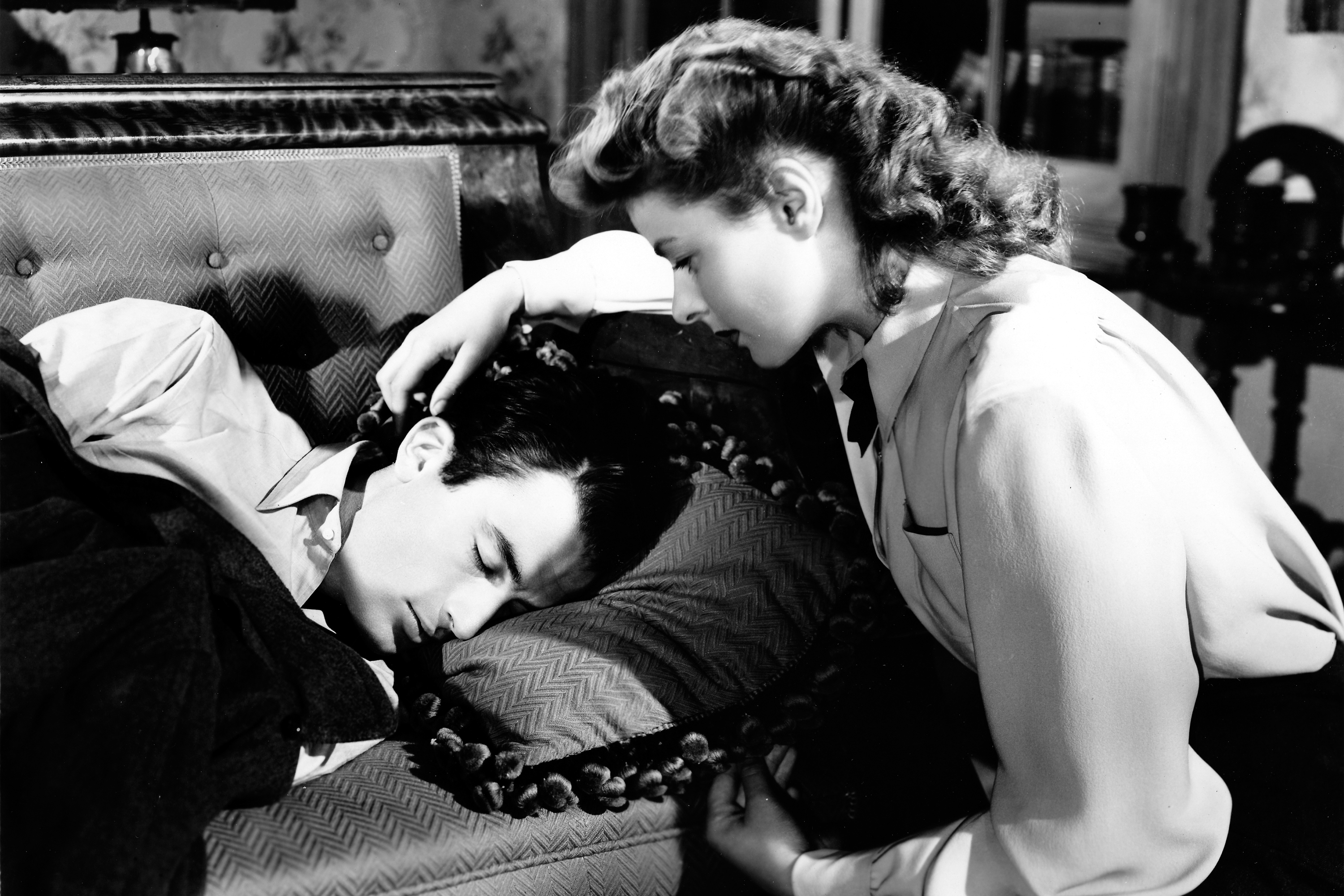
Spellbound features some of Hitchcock’s most exciting visuals, a prelude to how he would push his camera and psychosexual designs further in the decades to come. Here, Hitchcock teamed with surrealist artist Salvador Dalí to craft the dream sequences, and while large chunks were filmed (Bergman claimed they originally shot 20 minutes), only about two minutes made it to the finished feature. Still, these exciting renderings, along with pushing the envelope of representing psychological repression on screen, make it a fascinating watch within the context of Hitchcock’s larger filmography.
The seven-year contract Hitchcock signed with Selznick would end with The Paradine Case (1947), a courtroom drama the producer had sought to adapt since 1933 from Robert Smythe Hichens’ novel back when he still worked at MGM. The story follows the trial of Mrs. Maddalena Anna Paradine (Alida Valli), who is accused of murdering her older, wealthy husband. Her solicitor, Sir Simon Flaquer (Charles Coburn) hires a young barrister, Anthony Keane (Gregory Peck), to defend her, but he soon becomes attracted to his alluring client.
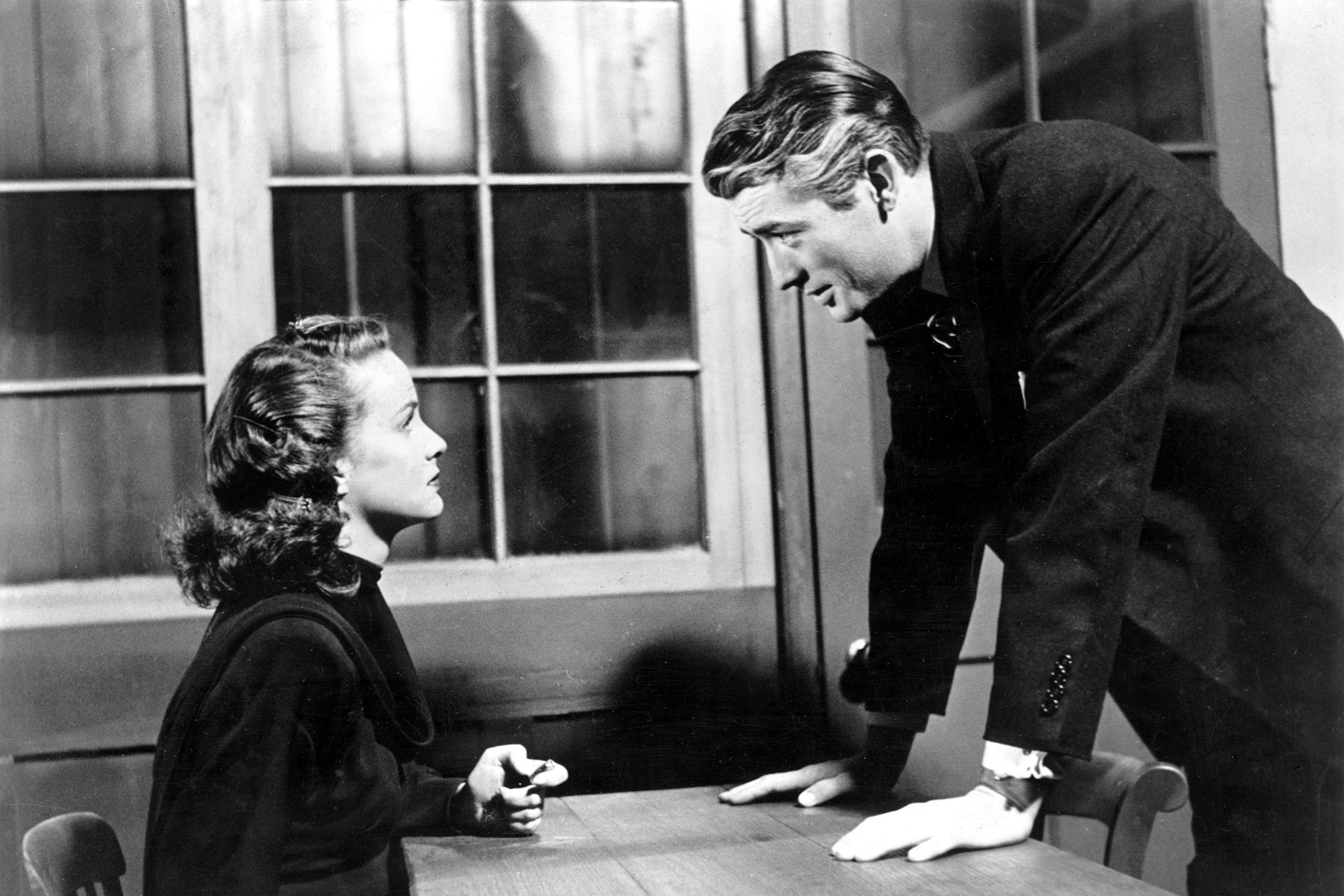
Given its difficulty to find, this restoration provides a useful B-side in Hitchcock’s vast filmography, especially as it’s wedged between two of his bigger, more beloved movies: Notorious (1946) and Rope (1948). While Hitchcock isn’t checked out, you can feel he’s meeting a contractual obligation rather than responding to the material. Spellbound at least allowed Hitchcock to return to his familiar territory of repressed sexual desires, but Selznick’s constant interference and demands for reshoots on The Paradine Case sent the budget ballooning, while Peck observed that the British filmmaker “seemed really bored with the whole thing.”
And yet it, along with these other three features, is well worth watching for the insight they provide into Selznick as perhaps the best example of a Golden Era Hollywood producer outside of Irving J. Thalberg. It’s not that Selznick’s choices were always correct or the most conducive to a well-managed feature, but his work here highlights his creative drive and impulse of a Golden Age producer rather than the current conception of the role which is more a manager of logistics and leaves the artistic decision to the director. With these restorations, audiences can now see Selznick’s flaws and lesser-known hits rather than only knowing him from his greatest achievements. These four films are not only interesting works on their own merits, but they help to illuminate an impressive, complicated figure in Hollywood history.
