Tuesdays in November | 31 Movies
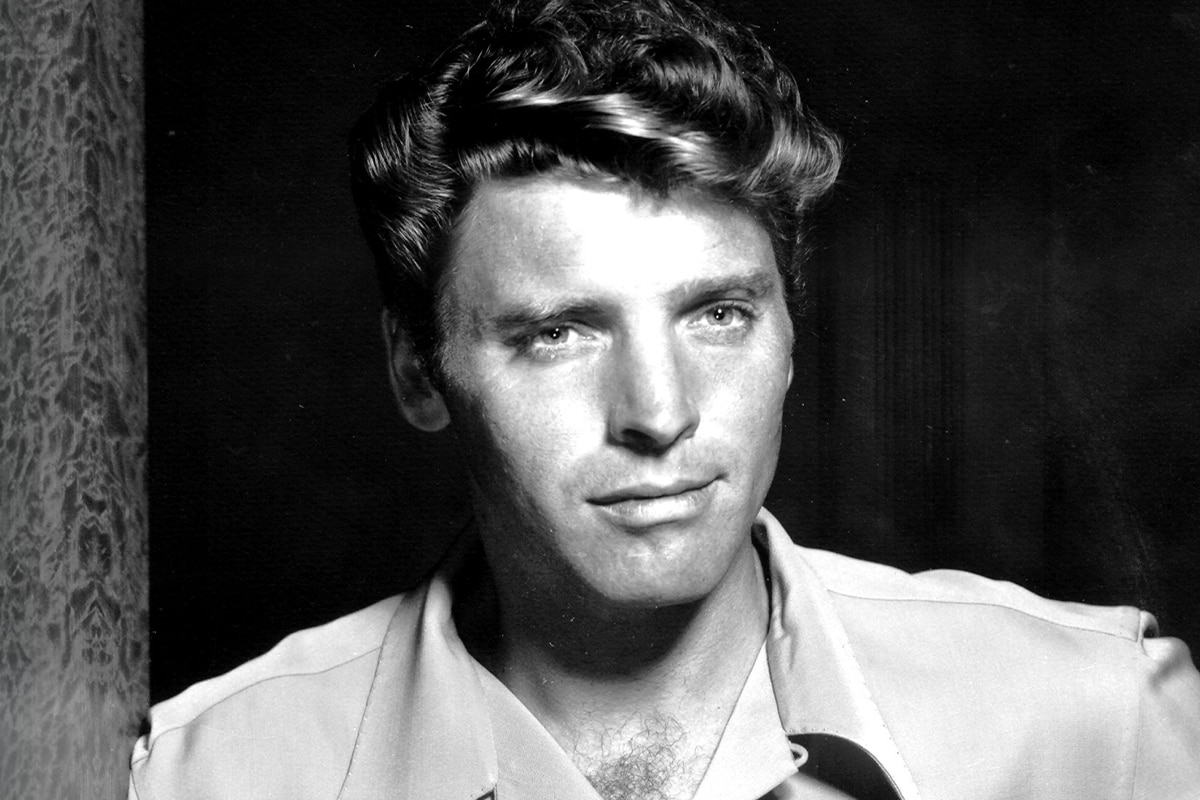
Performers who retain their stardom over many years are often credited with the ability to reinvent themselves, adapting their public images, acting styles and project choices to the changing times and tastes. Burt Lancaster, who rose to stardom quickly after World War II and remained at the top of his field until being sidelined by a stroke in 1990, made similar changes and adaptations from one phase of his career to another. He didn’t achieve his longevity by reinvention as much as by expanding his skills and choices over the decades, incorporating earlier personas, character types and methods into his later work. Thus, the sensitive, doomed protagonist of his 1940s films noir informed his approach to the rugged, athletic action hero of Ten Tall Men (1951); the tanned, muscular beauty of the swashbuckler The Crimson Pirate (1952); the aged small-time hood in the arthouse drama Atlantic City (1980); could still deliver the thrills in The Train (1964); and was very much alive in the toned middle-aged man at the center of the social drama The Swimmer (1968).
Lancaster’s background also played a big part in his ever-evolving artistic development. Born in 1913 to working-class offspring of Irish immigrants, he was a tough kid running loose on the streets of East Harlem at an early age. His experiences there gave him a good basis for the first phase of his career, playing hard-luck cases in some of the best films noir of the period. After service in World War II (significantly, as a USO entertainer), Lancaster returned to New York, where he was soon appearing on Broadway in a war drama. His performance and stage presence caught the attention of Hollywood agent Harold Hecht, who promised him big opportunities in the movies, including the chance to produce their own pictures within five years.
Through Hecht, he met producer Hal B. Wallis, who cast him as a gangster’s henchman in Desert Fury (1947), but before this third-billed role hit the screen, he made his debut in The Killers (1946), adapted from an Ernest Hemingway short story. Lancaster, as doomed boxer The Swede, and co-star Ava Gardner, as one of the period’s most fatale of femmes, became overnight stars under the tense and atmospheric direction of Robert Siodmak, a master of the film noir style. Lancaster stayed in the genre almost exclusively for the remainder of the decade, appearing as the leader of a prison rebellion in Brute Force (1947), as Barbara Stanwyck’s scheming but ultimately repentant husband in Sorry, Wrong Number (1948) and as a fugitive in Kiss the Blood Off My Hands (1948).

He ended the decade with the essential noir Criss Cross (1949). Under Siodmak’s direction again, Lancaster finds himself on the wrong side of the law thanks to his devotion to another treacherous woman, played this time by Yvonne De Carlo. (There’s also an extra named Tony Curtis making his uncredited film debut in a night club scene; remember that guy for later.) The film received mixed reviews and middling box office at the time of its initial release, but it has been reappraised as a highly influential film noir and perfect example of the style. TCM’s resident noir expert, Eddie Muller, notes: "Robert Siodmak ... had a flair for compositions and camera movements ominous yet elegant. Images simultaneously enticing and foreboding are essential to noir, and Siodmak crafted them like nobody's business. From the first shot ... Siodmak infuses the drama with a dreaminess that gets under your skin like a narcotic."
As early as Brute Force, Lancaster’s movie posters were already showcasing his muscular physique, a physical feature that would be key to the next phase of his career as a swashbuckler and action star in the early 1950s. That era kicked off with Lancaster as a Robin Hood type of hero in medieval Italy in The Flame and the Arrow (1950), produced as Hecht had promised by Norma Productions, an early iteration of the company the two men formed. (Later in the decade, with the addition of screenwriter-producer James Hill, it would be renamed Hecht-Hill-Lancaster.)
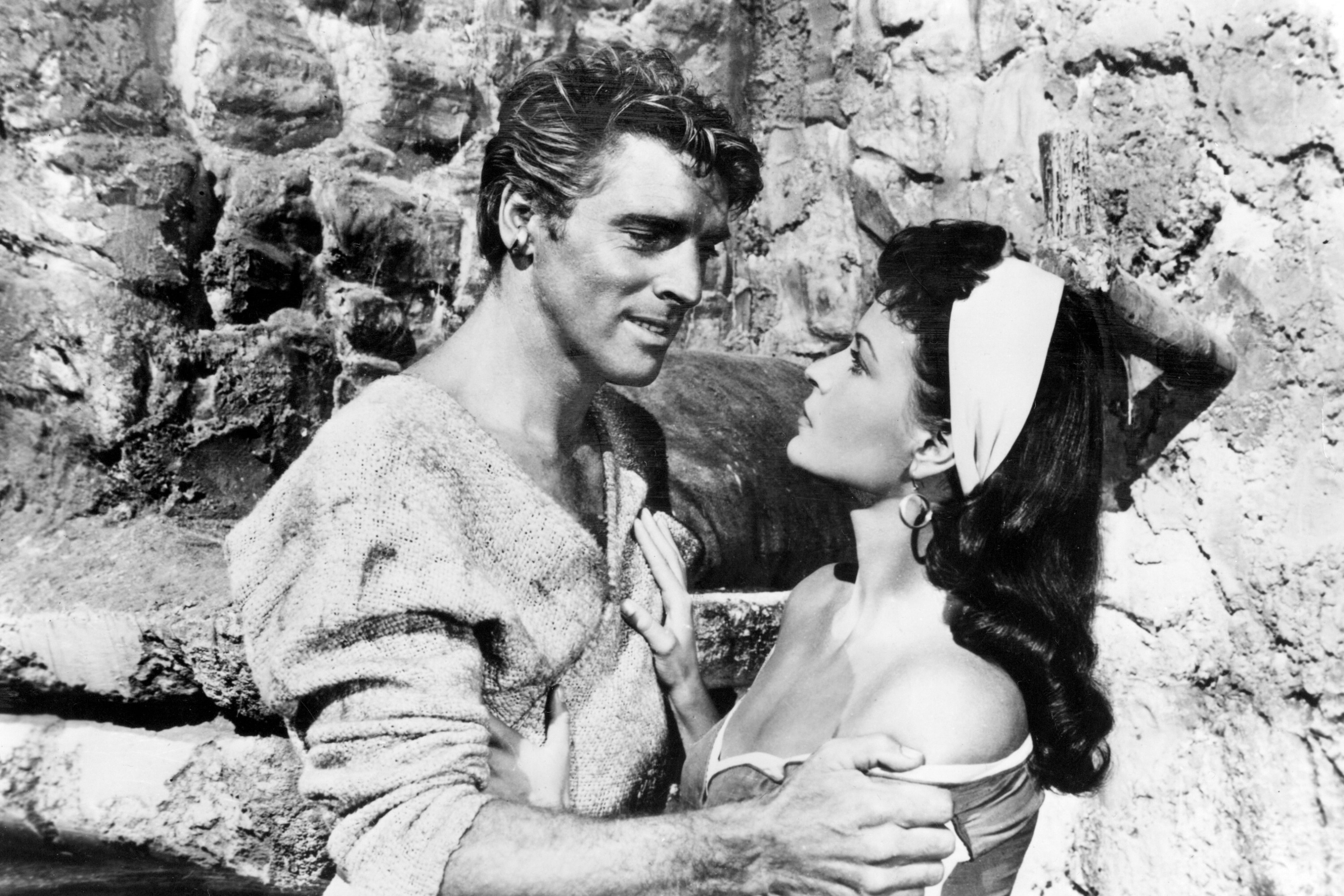
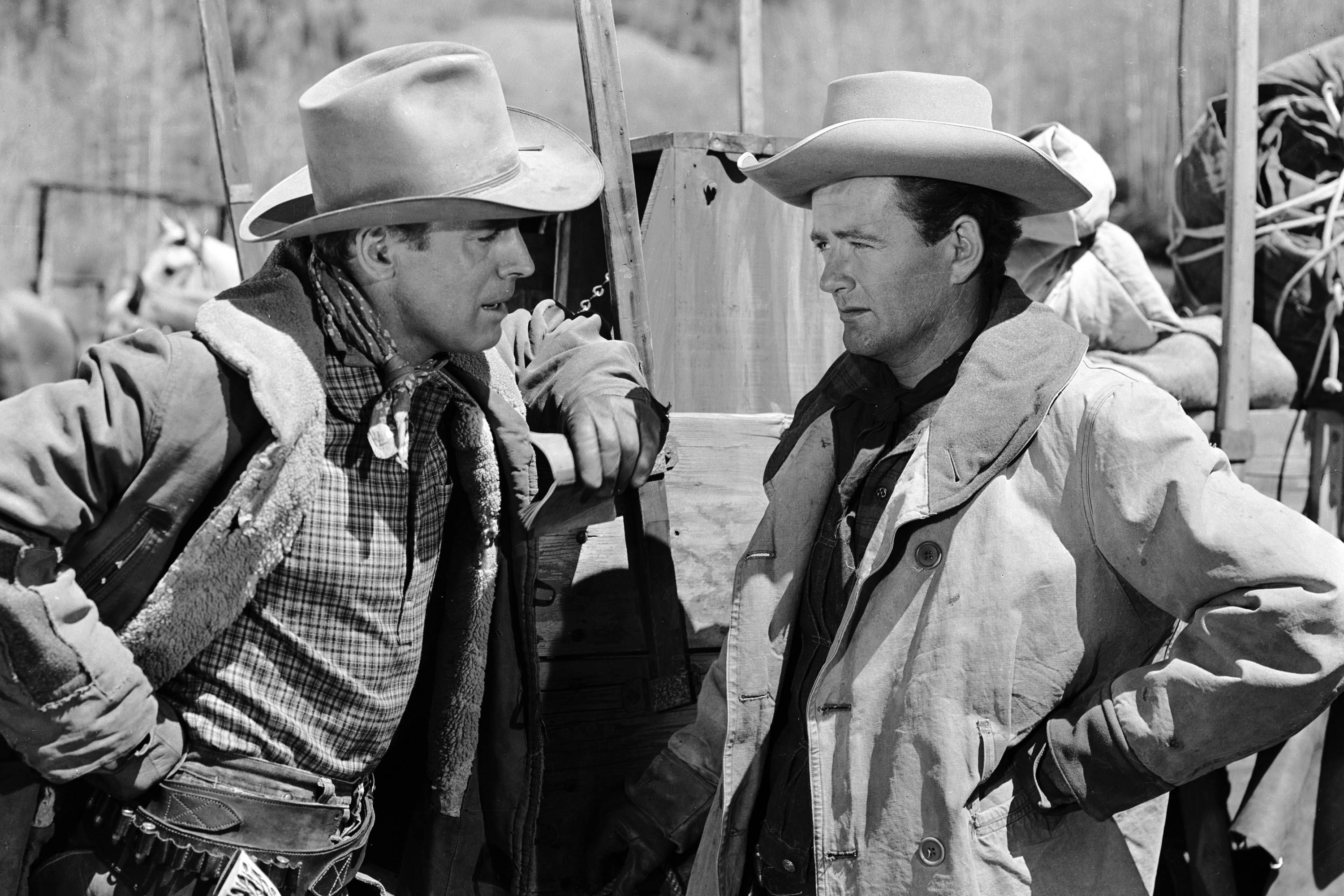
The company would also produce similar hits in this period, including the French Foreign Legion adventure Ten Tall Men and the South Seas-set His Majesty O’Keefe (1954). Lancaster also appeared in Vengeance Valley (1951), the first of several Westerns he would alternate with war movies for most of the rest of his career. But the biggest hit and most characteristic of this era of the actor’s career was The Crimson Pirate (1952), a seagoing adventure that cast Lancaster as a bit of a rogue and showcased his considerable athletic skills.
In his youth, Lancaster had shown a talent for gymnastics. In the early 1930s, he and childhood friend Nick Cravat formed an acrobatic act and worked at various circuses and in vaudeville until Lancaster suffered a hand injury in 1939, putting an end to their live performances. But the two remained lifelong friends and creative partners. The Crimson Pirate was the second time they worked together, not only as actors but as stunt coordinators; they would go on to appear in nine more pictures until the late 1970s. (Cravat also played the gremlin who terrorizes William Shatner from the wing of a plane in the famous “Twilight Zone” episode.) This over-the-top, tongue-in-cheek swashbuckler, the third and final collaboration between Lancaster and director Robert Siodmak, drew comparisons to the silent films of Douglas Fairbanks. The New York Times called it “a slam-bang, action-filled Technicolored lampoon.”
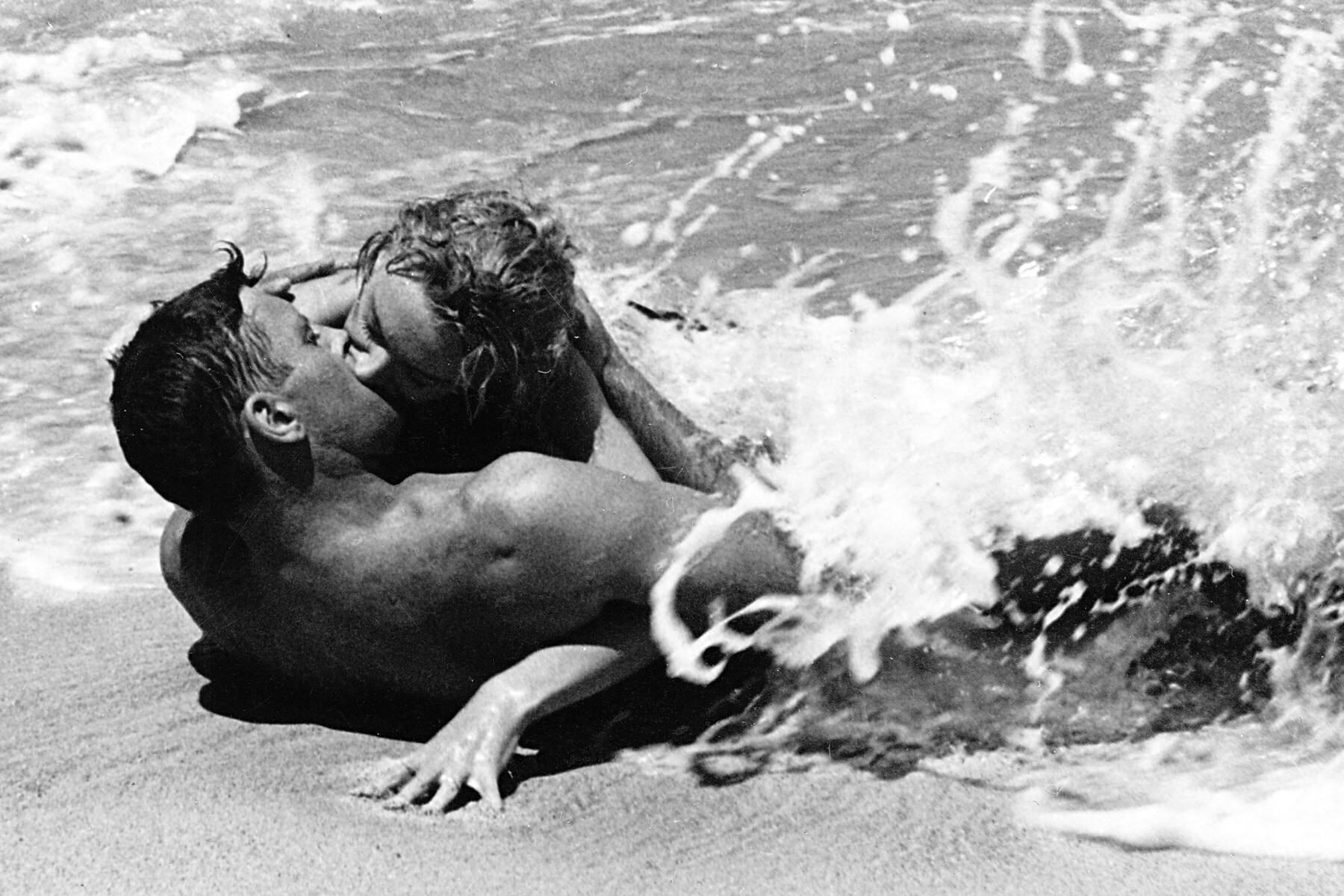
Never one to rest on his popularity or box-office laurels, however, the star was back in black-and-white the following year and entering a new phase of acclaimed dramatic work in prestige productions with From Here to Eternity (1953), the much-awarded epic based on James Jones National Book Award-winning 1951 novel about army life leading up to the bombing of Pearl Harbor. For good measure, though, director Fred Zinnemann managed to get his star back in a bathing suit, rolling around in the crashing surf with a hot-and-bothered Deborah Kerr. But while acknowledging his “muscles,” Variety’s review noted he “wallops” the role of a tough but compassionate sergeant with “a performance to which he gives depth of character.” It brought Lancaster his first of four Academy Award nominations.
He had previously established more formidable acting credentials in the kind of dramatic parts he would increasingly take on in the ‘50s and later, cast heavily against type as the alcoholic husband in the adaptation of William Inge’s play Come Back, Little Sheba (1952). The coming decades saw Lancaster in a wide range of roles in screen versions of noteworthy stage successes by Terrence Rattigan, Tennessee Williams and George Bernard Shaw, along with adaptations of stories by John Cheever (The Swimmer), Arthur Hailey (Airport, 1970) and Elmore Leonard (Valdez Is Coming, 1971). This last is one of several films he made that fall into the category of revisionist Western, films increasingly popular from the 1950s into the 1970s that subverted the tropes of traditional movie Westerns with more realistic settings, complex characterizations and ambiguous morality. As he had with film noir, Lancaster became something of a staple of this subgenre: Vera Cruz and Apache (both 1954), The Professionals (1966), Ulzana’s Raid (1972).
He returned to noir playing a thoroughly despicable newspaper columnist (modeled on Walter Winchell) in Sweet Smell of Success (1957), one of the nastiest, most cynical – and most compelling – films of the decade. As J.J. Hunsecker, an effete and bespectacled Lancaster runs roughshod over everyone, personally and professionally, especially the toadying publicist Sidney Falco, a career best performance by Tony Curtis (told you he’d pop back up). The two had played rivals for Gina Lollobrigida’s attention in the circus drama Trapeze (1956), but in the later movie the relationship is more toxic, the stakes are higher and the portrait of show business types much darker. The deeply shadowed cinematography by James Wong Howe, jazz score by Elmer Bernstein and performances by a stellar cast of character actors playing sleazy hangers-on and strivers made for a critically acclaimed but commercially disappointing release. Its reputation has grown in the years since, and in 1993 it was chosen for preservation in the National Film Archives of the Library of Congress.
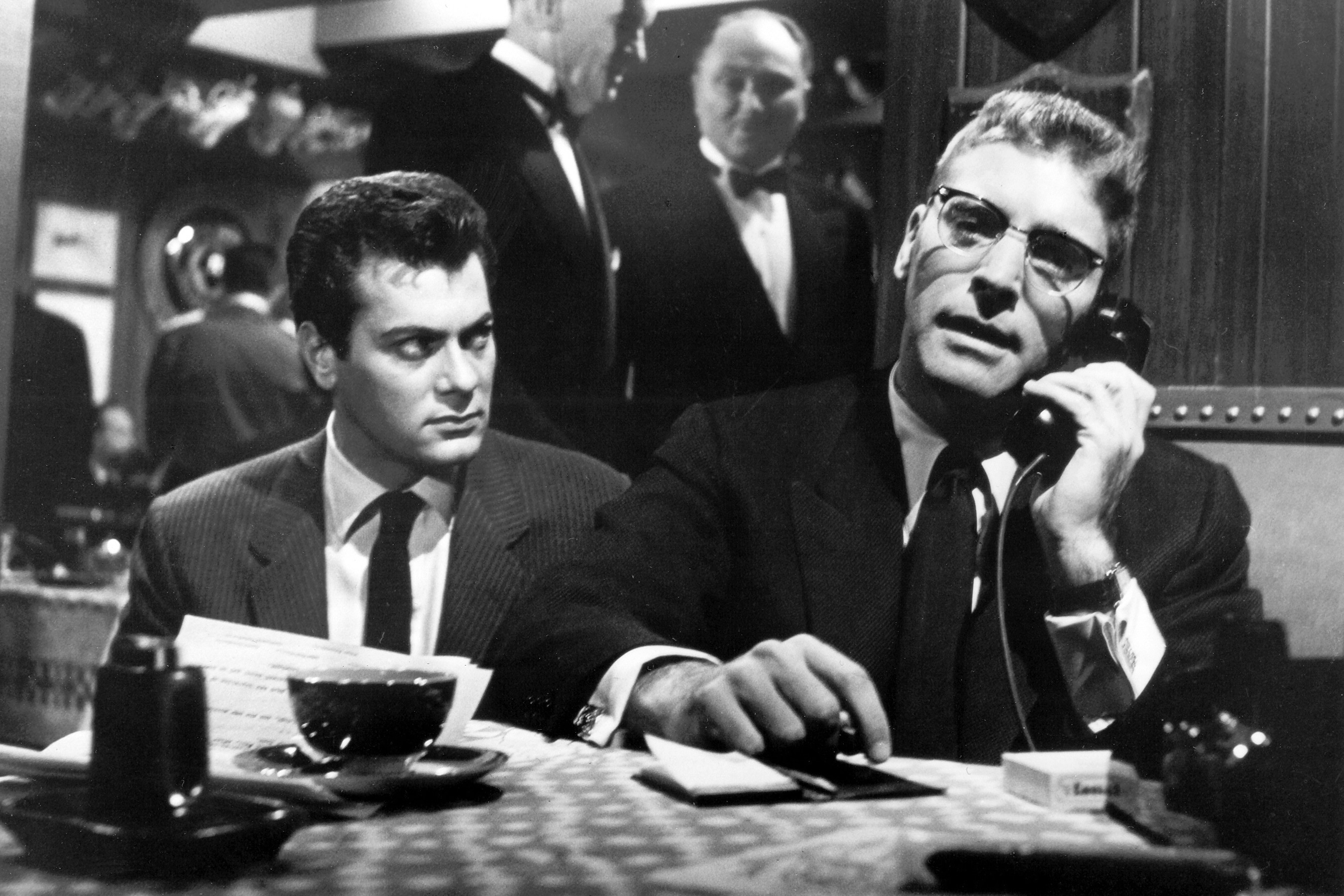
After a disastrous preview of the picture, tensions ran so high in the Hecht-Hill-Lancaster team they almost threatened to derail any further collaborations. Lancaster briefly struck out on his own, forming a partnership with director Richard Brooks to bring Sinclair Lewis’ novel (or at least the parts that survived the adaptation) Elmer Gantry (1960) to the screen. Initially reluctant to take on the role of a charismatic con-man evangelist, Lancaster won a Best Actor Academy Award. Despite its near implosion, Hecht-Hill-Lancaster more or less held together for several more years, culminating in Lancaster’s third Oscar nomination for Birdman of Alcatraz (1962).
In his later years, Lancaster shifted gears once again, playing a wide range of roles in acclaimed international and independent productions. He was much in demand by many of the world’s greatest directors of the time, including Robert Altman (Buffalo Bill and the Indians, 1976), Bernardo Bertolucci (1900, 1976), Luchino Visconti (The Leopard, 1963; Conversation Piece, 1974), John Cassavetes (A Child Is Waiting, 1963) and Bill Forsyth (Local Hero, 1983). Approaching 70 years old, he gave what may be the greatest performance of his career in Louis Malle’s elegiac Atlantic City. With only glimpses of the trademark Lancaster toothy smile, gleaming musculature and boundless energy, he nevertheless brought to bear everything he had incorporated in his impressive acting career: steely intelligence and vulnerable sensitivity, a romantic nature blended with bursts of tough guy bravado and a melancholy longing with a hint of his once-appealing sexuality.
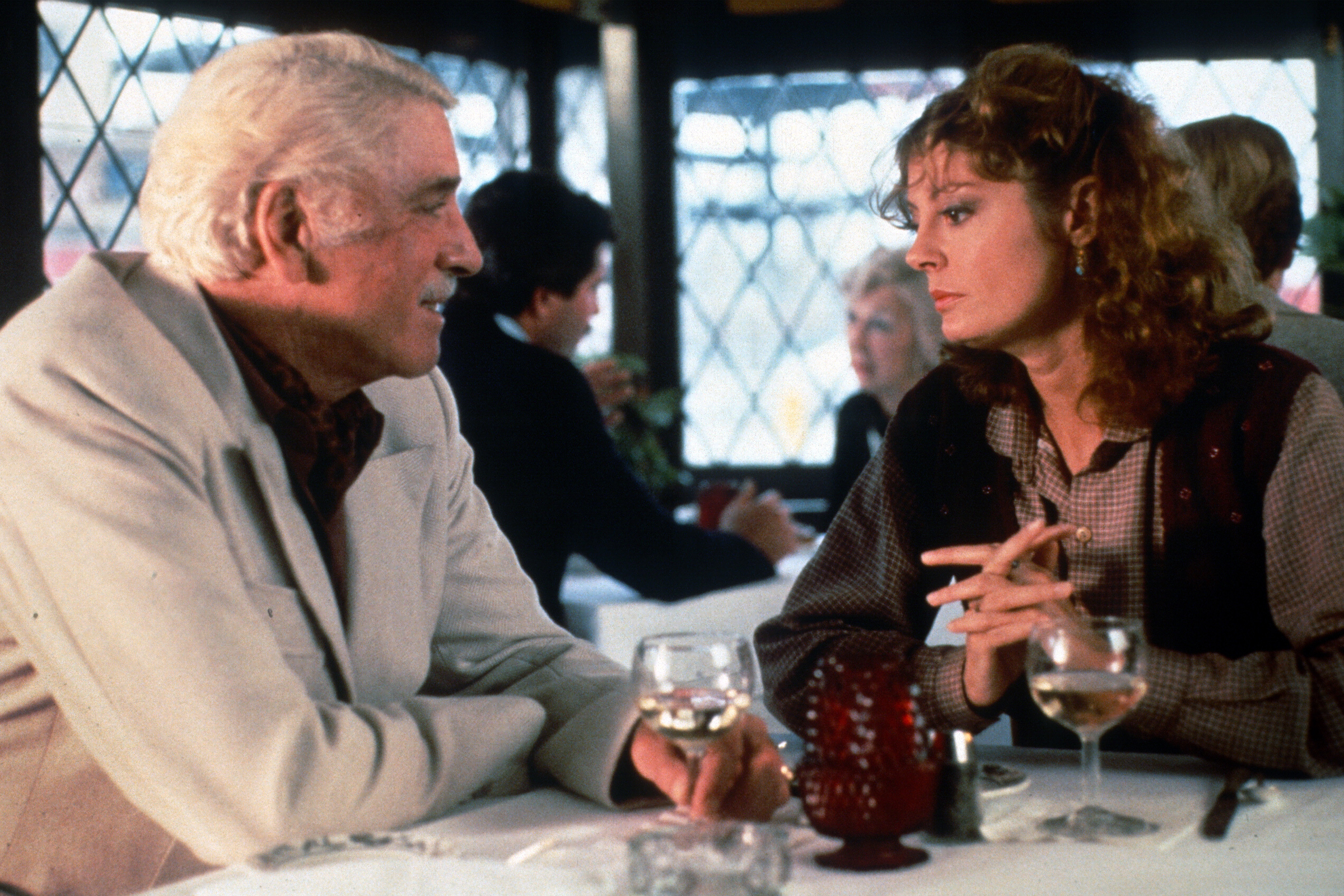
Burt Lancaster made 10 more films afterwards before a debilitating stroke ended his acting career and a series of heart attacks took his life in 1994 at the age of 80. He was voted 19th in the American Film Institute survey of American cinema’s greatest male stars, two slots below his close friend Kirk Douglas, with whom he made seven pictures, including their memorable pairing as Wyatt Earp and Doc Holliday in Gunfight at the O.K. Corral (1957).