Mondays in November | 23 movies
Before television, the only way for audiences to see big bands was in person or at the movies. Short subjects of jazz orchestras performing a few numbers had been common since the advent of sound, but as swing music came to the fore of popular musical culture, Hollywood started to make more feature-length films that incorporated the bands—and superstar bandleaders—who made that music. Monday nights in November, you’ll be dancing in your living room as TCM showcases 23 such films, almost all of which were produced during the World War II and immediate postwar era.
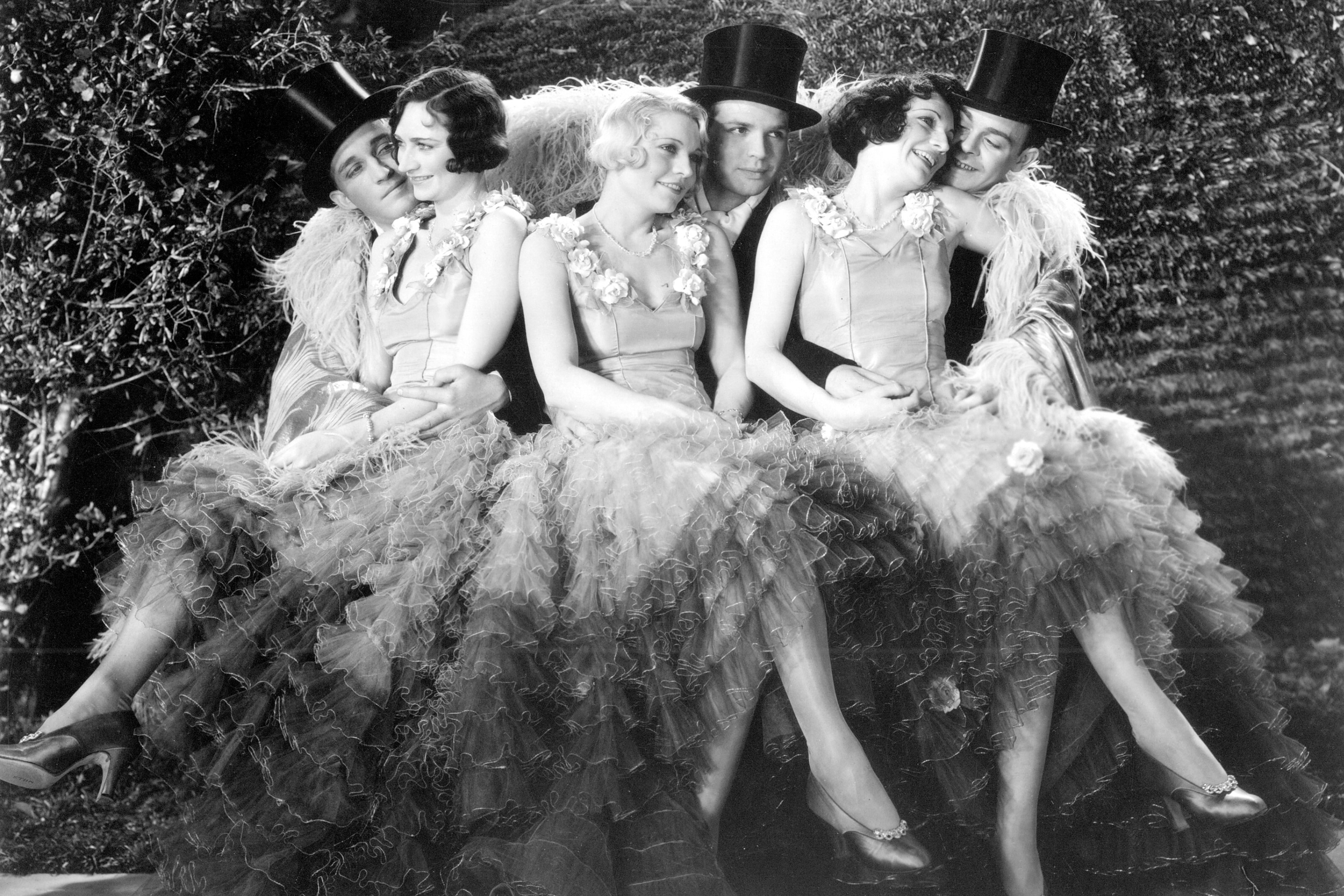
Night one is devoted mainly to musical revues with little in the way of plot. The first, King of Jazz (1930), has no narrative at all, just musical performances separated by comic sketches. Its title refers to Paul Whiteman, perhaps the single most popular bandleader of the 1920s. A press agent had christened him the “King of Jazz,” which Whiteman knew was not exactly true, but the title helped his band remain hot with audiences well into the 1940s. The film is also notable for being produced by Universal in two-strip Technicolor and containing the first-ever Technicolor animated sequence. Further, it introduced Bing Crosby to the screen as a member of Whiteman’s vocal trio The Rhythm Boys (along with Harry Barris and Al Rinker). Directed by first-timer John Murray Anderson, an experienced director of off-Broadway stage revues, King of Jazz is a unique artifact of its time. For decades considered a lost film, it was later magnificently restored and inducted into the National Film Registry.
Next are three WWII morale boosters known for their abundance of movie star cameos and big-band showcases. Hollywood Canteen (1944) is named for the real-life nightclub where film stars danced with servicemen. A slight plot of two soldiers visiting the club provides an excuse for appearances by Joan Crawford, Joan Leslie, Eleanor Parker, Peter Lorre, Ida Lupino and many more. Jimmy Dorsey and his band back the vocalists and have one number to themselves, the Jelly Roll Morton showstopper “King Porter Stomp.” Roy Rogers is also on hand to sing “Don’t Fence Me In” with the Sons of the Pioneers. The film’s profits were donated by Warner Bros. to the actual Hollywood Canteen, just as the studio had done a year earlier with the similar Thank Your Lucky Stars (1943). That film provides a showcase for bandleader Spike Jones and His City Slickers, known for their anarchistic musical slant.
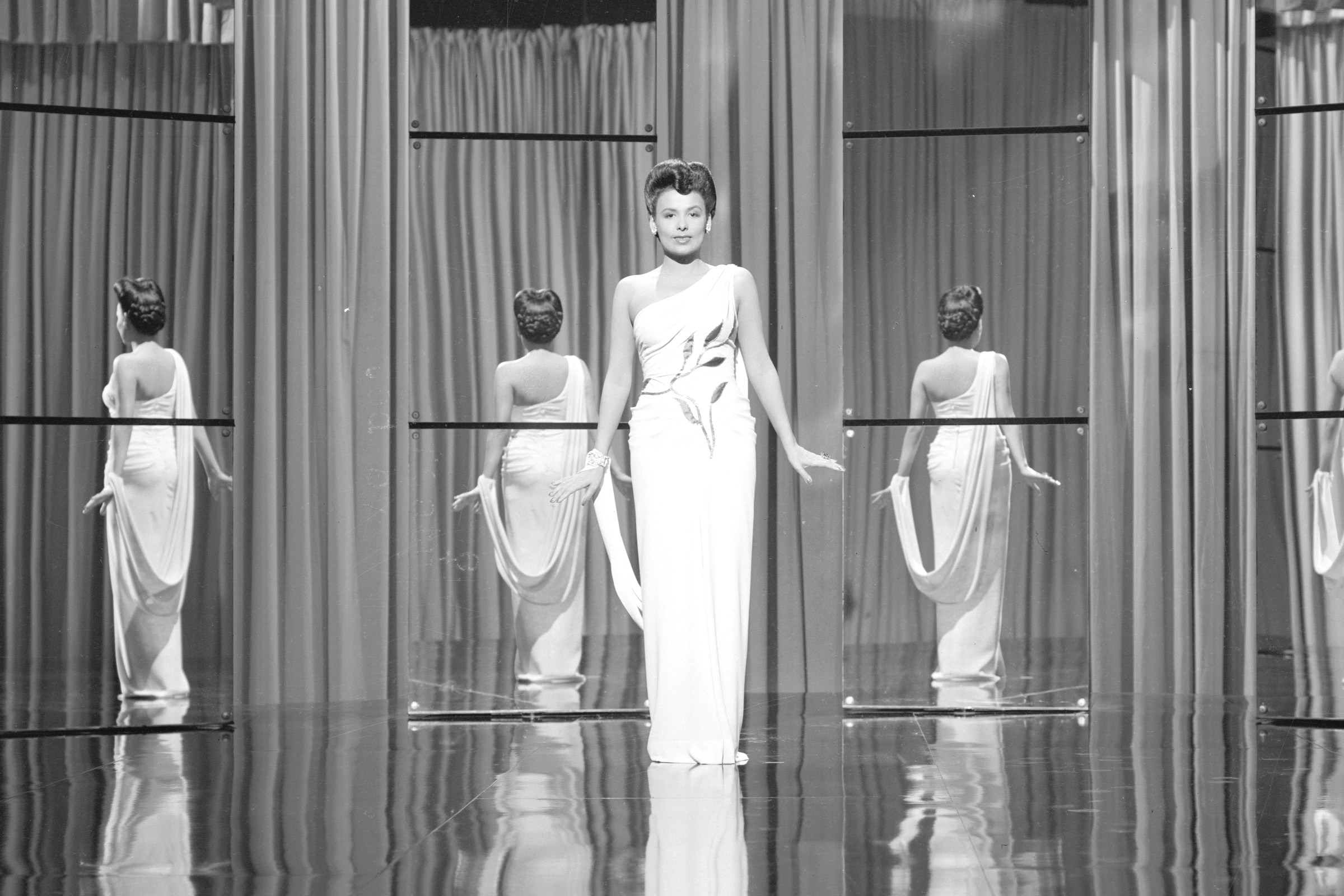
MGM’s Thousands Cheer (1943) features Gene Kelly and Mary Astor in acting roles and the likes of Judy Garland, Mickey Rooney and Lucille Ball as guest stars. Bandleaders on hand are Kay Kyser, one of the most popular in the country, Bob Crosby (Bing’s brother) and the sensational Benny Carter, an African-American alto-saxophonist and trumpeter who led a swing band and was known primarily to Black audiences. A standout number is “Honeysuckle Rose,” written by Fats Waller, performed by Lena Horne and Benny Carter’s band, and directed (uncredited) by Vincente Minnelli. Universal’s Private Buckaroo (1942), meanwhile, is light on star cameos but heavy on swing music from bandleader Harry James and the pleasing vocal harmonies of the Andrews Sisters, all of whose careers were significantly boosted by the film.
Night two launches with two movies featuring the immensely popular bandleader Glenn Miller, who, like Whiteman and others, was the equivalent of a major rock star today. (As jazz historian Mark Cantor has said, “People didn’t go to a big band because of the vocalist, unless it was someone like Frank Sinatra. They went to see the band.”) Miller had appeared in an earlier film and a musical short, but Sun Valley Serenade (1941) was the first feature to showcase his orchestra and use Miller himself as an integral part of the narrative. This was a big deal and a huge draw to audiences, as the Glenn Miller Orchestra was the number one band in America at the time. Among their great songs here are “In the Mood,” “Moonlight Serenade,” “I Know Why” and a spectacular new one: “Chattanooga Choo Choo,” which later went on to become the first record to be certified gold in 1958, with sales of 1.2 million. It garnered an Oscar nomination and is performed in the film by Dorothy Dandridge and the Nicholas Brothers in a show-stopping routine.
The film was such a hit that Fox quickly turned out a follow-up, Orchestra Wives (1942), again featuring the Glenn Miller Orchestra, here playing the songs of Mack Gordon and Harry Warren. As before, Miller has a prominent role, and the Nicholas Brothers dance sensationally to “(I’ve Got a Gal in) Kalamazoo.” In both of these films, the Glenn Miller Orchestra is at the peak of its fame and ability; two years later, Miller would be dead in a still-unexplained plane crash over the English Channel. One member of Glenn Miller’s original band, trumpeter Ray Anthony, later became a bandleader himself and is currently 104 years old.
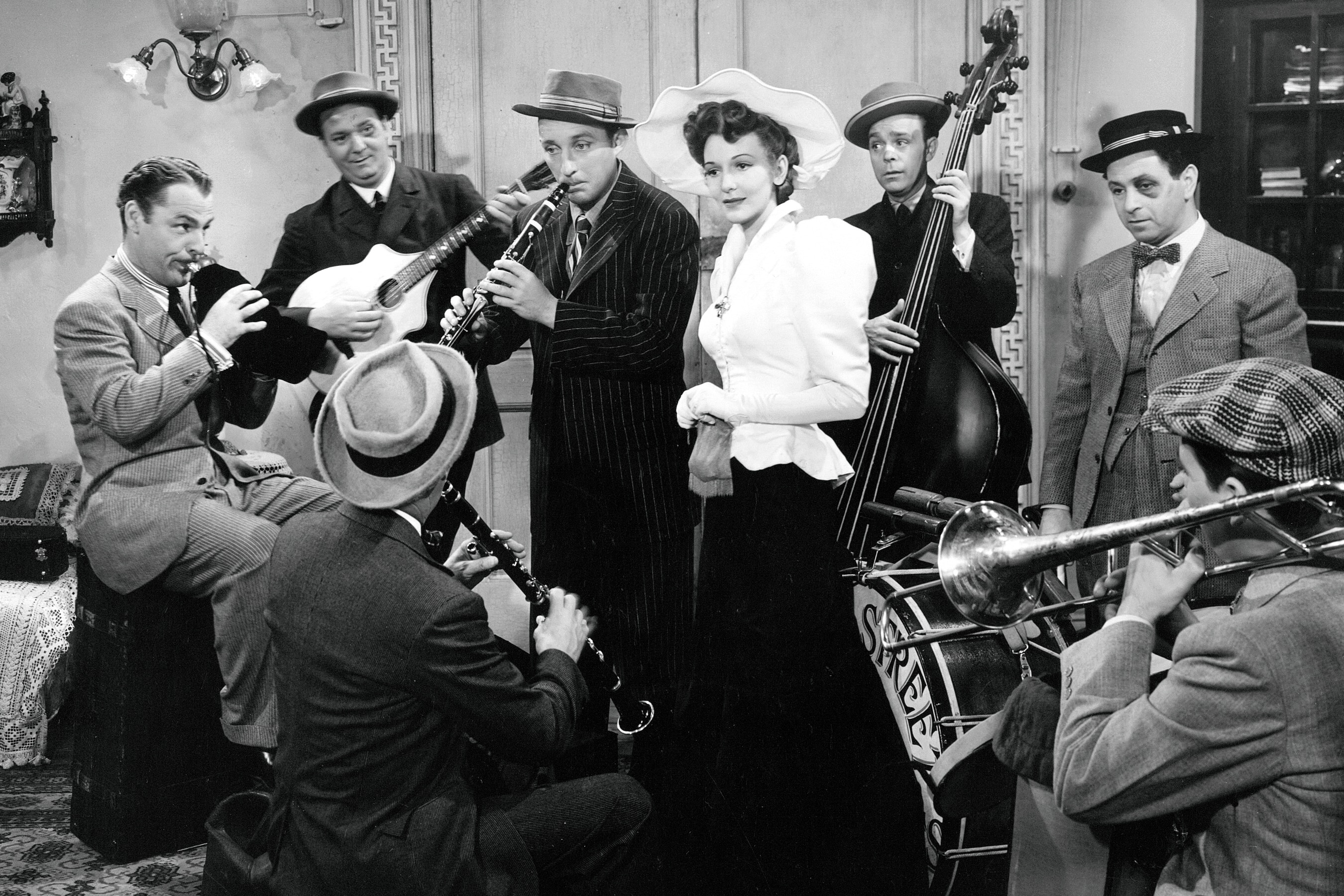
Paramount’s Birth of the Blues (1941) stars Bing Crosby in the story of a clarinetist who becomes a bandleader, but the real-life bandleader onscreen is Jack Teagarden, who had started as a jazz trombonist and became best known later in the decade as a member of Louis Armstrong’s All-Stars. Here, he performs several numbers with his orchestra, including the Johnny Mercer standout “The Waiter, the Porter and the Upstairs Maid,” in which Teagarden, also a vocalist, sings with Crosby and Mary Martin.
Judy Garland and Mickey Rooney appeared in 10 films together, but only four featured them as a musical team, and two of those are next. Girl Crazy (1943) was based on a hit 1930 Broadway show with music and lyrics by George and Ira Gershwin. For the film, bandleader Tommy Dorsey reshaped the Gershwin music to accommodate the public taste for swing music, and his orchestra backs up many songs and gets one to itself: “Fascinating Rhythm.” Strike Up the Band (1940) borrowed the title of another old Gershwin stage hit but is otherwise unrelated to that show. Paul Whiteman and His Orchestra back Rooney and Garland, mostly with songs by Roger Edens.
In Pot o’ Gold (1941), bandleader Horace Heidt and his Musical Knights, a fairly popular dance band, appear as themselves in a story of James Stewart and Paulette Goddard launching a radio show featuring that band. The movie was based on an actual radio program in which $1,000 was given away every week. Savaged by critics, the film is an interesting curiosity. Louis B. Mayer loaned Stewart (who had just won an Oscar for The Philadelphia Story, 1940) to this film’s independent producer James Roosevelt, President Franklin D. Roosevelt’s eldest son, only because he figured it could be useful to have good relations with the president. Stewart and Goddard did not get along at all, and Stewart later called Pot o’ Gold the worst picture of his career.
Stewart fared much better in The Glenn Miller Story (1954), which kicks off night three. He plays the famed bandleader in a loose biopic directed by Anthony Mann, with whom Stewart worked eight times, mostly on Westerns. As Mann scholar Jeanine Basinger wrote, the movie “stands as one of the better musical biographies Hollywood ever made”—not because the film story was accurate (Stewart didn’t even look like the real-life Miller), but because it captured the feel of Miller’s music, and its effect on audiences, in such a warm, entertaining manner. Stewart and June Allyson display excellent chemistry as husband and wife, and a multitude of Miller songs are packed into the movie.
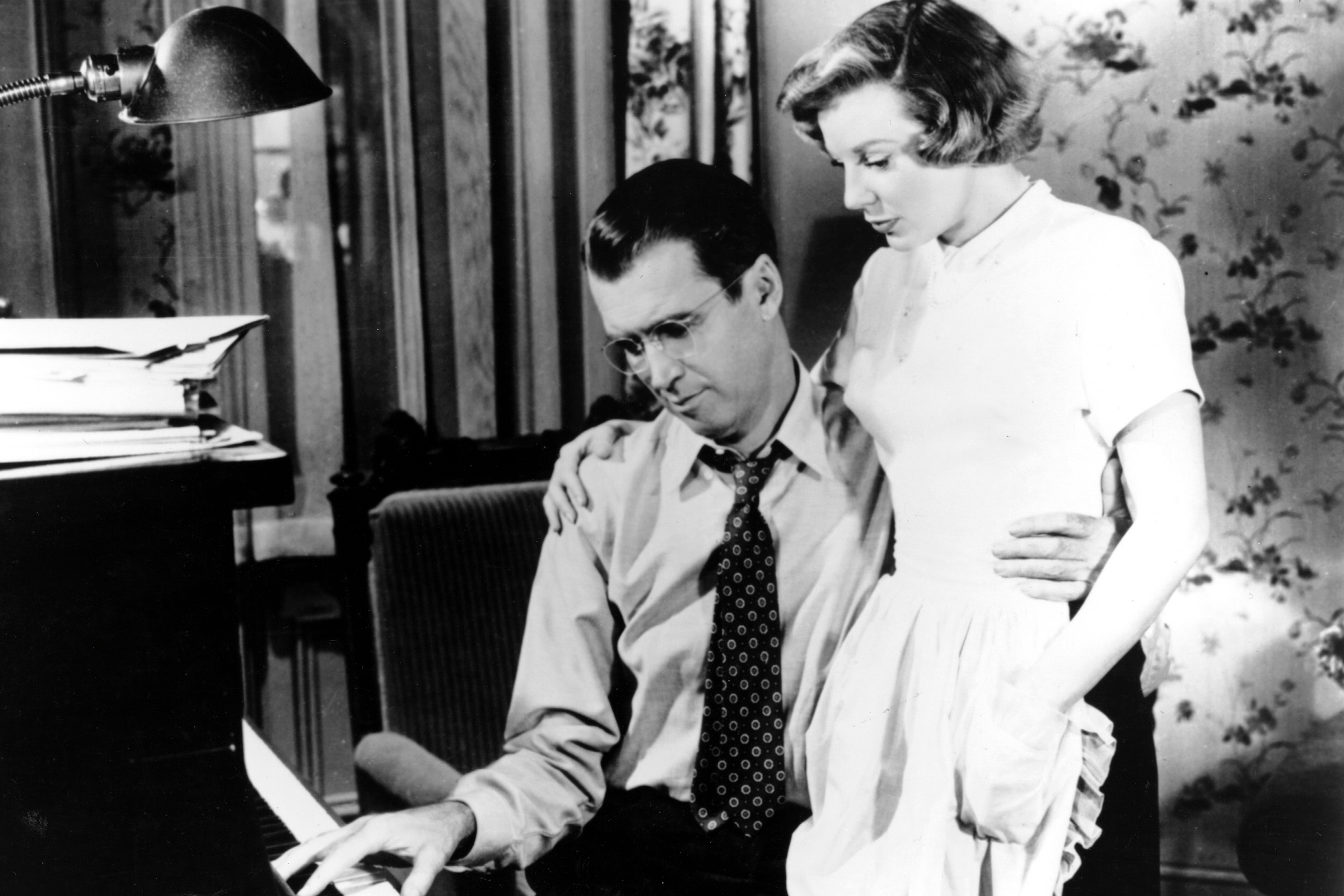
While The Glenn Miller Story became the fourth highest-grossing release of 1954, two other bandleader biopics fared a little less well but still have much to recommend. The Fabulous Dorseys (1947) stars the feuding brothers Tommy and Jimmy Dorsey as themselves. Their great music shines through the clichéd plot, with audience favorites like “Marie” and “Green Eyes” joined by a stunning jam session with the renowned jazz pianist Art Tatum. In the underrated The Gene Krupa Story (1957), Sal Mineo plays the great jazz drummer who descended into drug addiction. Krupa himself provided the drumming for the soundtrack, but Mineo actually learned to play the drums so he could believably sideline to what Krupa was playing.
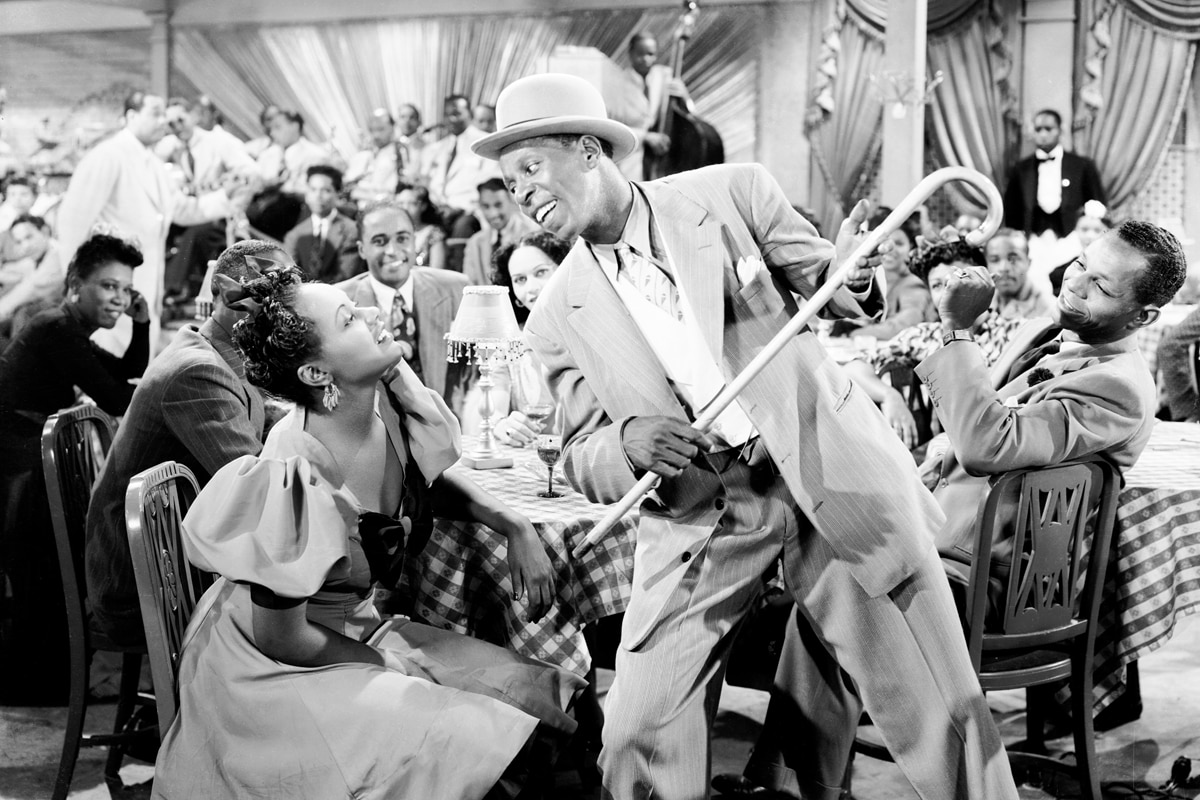
The night concludes with three all-Black cast musicals. MGM’s Cabin in the Sky (1943) represents the pinnacle of the style. Based on a 1940 Broadway hit and directed by Vincente Minnelli as his first feature, the film not only has an engaging plot but is jam-packed with first-rate talent. Bandleader Duke Ellington and his Orchestra are in top form, and highlights include Lena Horne and Eddie “Rochester” Anderson performing “Life is Full of Consequence,” the great John W. Bubbles tap dancing and singing “Shine,” and all the numbers with singing star Ethel Waters, who was imported from the Broadway show and steals the movie, especially with “Taking a Chance on Love” and the title song.
Reet, Petite, and Gone (1947) and Hi De Ho (1947), so-called “race films” that were made to be shown in segregated cinemas catering to Black audiences, were produced on very low budgets and have the slightest of plots. But their music is tops. Reet boasts wall-to-wall music from the grandfather of rhythm-and-blues, Louis Jordan, showcased here with His Tympany Five band. Hi De Ho is a vehicle for bandleader Cab Calloway. Both Jordan and Calloway were able to “crossover” and become quite popular with white audiences as well.
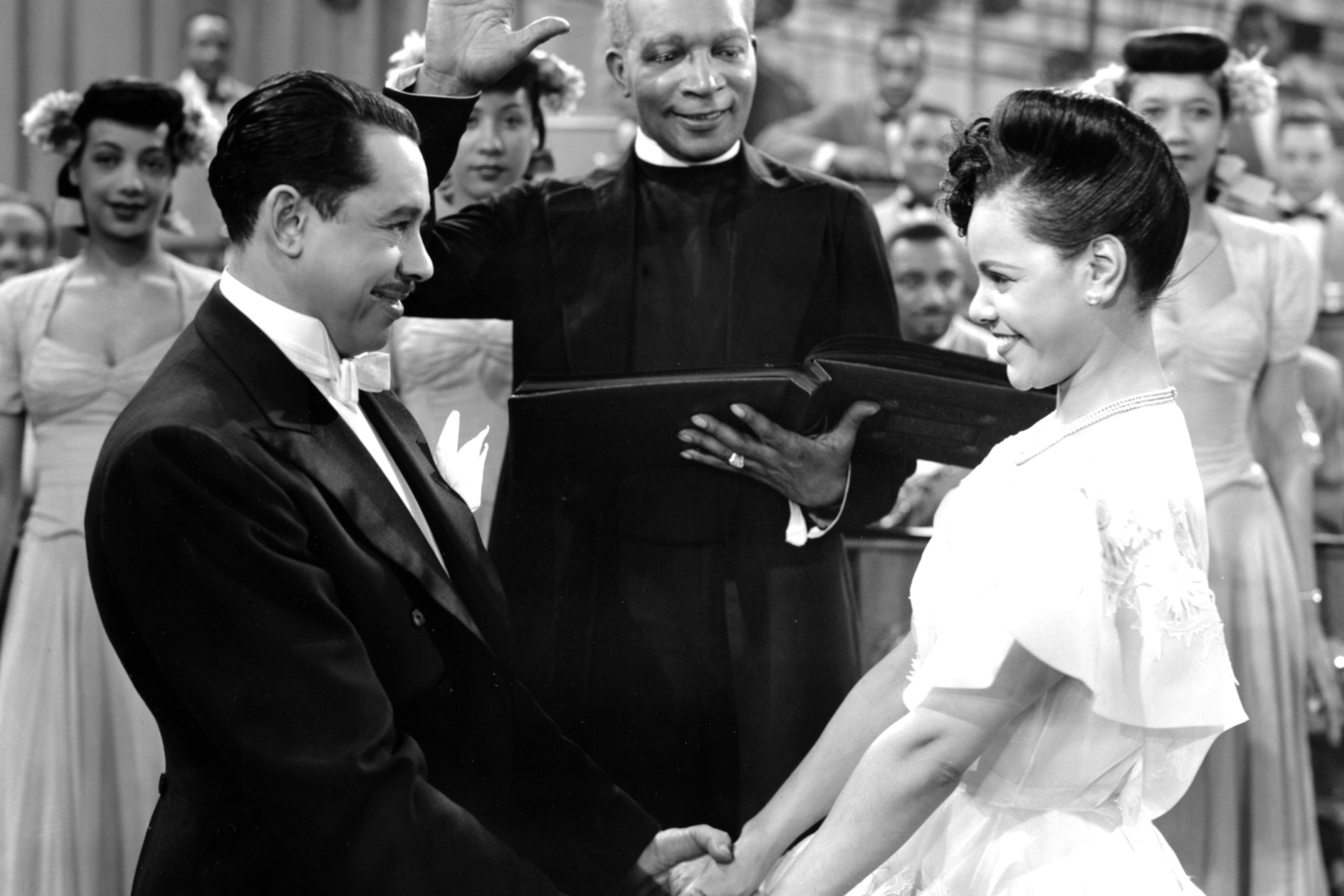
Launching night four is the other famous all-Black cast musical made by a major studio: Fox’s Stormy Weather (1943). It opened a few months after Cabin in the Sky and once again features Lena Horne, along with Cab Calloway and his orchestra, Bill “Bojangles” Robinson, Fats Waller, and the Nicholas Brothers in one of the best dance routines of their career. Other highlights are “I Can’t Give You Anything but Love, Baby,” performed by Horne and Robinson, and “Stormy Weather,” which became one of Horne’s signature songs.
A Song is Born (1948), a musical remake of Ball of Fire (1941) that serves as a Technicolor vehicle for Danny Kaye, has a plot involving the writing of a music encyclopedia, thereby setting up various jazz numbers (mostly in a jam session finale) from the likes of Benny Goodman, Louis Armstrong, Tommy Dorsey, Charlie Barnet and Lionel Hampton. Reveille with Beverly (1943) is one of the plums of this spotlight. Produced for next to nothing, it became one of Columbia’s biggest moneymakers of the year. It boasts a good story, a winning cast headlined by Ann Miller and a string of big band performances that defined the era. Count Basie leads his band in “One O’Clock Jump,” Duke Ellington leads “Take the ‘A’ Train” and Bob Crosby presents “Big Noise from Winnetka,” his greatest hit. Throw in Ann Miller’s great dance routines and special appearances by the Mills Brothers and Frank Sinatra, and Reveille with Beverly becomes, according to Mark Cantor, “one of the essential jazz films, bar none.”
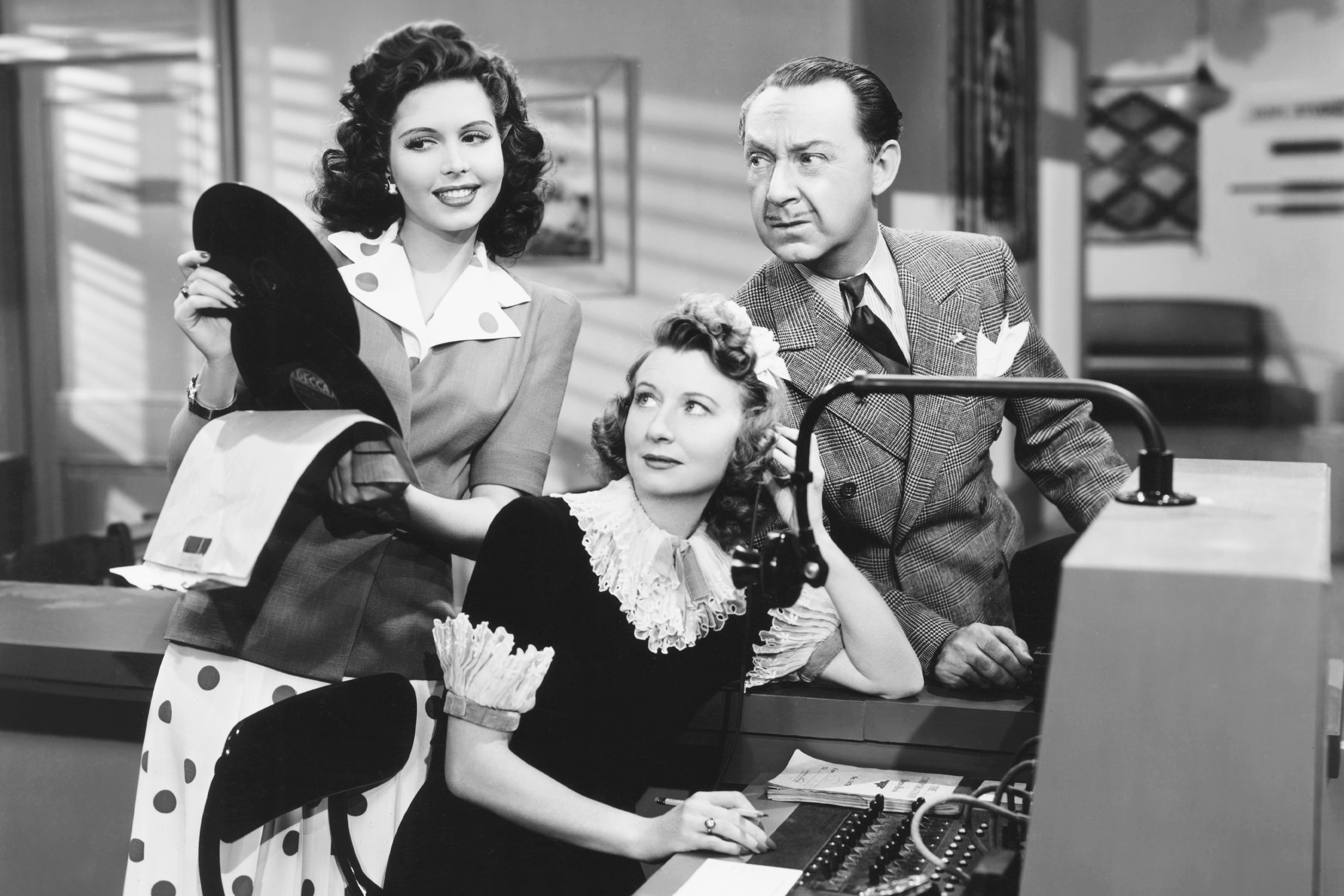
Another gem is Hollywood Hotel (1937), which boasts Benny Goodman and His Orchestra playing some of their most popular hits. Under Busby Berkeley’s direction, the film blends its musical and non-musical sections smoothly. The spotlight concludes with two musical vehicles for rising star Red Skelton. Ship Ahoy (1942) features the swinging sounds of Tommy Dorsey’s big band, the energetic dancing of Eleanor Powell and the striking voice of Frank Sinatra in only his second feature appearance. Drummer Buddy Rich joins the band for two numbers, including the huge hit “Hawaiian War Chant,” an old love song that Dorsey brilliantly transforms into swing. Dorsey’s band also fills the soundtrack of Du Barry Was a Lady (1943) with numerous Cole Porter songs. An interesting highlight is one of the most unusual songs Porter ever wrote: “Friendship,” a hillbilly-type number performed by Skelton, Gene Kelly, Lucille Ball and Virginia O’Brien. But Dorsey fans will especially jump to his rendition of Sy Oliver’s “Well, Git It!”, one of the Dorsey band’s most popular recordings.
Special thanks to jazz historian Mark Cantor for his invaluable insight on this topic.