"I am the city, hub and heart of America, melting pot of every race, creed, color and religion in humanity. From my famous stockyards to my towering factories, from my tenement district to swank Lake Shore Drive, I am the voice, the heartbeat of this giant, sprawling, sordid and beautiful, poor and magnificent citadel of civilization. And this is the story of just one night in this great city."
Chill Wills' opening narration in City that Never Sleeps
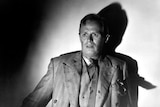
A fascinating hybrid of semi-documentary and fantasy, this 1953 film noir from Republic Pictures was long forgotten until a recent restoration of the studio's most interesting films brought it back to light. No less an expert, Eddie Mueller of The Film Noir Foundation has named it as one the top 25 noir films. TCM is showing the restored version of City that Never Sleeps, giving viewers a chance to enjoy the beauty of the film's high-contrast cinematography by John L. Russell, who would later serve as cinematographer for Alfred Hitchcock's Psycho (1960). The restoration brings back the impressive sense of atmosphere Russell and director John H. Auer created for the film, which is set entirely at night.
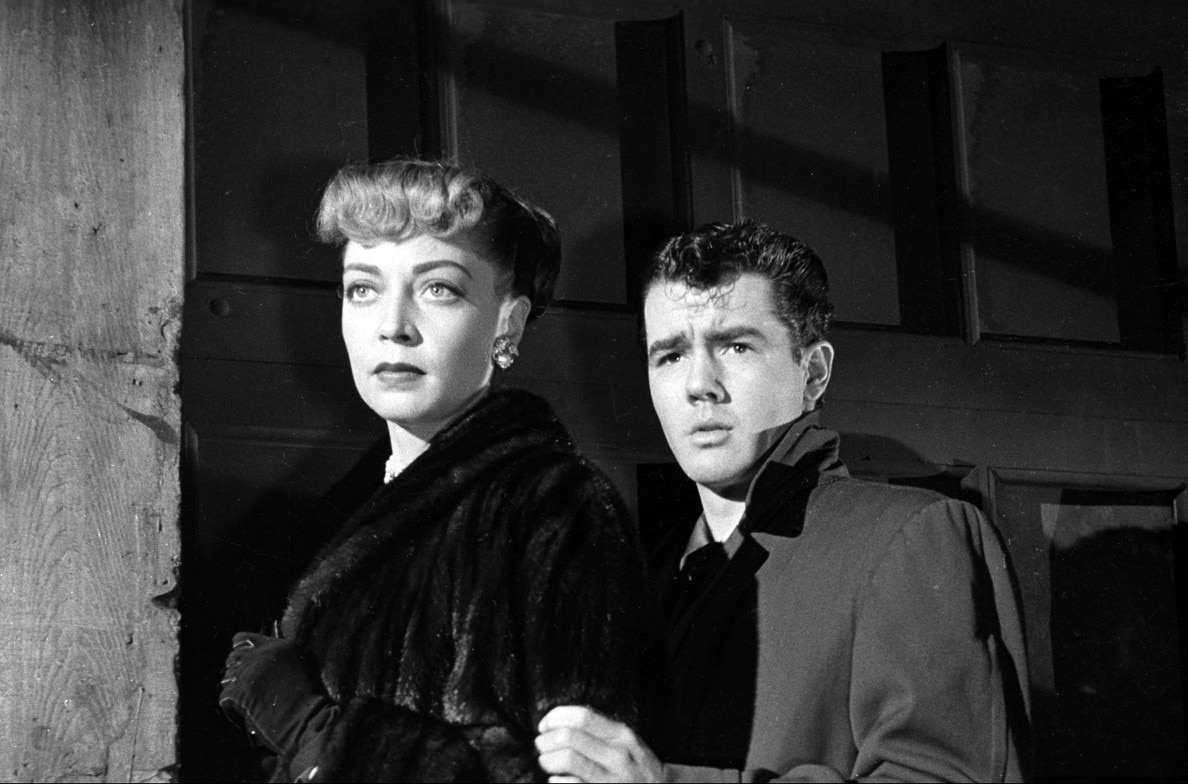
City that Never Sleeps opens with narration by the "Voice of Chicago," introducing the city and the people who will be the film's focus. What they have in common is the fact that each started out with a dream he or she lost. Johnny Kelly (Gig Young) wanted more out of life than a job as a cop and a loveless marriage. Sally Connors (Mala Powers) wanted to be a ballet dancer, but she now performs in a cheap nightclub. And Hayes Stewart (William Talman) trained to be a magician only to turn his skills to crime. Young has decided that this is his last night on the police force and as a married man before he runs off with girlfriend Powers. To get the money to get away, he agrees to get Talman out of town for powerful attorney Penrod Biddel (Edward Arnold), who's been using the crook to do his dirty work. The assignment leads to a night of violence and film noir's traditional double and triple crosses, climaxing in a deadly chase along the tracks of the "El".
The picture is one of the last film noirs to adopt a documentary tone in the tradition of Boomerang (1947) and The Naked City (1948). Like them, it features an omniscient narration that sets the film up as a slice of life, and location photograph- although in City that Never Sleeps the location footage is confined to second-unit work, sometimes repetitious (a shot of the street from a car's windshield is repeated) but ultimately skillfully edited into footage shot at the Republic Studios. What makes the picture stand out, though, is the addition of a fantasy character, the "Voice of Chicago" (Chill Wills). When Young starts his shift, he's informed that his usual partner is sick. Suddenly Wills pops up as Sergeant Joe, whom Young's never heard of before. Through the evening, Wills seems more intent on questioning Young's motives, particularly when he finds out he's leaving the force, than on doing any real police work. It's not hard to tell he's a fantasy figure, since the soundtrack goes all mystical when he shows up.
The film has some pretty impressive noir credits. The original screenplay is by Steve Fisher, an experienced writer whose noir novel I Wake Up Screaming became a rare dramatic vehicle for Betty Grable in 1941. He would go on to write the screenplays for such noir classics as Lady in the Lake (1946) and Dead Reckoning (1947). His script for City that Never Sleeps features the usual amount of corruption (Arnold's lawyer may seem respectable, but he's crooked as they come), and Fisher works a nice change on the typical women's roles. The film has the usual good girl-bad girl dichotomy in the two wives included, Young's sweet, neglected Mrs. (Paula Raymond) and Arnold's evil trophy bride (Marie Windsor). But there's more depth to Powers' exotic dancer. At first, she seems another film noir floozy carrying on with a married man. Before long, however, it's clear that she's not happy being the other woman and is actually torn between her affair with Young and the true love offered by failed actor Gregg Warren (Wally Cassell) playing a mechanical man in the nightclub's show window.
There's also a lot of nourish sizzle from the casting of Windsor, who would play the ultimate two-timing wife in Stanley Kubrick's The Killing (1956), and Talman. The film was made four years before Talman would achieve fame as District Attorney Hamilton Burger on Perry Mason. At the time of City that Never Sleeps, he was best known for playing villains, most notably the psychopath in Ida Lupino's The Hitch-Hiker, which had come out earlier in 1953. In his first scene in this film, he's shown fondling a rabbit, a holdover from his days as a magician and a distinct contrast to the brutality he'll display later in the picture.
Because he spent most of his career in low-budget films, Auer is still something of an unknown quantity to contemporary film buffs. Unable to find work in Hollywood at first, he directed a series of popular Mexican films. Their success brought him back to the U.S., but he never graduated from B movies, spending a significant part of his career at Republic. He was a rarity at the studio in that he produced his own films and never worked on any of their bread-and-butter pictures, the Westerns. He worked in just about every other genre, however. Despite City that Never Sleeps' low budget, Auer does some impressive work creating atmosphere. In a scene in which Young and Wills help deliver a baby in the street, there are some great crowd shots that capture a sense of the seedy underside of the big city. And the final chase is cut for maximum suspense.
City that Never Sleeps received only mixed reviews at the time of its premiere, with the best notices going to Talman and Warren. It took until 2018 for the film to earn any more serious consideration. By that time, Paramount Pictures had acquired the Republic library and set out to restore 30 of their films. Many of the new prints debuted as part of a special series at the Museum of Modern Art. City that Never Sleeps opened the series, which also included Frank Borzage's I've Always Loved You (1946) and Lewis Milestone's The Red Pony (1949). At the screening, director and film preservationist Martin Scorsese gave City that Never Sleeps special praise for its energy and creativity. With luck, the restorations could spark a reevaluation of Auer's career, as he's also represented by another film noir, The Flame (1947), and his jungle melodrama Angel of the Amazon (1948).
Producer-Director: John H. Auer
Screenplay: Steve Fisher
Cinematography: John L. Russell
Score: R. Dale Butts
Cast: Gig Young (Johnny Kelly), Mala Powers (Sally 'Angel Face' Connors), William Talman (Hayes Stewart), Edward Arnold (Penrod Biddel), Chill Wills (Sgt. Joe, the 'Voice of Chicago,' Marie Windsor (Lydia Biddel), Paula Raymond (Kathy Kelly), Wally Cassell (Gregg Warren), Ron Hagerthy (Stubby Kelly), Tom Poston (Detective), Roy Barcroft (Mechanical Man Attraction Hawker), Walter Woolf King (Hotel Manager)
Noir
City That Never Sleeps (1952)
by Frank Miller | June 19, 2018
More of Noir
SIGN UP FOR OUR NEWSLETTERS

CONNECT WITH TCM