This article was originally written about programming in the TCM Now Playing newsletter in June 2025.
In 1894, W.K.L. Dickson, inventor of the early motion picture camera known as the Kinetograph, wrote that there should be a way to preserve “vitalized pictures.” While most considered the new art form as little more than a novelty, in Europe, writer Boleslaw Matuszewski argued in 1898 that film should be taken as seriously as history and was worthy of preservation. For the next 20 years, the earliest archives were simply personal collections until institutions, and eventually governments, created their own.
The British Film Institute was founded in 1933, becoming a registered charity under the Royal Charter. Two years later, the BFI created the National Film Library (later renamed the BFI National Archive in 2006), with the mission to “maintain a national repository of films of permanent value.” The Archive has acquired television programs since the late 1950s and is currently creating new infrastructure to ensure that digital titles are not lost when new technologies emerge. Recognizing the need for international cooperation, the Archive joined New York’s Museum of Modern Art (MoMA), the German Reichsfilmsarchiv and the Cinémathèque Française to form the International Federation of Film Archives (FIAF) in June 1938. According to FIAF’s website, as of April 2024, there are 96 Members and 83 Associates, in 80 countries.
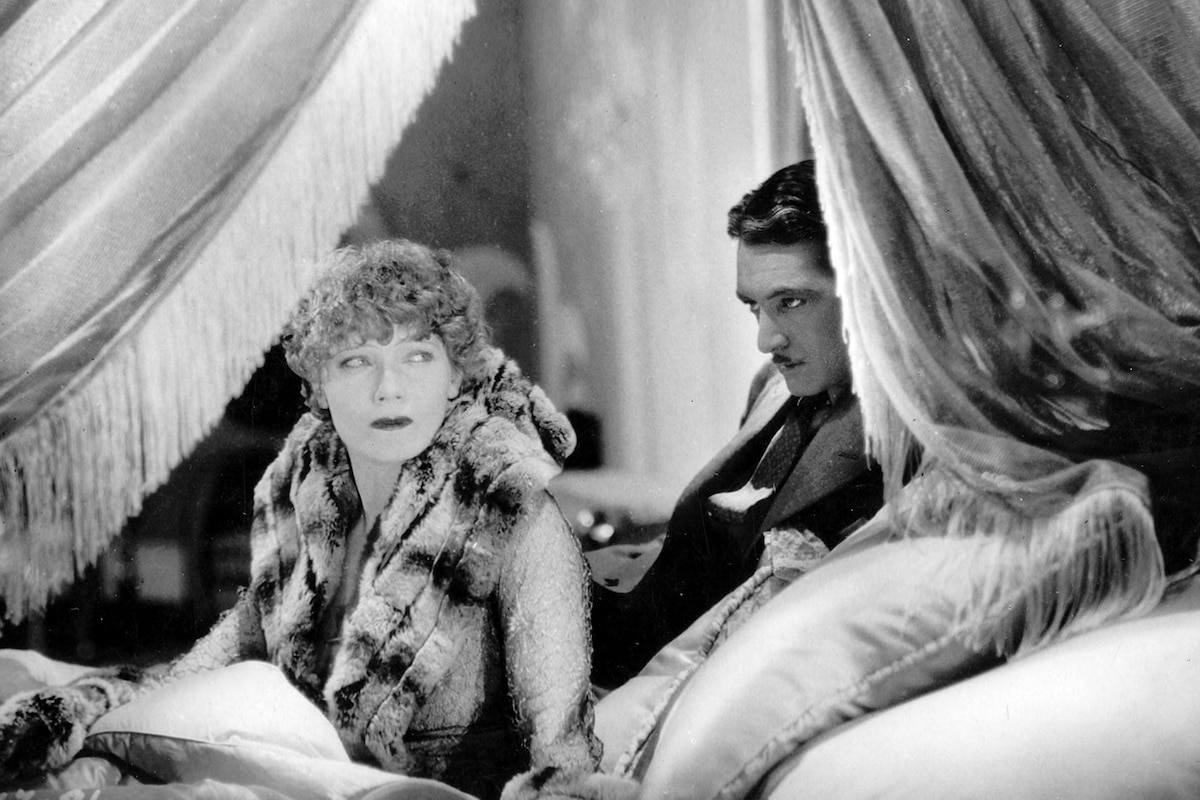
On June 10th and June 17th, Turner Classic Movies will celebrate the 90th anniversary of the BFI National Archive by highlighting some of the films they have restored, including the Anna May Wong silent film, Piccadilly (1929). Los Angeles-born Wong was the first Chinese-American movie star. After appearing in films like the early two-strip Technicolor The Toll of the Sea (1922) and the Douglas Fairbanks Sr. blockbuster The Thief of Bagdad (1924), Wong wanted to break free of stereotypical Chinese roles that restricted her talent. In 1928, she left Hollywood for Europe, where she made two films in Germany before going to England, having been signed by British International Pictures for Piccadilly.
Her role as Shosho, the London nightclub kitchen worker who becomes a star, was a multi-dimensional part that is arguably the best of her career. Piccadilly was originally released as a silent early in the year but was re-released during the summer with sound effects and music. Despite Wong’s stellar reviews, Piccadilly couldn’t compete with all-talking films and soon disappeared from circulation until its restoration by the Archive over 70 years later. The US Mint recognized Anna May Wong’s importance in film history in 2022 when it added her face to the American quarter.
At the same time, Wong’s career was on the decline, a bit player in Piccadilly saw his begin to rise: Charles Laughton. When Laughton starred in The Private Life of Henry VIII (1933), he had already been to Hollywood and back, gaining notoriety for his unrestrained performances in films like The Sign of the Cross and The Old Dark House, both in 1932.
Produced and directed by Hungarian immigrant Alexander Korda through his newly formed London Film Productions, this comedy-drama has been widely considered as the film that first represented British cinema in the sound era. The Private Life of Henry VIII focuses on only five of Henry’s six wives, with Catherine of Aragon’s absence explained by a title card stating that “her story is of no particular interest - she was a respectable woman. So Henry divorced her.” Co-starring with Laughton are Korda’s future wife, Merle Oberon, in a brief appearance as Anne Boleyn; Wendy Barrie as Jane Seymour; Laughton’s real-life wife Elsa Lanchester as Anne of Cleves; Binnie Barnes as Katherine Howard; and Everley Gregg as Henry’s last wife, Katherine Parr.
The Private Life of Henry VIII was an international success, earning an Academy Award nomination for Best Picture and giving Laughton his only Best Actor win. The Archive’s 4K restoration premiered at the London Film Festival in October 2018.
The best-known film adaptation of Patrick Hamilton's play, “Angel Street,” was made by MGM in 1944 as Gaslight, starring Ingrid Bergman and Charles Boyer, but it was not the first. The 1940 version of Gaslight (also known in England as “A Strange Case of Murder”) was directed by Thorold Dickinson, and Anton Walbrook starred as the husband who tries to convince his wife, played by Diana Wynyard, that she is losing her memory so he can steal her fortune in rubies. For many years, it was thought that this version of Gaslight had been lost because when MGM purchased the film rights, they also bought up and destroyed all copies of the film so it could not compete with theirs. Years later it was discovered that the original British distributor, Anglo-American Film Corp., had donated a duplicate negative to the Archive in August 1942 and a print in January 1943. The BFI released a restored version on Blu-ray in 2013.
Michael Powell and Emeric Pressburger’s The Life and Death of Colonel Blimp (1943), about an out-of-touch Army officer (Roger Livesey) earned the wrath of Prime Minister Winston Churchill, who thought that wartime was the wrong time to be critical of the military, and also felt that the character of the Colonel bore more than a passing resemblance to himself, when in fact, it was based on a famous cartoon character. Miffed, Churchill refused to loan the producers any military equipment for production. Often asked in later years how he managed to get uniforms, vehicles and weapons without help from the War Office, Powell wrote in his autobiography, “The answer is quite simple: we stole them.”
Churchill even banned The Life and Death of Colonel Blimp from being exported for four years, and then only after severe edits were made. It would not be seen in its original format until its restoration 40 years later, thanks in part to director Martin Scorsese.
Another film we can thank the National Archive for restoring is what Michael Powell called “the sweetest film we ever made,” I Know Where I’m Going! (1945). Wendy Hiller stars as Joan Webster, a young woman traveling to Scotland’s remote Hebrides islands to marry a wealthy man she doesn’t love when foul weather strands her on another island, where she meets a handsome naval officer. Colonel Blimp star Roger Livesey, who was 40 and overweight, learned that James Mason had turned down the role of the officer, and wanted the part so badly that he dieted and bleached his hair blond. Also in the cast was 13-year-old future pop star Petula Clark. The 4K restoration was released in British theaters in 2023.
Ken Russell’s adaptation of D.H. Lawrence’s 1920 novel about friendship, love and sexuality, Women in Love (1969), elevated theater actress Glenda Jackson to stardom and earned her a Best Actress Academy Award. Although she initially met resistance from her co-star, Oliver Reed, who was rumored to have tried to replace her, the two eventually formed a good working relationship and appeared in two more films together.
Women in Love might have been a very different film had either Stanley Kubrick, Peter Brook or Jack Clayton agreed to direct. Their refusals gave Russell the assignment and an Academy Award nomination for Best Director to boot. Women in Love became the first major motion picture to show full frontal male nudity, and the now famous nude wrestling scene between Reed and Alan Bates had to be coordinated with the British censors to ensure that their genitals would not be visible and the homoerotic overtones toned down. A 4K restoration premiered at the London Film Festival in 2015.
Mike Leigh’s Naked (1993), premieres on TCM this month. The film stars David Thewlis as a disillusioned chatterbox and conspiracy theorist with a talent for provoking people and an inability to live a stable life. Described by Derek Malcolm of “The Guardian” as trying to “articulate what is wrong with the society that Mrs. [Margaret] Thatcher claims does not exist,” Naked won Leigh Best Director and Thewlis Best Actor at the Cannes Film Festival and was nominated for several awards at other major festivals, putting Thewlis on the map as a serious talent. Digitally remastered by the Archive, the restoration of Naked premiered at the London Film Festival in October 2021.
The British Film Institute National Archive has just announced that they will soon launch an American branch in Los Angeles, to be called BFI America. Board members will include Monty Python member and director Terry Gilliam and James Bond producer Barbara Broccoli.