This article was originally written for the TCM Now Playing newsletter in October 2023.
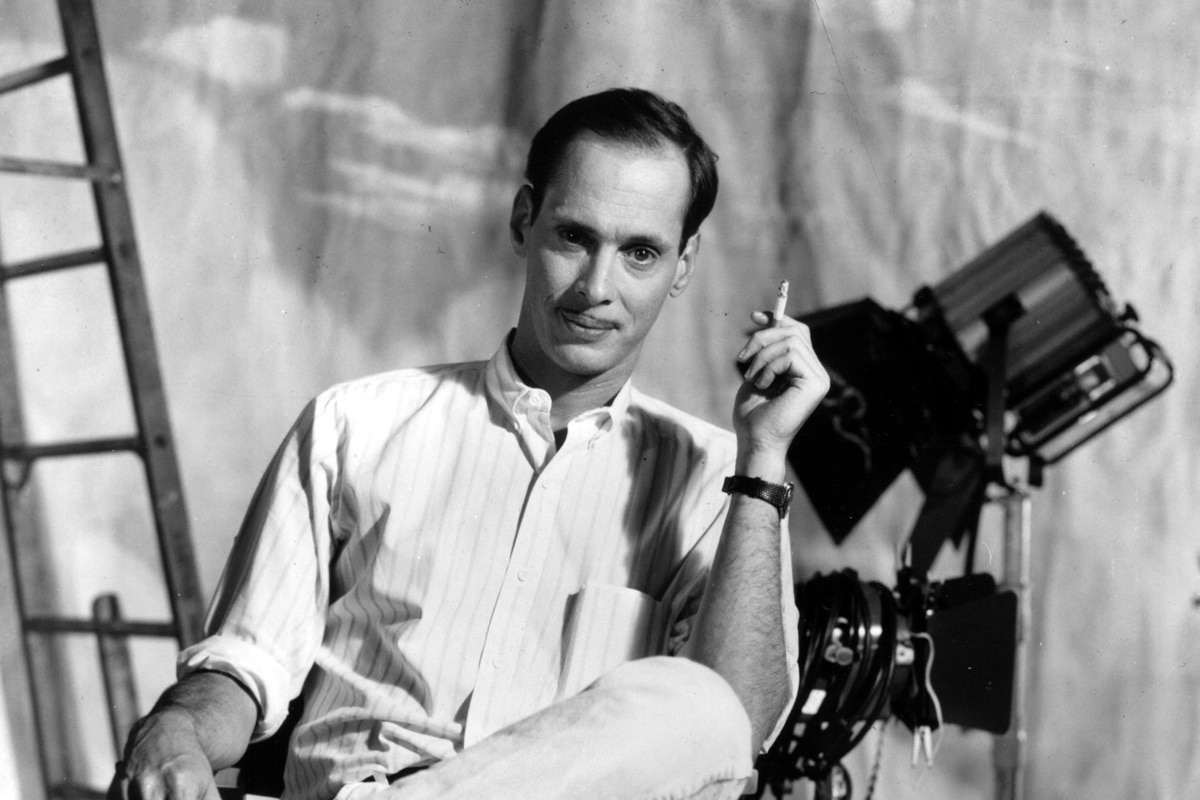
“To understand bad taste, one must have very good taste,” John Waters wrote in his first memoir, “Shock Value.” If there’s anything the renowned provocateur knows, it’s how to flaunt extremes in high and low brow culture, deriding accepted social conventions and defying taboos with an outlandish edge and jarring, dark humor. “I never just wanted to shock,” Waters recalled. “I always wanted to make people laugh first. And how I got my original laughs was by shock.”
Born in 1946, Waters came of age in Baltimore during the 1950s and 1960s, a place and time he both celebrates and mocks in his films. Shades of Waters’s rebellious nature and showmanship flashed from a young age, as he indulged in puppet shows and eagerly watched movies his Sunday school nuns deemed unacceptable. Those inclinations, Waters’s life experiences and his cinematic influences ranging from exploitation heroes to arthouse icons play an integral role in his work.
The Pope of Trash, the King of Kitsch, the Sultan of Sleaze—the multifaceted writer-director has earned many nicknames throughout his six-decade career. The Academy Museum of Motion Pictures chose the first listed moniker, coined by William S. Burroughs, for their new exhibition on Waters. “John Waters: Pope of Trash” charts the cult director’s evolution as a moviemaker and underground icon, from an illustrated timeline of his life and work and an area dedicated to his frequent collaborators (dubbed the “Dreamlanders”) to sections highlighting his feature films and an interactive AR experience that digitally transforms fans into Waters and select quintessential characters.
Original costumes, iconic props, clip montages, script pages and numerous personal effects— over 400 items total—fill the expansive space. Waters and his archive at Wesleyan University loaned several pieces, many of which hold a special significance for the director. I mean, how many people would cherish the notebook they used to track early expenses and profits (so they could pay their father back for the money loaned, with interest!) and a receipt from the Maryland censor board for a $16 fee to cut an oral sex scene from Female Trouble (1974)?
As visitors near the end of their journey through “Pope of Trash,” they enter a gallery celebrating the offbeat public persona Waters, ever the promoter, has cultivated, featuring a cameo reel and a display of lovingly crafted fan art. Taken together, it’s a fitting tribute to Waters’s half-century-plus of empowering outsiders and the devoted community they’ve carved out for themselves.
The “equal opportunity satirist,” as Academy Museum exhibitions curator Jenny He termed him, built his subversive reputation on grotesque, nonconformist fare such as Pink Flamingos (1972), Female Trouble and Desperate Living (1977). In the 1980s, Waters moved from the cinematic margins to the mainstream with his first studio film, Polyester (1981), and followed that up with Hairspray (1988) and Cry-Baby (1990), all of which maintain Waters’s provocative nature and affinity for confronting hypocrisy, albeit with considerably less filth and blatant outrage compared to his earlier work. This month, TCM showcases Polyester, Hairspray and Cry-Baby as host (and Academy Museum director and president) Jacqueline Stewart celebrates Waters’s new exhibition at the museum.
Waters describes Polyester as “‘Father Knows Best’ gone haywire.” Francine Fishpaw (Divine) desperately wants a happy suburban life in 1980s Baltimore. Everything her unappreciative family does, however, tortures the well-meaning Catholic mother: her philandering husband Elmer (David Samson) runs an adult movie theater, wild daughter Lu-Lu (Mary Garlington) looks forward to her next abortion and son Dexter (Ken King) has a fetish for stomping on women’s feet. Just as she hits bottom with her only friend by her side, Cuddles Kovinsky (Edith Massey), the good-looking Todd Tomorrow (Tab Hunter) sweeps Francine off her feet. Everything’s looking up—or is it?
Polyester marked a turn in Waters’s partnership with his muse Divine into the “quasi-mainstream,” a divergence from their outré 1970s output. Other firsts abounded: Polyester was the director’s first R rating (previous movies were unrated) and his first time working with a Hollywood star: Tab Hunter. (Waters joked that he paid Hunter the most he’d ever compensated an actor, which was probably the star’s smallest paycheck.) Polyester was budgeted at $300,000, considerably more than Waters was used to, allowing him higher production values. Predictably, a polished, less repulsive Waters film disappointed some longtime fans. “Nevertheless, ‘Polyester’ is a funny film which still may be found totally tasteless by many,” The Hollywood Reporter observed.
That said, several Waters signatures and influences remained. Thematically, Polyester mocks some of his favorite subjects, including Catholicism, censorship and adultery. Waters was also inspired by and satirized over-the-top 1950s melodramas; the Fishpaws’ address, 538 Wyman Way, is a nod to Jane Wyman, who starred in two Douglas Sirk classics. Additionally, Waters tipped his hat to exploitation icon William Castle by releasing the film in Odorama. To highlight Francine’s heightened sense of smell, the corresponding scratch-and-sniff cards featured peculiar scents, such as flatulence, gasoline and dirty shoes. Waters also utilized one of his own experiences in Lu-Lu’s storyline. He grew up with Dreamlander Mary Vivian Pearce, and they got into trouble so often that Pearce’s parents forbade her from seeing him. So, she made fake dates with boys, and once safely out of the house, she’d ditch her date to hang with Waters.
The section on Polyester in ”Pope of Trash” relishes in the film’s eccentricity and dysfunction. Case in point: The cast and crew held a yard sale after production wrapped in the cul-de-sac where filming took place, which is how the Fishpaws’ bar cart came into a neighbor’s possession. Four decades later, co-curators Jenny He and Dara Jaffe knocked on doors in the same neighborhood in hopes of finding items from the movie. That’s how they met a man who nonchalantly informed them that his sister still had the cart. Other highlights of the Polyester area include a behind-the-scenes look at Odorama, Dexter’s foot stomping paintings and a handwritten apology letter from Polyester’s location manager to residents for loud helicopter noise (a result of the increased budget allowing for aerial shots). His promise that nothing like that would happen again showcases the respect Waters and his crew had for his hometown.
“The sensibility and sense of humor in Hairspray is the same as Pink Flamingos,” Waters argued in 1988. “The difference is that I don’t have that rage now.” Indeed, Hairspray, Waters’s first and last PG-rated film, centers around optimistic plus-sized teenager Tracy Turnblad (Ricki Lake) in early 1960s Baltimore. Tracy makes waves when she lands a spot on the segregated dance program The Corny Collins Show, stealing the spotlight and boyfriend from the show’s spoiled star Amber von Tussle (Colleen Fitzpatrick aka Vitamin C). At school, Tracy befriends Black students who introduce her to new dances at Motormouth Maybelle (Ruth Brown)’s record shop, and, inspired by her friends, Tracy kicks off a crusade to integrate The Corny Collins Show.
Seven years elapsed between Polyester and Hairspray. “The hard thing is getting them to agree to make the movie in the first place,” Waters said of working with the Hollywood studios. “Once they do, I give them what I told them it was going to be.” He delivered with Hairspray, a film the Los Angeles Times called a “surprisingly sweet-tempered spoof” that proved a critical and financial hit on a budget just under $3 million. (Over $300,000 went to music rights, outspending Polyester’s entire cost.) Hairspray provided Waters with a level of respectability he never attained or pursued before, and it even went on to become a popular rental for kids’ parties! The film also signified a cinematic passing of the baton, as it was Lake’s first and, tragically, Divine’s last role in a Waters film.
“It’s great to be able to shock in reverse,” Waters remarked of Hairspray. Not only were the upbeat performances a departure, but focusing on one subject, segregation, was a first for Waters. The activism in the movie called back to actual protests surrounding The Buddy Deane Show, Corny Collins’s real-life counterpart, a program Waters was a fervent fan of. Taking another page from his past, the “Dirty Boogie,” one of the dances performed in the film, was a forbidden number for Waters growing up. He recalled attending Catholic Youth Organization dances with Pearce, where they’d “steal pocketbooks and do the Dirty Boogie and be asked to leave.
The Hairspray gallery at the Academy Museum primes its focus on the film’s 1960s-era fashions crafted by Van Smith, Waters’s longtime costume designer. Several pieces are displayed, including Tracy’s iconic pink cockroach dress. Also on view are more of Waters’s influences from the 60s, including the director’s soundtrack notes and production design drafts detailing The Corny Collins Show set. But the sweetest item in this section—and perhaps the entire exhibition—is a charming and effusive handwritten note from Ricki Lake thanking Waters for giving her “the greatest experience of my life.” Appropriately, as fans exit Hairspray’s space, they enter a gallery dedicated to the song and dance numbers found in Waters’s work, complete with a camera and live feed to get your groove on. It’s an appropriate bridge between the director’s dance film, Hairspray, and his musical, Cry-Baby.
“Grease on acid” is how star Johnny Depp dubbed Cry-Baby. The film takes place in 1950s Baltimore, where Wade “Cry-Baby” Walker (Depp) leads the Drapes, a misfit group of juvenile delinquents. One day after school, Wade meets and falls in love with Allison Vernon-Williams (Amy Locane), a conventional Square itching to be bad. Going against her straightedge grandmother (Polly Bergen), Allison hops a ride with Wade to a party. When Allison’s jealous boyfriend Baldwin (Stephen Mailer) crashes the gathering and instigates a fight, Wade gets hauled off to jail, prompting Allison, the Drapes and her grandmother (finally won over by Wade) to fight for his release.
Hot off a hit, Waters found himself in a bidding war for Cry-Baby. Ron Howard’s Imagine Entertainment won and granted the movie a budget of about $10 million. With a colorful cast of famous names, hopes were high for Cry-Baby, which received a standing ovation at the Cannes Film Festival. While Cry-Baby played in more theaters than any other Waters film, it unfortunately wasn’t a box office triumph, though the movie eventually found success abroad. Cry-Baby “inspires an audience’s generosity because it’s a film that wants only to be loved,” The Los Angeles Times remarked. “Watching it is a bit like checking out a grade-school talent show on parents’ night.”
A tribute and send-up of the 1950s, Cry-Baby possesses earmarks of Waters’s upbringing. Always a fervent researcher, Waters was studying Drape style when he stumbled upon a high-profile Drape murder that he recalled hearing about when he was young. The case fascinated him, though no traces of the homicide wound up in the film, save for the idea of the gang. On the Square side, Waters’s middle-class childhood brought back recollections of the dreary dances he was forced to attend, which directly influenced the Squares’ equally dull social activities in the movie.
The exhibition’s section on Cry-Baby foregrounds the film’s period setting and culture while also highlighting the story’s sense of rebellion. To this effect, items displayed include the leather jackets worn by Johnny Depp and Jonathan Benya as Wade Walker and Snare-Drum respectively, Wade’s guitar, Waters’s soundtrack notes and a brief overview of notable cast members. The actor spotlight emphasizes how Waters recruited a diverse talent pool from a wide array of places, from a teen heartthrob (Depp) and rock star (Iggy Pop) to a kidnapped heiress (Patricia Hearst), a classic movie star (Bergen) and former adult film performers (Traci Lords and Joe Dallesandro). Cry-Baby’s eclectic casting reflects Waters’s outsider spirit and inclination to go beyond the norm. As he asserted in a 1990 interview: “I look for personalities, people with a history.