This article was originally written for the 31 Days of Oscar programming in the TCM Now Playing newsletter in March 2023.
We all love movies. We all love, love. So, of course, we all love movies about love. On March 5th, TCM will present a lineup of 10 of the screen’s most beloved (pun intended) screen romances, each an Academy Award winner or nominee.
When ranking the most romantic movies of all time, no matter what poll or list or critic you follow, nearly always at the very top is Michael Curtiz’s Casablanca (1942). There is little to be said about this masterpiece that hasn’t been said before. With multiple books, documentaries and countless parodies and references in other films and media, this is one film that has truly taken on a life of its own. Perhaps the most remarkable thing about this perfect film is that it emerged from very imperfect circumstances. The original unproduced stage play, “Everybody Comes to Rick’s,” about an American expatriate living in French Morocco who is unexpectedly reunited with a lost love and her husband, was purchased by Warner Bros. for a then sizable sum of $20,000.
Despite such an investment, the film was widely seen as just another studio project and not a prestige picture. There were several changes from the original casting choices. It is rumored that Jack Warner suggested George Raft as an alternative for the leading role of Rick Blaine. Producer Hal Wallis’s only choice was Humphrey Bogart. Ann Sheridan, Hedy Lamarr and Luise Rainer were among the actresses considered for Ilsa Lund before Ingrid Bergman was brought in on loan out from Selznick Studios. Austrian leading man Paul Henreid was uncertain about the role of Ilsa’s husband Victor Laszlo, fearing it was secondary to the two leads. He accepted on the condition that he receive billing above the title alongside Bogart and Bergman. Wallis’ original director of choice was William Wyler. When Wyler proved unavailable, Warner Bros. contract director Michael Curtiz was assigned. If all this were not enough, the script was in constant rewrites all throughout filming, with at least four different writers making revisions.
These shaky circumstances were particularly challenging for the actors. Ingrid Bergman later recalled that her only question for Michael Curtiz was to know which of her suitors her character was supposed to actually be in love with. Curtiz responded that he was unsure, but that it would all be figured out by the end of the movie. Her instinct was to simply play her character as neutrally as possible in the early scenes and rely on the editing and music in post-production to create a mood that would convey her character’s feelings to the viewers. Needless to say, it all worked out!
The same year they made Casablanca, Paul Henreid and co-star Claude Rains also starred alongside Warner Bros’ reigning queen, Bette Davis, in another landmark film romance. Now, Voyager (1942) had been a popular entry in a series of novels by New England author Olive Higgins Prouty about the fictional Vale family. This story was about the family’s spinster youngest daughter who undergoes a physical and emotional transformation through psychotherapy and then meets an unhappily married man aboard a cruise ship. The complex character of Charlotte would have been great material for any dramatic actress. It was first considered as a potential vehicle for the newly studio-free Irene Dunne. Ginger Rogers and Norma Shearer were also mentioned before Bette Davis, then at the height of her popularity and power at Warner Bros., used all her leverage to win the role.
Davis was eager to play a more sympathetic character after playing several of her most wicked roles in a row (The Letter, 1940; The Little Foxes, 1941; and In This Our Life, 1942). Not stopping at winning the role, Davis also took part in many of the film’s creative decisions. Irving Rapper had been an Assistant Director on several Davis films in the 1930s, and she approved him to move up to head director for this film. While this was certainly a generous gesture from Davis, it also allowed her even more creative control, beginning with her choice of a leading man.
The role of Jerry Durrance was Paul Henreid’s first romantic lead in a Hollywood film. He’d had some success in British films before leaving Europe in opposition to nazi Germany. Henreid was one co-star with whom Davis not only had great chemistry with on-screen, but she also became great friends with him off-screen as well. The two were strong allies in how their characters should both look and behave. Perhaps the film’s most iconic moment, the lighting of the two cigarettes, was (according to both) improvised by them. The two would reteam again in Deception in 1946, and Henreid also directed Davis in Dead Ringer (1964). Now, Voyager would become one of Davis’ biggest hits and remains well remembered as one of her signature performances, as well as a groundbreaker for its depictions of psychotherapy and its benefits.
2023 marks the 50th Anniversary of Sydney Pollack’s popular tearjerker The Way We Were (1973). This film is another that is constantly referenced and spoofed in other films and media and has even spawned two books about its making (within the same year). The famed Broadway writer/director Arthur Laurents, one of the masterminds behind such masterpieces as West Side Story, Gypsy and La Cage Aux Folles, was only able to achieve moderate success as a Hollywood screenwriter. His daring scripts for such unconventional films as Rope (1948) and The Snake Pit (1948) helped put the progressive Laurents under the radar of the House Un-American Activities Committee. He eventually became one of several writers who were entirely blacklisted and exiled from Hollywood, not writing for film for several years.
Laurents used this experience as inspiration for a short love story about a gifted Hollywood screenwriter and his troubled marriage to a liberal Jewish woman. Barbra Streisand loved the story from the beginning and helped Laurents pitch it to several directors, among them Peter Bogdanovich and Francis Ford Coppola (who was also one of the film’s uncredited rewriters). Eventually, Sydney Pollack took on the project and brought with him Streisand’s (and everybody’s) first leading man of choice, Robert Redford. However, Pollack’s vision for the story was quite different from Laurents’ original script. It would eventually undergo 11 rewrites. Pollack and Redford both felt the film’s emphasis should be less on the political statements made about the McCarthy era and more on the love story between the two leads. While this opinion differed from what Laurents and Streisand wanted, the film eventually became one of the most popular of the 1970s and a highlight in the careers of all involved. The film won two Academy Awards, for Original Score and for the now iconic title song.
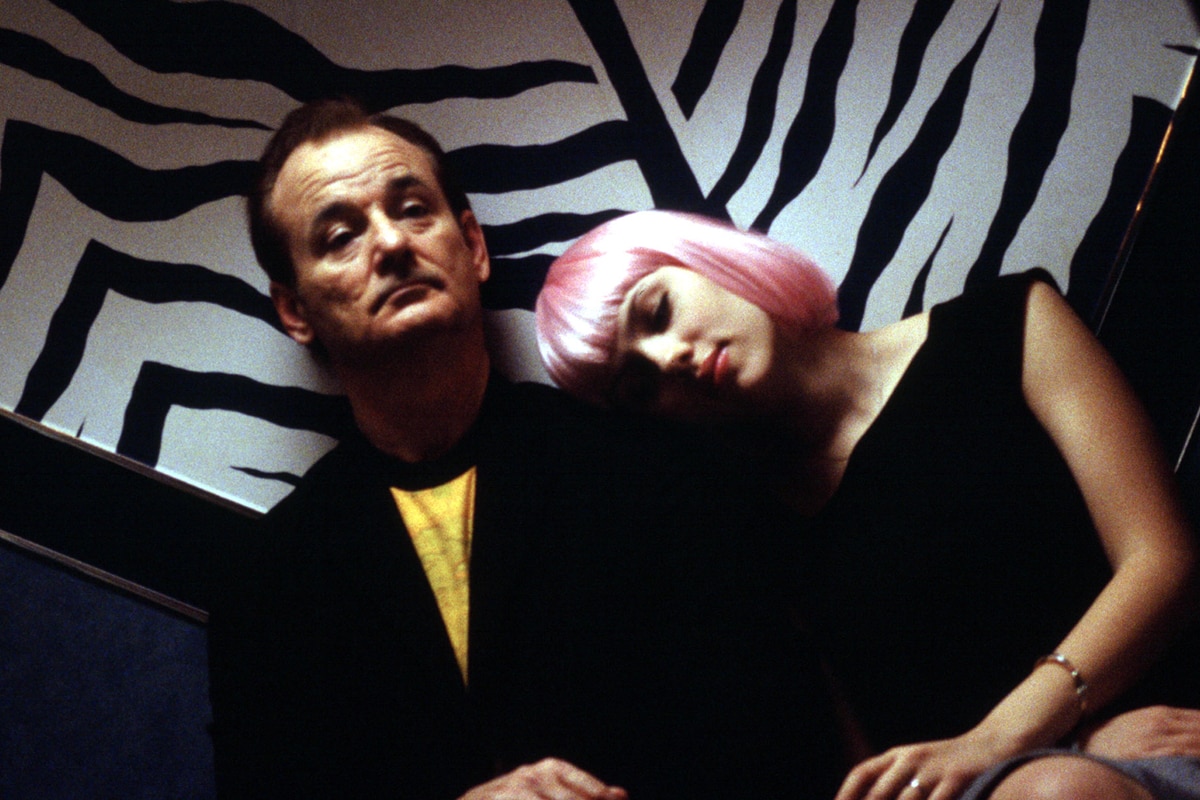
No matter the narrative structure or look of the film, the screen romance continues to be one of the longest-lasting and most versatile genres. A particularly unique love story of the 2000s was writer/director Sofia Coppola’s Lost in Translation (2003). In a role Coppola wrote specifically for him and had to spend months convincing him to accept, Bill Murray gives an Oscar-nominated performance as Bob Harris, an aging actor who arrives in Tokyo to make a whiskey commercial. In the hotel he is staying at, Bob encounters a beautiful young girl (Scarlett Johansson in her first romantic lead) who, like Bob, is unhappy in her marriage and uncertain about her future. Over the next few days, the two become unexpectedly and increasingly close.
This was only Sofia Coppola’s second feature film and was made on a very slim budget. To ensure its completion on time, Coppola made the film in what she describes as a “documentary style.” The film was shot in just four weeks on location in the less touristy area of Tokyo, using a minimal crew, with more static shotmaking and mostly natural lighting. The only expensive decision she made (against the recommendations of her father, Francis) was to shoot the movie on actual film as opposed to tape or digital. Coppola felt shooting on film would give the movie its more romantic feel and she was right! Though an unlikely pair, Bill Murray and Scarlett Johansson had a unique chemistry on screen, and the film became critically praised on the festival circuit and a sleeper hit with audiences. For the film, Coppola became the first woman to earn Oscar nominations for Best Picture, Best Director and Best Original Screenplay in the same year, winning for the latter. Both Murray and Johansson have listed this film as their personal favorite of their careers.
As long we love, love and as long we love the movies, these and all great screen romances will remain enduring parts of our cinematic heritage.