Few films have embedded themselves into the cultural fabric like The Wizard of Oz (1939); a fairy tale that catapults audiences into a fantasy world but always brings us back to reality with the enduring message that “there’s no place like home.” One of the most widely beloved Hollywood films of all time, The Wizard of Oz continues to entertain and inspire generations. L. Frank Baum’s novel “The Wonderful Wizard of Oz” was first published in 1900. Baum had been inspired by Lewis Carroll’s “Alice’s Adventures in Wonderland” but wanted his story—also about a young girl’s adventures in a fantasy world—to have recognizable elements for young American readers, basing Dorothy’s home in America’s Heartland. The novel was a sensation upon publication, and Baum went on to publish 13 more novels in his series. Adaptations of the novel soon followed, including a 1902 Broadway musical and two silent films in 1910 and 1925.
Producer Samuel Goldwyn purchased the film rights in 1933 for $40,000, and for a brief time, it was considered a potential vehicle for either Eddie Cantor or W.C. Fields. After the release of Snow White and the Seven Dwarfs (1937), other Hollywood studios were eager to ride the coattails of its success, spawning new interest in adapting The Wizard of Oz. Reports differ, but according to Oz historian Aljean Harmetz, both Mervyn LeRoy and Arthur Freed had taken credit for presenting it to MGM executive Louis B. Mayer. He won the bid and paid Goldwyn $75,000 for the rights, a healthy return on Goldwyn’s initial investment. The first assigned to the project was LeRoy as producer and Freed as associate producer.
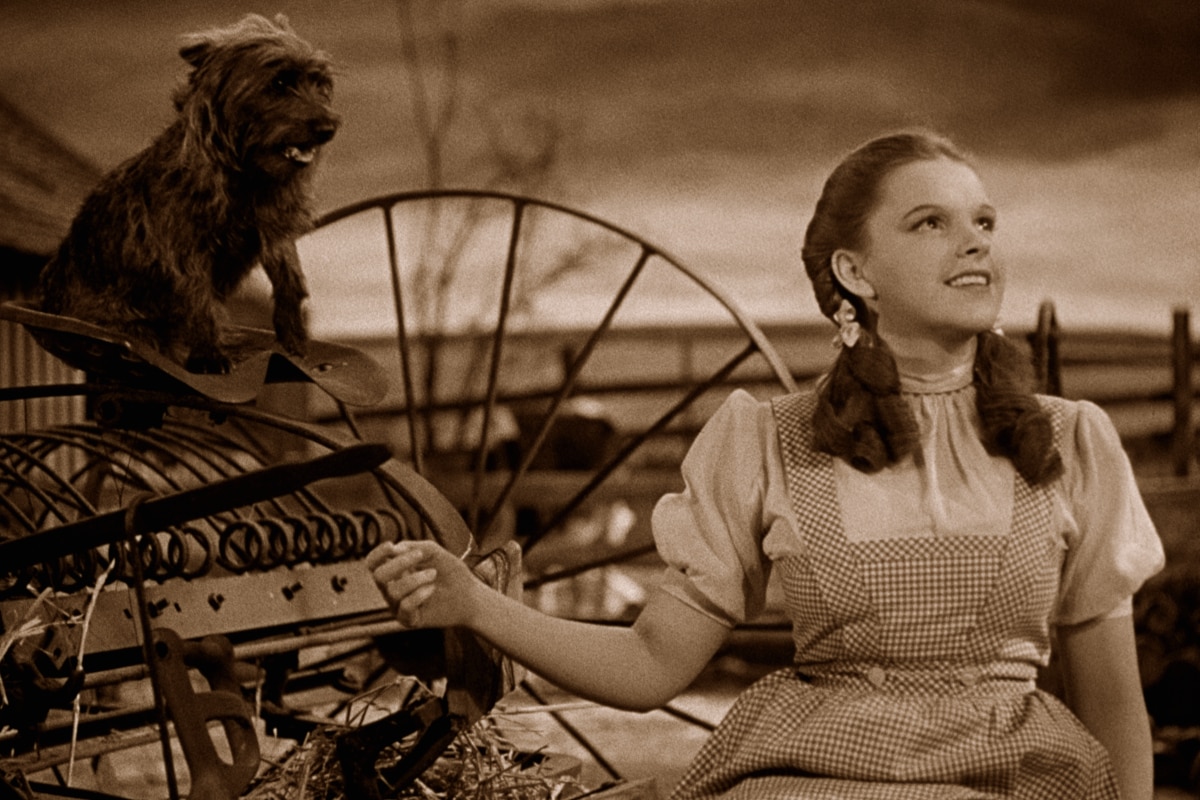
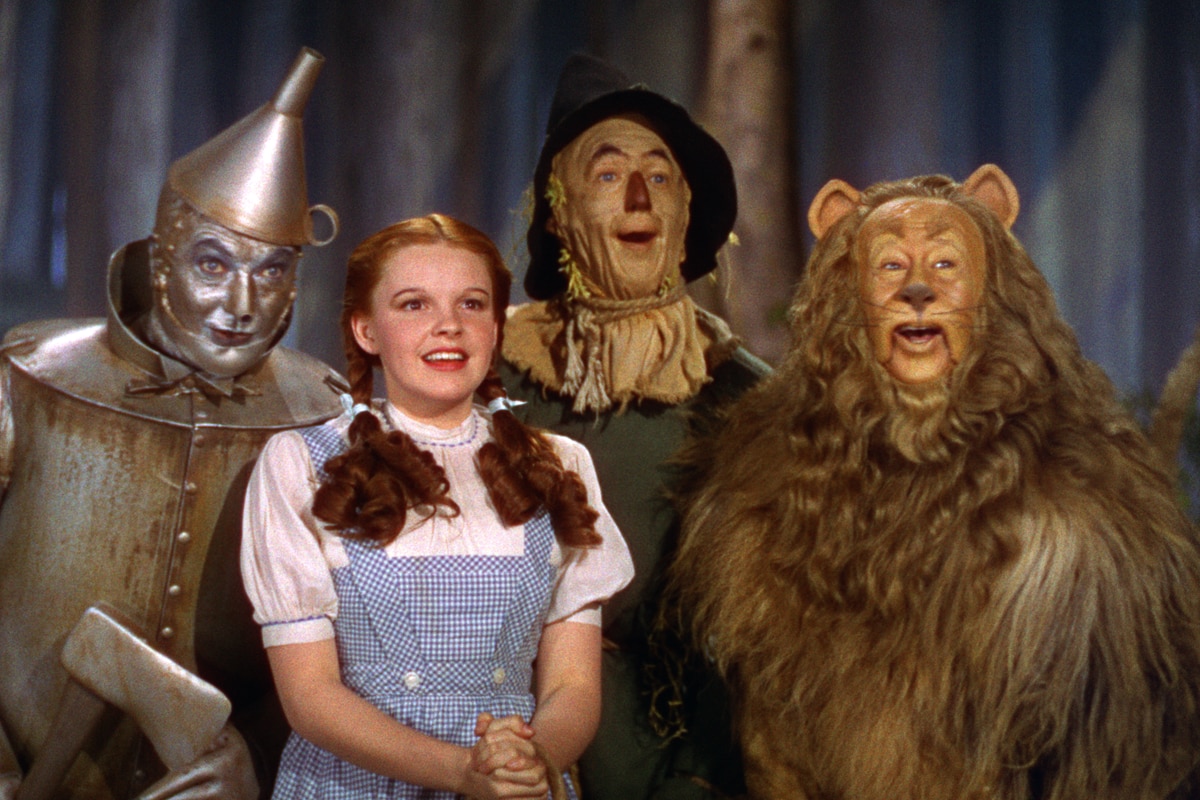
Mayer had his sights set on borrowing Shirley Temple from Twentieth Century-Fox for the lead role of Dorothy. Temple was already an established star, while Judy Garland, who eventually got the role, had only just started at MGM a couple of years earlier. In the end, Garland was the perfect choice for Dorothy. Her anxiety about working on a large-scale production with seasoned entertainers informed her performance as Dorothy, an adolescent thrust into a grandiose world full of unknowns.
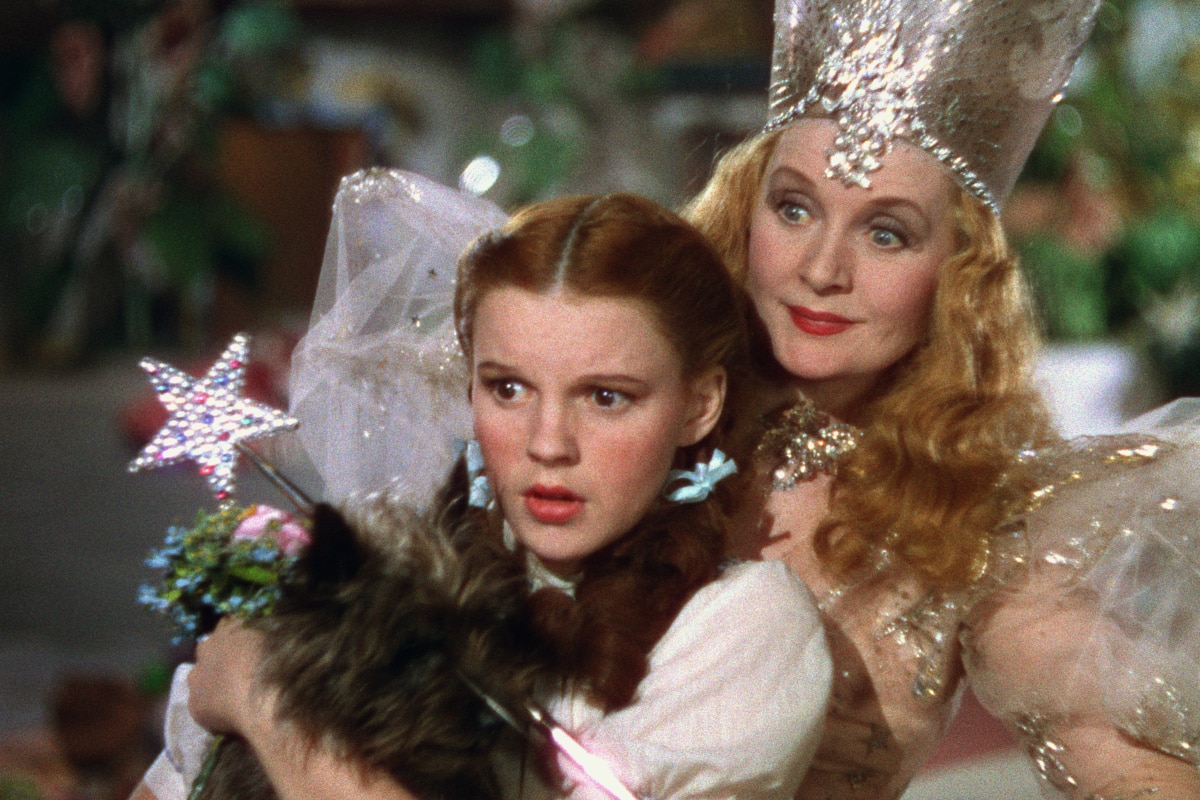
To fill out the rest of the cast, vaudeville entertainers Ray Bolger, Jack Haley and Bert Lahr were cast to play the Scarecrow, the Tin Man and the Cowardly Lion, respectively. Frank Morgan was not originally in the running for the role of the Wizard, but he enthusiastically campaigned for the part and won. Billie Burke was cast in the role of Glinda, the Good Witch and Margaret Hamilton as the Wicked Witch of the West. Hamilton was one of the only cast members who had stage experience performing “The Wizard of Oz.” For The Munchkins, manager Leo Singer brought on 18 performers from his own troupe and reached out to other managers to help them cast the rest. In total, 124 actors played The Munchkins, eight of whom were children to help fill in the background. Of course, Dorothy needed her little dog, too. Terry the Cairn Terrier, one of several movie industry dogs trained by Carl Spitz, was cast as Toto.
There were 10 screenwriters assigned to The Wizard of Oz in various capacities. Herman J. Mankiewicz and Samuel Hoffenstein made contributions to the Kansas sequence. Ogden Nash and Herbert Fields were assigned but did not contribute. Other writers, like Jack Mintz, Sid Silvers and John Lee Mahin, served as script supervisors. The biggest contribution was from writer Noel Langley, who wrote the bulk of the script. Writing duo Florence Ryerson and Edgar Allan Woolf came on to fix Langley’s dialogue, add key themes and flesh out the alter egos for the principal players.
As with the script, many hands were involved with the direction. Norman Taurog was initially considered, but his involvement was limited. Richard Thorpe was the first director to work on set but did not last long. George Cukor was brought on briefly for a few days of tests and some assistance with the Kansas sequence. His biggest contribution was toning down Judy Garland’s look by removing her blonde wig and giving her advice on her performance. Victor Fleming soon replaced Cukor and would remain on as director through the majority of the production before he was taken off to help out with another big production: Gone With the Wind (1939). After Fleming, King Vidor was brought on to tie up loose ends.
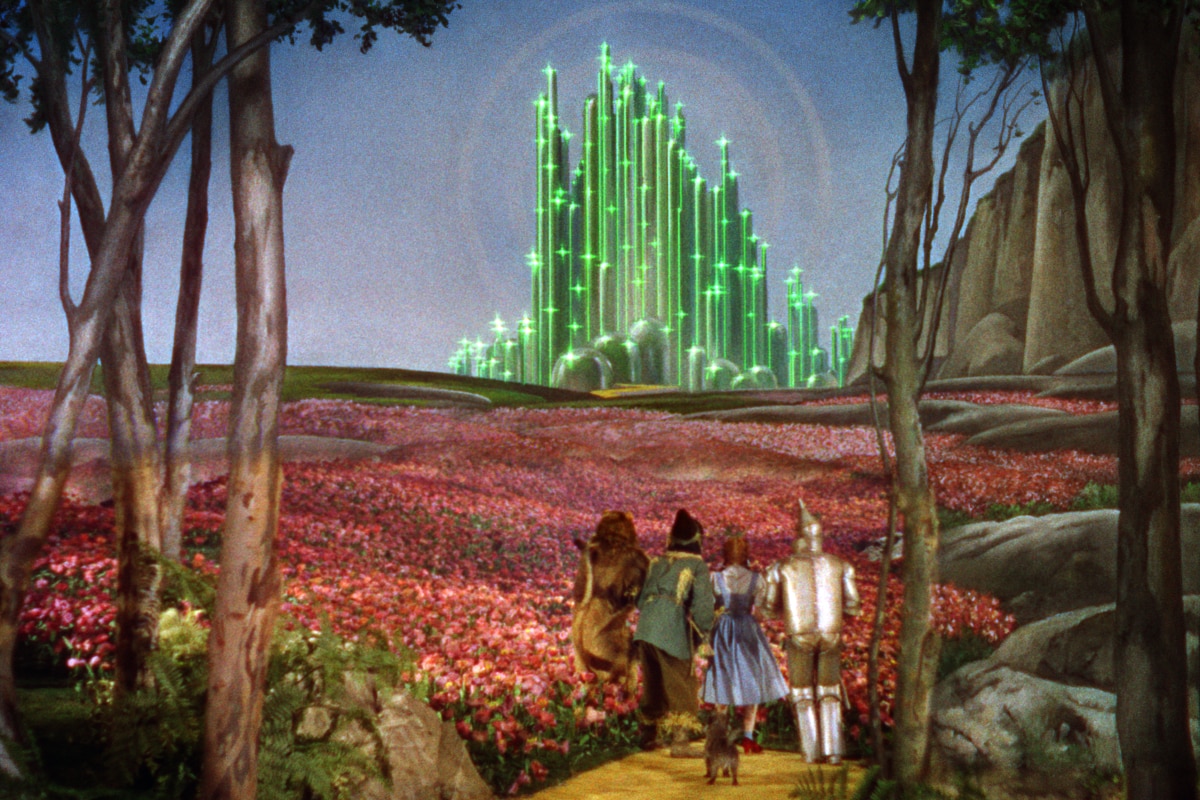
Lyricist E.Y. Harburg and composer Harold Arlen came up with original songs for the film, including “We’re Off to See the Wizard,” “The Merry Old Land of Oz” and “Somewhere Over the Rainbow,” the latter of which Mayer had threatened to cut from the movie but was convinced otherwise. The production’s grand scale included over 9,000 actors, 450 crew members and 6,000 contractors. According to LeRoy, “when the full set was built, it covered 25 acres of the studio back lot… we had 65 different sets in the picture, and each one of them was concocted out of whole cloth and hard work.” With the exception of the Kansas sequences, the film was shot in Technicolor. For special effects, the production included miniatures, rear-projection, opticals and painted backdrops. The famous cyclone was created by forming muslin tied with music wire into a cone shape and animating it with compressed air.
With such a massive scale of work at play, the production was not without its problems. Buddy Ebsen, who was originally cast as the Tin Man, had to drop out when he had an allergic reaction to the aluminum makeup. Margaret Hamilton suffered second and third-degree burns on her hands and face during a mishap while filming her famous line to Dorothy, “I’ll get you my pretty and your little dog, too,” after which she disappears into red smoke and fire. The incident put the actress on medical leave for over a month. Her stunt double, Betty Danko, was also burned while filming the “Surrender Dorothy” message-writing stunt, sending her to the hospital for several days after a smoking pipe on the broomstick exploded. Even Terry the dog suffered a sprained foot.
The Wizard of Oz premiered nationwide in August 1939, receiving mixed reviews from critics. One of the few who praised it was Frank S. Nugent of The New York Times, who called it “a delightful piece of wonder-working which had the youngsters' eyes shining and brought a quietly amused gleam to the wiser ones of the oldsters.” At the Academy Awards, The Wizard of Oz received five nominations, including Best Picture, Best Art Direction and Best Special Effects and garnered two wins for Best Music, Original Song and Original Score, as well as an honorary Juvenile Award for Judy Garland.
The Wizard of Oz was not profitable for MGM upon initial release. It wasn’t until 1956 when CBS successfully licensed the film from MGM that The Wizard of Oz became profitable. CBS televised the film annually from 1956 until 1967. After that, the licensing switched back and forth between NBC and CBS. TCM host Ben Mankiewicz called The Wizard of Oz “quite arguably the most widely seen film of all time.” A long-standing tradition of watching the film every year and introducing it to newer generations made it an enduring classic.
The Wizard of Oz became the cinematic lens through which future filmmakers found inspiration. Most notable were directors David Lynch, who included many references to The Wizard of Oz in his body of work, and John Waters, who became enamored with the land of Oz and famously asked the question, “Why would [Dorothy] go back to Kansas?” The Wizard of Oz was later reimagined with two Broadway musical-turned-film adaptations: Sidney Lumet’s The Wiz (1978), starring Diana Ross and Michael Jackson, and John M. Chu’s 10-time Oscar-nominated Wicked (2024) with Cynthia Erivo and Ariana Grande.
In later years, Mervyn LeRoy and Ray Bolger credited The Wizard of Oz’s enduring legacy to “its simple philosophy: that there’s no place like home, that everybody has a heart, everybody has a brain, everybody has a soul.”