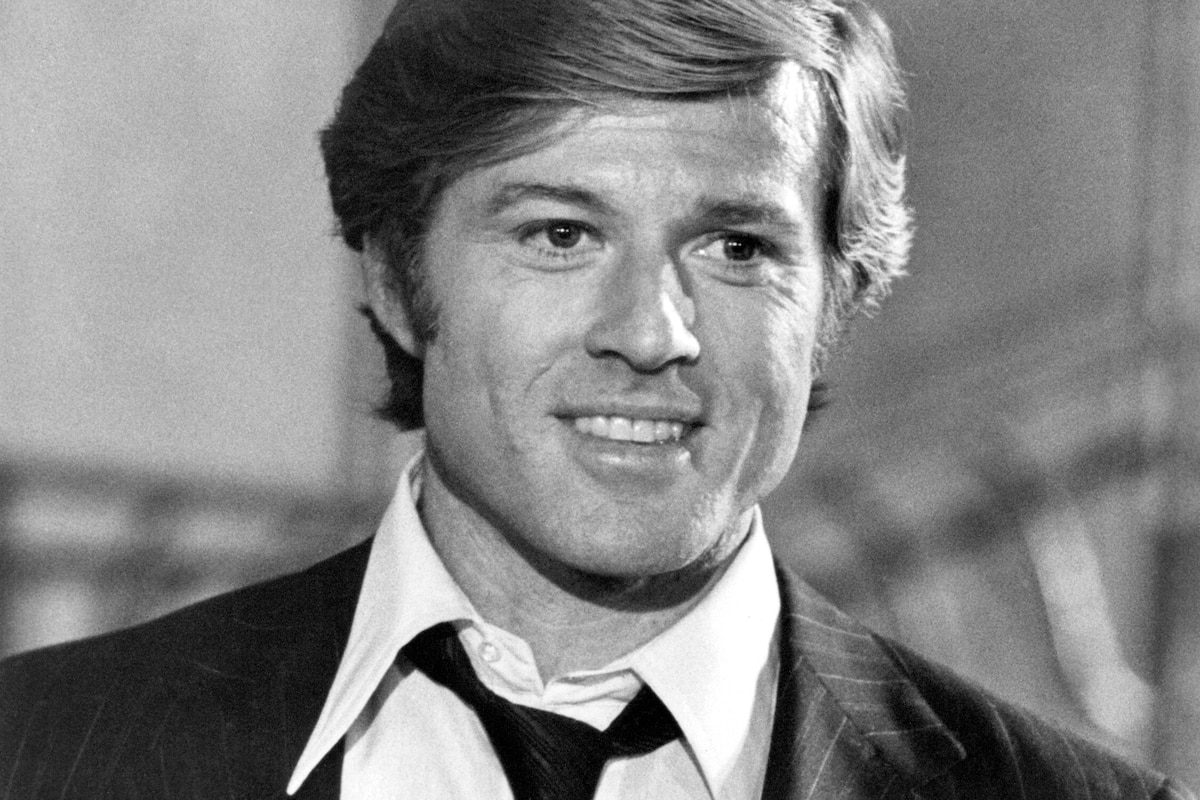
Over the course of his life, Redford became one of cinema’s most indelible figures, and while one could argue his conventional good looks and natural charisma would have made him a star at any time, such myopia misses his range as a performer and the breadth of his contribution to movies. One of the most iconic actors of his generation, Redford is perhaps best known for his role as the Sundance Kid in the film Butch Cassidy and the Sundance Kid (1969), the namesake for the now-famous Sundance Film Festival, which Redford helped found and has since become one of the most relevant and respected film festivals in the world.
Born on August 18, 1936, in Santa Monica, California, Redford tried his hand at sketching and painting before discovering his love of acting. He found initial success on stage, making his Broadway debut in "Tall Story" in 1959. He followed that role with parts in The Highest Tree (1959) and Sunday in New York (1961) before he would earn tremendous acclaim starring in the Broadway production of Neil Simon's "Barefoot in the Park" in 1963. By this point, he was also pursuing roles on screen, appearing on TV series like "Maverick" (ABC, 1957-1962) and "Perry Mason" (CBS, 1957-1966). He made his feature film debut in the film adaptation of Tall Story (1960), directed by Joshua Logan, reprising his role from the stage. The role went uncredited. Redford’s first credited onscreen film was War Hunt (1962), which slots Redford into the part of the idealistic soldier Pvt. Roy Loomis, who joins an infantry company near the end of the Korean War.
The role is an archetype—the neophyte soldier hardened by the horrors of battles—but Redford finds the texture and nuance in the character, playing perfectly off the disturbing Private Endore (John Saxon), who goes on independent night raids to feed his bloodlust. War Hunt not only marked Redford’s first major role, but also the feature debuts of Tom Skerritt and Sydney Pollack, the latter of whom would be one of Redford’s key creative collaborators, directing the actor in seven features. After appearing alongside Marlon Brando in The Chase (1966), Redford reprised his role in Barefoot in the Park (1967) for the movie adaptation, with Jane Fonda in the female lead. The movie was a hit, and Redford quickly became a major star. However, the film that skyrocketed the actor into the stratosphere was his first of two monumental collaborations with actor Paul Newman and director George Roy Hill: Butch Cassidy and the Sundance Kid (1969). He would go on to star in memorable films like The Candidate (1972), Jeremiah Johnson (1972), The Way We Were (1973), and All the President's Men (1976).
Redford would have another important director when he teamed up twice with Michael Ritchie, first for the sports drama Downhill Racer (1969) and then a few years later for The Candidate (1972), which remains a vital political text of modern America. Redford plays Bill McKay, a legal aid organizer and son of a former governor. When political consultant Marvin Lucas (Peter Boyle) lures Bill into the California senate race with the promise that he can talk about whatever he wants to, Bill accepts only to discover he’s now a cog in a larger machine. The genius of the film, and Redford’s performance, is to feint at the idea that this young, charismatic figure would obviously be a great candidate and then upends that expectation by showing how a modern campaign with its talking points, TV appearances, fundraising, etc., diminishes any politician who steps into it. By the time Bill’s stump speech is so rote and memorized, he can’t help but lean into the absurdity of the whole endeavor as he rides between appearances.
The space between a traditional movie star and digging deeper into the character’s psychology is how Redford found tension in his characters, as you can see in The Great Waldo Pepper (1975). The film reteams Redford with his Butch Cassidy and the Sundance Kid (1969) director George Roy Hill and screenwriter William Goldman, with a similar thematic subtext of men in a dangerous profession trying to continue their way of life in a modernizing world. Swap out train robberies for aerial acrobatics, and you have a spiritual sequel of sorts, but Waldo is no Sundance and allows Redford to start the film as a self-mythologizing playboy of the skies who, figuratively, comes back to Earth as his daredevil stunts take a toll on his loved ones and his health. It’s a sneakily melancholy film rooted in Hill’s past as a pilot, but Redford (along with the stunning aerial stunts) makes the movie soar.
Redford’s lead presence would be central in winning Oscars for directors (before winning one himself for his directorial debut feature, Ordinary People, 1980). For Hill, it was the second of three features with Redford, The Sting (1973), and one of many movies in the actor’s filmography that showed he couldn’t be pegged to any one time period. Although he was a performer who achieved stardom during the New Hollywood era, Redford appeared as comfortable in the Great Depression of The Sting as he did in the Wild West of Butch Cassidy, just as he is in the tumult of a contemporary setting like The Candidate. But the breeziness he can bring to a role without it ever feeling light is beautifully exemplified in The Sting, where he reteams with Paul Newman to pull a con on a crime boss (Robert Shaw). The film would go on to earn Best Picture and Best Director for Hill as well as, surprisingly, earn Redford his only Oscar nomination for acting.
In 1978, Redford's business partner Sterling Van Wagenen was inspired to launch an independent film festival, leading to the pair collaborating on the Sundance Film Festival, which has since become one of the most relevant and respected film festivals in the world. Around this same time, Redford also took a keen interest in directing, stepping behind the camera to helm the acclaimed family drama Ordinary People. His directorial efforts would remain successful with A River Runs Through It (1983), Quiz Show (1994), The Horse Whisperer, The Legend of Bagger Vance (2000), Lions for Lambs (2007), The Conspirator (2010), The Company You Keep (2012) and a segment in the anthology film Cathedrals of Culture (2014).
He would remain a successful actor, however. Of Redford’s seven collaborations with director Sydney Pollack, the one that would win the Oscar for Best Picture and Director was Out of Africa (1985). The film is a sweeping romance set in Nairobi and follows Danish aristocrat Karen Dinesen (Meryl Streep) as she grows to love her new homeland and bristles against the patriarchal and colonialist attitudes she encounters. Her awakening comes in part through her relationship with big-game hunter Denys Finch Hatton (Redford), who loves Karen but also treasures his independence. It’s a lush drama that unsurprisingly won seven Oscars, including Best Picture, but one where Redford once again shows himself as a generous scene partner, fitting comfortably into the piece that places the central focus on Karen rather than Denys. That kind of generosity appears again and again in Redford’s work and is one of the reasons co-stars like Jane Fonda, Barbra Streisand and Sissy Spacek spoke so highly of him.
He plays off both Debra Winger and Daryl Hannah in Ivan Reitman’s screwball-esque picture Legal Eagles (1986). In this film, he plays an assistant district attorney who gets caught up with a charming defense lawyer (Winger) and her performance artist client (Hannah) in a case involving lost works of art. Redford was no stranger to comedic performances, but rarely did he get the opportunity to be as silly as he is here. During a sleepless night, his character ends up tap dancing in the bathroom while Singin’ in the Rain (1952) plays on the television. He later has to outrun an explosion by driving a forklift.
It could be easy to mistake Redford as just another pretty face, but he refused to let audiences or directors pigeonhole him as such. If anything, Redford continued to push himself as an actor throughout his career, finding new collaborators and keeping audiences on their toes. As serious as he was about filmmaking as an art, he never stopped being playful, showing up later in his career with successful pictures, including Sneakers (1992), Up Close & Personal (1996), The Last Castle (2001), Spy Game (2001) and the stunning, one-man film All Is Lost (2013), in which he has almost no lines of dialogue. He even lended his credibility to the blockbuster fare of Captain America: The Winter Soldier (2014). In 2017, Redford re-teamed with one of his first major screen partners, co-starring with Jane Fonda in Our Souls at Night. It’s perhaps fitting that his final major role would be his farewell performance, starring in The Old Man and the Gun (2018) opposite Sissy Spacek. It’s the true story of a bank robber who escaped from prison numerous times. Director David Lowery was able to use footage from earlier Redford movies like The Chase, which is also about a prison escapee, as “flashbacks” for the character, later noting how the montage of the prison breaks functioned as a kind of retrospective for the actor’s career.
Redford died in his sleep in Sundance, Utah, on September 25, 2025, at 89 years old. His longtime friend and colleague Jane Fonda remembered him at the 2026 TCM Classic Film Festival. Of Redford’s work at the Sundance Institute, she said, “He wanted to make different [films]. It’s called “independent,” films that had nuance and diversity. He wanted diversity, he wanted complexity, he wanted surprises. He could have built an empire, and he built a nest for artists to feel safe and to grow.”