Former monthly contribution by late TCM host Robert Osborne to the TCM newsletter Now Playing in June, 2015.
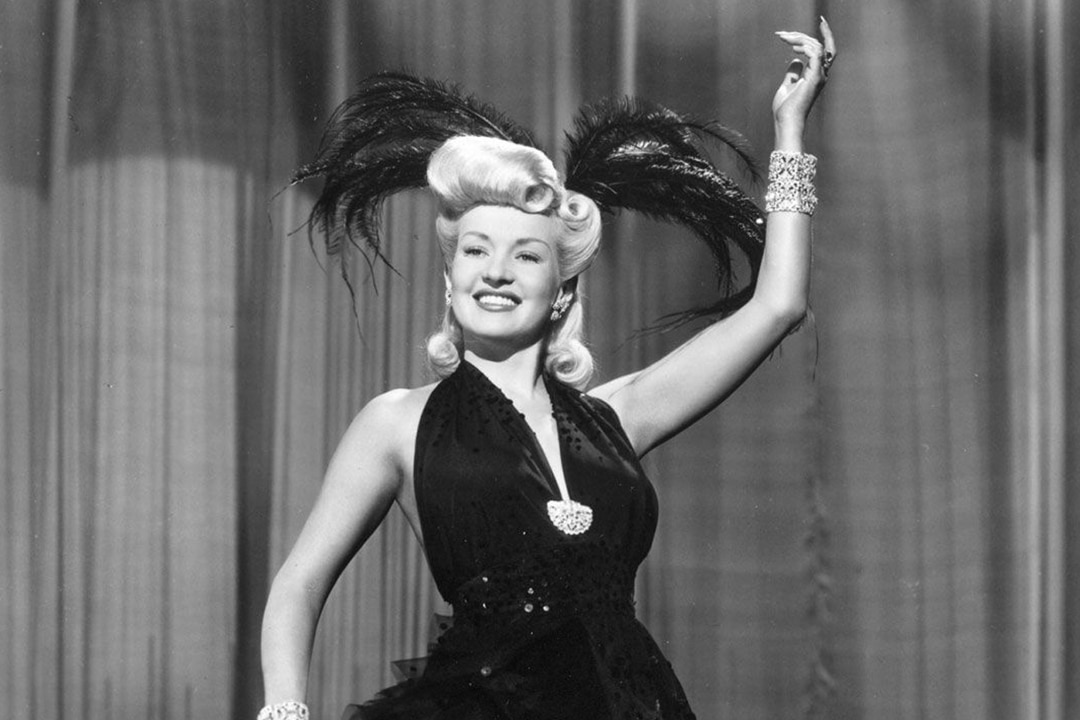
We who love movies have always had great favorites among the many talented women who have made their unique impressions on us in films through the years–the Stanwycks, Streisands, Streeps, Bergmans, Loys, Garsons, Tierneys and (fill in the blank), among the many. But there's one breed of female star that often gets short shrift when you're talking about impressive cinematic ladies. I speak of the "Pin-Up Girls", those photogenic beauties famous for their images (usually 8x10), which once hung in lockers on military installations around the world, a constant reminder to the boys on the front lines of what they were fighting for. It's an oversight we're going to do our best to correct this month on TCM–not only saluting the most famous of the Pin-Ups but also showing examples of why these particular women were idealized, idolized and, admittedly, lusted after in the first place.
Interestingly, the "Pin-Up Girl" didn't exist until just before the Second World War exploded globally. The term was actually first used in a special July 7, 1941 issue of “Life” magazine in reference to Dorothy Lamour, famous for her curvaceous figure encased in a tight-fitting sarong, which she wore in a number of popular films set on various fictional South Sea islands. It was “Life” which dubbed Dottie the nation's first "Pin-Up Girl" because of simple mathematics: the image of Lamour was pinned up in more lockers of soldiers, sailors and marines than any other well-known female of that pre-WWII era.
Alas, Lamour didn't hold that distinction for long. Five weeks later, in the August 11, 1941, issue of that same weekly magazine, “Life” published a full-page image of Rita Hayworth, photographed by Bob Landry, showing the 23-year-old Rita provocatively wearing a silk negligee trimmed with black lace and playfully sitting on her knees on her bed at home. Pow! It's a photographic image that created a virtual sensation and for the next two years remained the most requested of all the pin-up pictures then in circulation, despite competition from such diverse and sultry ladies as Hedy Lamarr as an untamed jungle vixen in the film White Cargo, Jane Russell lazily reclined in a haystack in Howard Hughes' Western The Outlaw and Veronica Lake with her gorgeous long hair combed in a way that indicated she may have had only one eye in The Glass Key.
Then in 1943, along came a new game-changer, a photo of Betty Grable by 20th Century-Fox's lensman Frank Powolny, showing Grable in a one-piece bathing suit, her back to the camera, hands on her hips, as she saucily looks over her right shoulder. To this day, 72 years later, it remains the yardstick by which all other Pin-Up poses have been judged. Over five million copies of the Powolny shot were sent out to fill requests, the photo itself later designated as one of the "100 Photographs that Changed the World."
We'll be showing Grable's 1944 musical Pin-Up Girl for the first time on TCM, launching a whole month of films with iconic Pin-Ups of the 1940s, 1950s and beyond. With each film comes this guarantee: the scenery couldn't possibly look better than it will this June on Turner Classic Movies.