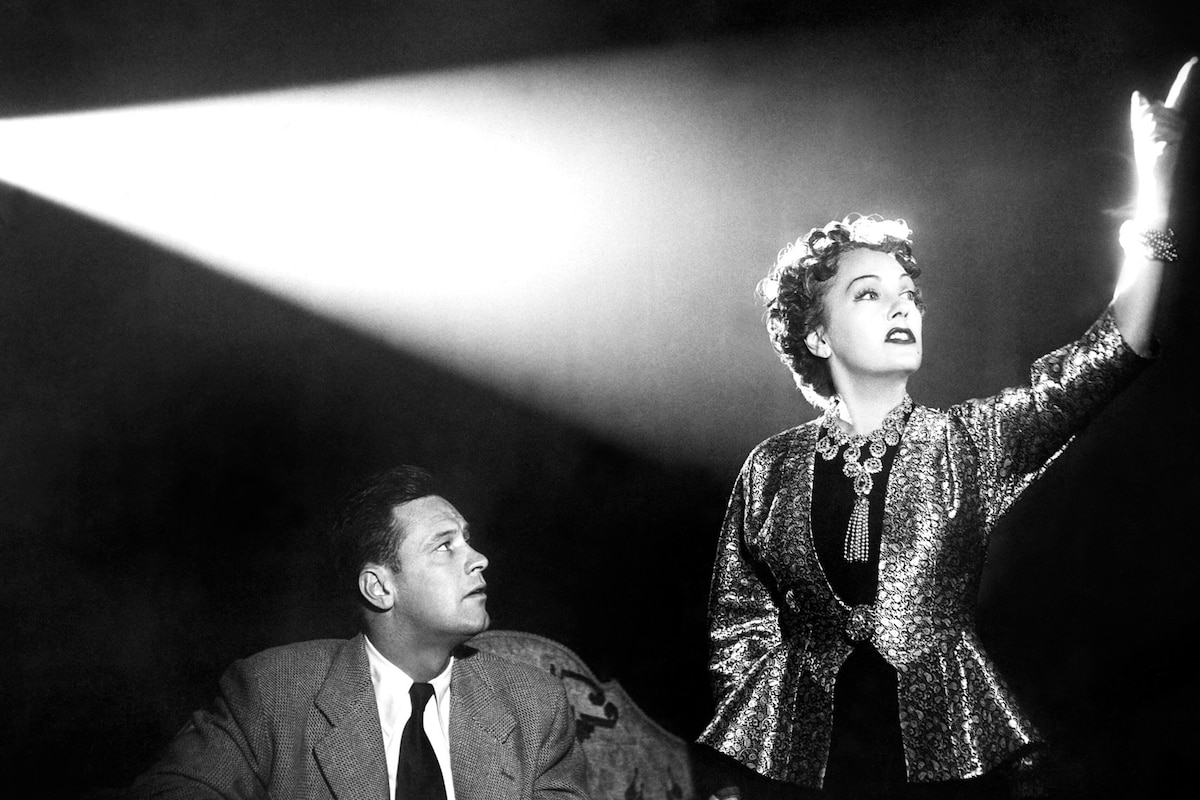

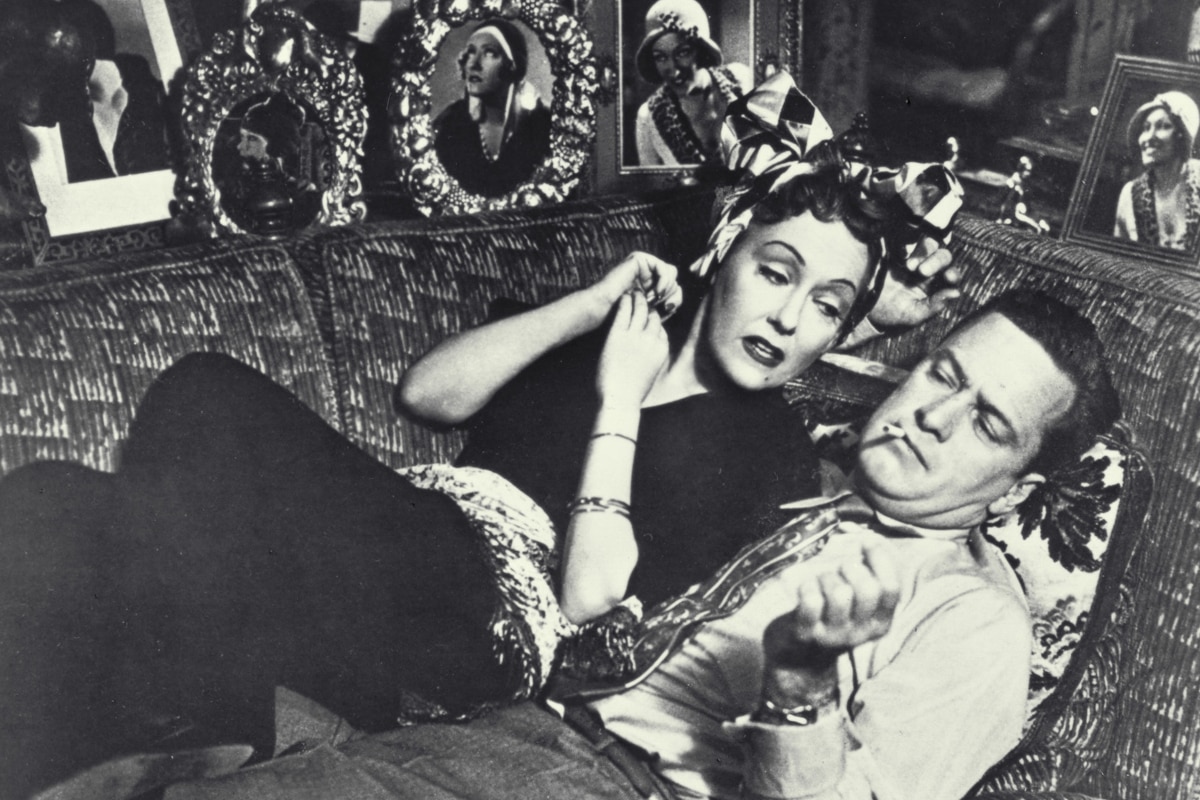
Hollywood has always been fascinated by tales about its own cruelty, and Sunset Boulevard (1950) is the most ruthless Hollywood tale of them all. In the opening shot, the camera tilts down over a sidewalk to reveal the words "SUNSET BLVD" painted on the curb, above a street gutter littered with dead leaves. A dead man narrates the film, he’s our protagonist, Joe Gillis (William Holden). A down-and-out screenwriter who can't pay his bills, Joe makes the acquaintance of silent movie queen Norma Desmond (Gloria Swanson), who is lost in her dreams of former glory. Her servant and former director Max von Mayerling (Erich von Stroheim) helps preserve her fragile illusions. Desperate for money, Gillis agrees to work on the script for her supposed comeback vehicle and finds himself becoming a kept man to the possessive movie star. He meets and falls for an idealistic young studio script reader, Betty Schaefer (Nancy Olson), causing Norma to grow increasingly suspicious and jealous.
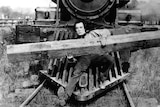
Sunset Boulevard is notable for its brazen introduction and the story's use of many "has-beens" played by actual stars of the silent era. One of Norma’s card-playing friends is none other than the great comedian Buster Keaton. Wilder originally approached former star William Haines to play one of Norma's bridge partners. Haines, whose career had ended because of his open homosexuality that he refused to hide in the face of the Code, was too happy in his new profession as an interior decorator to want to call attention to his past as an actor. In his place, Wilder hired Keaton.
H. B. Warner, best known for his performance as Jesus in Cecil B. DeMille's The King of Kings (1927), also plays himself, though he was hardly a has-been, considering his steady and prolific career throughout the 1930s and ‘40s. The Swedish-born Anna Q. Nilsson, the third of Norma’s "waxworks," was known for her roles in the early Raoul Walsh feature Regeneration (1915) and the William S. Hart vehicle The Toll Gate (1920). Norma Desmond's name was derived from silent comedienne Mabel Normand and her husband William Desmond Taylor. Significantly, the latter was murdered in 1922 under mysterious circumstances in what became one of the most notorious Hollywood scandals of the silent era, contributing to the establishment of the Hays Office that same year.
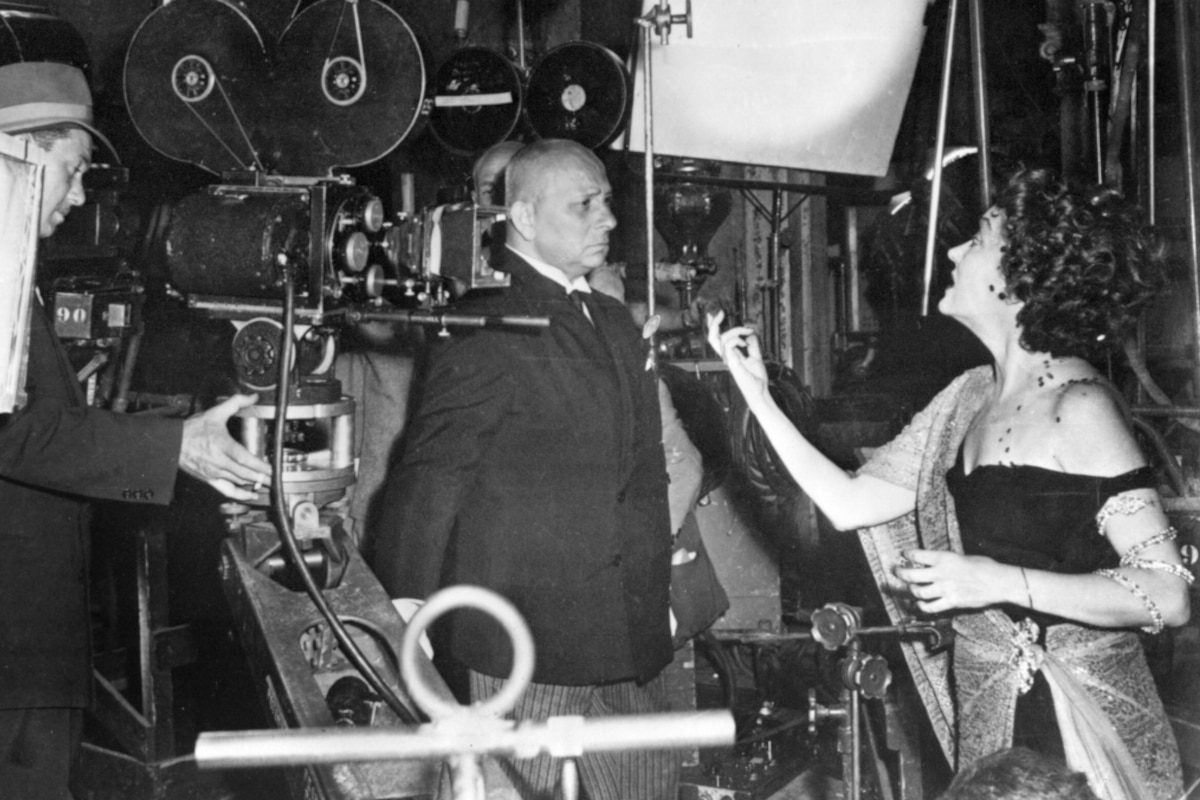
An even crueler irony was at work in the casting of Erich von Stroheim as the former director turned butler Max von Mayerling, who was unmistakably modeled after Stroheim himself. It was von Stroheim who suggested using clips from Queen Kelly (1929) in the film, the brief clip of the Norma Desmond film that Max screens for her and Joe. It was Stroheim's last major directorial effort, a starring vehicle for Gloria Swanson produced by her lover Joseph Kennedy. That film was halted mid-production because of Stroheim's excesses; in particular, Swanson objected to perverse elements in the plot such as making her character the inheritor of a brothel. Stroheim, in fact, directed one more film, the sound feature Walking Down Broadway (1933), which Fox Studios reshot, re-edited and re-titled Hello, Sister. Stroheim also offered other suggestions Wilder used, including the revelation that Max was writing all of Norma's fan mail.
According to Ed Sikov, author of the well-researched and snappily written biography “On Sunset Boulevard: The Life and Times of Billy Wilder,” screenwriter and producer Charles Brackett insisted that Swanson was the first choice for the crucial role of Norma Desmond from the very start. Wilder claimed that he initially wanted Mae West and also considered Pola Negri and Mary Pickford before settling on Swanson. At any rate, the choice of Swanson was felicitous since Cecil B. DeMille had previously directed her in lavish silent vehicles such as Don't Change Your Husband (1919), Male and Female (1919) and The Affairs of Anatole (1921). He had also completed the Biblical epic Samson and Delilah (1949) a few months before Sunset Boulevard began shooting, a detail which Wilder and Brackett worked ingeniously into the film's plot. Swanson herself proved fearless in her interpretation of the aging star, encompassing the grotesque, the vulnerable and ultimately the tragic aspects of her character.
Wilder and Brackett almost came to blows over the montage depicting Norma's preparations for her comeback. Brackett thought the sequence was cruel in its emphasis on what age had done to the one-time beauty, but Wilder insisted it was essential to show how driven she was in her pursuit of youth. Wilder won the argument and privately told friends that he would not be making any more films with Brackett. He stayed true to his word. Sunset Boulevard was the final collaboration for writer-producer Brackett and writer-director Wilder, one of the longest writing collaborations in Hollywood history. Their previous films together included Ninotchka (1939), Double Indemnity (1944) and The Lost Weekend (1945), which Wilder also directed.
William Holden's performance, particularly his sardonic voiceover narration, embodies the cynicism at the core of Wilder's work, and today it's hard to imagine anyone else in the role of Joe Gillis. However, originally Wilder assigned the lead to Montgomery Clift; after initially accepting the part, Clift backed down because of the age difference between him and Swanson. (Clift was 28 and Swanson was 50 at the time production began in the spring of 1949.) Some sources state that Fred MacMurray was also considered at one point.
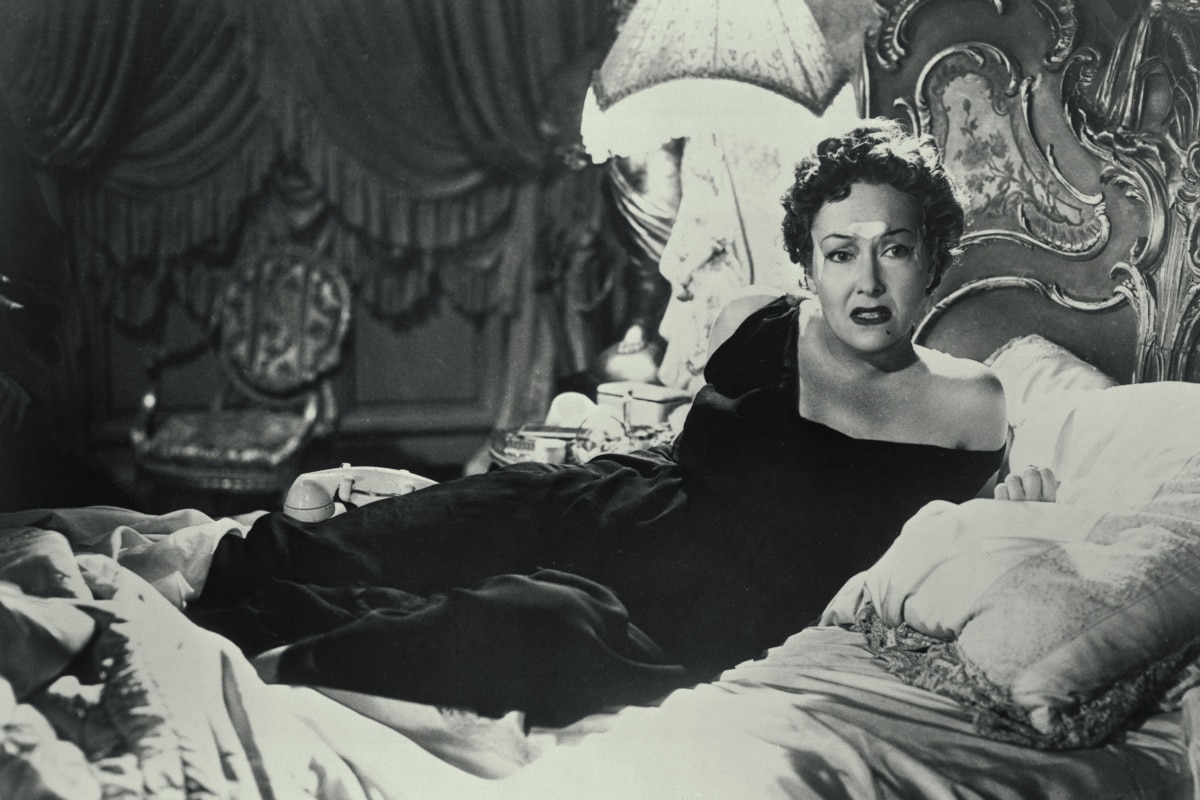
Everyone remembers Sunset Boulevard for its performances and its endlessly quotable dialogue ("I am big. It's the pictures that got small."), but the film is best appreciated as a work of cinema in which all the elements are meticulously coordinated. Wilder may not have the flamboyant visual style of, say, Alfred Hitchcock, but his direction is fluid and expressive, moving from shockingly direct imagery such as an underwater view of a corpse floating in a pool to more subtle effects such as using camera placement to draw the viewer's attention to a pair of doors in which the locks have been removed after we learn of Norma's history of suicide attempts.
The art direction by Hans Dreier and John Meehan brilliantly evokes the decaying grandeur of a bygone era; for those lucky enough to see a good 35mm print of the film, its rich detail is unforgettable, as this was the last major Hollywood film shot on a nitrate negative. The process was eventually abandoned because nitrate was highly flammable, but it produced amazingly lustrous black-and-white images. Franz Waxman's musical score, alternating between tense orchestral tuttis and a sly, jazz-inflected piano theme–associated mainly with the character of Gillis–is among the best of his career.
As has since become widely recounted, a preview version of the film opened with Gillis in the morgue, sitting up from his slab and conversing with the other cadavers. When audiences laughed at this scene during a preview screening, it was replaced with the now-famous shot of Gillis' corpse floating in the pool. Art director John Meehan experimented until he came up with the idea to shoot the scene through a mirror at the bottom of the studio water tank. From the right angle, the camera could shoot the reflected image in the mirror without ever going underwater. Wilder evidently liked the device of having a dead man tell his tale since he used it again in an early draft of his next film, arguably the most ruthless satire of his entire career: Ace in the Hole (1951).
Sunset Boulevard finished filming on June 25 with a final cost of $1,572,000. Wilder re-shot a few scenes in July and again in October. He finally finished shooting in January 1950 with retakes of Swanson's final descent of the staircase. When Swanson finished Norma's final scene, the mad staircase descent, she burst into tears and the crew applauded. Even though it wasn't the last scene filmed, Wilder threw a party for her as soon as the shot was finished.
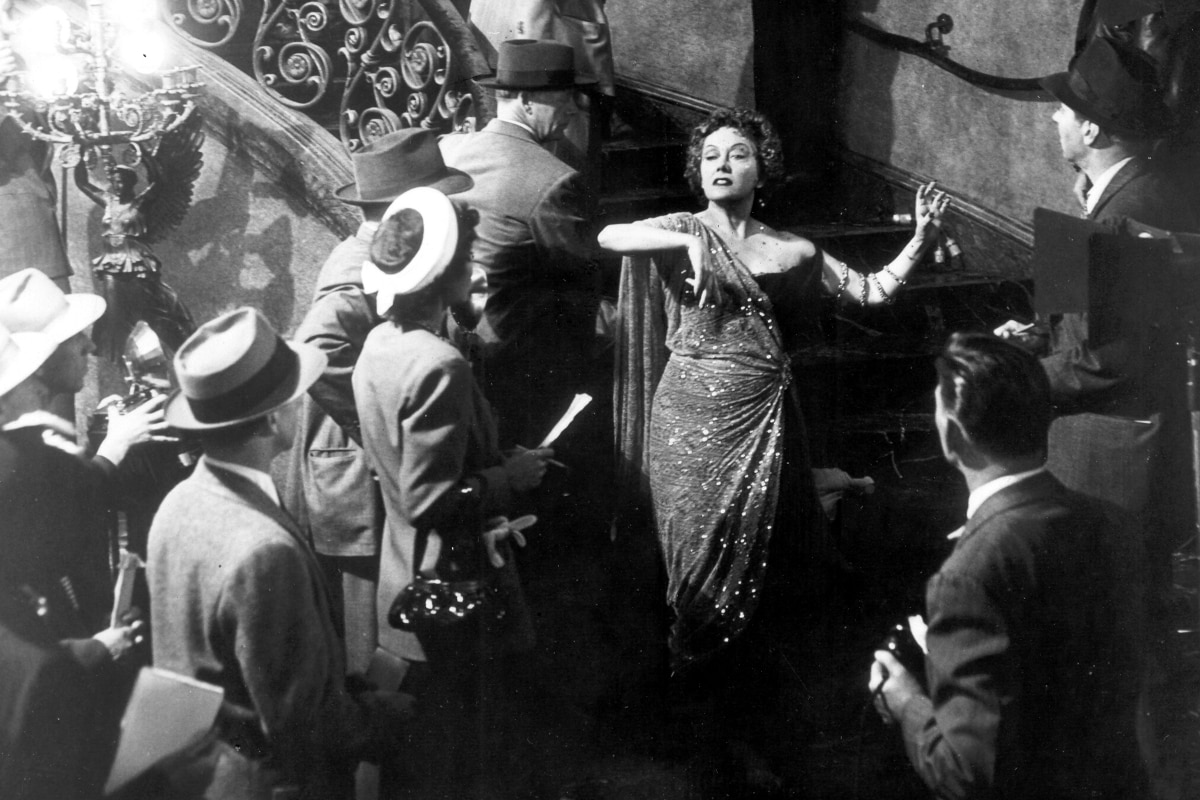
For the first industry screening of Sunset Boulevard, Paramount executives invited several silent film stars. At the end, they stood and cheered for Swanson's comeback. After seeing Sunset Boulevard in a preview, Barbara Stanwyck knelt at Swanson's feet and kissed the hem of her gown. After the screening, Louis B. Mayer is said to have berated Wilder for airing Hollywood's dirty laundry, saying something along the lines of: "You bastard! You have disgraced the industry that made you and fed you! You should be tarred and feathered and run out of Hollywood." Mayer's outrage was a sure sign of the film's future success.
Sunset Boulevard became one of the most admired pictures of its day, receiving nominations for Best Picture, Actor (Holden), Actress (Swanson), Supporting Actor (Stroheim), Supporting Actress (Olson), Cinematography and Editing. Ultimately it won awards for Best Story and Screenplay, Score and Art Direction. A more dubious honor, perhaps, was Andrew Lloyd Webber's musical adaptation that bowed on the London stage in 1993 with Patti LuPone in the lead. Still, Sunset Boulevard seems ageless even if Norma Desmond, tragically, was not. Test
Producer: Charles Brackett
Director: Billy Wilder
Screenplay: Billy Wilder, Charles Brackett and D. M. Marshman, Jr.
Photography: John F. Seitz
Editing: Arthur Schmidt
Music: Franz Waxman
Costumes: Edith Head
Art Direction: Hans Dreier and John Meehan
Principal cast: William Holden (Joe Gillis), Gloria Swanson (Norma Desmond), Erich von Stroheim (Max Von Mayerling), Nancy Olson (Betty Schaefer), Fred Clark (Sheldrake), Lloyd Gough (Morino), Jack Webb (Artie Green), Franklyn Farnum (Undertaker), Larry Blake (first finance man), Charles Dayton (second finance man), Cecil B. DeMille (himself), Buster Keaton (himself), Anna Q. Nilsson (herself), H. B. Warner (himself), Hedda Hopper (herself), Ray Evans (himself).
BW-111m. Closed captioning.