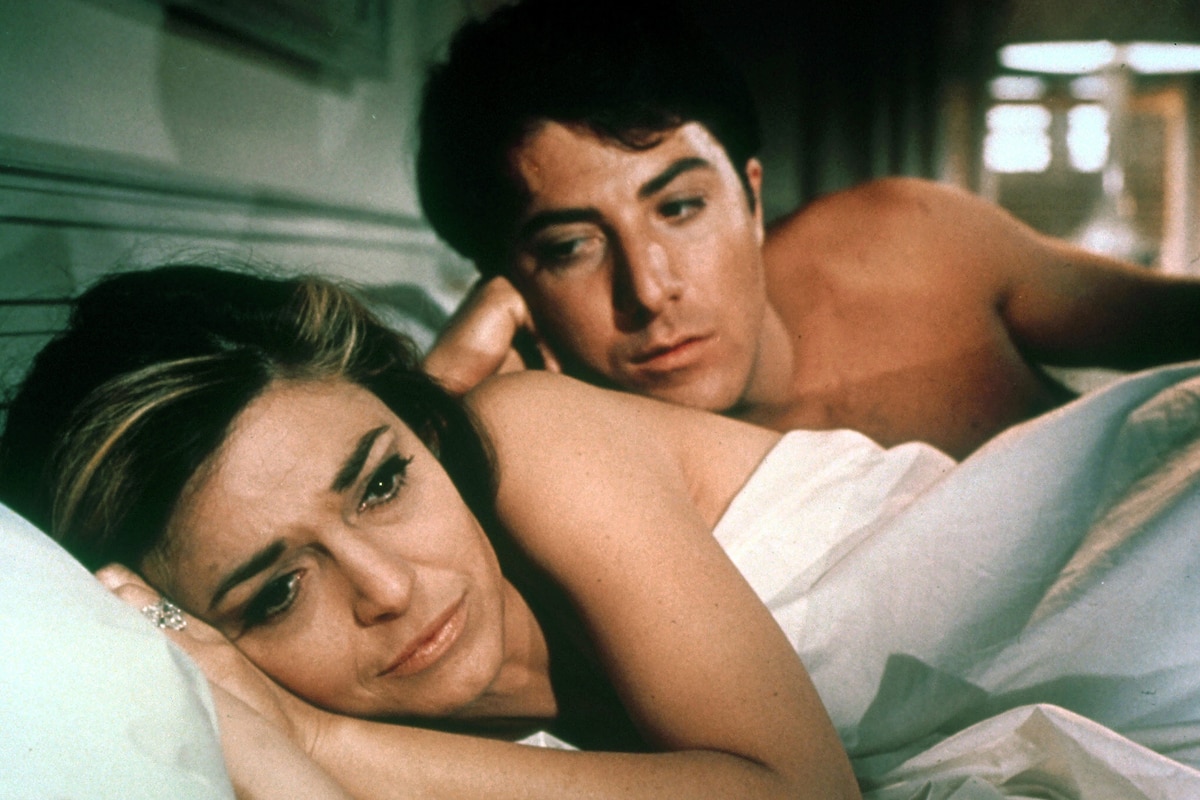

The Graduate (1967) is one of those films that's been quoted, parodied and referenced so often that you might think you've seen it even if you haven't. Even if you have, it's a film that's always good for another viewing, especially with a clear eye. The Graduate packed in the audiences in 1967 and gained seven Oscar nominations, but it really hasn't dated itself much. In his breakthrough role, Dustin Hoffman plays Benjamin, the graduate of the title. He returns to his home in the California suburbs where his family pressures him to make a decision about his immediate future. To complicate matters Benjamin is being pursued by one of his parents' best friends, Mrs. Robinson (Anne Bancroft), while falling in love with her daughter Elaine (Katharine Ross). It's a classic triangle situation kept fresh by a sly sense of humor and top-notch acting.
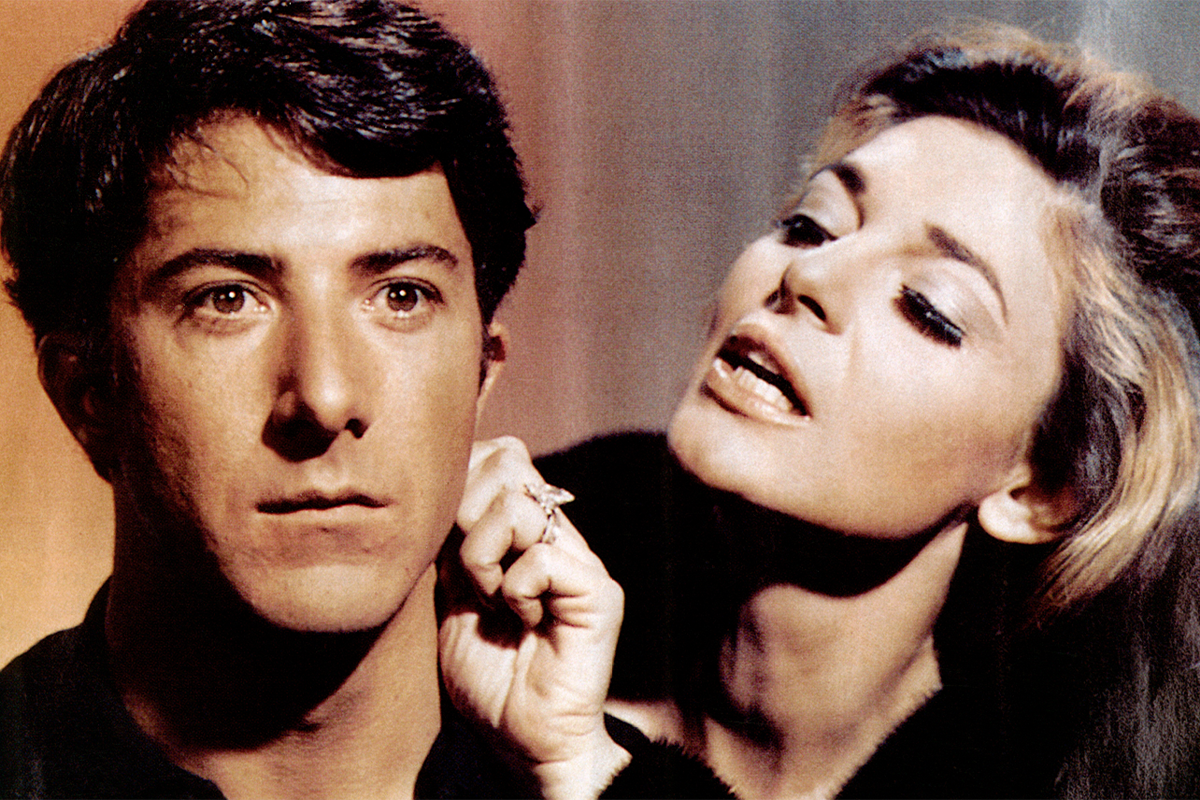
The Graduate's journey from page to screen began with the 1963 novel of the same name by Charles Webb, son of a well-to-do San Francisco doctor. In a 2005 interview with the British newspaper “The Guardian,” Webb acknowledged that the Benjamin Braddock character was based on himself and Elaine was modeled after his real-life spouse, an artist known as Fred. Webb denied Mrs. Robinson was Fred's mother and insisted the character grew out of a fantasy he had about one of his parents' friends. The book had its genesis when Webb went to the Pasadena Library one day and jotted down a short plot outline "to get that person out of my system."
Producer Lawrence Turman read about the novel in the “New York Times,” picked up a copy and decided he could make a good film out of it while remaining almost entirely faithful to the book. Webb sold the film rights to the book for $20,000, a good sum at the time but far short of the millions he might have earned by holding out for percentages. It was typical of his anti-materialist philosophy and attitude toward his parents and the wealth he grew up with, all of which found its way into the book. He turned down a huge inheritance from his father, gave thousands of dollars to a range of causes and charities over the years, and even donated the book's royalties to the Anti-Defamation League, preferring to live life on the most meager means.
Joseph E. Levine was the epitome of the independent producer who turned out top-grossing films after the collapse of the Hollywood studio system. After producing a number of hits, he formed his own company in the late 1960s, Avco Embassy, and The Graduate was his first project. This was actually going to be Mike Nichols' first film, following his successful career as part of a comedy team with Elaine May and then as a Broadway director. He had put the word out that he wanted to direct, but he wasn't interested in the scripts he was offered. Then Lawrence Turman brought him The Graduate. He agreed but at the same time got the chance to direct the film adaptation of Edward Albee's Who's Afraid of Virginia Woolf? (1966), so he decided to do that first.
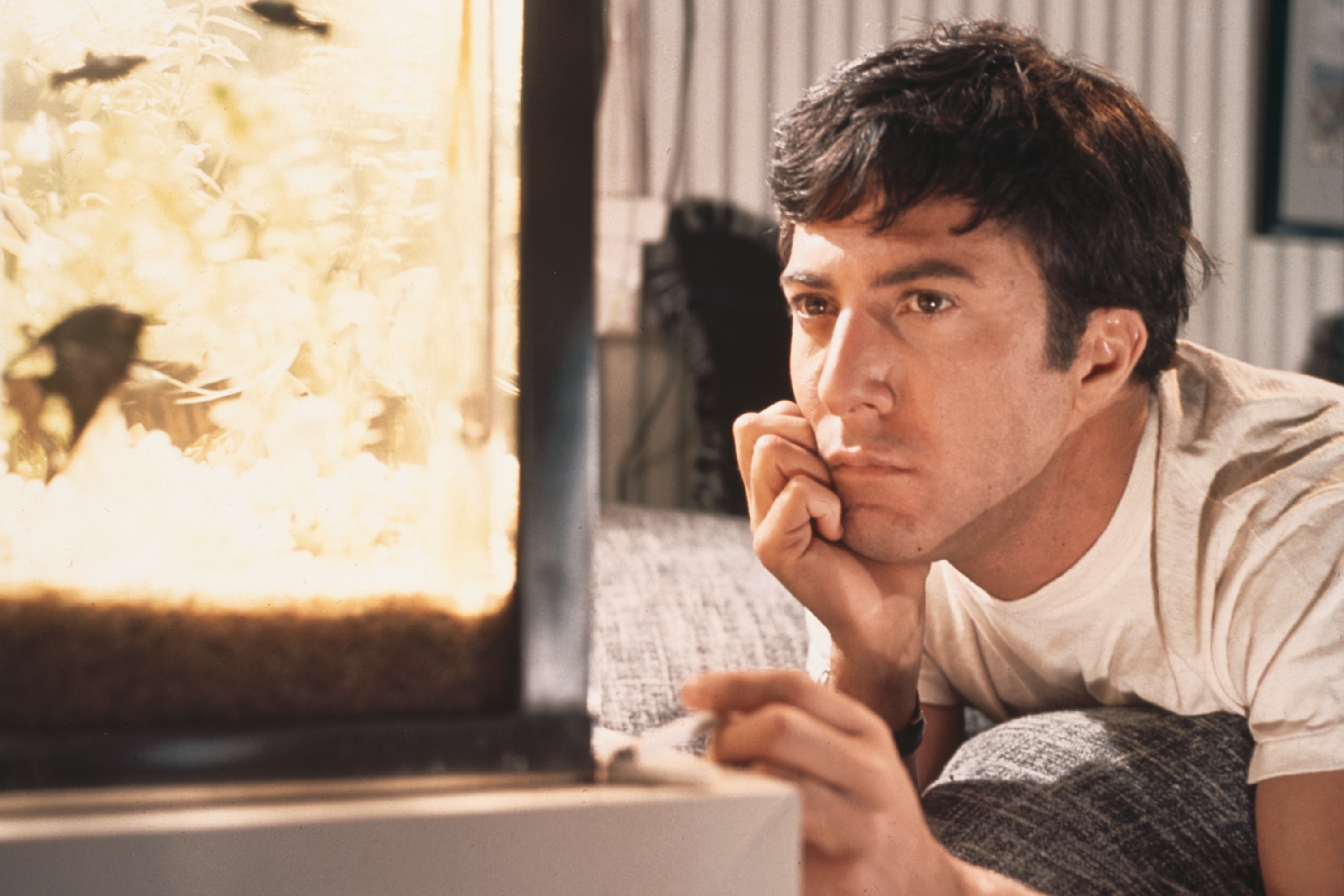
Casting the lead part of Benjamin turned out to be tough. "It's the hardest thing I've ever had to cast," director Mike Nichols said in an interview during pre-production. "These people are so far removed from stock characters." Robert Redford turned it down because he didn't think he could do it justice, so Charles Grodin ended up being cast only to quit over money issues. By the time Hoffman got the part on the strength of a screen test, he had already committed to a different film but was able to break his agreement. After all, it would have been hard to say no to a director as innovative as Mike Nichols. Nichols had decided on doing the film because of a scene in Webb's original novel that made him realize Mrs. Robinson would be "the most interesting person in the picture." Nichols said he tested a number of actors who were the actual age of the character, but he chose 30-year-old Hoffman because he had enough distance from his early 20s to have an attitude about that period in his life and "get rid of that self-pity."
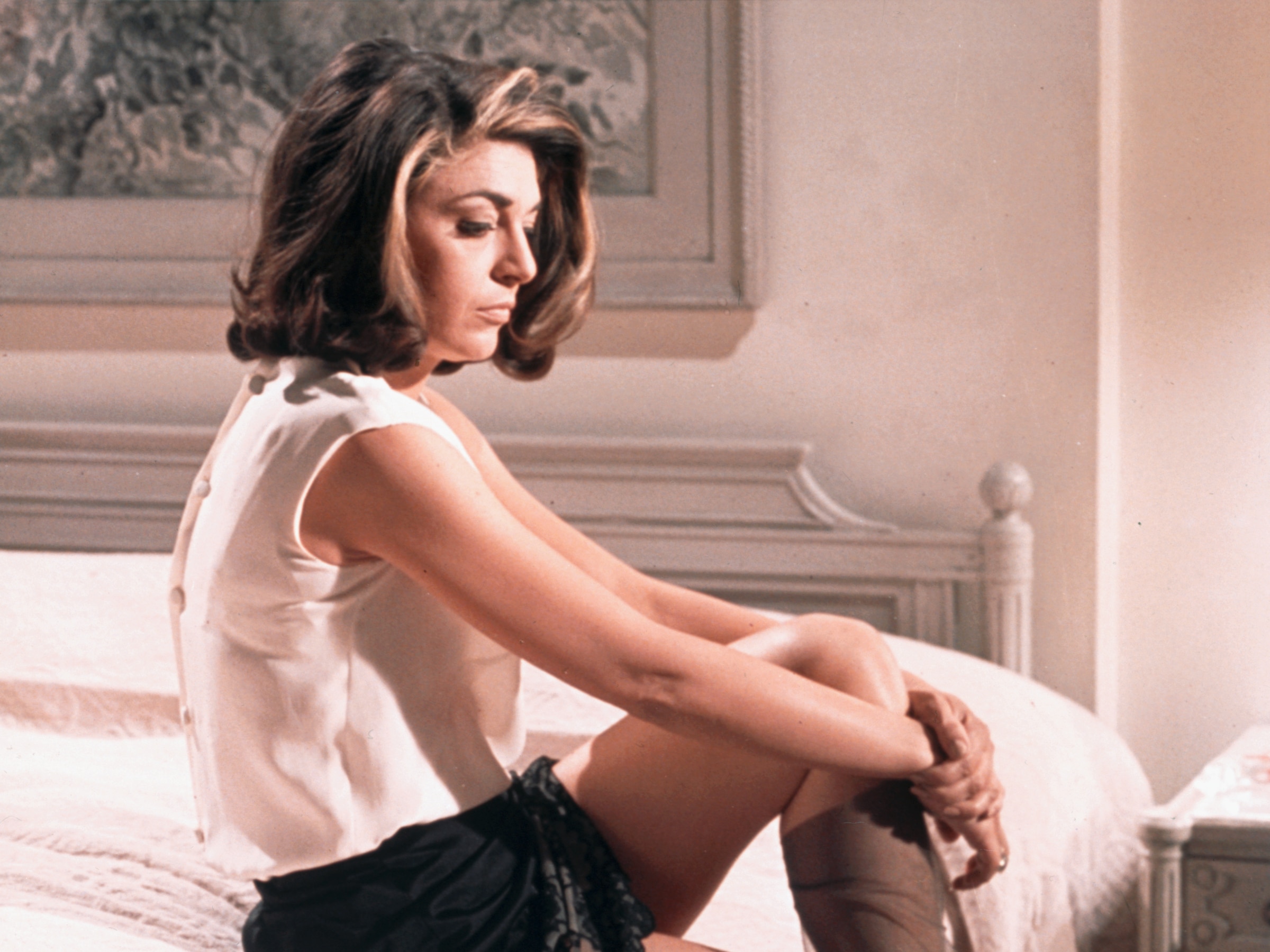
Casting that role was a bit easier since Bancroft had been in his mind, though Jeanne Moreau was briefly considered. Candice Bergen was also considered for the role. Sally Field allegedly tested for it, and Patty Duke is reported to have turned it down. Bancroft loved Nichols' description of Mrs. Robinson as someone who was angry with herself for giving up who she really was for wealth and security, the moment in the book that really captured his interest. When they shot the scene of Mrs. Robinson and Ben discussing art in the hotel room, Bancroft had forgotten Nichols' initial revelation about the character but managed to capture that anger and regret on subsequent takes. Nichols thought this was very important because he really wanted to drive home the point about the character having bargained away her life. "That seems to me the great American danger we're all in, that we'll bargain away the experience of being alive for the appearance of it." Also, keep an eye out for the film debuts of Richard Dreyfuss and Mike Farrell (Capt. Hunnicut on TV's “MASH”).
Nichols and production designer Richard Sylbert talked at length about how to accurately capture the look of middle class Southern California in a unique way and not just what had been seen in movies for 20 years, "like a Doris Day picture." In a later interview, he said, "California is like America in italics, like a parody of everything that's most dangerous to us."
Buck Henry and Calder Willingham wrote the Oscar-nominated script, which was followed very closely by Nichols since he didn't believe in improvising. The cast spent three weeks in rehearsals to get it right. (As a joke, in Robert Altman's The Player (1992), Henry can be seen pitching a remake of The Graduate to studio executives.) The Simon and Garfunkel songs were added both as commentary and as a marketing scheme. Paul Simon had written a fragment specifically for the film but was asked to expand it into a full song.
Producer: Lawrence Turnman
Director: Mike Nichols
Screenplay: Buck Henry, Calder Willingham
Cinematography: Robert Surtees
Costume Design: Patricia Zipprodt
Film Editing: Sam O’Steen
Original Music: Dave Grusin
Principal Cast: Dustin Hoffman (Benjamin Braddock), Anne Bancroft (Mrs. Robinson), William Daniels (Mr. Braddock), Elizabeth Wilson (Mrs. Braddock), Murray Hamilton (Mr. Robinson).
C-106m. Letterboxed. Closed captioning.