"Magnificent and Supreme Triumph of Film History," announced “The Hollywood Reporter” in its banner headline after the premiere of David O. Selznick's production of Gone With the Wind on December 15, 1939. Nearly 90 years later that description still holds, with this legendary Civil War romance lingering in the hearts and minds of most classic movie fans as the most memorable production of Hollywood's Golden Age. Gone With the Wind was the longest, most expensive and most successful Hollywood sound film up to its time. The movie earned a record 13 Academy Award nominations and won 10 Oscars (eight in competition and two honorary awards), including for Best Picture in competition with The Wizard of Oz, Stagecoach, Mr. Smith Goes to Washington and Goodbye, Mr. Chips.
Made for around $4 million, Gone With the Wind still holds the box-office record for domestic gross (adjusted for inflation). Over the years, Gone With the Wind has been given eight major theatrical re-releases and regularly shown on television, including as the film that launched TNT in 1988 and, famously, TCM in 1994. Margaret Mitchell's Pulitzer Prize-winning novel, on which the film is based, sold hundreds of millions of copies worldwide and continues to sell tens of thousands of copies a year.
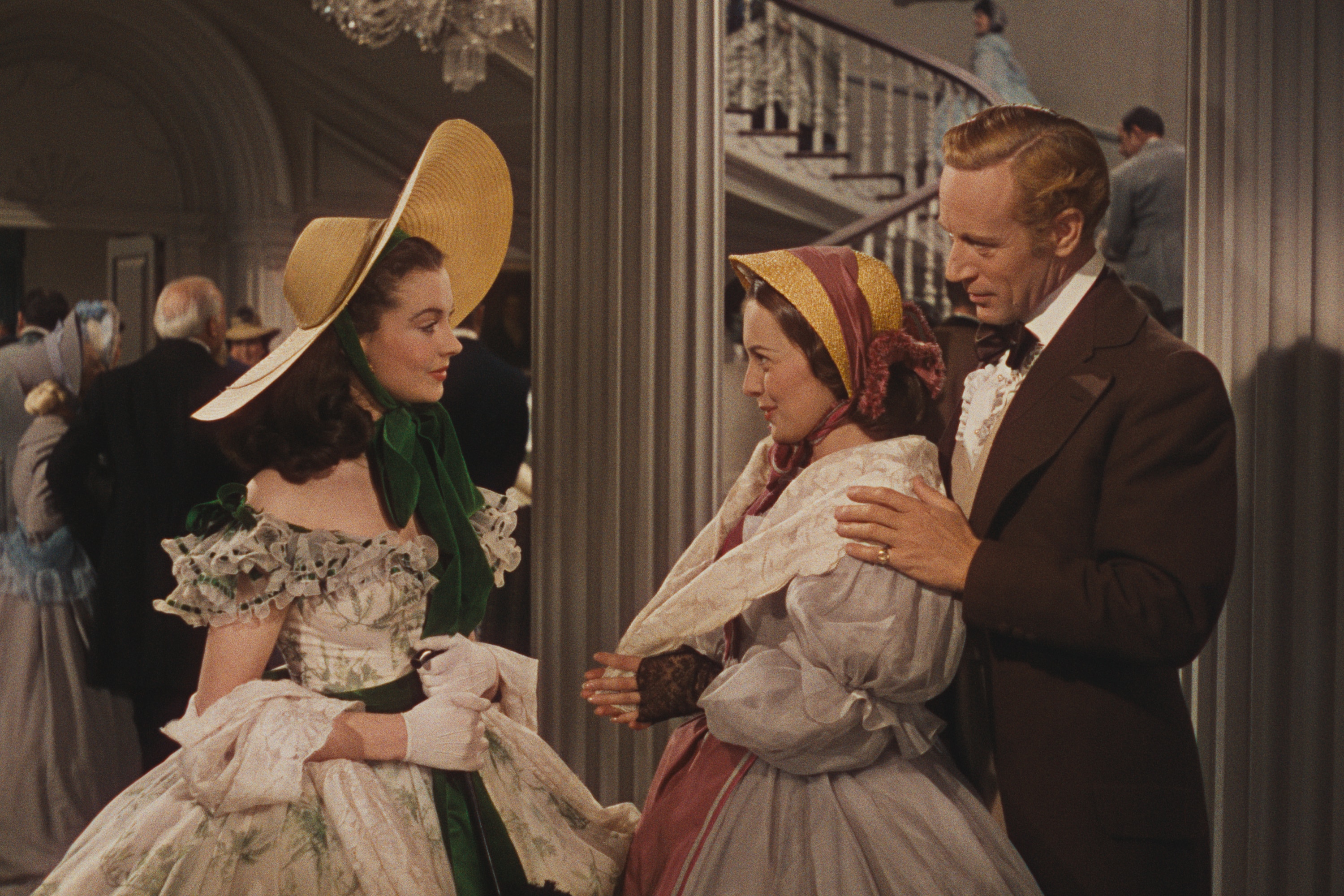
The story follows the willful, pampered Scarlett O'Hara (Vivien Leigh), the belle of Tara, a plantation in Civil War-era Georgia. Hopelessly in love with aristocratic landowner Ashley Wilkes (Leslie Howard), she loses him in marriage to his own cousin, Melanie Wilkes (Olivia de Havilland), but continues to pine for him through three marriages of her own – including one to the roguish Charlestonian Rhett Butler (Clark Gable), who recognizes Scarlett as a fellow rascal who can be ruthless in looking after her own interests. Surviving the horrors of war and the deprivations of reconstruction, Scarlett realizes too late where her heart really lies.
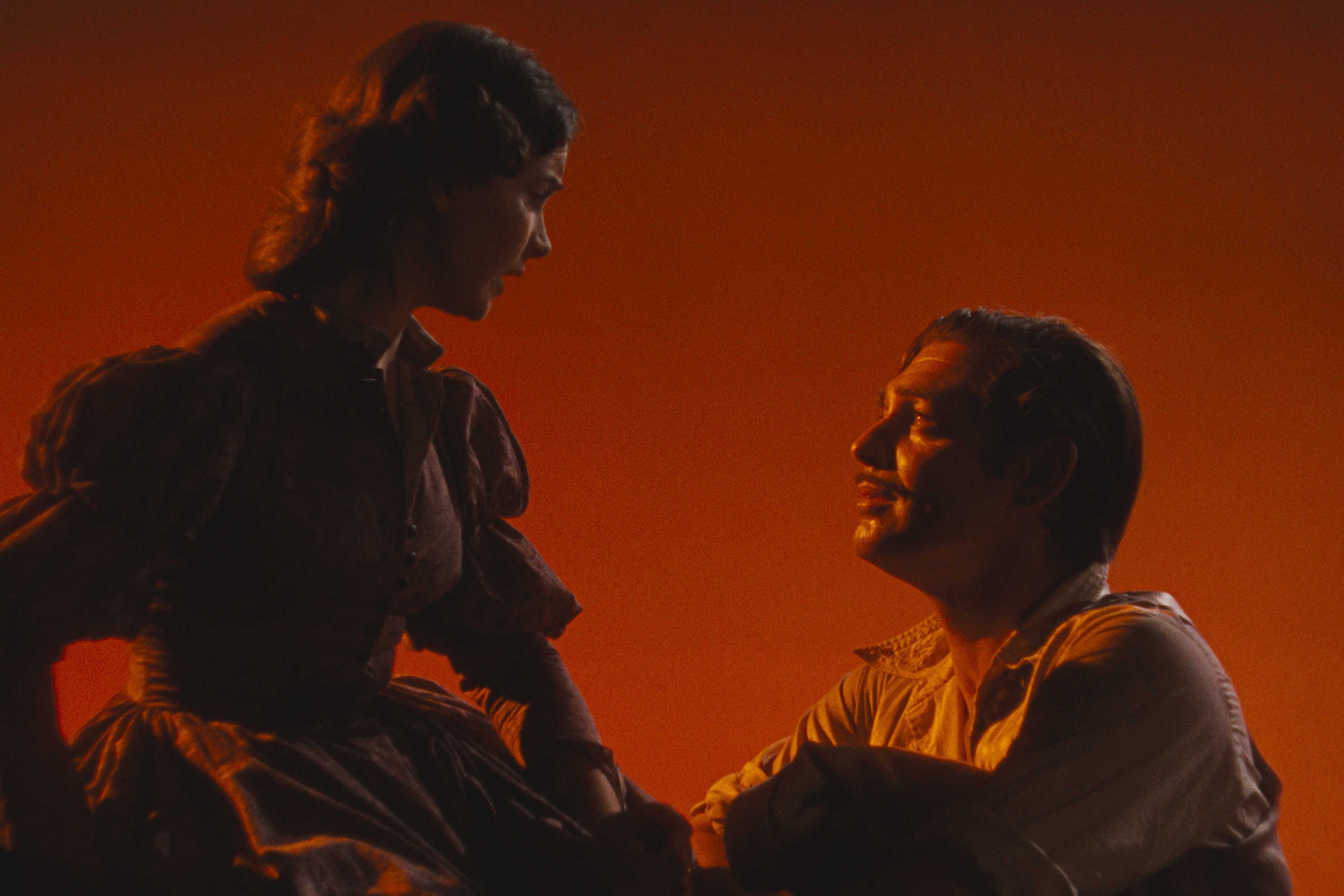
"Selznick's Folly" had become the nickname applied to the movie by cynics when producer Selznick bought the rights in 1936. While the epic was still in production, Gone With the Wind had also become a major preoccupation of the public at large, and suggesting cast members became a national pastime. Selznick had considered Errol Flynn or Gary Cooper as Rhett Butler but waited two years in order to secure the services of public favorite Clark Gable from MGM. Gable's casting came at a high price; although MGM agreed to pay half the film's budget, the studio would reap half the profits and release the film through its parent company, Loew's, Inc.
As this deal was being settled, the search for Scarlett reached frenzied proportions; among those considered were top stars at MGM (Norma Shearer and Joan Crawford), Warner Bros. (Bette Davis) and RKO (Katharine Hepburn). Meanwhile, Selznick was auditioning hundreds of unknowns in a well-publicized talent search, along with such well-known actresses as Tallulah Bankhead, Miriam Hopkins and Jean Arthur. Thirty-one actresses made screen tests including Paulette Goddard, who was considered for a time to have the inside track.
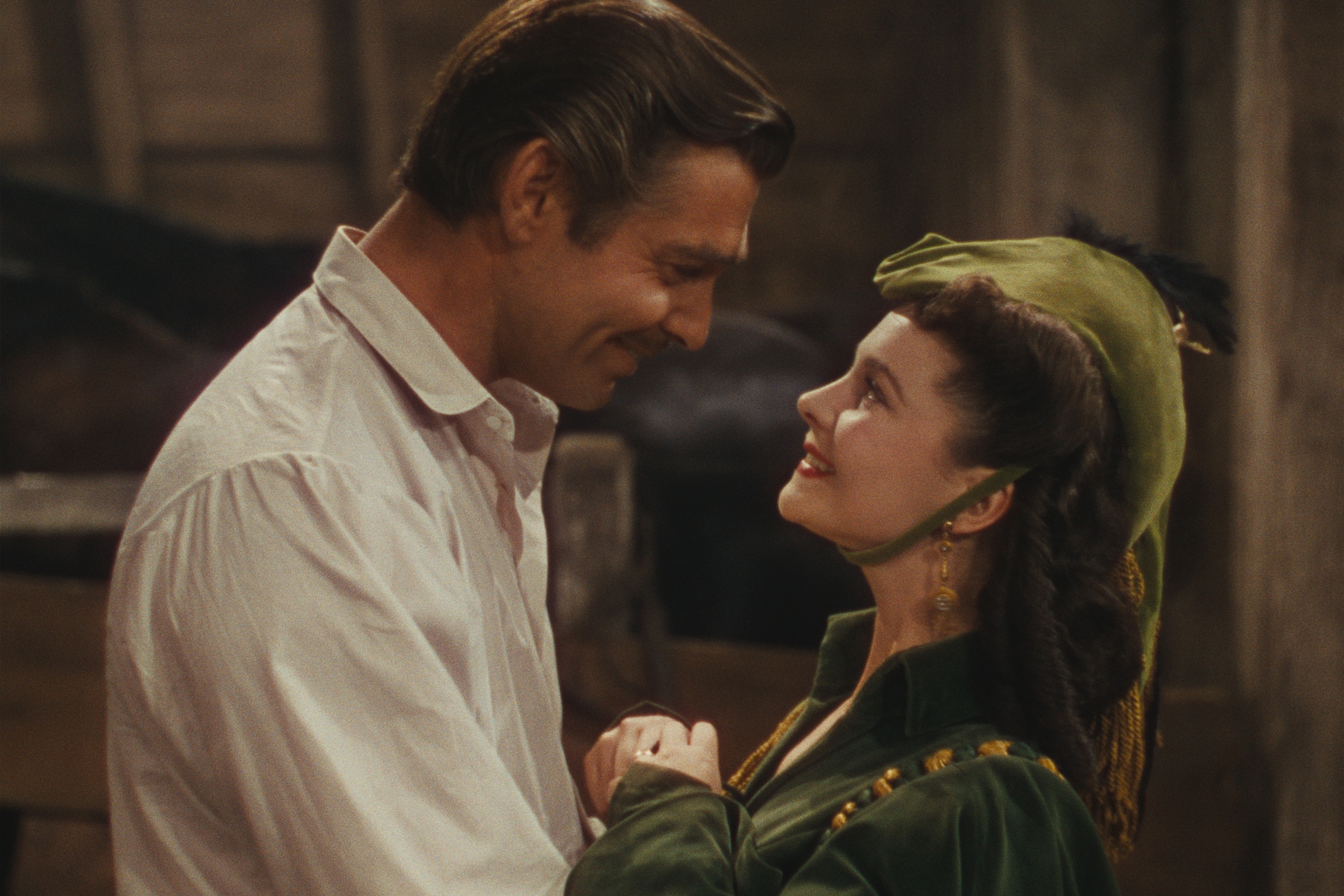
Enter Vivien Leigh, a British beauty with few screen credits and little name recognition in America. According to Hollywood lore, Selznick first glimpsed at her with her exquisite face alight from the flames of the sets being destroyed to represent the burning of Atlanta. Myron Selznick, David's brother and the agent of Leigh's lover Laurence Olivier, is said to have called out to his sibling, "Hey, genius, meet your Scarlett O'Hara!" Once cast, Leigh–despite her youth and lack of experience in Hollywood–took fierce hold of the role and made Scarlett her own, vividly conveying both the character's coquettish charm and her underlying spine of steel.
Rounding out the cast of principals, along with the perfectly cast Gable, were Olivia de Havilland as Melanie, Leslie Howard as Ashley, Thomas Mitchell and Barbara O'Neil as Scarlett's parents, and Hattie McDaniel and Butterfly McQueen as O'Hara slaves Mammy and Prissy, respectively. The production was a turbulent one, with Selznick obsessing over every detail, struggling with Sidney Howard and other writers to condense Mitchell's epic story to a reasonable length, and going through three directors, including original choice George Cukor, Sam Wood and Victor Fleming (who received screen credit). All the technical resources of Selznick International Pictures were brought to bear, and Gone With the Wind's Technicolor images had a style, dash and polish unlike anything else that had been seen on the screen.
When Oscar night came, Gone With the Wind continued to make history with eight wins, plus special awards to Selznick and production designer William Cameron Menzies. The first two major awards for Gone With the Wind were not claimed by their winners. Selznick accepted for director Victor Fleming, explaining that he was ill. Screenwriter Sidney Howard, who had been killed in a tractor accident on his Massachusetts farm, became the first posthumous Oscar winner. When Y. Frank Freeman presented Selznick with the Best Picture award, the Southern-born Paramount executive cracked, "David, I never saw so many soldiers as were used in Gone With the Wind. Believe me, if the Confederate Army had had that many, we would have licked you damn Yankees."
From the time of the publication of the novel, Gone With the Wind has provoked controversy because the O'Hara family and other white Southerners in the story are unrepentant slave owners. Upon its original release, the film was met with mixed responses from the Black community in the U.S., with many protesting that it amounted to a racial insult and others seeing some signs of progress for Black performers in the film industry. Fay Bainter, announcing the winner for Best Supporting Actress, described the award as "a tribute to a country where people are free to honor noteworthy achievements regardless of creed, race or color." A big "Hallelujah!" rang from the lips of Hattie McDaniel.
McDaniel won for Best Supporting Actress for her role as Mammy in Gone With the Wind. Her win was the first such honor accorded to an African-American. In an acceptance speech reportedly prepared for her by the Selznick studio but delivered with heartfelt sincerity, she said, in part, "I sincerely hope I shall always be a credit to my race and to the motion picture industry." A disappointed de Havilland, also nominated in McDaniel's category, slipped into the Coconut Grove kitchen for some private tears before composing herself and returning to congratulate her co-star. In his final appearance at an Oscar ceremony, Spencer Tracy appeared to present Leigh with her Best Actress award for so memorably playing Scarlett in Gone With the Wind. Leigh ended her acceptance speech with special thanks to Tracy for coming straight from the hospital after two days of treatment for strep throat.
Perfectionists are never happy, as publicist Russell Birdwell learned on his drive with Selznick to a celebration party. According to Selznick biographer Bob Thomas, the producer snapped to Birdwell, who had campaigned tirelessly for the Gone With the Wind awards, "I don't know why we didn't get the Best Actor award for Gable. Somewhere you failed. You didn't put on the proper campaign; otherwise, Clark Gable would have been sure to get it." After the devastated Birdwell failed to report to work for two days, Selznick called and admitted, "I was a pig. I worked so hard and waited so long, I got piggish and wanted everything."
Producer: David O. Selznick
Director: Victor Fleming, George Cukor (uncredited), Sam Wood (uncredited)
Screenplay: Sidney Howard, Ben Hecht (uncredited), David O. Selznick (uncredited), Jo Swerling (uncredited), John Van Druten (uncredited), from Margaret Mitchell novel
Production Design: William Cameron Menzies
Art Direction: Lyle R. Wheeler
Cinematography: Ernest Haller, Ray Rennahan, Lee Garmes (uncredited)
Costume Design: Walter Plunkett
Editing: Hal C. Kern (supervising)
Original Music: Max Steiner, Adolph Deutsch (uncredited), Hugo Friedhofer (uncredited), Heinz Roemheld (uncredited)
Principal Cast: Clark Gable (Rhett Butler), Vivien Leigh (Scarlett O'Hara), Leslie Howard (Ashley Wilkes), Olivia de Havilland (Melanie Hamilton Wilkes), Hattie McDaniel (Mammy), Thomas Mitchell (Gerald O'Hara), Barbara O'Neil (Ellen O'Hara), Evelyn Keyes (Suellen O'Hara), Ann Rutherford (Careen O'Hara), George Reeves (Stuart Tarleton), Fred Crane (Brent Tarleton), Oscar Polk (Pork), Butterfly McQueen (Prissy), Victor Jory (Jonas Wilkerson), Ona Munson (Belle Watling), Cammie King (Bonnie Blue Butler).
C-222m. Closed captioning. Descriptive Video.