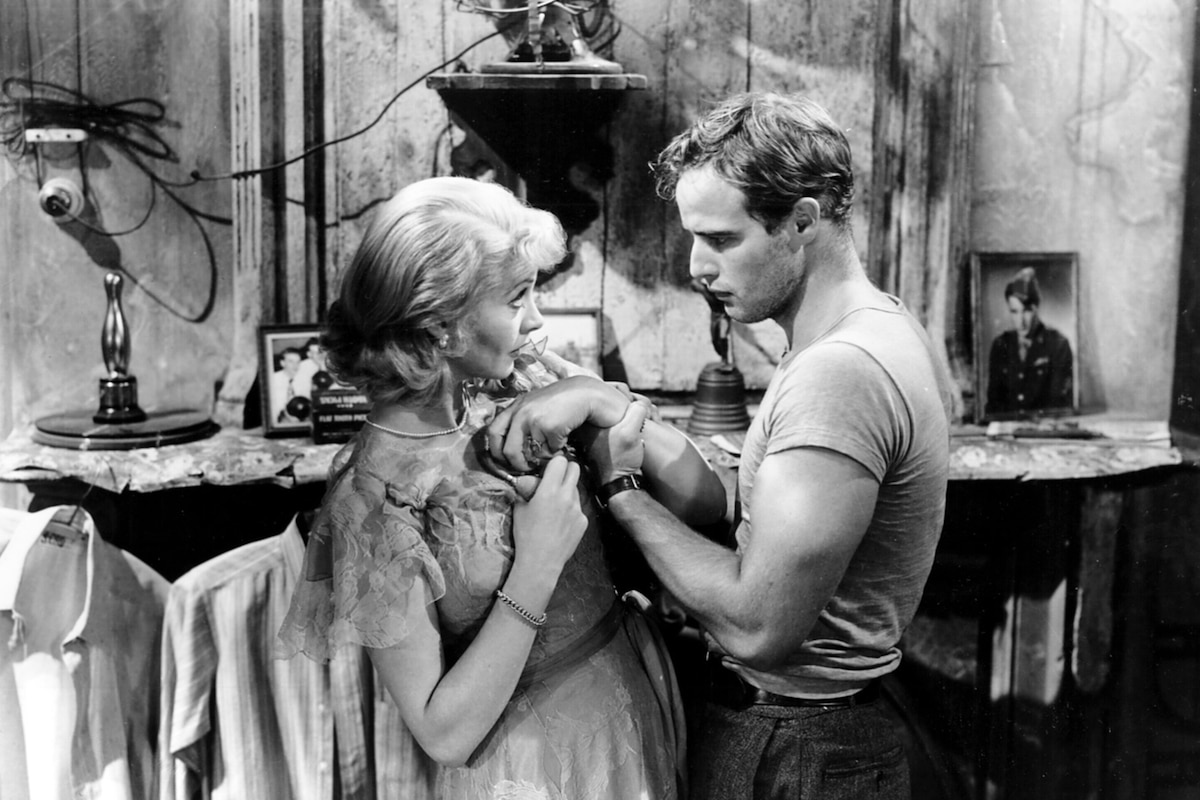

Blanche DuBois (Vivien Leigh) is an aging, emotionally frayed schoolteacher who leaves her hometown under mysterious circumstances and stays with her pregnant sister Stella (Kim Hunter) in New Orleans. Stella's brutish husband, Stanley Kowalski (Marlon Brando), resents Blanche's presence and accuses her of squandering the family inheritance. He sets about tearing down the fragile world of illusion with which Blanche attempts to surround herself. Directed by Eliza Kazan and written by Tennessee Williams and Oscar Saul, A Streetcar Named Desire (1951) became one of the most influential and controversial films of its time and remains a significant drama to this day.
Although “The Glass Menagerie” in 1944 was Williams’s first commercial onstage success, “A Streetcar Named Desire” became his signature play, full of visceral emotion and unnerving tragic realism. Debuting on Broadway in 1947, it earned Williams his first Pulitzer Prize and the first of four New York Drama Critics Circle Awards. In the stage version directed by Kazan and produced by Irene Mayer Selznick, Jessica Tandy played Blanche DuBois, Hunter was Stella, and Brando became the talk of Broadway for his performance as the primal Stanley. The principal players–along with Karl Malden, Rudy Bond, Nick Dennis, Peg Hillias and Edna Thomas–and Kazan were all recruited for the film adaptation. The exception was Tandy who, despite being an absolute smash on Broadway, was replaced with Leigh. (Olivia de Havilland was offered the role first but turned it down.) Studio executives did not think Tandy was a household name outside of the New York stage, so her role went to Leigh, who was famous for her role as another colorful Southern belle in Gone With the Wind (1939). Leigh had also starred in a London production of the play directed by her husband, Laurence Olivier.
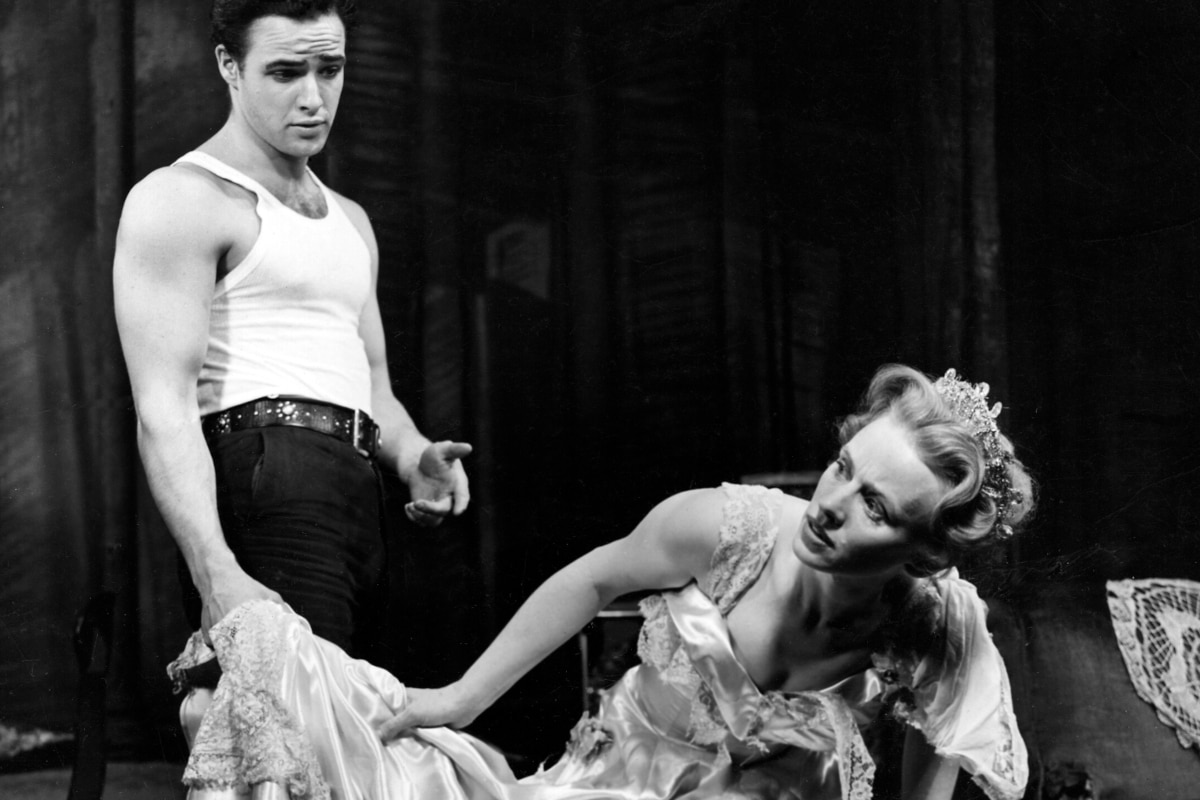
Despite the initial tightness of the cast, the filming of A Streetcar Named Desire was marred by complications. Leigh clashed with Kazan over her interpretation of Blanche and also had problems connecting with her fellow cast members, who were trained in the Stanislavski Method of acting. At the time, Leigh's relationship with her husband was also starting to unravel and her immersion into the role of Blanche only accentuated her current manic-depressive state. "In many ways she was Blanche," Brando said in his autobiography, “Brando: Songs My Mother Taught Me.” "She was memorably beautiful, one of the great beauties of the screen, but she was also vulnerable, and her own life had been very much like that of Tennessee's wounded butterfly...Like Blanche, she slept with almost everybody and was beginning to dissolve mentally and to fray at the ends physically. I might have given her a tumble if it hadn't been for Larry Olivier."
To prepare for the part of Stanley Kowalski, Brando began a daily workout routine at a local gym where he exercised with weights to build up his chest and biceps. Prior to this role, the actor was not known for his muscle-bound physique. When Truman Capote first observed Brando's transformation, he said, "It was as if a stranger's head had been attached to the brawny body, as in certain counterfeit photographs." A Streetcar Named Desire was only Brando's second movie, but by the time he agreed to do the film, he had become a major star. Insider scoop hailed his acting style as the most revolutionary thing to hit Hollywood since the Talkies, earning the actor $75,000 for his work. Leigh received a $100,000 salary, making her the highest-paid English screen actress of the day.
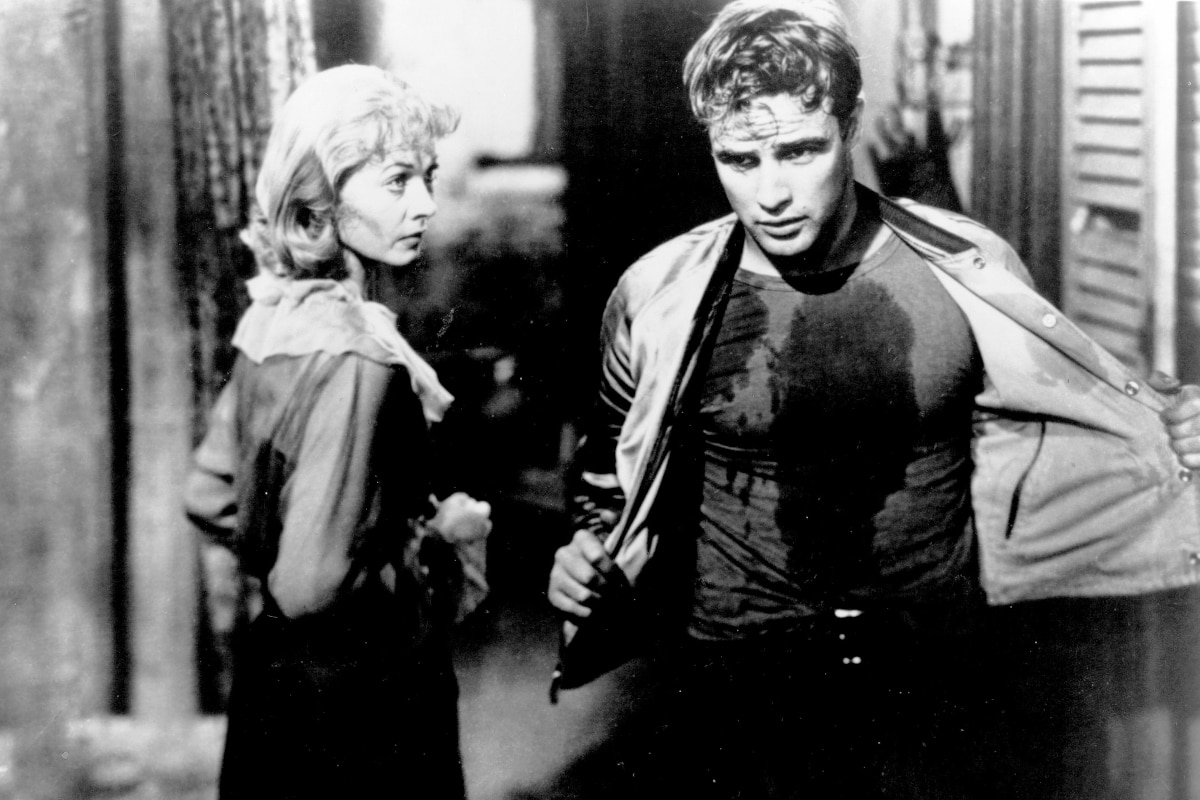
While in production, A Streetcar Named Desire began to encounter resistance from the film industry's self-regulating production code office. References to the homosexuality of Blanche's deceased husband were removed and the harsh original ending was altered, with Stella rejecting her husband rather than remaining by his side. Still, the film encountered controversy during its release, and Warner Bros. deleted an additional five minutes of material (later added back in a 1993 restoration), which included dialogue references to Blanche's past promiscuity and visual evidence of the lustful relationship between Stanley and Stella.
All the trouble was worth it in the end because A Streetcar Named Desire is now considered a landmark film in terms of the ensemble performances, Kazan's direction and the evocative art direction by Richard Day. The derelict New Orleans tenement is given a convincing presence through the accumulation of details such as crumbling stucco and bricks, peeling wallpaper, streaks of dirt on the walls and the dramatic courtyard staircase with wrought iron railings. In collaboration with Harry Stradling's evocative textures of light and shadow, the sets provide crucial atmospheric support for the actors' naturalistic performances. Academy Awards for the film included Best Actress (Leigh), Best Art Direction (Richard Day and George James Hopkins), Best Supporting Actor and Actress; the other Oscar nominations included Best Actor (Brando), Best Director, Best Original Screenplay and Best Score.
Director: Elia Kazan
Producer: Charles K. Feldman
Screenplay: Tennessee Williams, Oscar Saul
Cinematography: Harry Stradling
Art Direction: Richard Day (Oscar winner)
Set Decoration: George James Hopkins (Oscar winner)
Music: Alex North
Principal Cast: Vivian Leigh (Blanche DuBois), Marlon Brando (Stanley Kowalski), Kim Hunter (Stella), Karl Malden (Mitch), Rudy Bond (Steve Hubbell), Nick Dennis (Pablo Gonzales).
BW-125m.